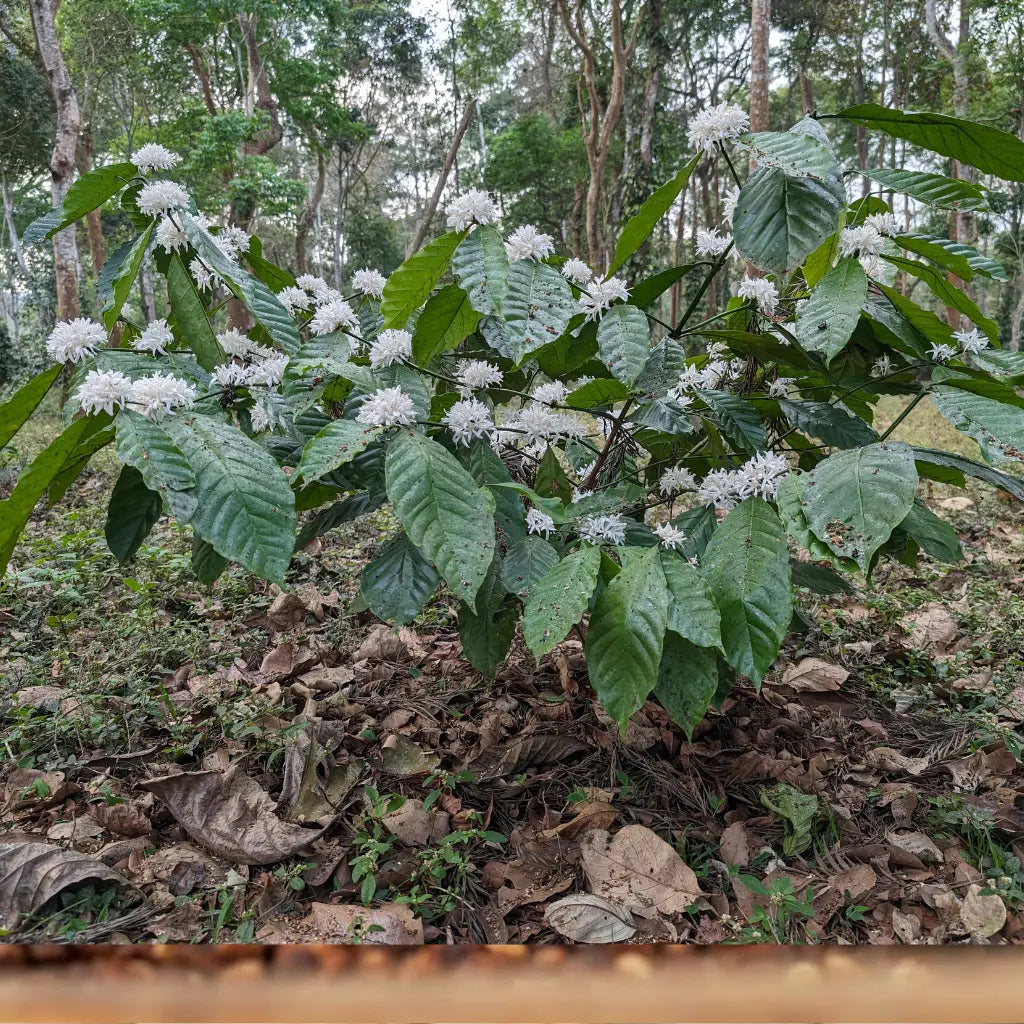




There's a lot of argument about Robusta. And it starts with the name. Precisely, the plant is called Coffea Canephora and, like Coffee Arabica, is subdivided into different varieties/clones. Canephora is diploid and self-sterile and freely mixes in the field. It's actually quite involved keeping different varieties clean next to each other. However, that's not what this article is about.
No, it's about the quality of Robusta and a sensory assessment and evaluation. Besides Conilon and Ugandea, Robusta is commercially the most widely distributed Coffea Canephora variety
I completed the Q Robusta Grader course in 2019. This week-long course from the Coffee Quality Institute requires passing 20 sensory tests spread over three days for successful completion. Q Robusta Graders calibrate and evaluate the quality of Robusta or Canephora with each other.
From October 2025, there will be a new assessment form for both Arabica and Robusta. The Coffee Value Assessment, or CVA for short, we discussed here in detail.
Overall thoughts on Robusta
Engaging with Robusta makes sense! We can clear up our own prejudices, learn about a coffee species that serves around 1/3 of the world market and in the future will become increasingly important due to climate change and changing growing conditions. And by the way, Robusta is getting better all the time! Robusta is no longer just Robusta and tastes like the next highway exit. Robusta is diverse, elegant, complex, sweet, fruity and tastes better than many Arabicas in some cases. The Q Robusta Grader isn't about comparability to Arabica though. Instead, the goal is to cup Robusta alongside Robusta and learn to measure and assess qualities. What scores 80 points and above means "fine" Robusta. Quality in the cup also leads to better prices for Robusta, from which the producer benefits. Qualitative feedback helps a product improve.
I wasn't going around with my cupping spoon 50 years ago. But ask the veterans of the trade how Arabica used to taste.
Robusta Fine Coffee Cupping Form
In this article, I won't go into all the nuances of the cupping protocol that we also have with the Arabica protocol. We'll be writing about that in a separate article on the Arabica protocol, which the Coffee Quality Institute uses. Here's a look at the differences from Arabica.
Fragrance/Aroma:

The typical notes we find in Robustas differ significantly in some cases from Arabicas. The first Flavor Wheel for Robusta was published in early 2025. Here we can get inspiration regarding different aromas. Besides enzymatic notes like honey, lemon, tea rose, stone fruits, we find particularly in lower quality notes of potato, pea and cabbage. Sugar browning gives us a jumble of nuts, vanilla, cocoa, chocolate, caramel, but also toast bread, peanut and various dry distillation off-roast notes of burnt cellulose to malt, cedar, tobacco, cinnamon, pepper, etc. Added to this are storage notes of earth, rubber, coffee fruit, straw and others.
Flavor:
Good Robustas actually have a lot to offer in terms of taste. This is scored by the combination of gustatory and retronasal impression. We look at intensity, quality and complexity and rate it highly with appropriate transparency. Typical notes of Robustas are various fruits, such as cherries, raisins, berries and especially dried stone fruits. As well as, of course, the full range of nuts and in some cases spicy and floral notes of clove, cedar, pepper, coriander, etc. The less fine Robustas, meanwhile, outdo themselves in notes of grassy, hay, grainy, vegetal, rubbery, potato flavor, chemical, medicinal, mushrooms, phenolic, etc.
Aftertaste:
Here the wheat quickly separates from the chaff. "Fine" Robustas convince with clarity and a long finish that continues the positive flavor attributes. "Commercial" Robustas are earthy, astringent, soapy, chalky, bitter.
Salt/Acid and Bitter/Sweet Ratio

Now it gets interesting! Because here the Robusta cupping form is fundamentally different from the Arabica cupping form. As most of you have already noticed when tasting Robusta, it generally has higher bitterness than Arabica. This is due to the higher chlorogenic acid content, quinic acid and also in some cases higher caffeine content. In fact, Robusta also has more potassium and thus tastes slightly salty. Saltiness leads to an unclean, harsh taste when pronounced, while quality acidity balances the coffee and gives it structure and liveliness. We rate low salt taste positively and the presence of acidity as well.
Bitterness works similarly to salt taste. Less is more and that's good for the cup. And if a nice sweetness comes along, a Robusta quickly becomes really well balanced.
This also benefits the texture, which ideally doesn't just stand out for its fullness as is often the case with Robustas, but because it's round and soft. No defects or irregularities round out the picture – then you get a really fine Robusta – a "fine" Robusta, so to speak.
"Fine" Robusta Classification
The classification by overall score is as follows:
- 90-100 Outstanding Very Fine
- 80-90 Fine Fine
- 70-80 Very Good Premium
- 60-70 Average Usual Good Quality
- 50-60 Fair Usual Good Quality
- 40-50 Fair Commercial
- < 40 Exchange Grade
- < 30 Below Grade
- < 20 Off Grade
- < 10 Triage
In addition to the sensory evaluation, 350g of green coffee per sample is classified.
More on the topic Robusta, you can find in our overview article. Worth reading on the topic Sensory is Philipp Schallberger's series on specialty coffee communication.