Many follow us on social media and read our blogs. Others drink coffee with us at Café frühling or at Kaffeemacher Café at Basel train station, come to courses in Basel or Dinslaken, or order our coffee to their homes. We create various touchpoints, but work from the same fundamental motivation with which we advance our company:
Sustainability and fairness are processes and not finite states.
Sustainability at the Kaffeemachers
The first version of this text about what we understand by sustainability came from 2019. It was time to revise it. And this second version won't stand here forever either. We continuously learn and incorporate that knowledge into our actions, so that today we have developed an increasingly multifaceted picture of topics that shape our thinking. Also in the course of the
coming years, we will refine our approaches, reflect on our actions again and again, and remain in the process. In the following, we address various topic areas on how we understand, live and practice sustainability at the Kaffeemachers.

"We want to make good coffee accessible to everyone, share our knowledge about the coffee world and provide new impulses to advance the industry."
Sustainable Entrepreneurship
Our work and our ambitions are fundamentally sustainable. Because we understand our endeavor as long-term, social at its core, and we have enshrined this aspiration and goal in the articles of association of the GmbH and even in the commercial register.
We have committed ourselves to cooperative and collaborative work along the coffee chain. From cultivation to cup, we promote knowledge exchange, transparency and equity along the coffee value chain.
We understand ourselves as a learning enterprise that shares the knowledge gained with the market. Concrete examples are our training for restaurateurs, roasteries or baristas as well as our articles and videos. We operate a coffee farm, cafés and a roastery, and are thereby confronted with the real challenges of the coffee industry. This way our perspective is shaped by practical experience and drives our work as well as the experiential foundation for our decisions and recommendations.
Purpose-Driven
We are a purpose-driven enterprise. This means that for us a goal is at the center of our activities, not profit generation. We understand profit as a prerequisite for achieving corporate objectives. For this reason, profits in our enterprise are not withdrawn but remain in the company and are invested in the purpose-driven operations. Purpose is not a buzzword for us, but reflects our fundamental motivation and guiding impulse for our founding.
The Team as Engine
Employees shape and develop Kaffeemacher:innen from within with their ideas and visions. Our philosophy resonates and attracts like-minded individuals, and we support team members in realizing their potential and implementing their ideas. Our company philosophy allows for mistakes and sees them as an opportunity for growth. Our collaboration is based on trust, enabling everyone to find their path and further develop within it.
Customers and Partner Companies as Part of the Community
Our customers are not just consumers of our products; they are also part of our coffee community. Primarily through our presence on various social media platforms and by sharing knowledge about coffee, we have steadily increased our brand awareness. We provide updates on current developments in the coffee market through live discussions, offer articles on coffee-specific topics, and invite our customers to live Q&A sessions.
Fellow companies are often partners and are valued as such. Whether it's sourcing green coffee or promoting and supporting coffee farmers when it comes to new equipment – together, we are stronger and can achieve more. Our goal is to find synergies and build a strong network.

Social Responsibility
Through our size and level of recognition, our social responsibility grows beyond the coffee supply chain. We are aware of this, and as a still young enterprise, we see development opportunities in this regard and want to build alliances beyond coffee in the future.
Regarding the ecological impacts of our company and its products, we are in the process of generating figures and facts. We are already launching projects on waste avoidance and recycling, investing in research in this area, and constantly seeking more sustainable alternatives in packaging and accessories.
Sustainable Green Coffee Procurement
As a coffee enterprise with our own roastery, we are aware of our role as a hinge in the coffee chain. We have the choice from millions of green coffees, but purchase only about "just" approximately 25 different green coffees per year.
We equate selection with responsibility - since we have far more choice in different green coffees than our customers have in roasted coffee, we are in the position of a gate opener and our decisions have great influence on realities in the coffee country of origin. That's a great task that motivates us.
Because this responsibility contains tremendous potential to make the coffee chain progressively more sustainable. Through the turn to the origin, understanding where coffee comes from, in dialogue with producers and regular trips to coffee countries, we became aware of how great the leverage is that we now have with green coffee purchasing. We buy green coffee carefully. Because the inclusion of certain producers is the exclusion of others. That's why we work in green coffee purchasing with partners who share our philosophies.
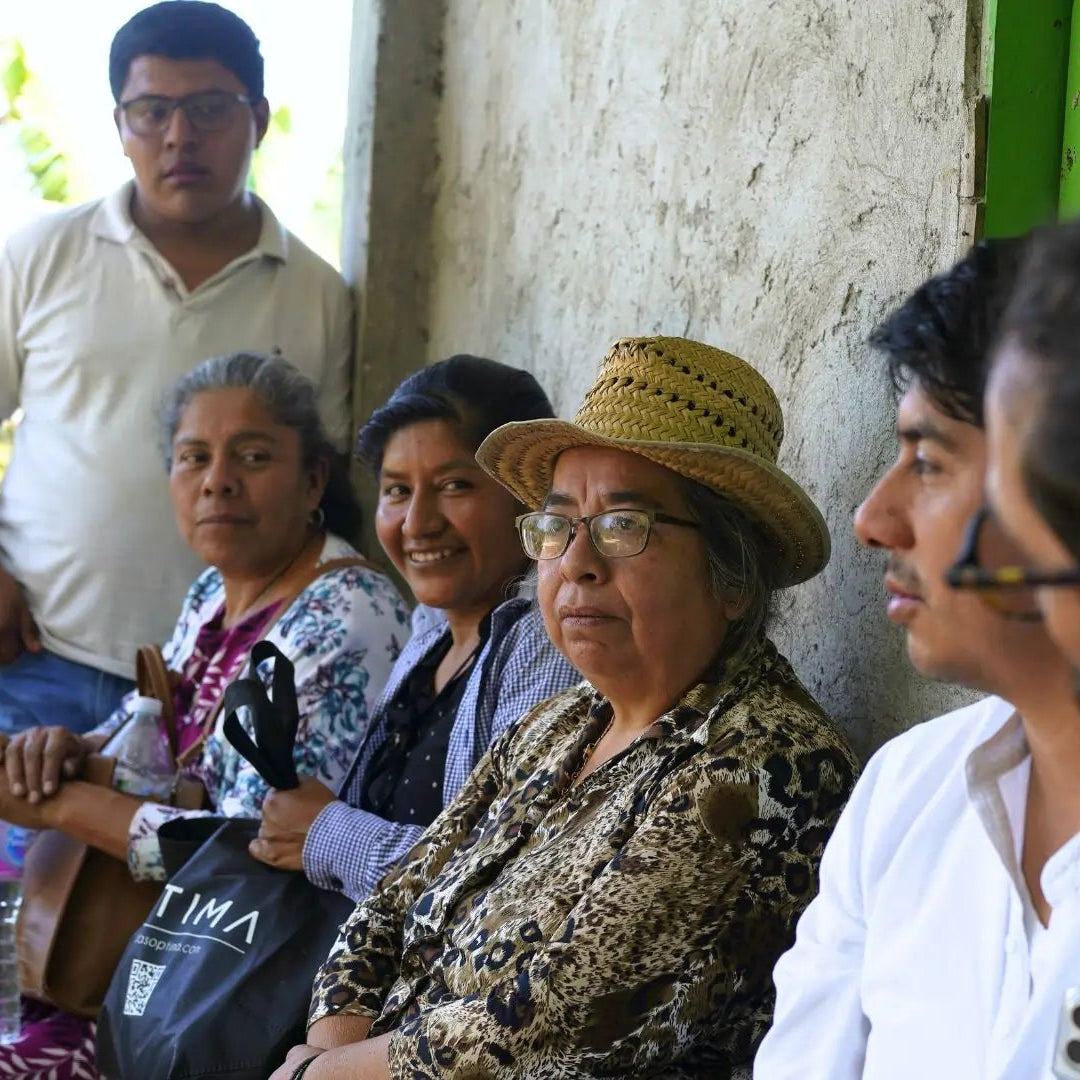
Toca, Mexico
Since 2022, through the Toca project in the Sierra de Zongolica, we have been supporting a young organic cooperative on its path to self-determination. In 2024, the producers made great strides: they built a micro-beneficio, now process their coffee cherries centrally, and are continuously improving quality. Through a co-investment, we transformed from buyers to partners – the potential is huge, sustainable change is possible.
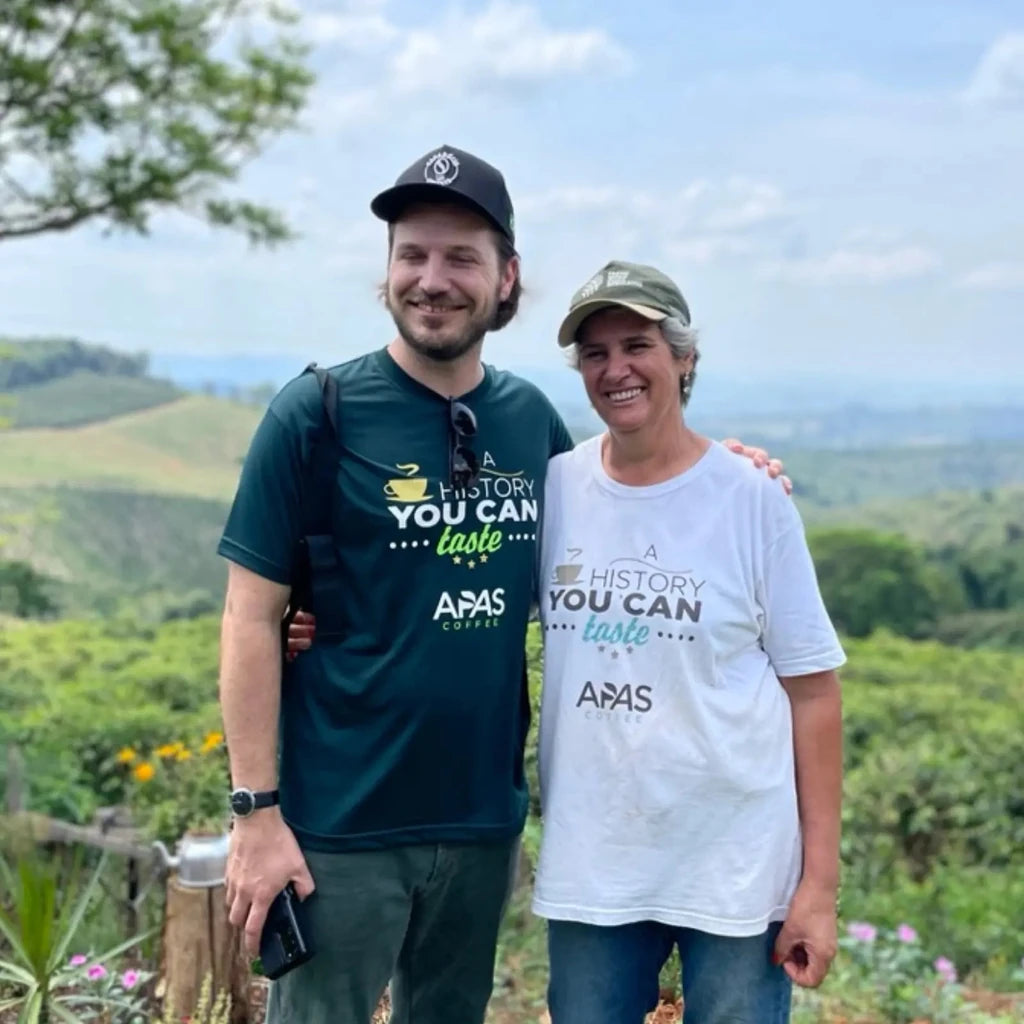
Apas, Brazil
Brazil is the world's largest coffee producer. However, less than 0.5% of the total production is organically grown. The Brazilian approach to coffee production is focused on high yields on a small area. Anyone switching to organic farming in Brazil must change not only their methods but, above all, their understanding of agriculture. Apas has done this, and we have accompanied them on their journey.
Be a partner, provide impetus and initiate change
As a coffee enterprise that purchases green coffee and sells roasted coffee, we perform a great balancing act: on one hand we are deeply rooted in smallholder, subtropical agriculture, on the other we engage in precise positioning of roasted coffees in the end consumer market.
At these ends, and at every stage between, we can provide impulses and bring about change.

Mit der Apas-Kooperative in Brasilien sind wir 2022 auf die biologische Kaffeeproduktion umgestiegen und kaufen fast ihre gesamte Bio-Ernte auf.
Im Toca‑Projekt in Mexiko führen wir eine indigene Community zur biologischen Kaffeeproduktion und bringen einen direkten Marktzugang in eine stark marginalisierte Region.
Ebenfalls in Mexiko haben wir mit der Rancho San Felipe den wohl lokalsten entkoffeinierten Kaffee aufgesetzt – in einem Radius von 80 km wird der Kaffee angebaut, verarbeitet, chemiefrei entkoffeiniert und verschifft.
Mit Macenta Beans in Guinea haben wir Partner gefunden, die Robusta zu Spezialitätenkaffee machen und dabei den Regenwald schützen.
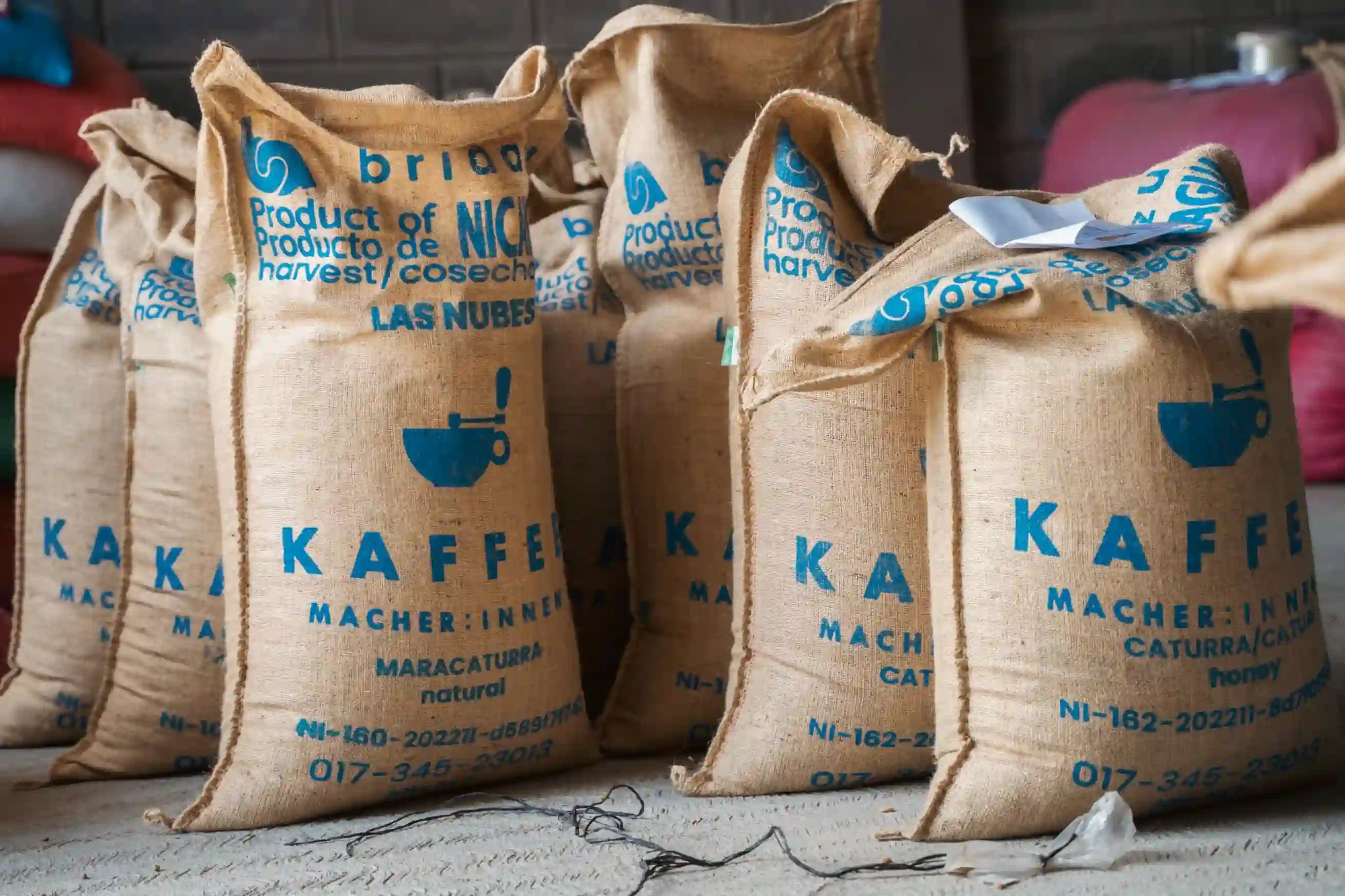
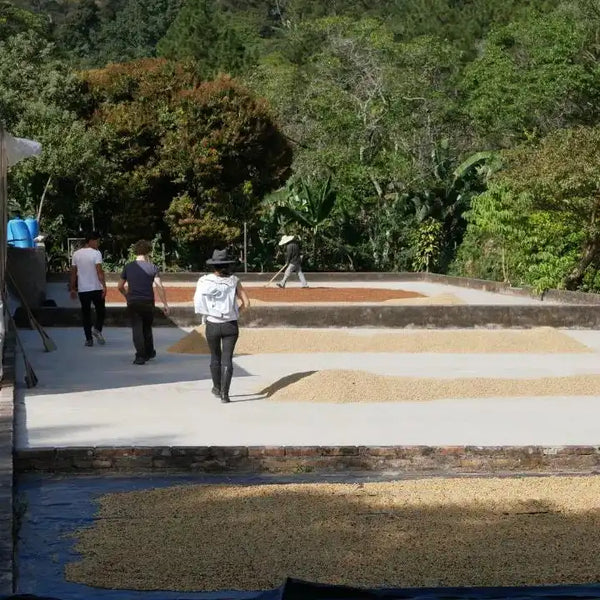
Und auf unserer Farm in Nicaragua experimentieren wir mit verschiedenen Nachernteprozessen, Varietäten und Schattenbäumen, um möglichst autark von äußeren Einflüssen Kaffee produzieren zu können.
A fair price for coffee producers
Ever since we started buying green coffee as a roastery, we wanted to understand what a fair price for coffee producers is. Thus began our intensive years of learning. We conducted interviews, wrote articles, and made podcasts about production costs, FOB, ex-farmgate prices, Fairtrade, and direct trade. Each of these concepts helped us sharpen our perspective while also asking the question: what if we don't determine the price at all?
You are empowered entrepreneurs at eye level, so why shouldn't those who are responsible for a product be the ones to set the prices?
To achieve this actually self-evident way of doing business, transparency in the supply chain, direct contacts, and partners who all pull together are required. Today, we only work with green coffee suppliers who share our ideals and have internalized transparent practices.
The prices of our green coffees are either set by the producers themselves, or we, together with our import partners, offer prices that are significantly above local markets and include premiums for efforts towards ecological production.
There is no single fair and just coffee price – these are contextual and vary seasonally. Depending on weather patterns, foreign exchange rates, inflation, and economic shocks with global impact, we renegotiate prices with our partners year after year. The fluctuations are generally not very large but reflect realities. Two examples:
More Ecological Agriculture
A crucial pillar of this way of working is a clear focus on soil health. The healthier the soil, the more resilient the coffee plant. We support agricultural approaches that employ regenerative practices and understand coffee production holistically. This also includes the self-production of fertilizer, which makes producers more independent of market fluctuations.
We learn when we discuss soil erosion and fertilizer with FiBl, when agricultural advisors explain different types of compost to us, when scientists recommend agroforestry systems, and when sustainability consultants from large companies describe their strategies for adapting coffee farms to climate change.
The solutions are complex and contextually varied. Neither a single certification nor a single form of agriculture can endure in an unpredictable and rapidly changing climate. Mixed approaches and flexibility are required, which necessitates openness and curiosity, and we aim to commit ourselves to these two virtues.
Ecological footprint and environmental impact points
Coffee companies, by definition, operate globally along the coffee supply chain.
This is inherent to the business, as coffee is grown in the southern hemisphere, shipped here, roasted, and distributed. The coffee bean not only connects distant worlds in terms of content but also travels astonishing distances.
The ecological footprint of coffee is not without controversy – depending on the cultivation method, logistics efficiency, roasting method, preparation method, and last but not least, the decision of whether, how much, and what type of milk is added to a coffee, coffee can range from climate-neutral to climate-damaging.
There are worlds between these extremes, and analyzing, calculating, understanding, and deriving courses of action from this requires patience and energy, which should be invested in this analysis.
Since 2022, we have been working on calculators ourselves to determine our ecological footprint; on the coffee farm, in the roastery, and in the gastronomy sector. We collaborate with consulting firms that verify our calculations, giving us confidence that our figures are accurate.
We do not aim to calculate individual products, business units, or the entire company and then offset our emissions.
We calculate so that we can understand where we can initiate which reduction pathways, and where we need to activate which levers, so that we not only emit less but also bring about positive change and, ideally, achieve a carbon sink effect.
With the switch from conventional to organic coffee production at the Apas cooperative, we likely changed CO₂ emissions at Apas by a single-digit percentage. In our internal calculations, it is even in the higher double-digit range.
By establishing the new decaf supply chain within the smallest radius in Mexico, we were able to save more than 18,000 nautical miles in logistics compared to our previous decaffeinated coffee.
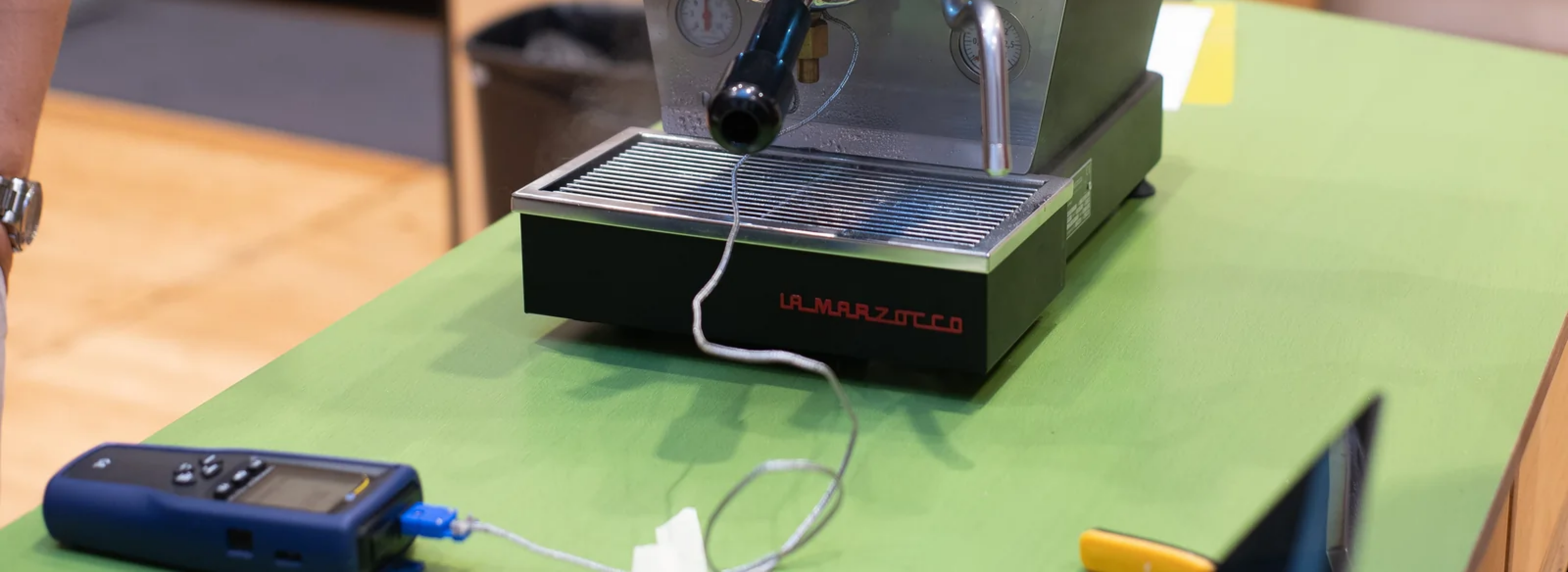
Through precise energy consumption measurements on espresso machines, we can provide increasingly better recommendations on which devices perform as climate-friendly as possible and which anachronistically chase the pure focus on 1960s espresso machine aesthetics.
Coffee companies, by definition, operate globally along the coffee supply chain.
This is inherent to the business, as coffee is grown in the southern hemisphere, shipped here, roasted, and distributed. The coffee bean not only connects distant worlds in terms of content but also travels astonishing distances.
The ecological footprint of coffee is not without controversy – depending on the cultivation method, logistics efficiency, roasting method, preparation method, and last but not least, the decision of whether, how much, and what type of milk is added to a coffee, coffee can range from climate-neutral to climate-damaging.
There are worlds between these extremes, and analyzing, calculating, understanding, and deriving courses of action from this requires patience and energy, which should be invested in this analysis.
Since 2022, we have been working on calculators ourselves to determine our ecological footprint; on the coffee farm, in the roastery, and in the gastronomy sector. We collaborate with consulting firms that verify our calculations, giving us confidence that our figures are accurate.
We do not aim to calculate individual products, business units, or the entire company and then offset our emissions.
We calculate so that we can understand where we can initiate which reduction pathways, and where we need to activate which levers, so that we not only emit less but also bring about positive change and, ideally, achieve a carbon sink effect.
With the switch from conventional to organic coffee production at the Apas cooperative, we likely changed CO₂ emissions at Apas by a single-digit percentage. In our internal calculations, it is even in the higher double-digit range.
By establishing the new decaf supply chain within the smallest radius in Mexico, we were able to save more than 18,000 nautical miles in logistics compared to our previous decaffeinated coffee.
Through precise energy consumption measurements on espresso machines, we can provide increasingly better recommendations on which devices perform as climate-friendly as possible and which anachronistically chase the pure focus on 1960s espresso machine aesthetics.
New tasks through self-review
Through the self-imposed and increasingly rigorous examination of our actions across the entire coffee chain, we not only continually discover new blind spots, but also set ourselves new tasks on how we can improve what exists.
How do we achieve the most ecological coffee packaging?
What wood makes our tamper CO₂-positive?
Which barista towels protect water from microplastics?
What type of milk has the shortest delivery distance and the smallest footprint?
We do not experience this self-examination as a burden, but gain new enthusiasm for continuing to develop the enterprise, seeing new opportunities, using them, and thus helping to shape our collective future.
We cannot tackle these new challenges alone and therefore will increasingly rely on partnerships and alliances to tackle complex projects and achieve overarching goals.
Sustainability in Gastronomy
As coffee makers, we operate two cafés in Basel. Our goal is to create places and spaces that convey our love for coffee and invite people to relax and linger. Our two concepts, Café frühling in Kleinbasel and Café auf der Passerelle at Basel SBB train station, are both places where we can communicate our standards for coffee and food.
Since the beginning, we have maintained a close relationship with our suppliers, focusing on regionality, organic products, and preferably sourcing products from small businesses or producers. For example, our baked goods come from Vital Speisehaus Bio Bäckerei in Dornach, and the cow's milk comes from the organic farm Marchmatt in Reigoldswil. The two cafés are among the largest customers of our own roastery.
We co-founded the Swiss organic oat drink Gutsch, are part of the cooperative, and serve as a distribution center for other gastronomic projects.

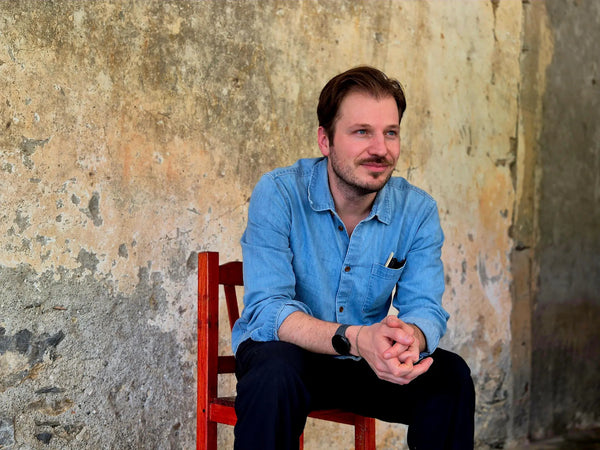
Philipp Schallberger is co-managing director of Kaffeemacher:innen. He manages the roastery and is responsible for green coffee purchasing and origin projects. He judged Barista World Championships for several years. And if he wasn't making coffee, it would probably be wine.