



The crema. For many, it's the crown on top of an espresso. Many swear that a good layer of foam also promises good coffee, that the tiger stripes give the espresso the final kick and that no crema means a bad espresso. Well, it's not quite that simple.
The layer of foam (Italian: crema) on coffee is indispensable for many. There's hardly an image, hardly a coffee package, hardly any coffee advertisement without coffee covered by a layer of foam. You almost get the feeling that a layer of foam simply has to come with coffee, otherwise something isn't right. Yes, that the foam is just as important as the drink itself.
I'll admit, the layer of foam simply looks really good. We've become so accustomed to it that we believe the crema simply must be there, regardless of which drink it is.
Based on these observations, opinions and even theories form that become so strong that the preparation of the perfect espresso, the often-cited God Shot, seems unreachable. And an entire industry took advantage of this – the most beautiful layer of foam suggests the best coffee.
One thing becomes clear: espresso is probably the drink with the most expression, the most myth, the highest appeal. And the crema is partly responsible for that.
What is Crema?
The crema is a foam that only forms because we work with high pressure and high temperatures. Hot water of more than 90° meets ground coffee at high pressure of approximately 7 bar. The water emulsifies the oils in the coffee powder, while the CO2 in the coffee is released by these high temperatures and pressure. As soon as the coffee leaves the filter basket, the coffee emulsion goes from a space of high pressure into a space of atmospheric pressure. As the pressure on the emulsion decreases, the CO2 trapped in it expands and turns into foam.
The comparison is somewhat similar to a shaken soda bottle. We all know it – whoever shakes a soda bottle vigorously and immediately opens the cap afterward will be sprayed by a soda fountain: a liquid with CO2 in a space of high pressure reaches a space of less pressure, creating foam.
The crema is nothing other than a special type of foam. The foam consists of two phases: the continuous phase, which is the medium in which CO2 gas bubbles are present as a dispersion. This means they don't dissolve in the continuous phase.

It just looks so good.
The Short Lifespan of Crema
The lifespan of crema is up to 40 minutes. And within these 40 minutes, the structure changes considerably. From liquid, fine-pored foam, it eventually becomes dry, porous foam. Only for many consumers this isn't really important, since espresso is generally drunk quickly.
The crema decreases because its molecular structure slowly changes. This happens to any foam when drainage occurs. The heavier oil particles settle because they're attracted by gravity. As this happens, the crema structure changes, it becomes unstable and gradually dissolves.
Literature Tips and Other Videos
Here you'll find two scientific analyses on the topic that we can recommend:
Xiuju Wang, 2014:
Understanding the Formation of CO2 and Its Degassing
Behaviours in Coffee
Illy and Navarini, 2011:
Neglected Food Bubbles: The Espresso Coffee Foam
The video by James Hoffmann on the topic goes even deeper into the chemical composition of crema and makes a connection to its historical origins.
5 Factors Influencing the Amount of Crema
We take from the first step that crema is essentially just a type of foam. We'll discuss here which factors determine the quantity and quality of this foam.
Crema and CO2
The gas bubbles in the crema are dissolved CO2. But where does it come from and in which coffees is there more CO2?
CO2 is created as a byproduct during coffee roasting. The CO2 then deposits in the cell structure of the roasted coffee beans. For a layer of foam to end up on the coffee, the CO2 must remain stored in the bean. This requires tight packaging, timely grinding, and a correctly adjusted grinder.
Roast Age
The fresher a coffee is, the more crema the coffee has. The older it is, the less crema will be present, because the CO2 has dissipated. The crema clock also starts ticking once a package has been opened.
Crema is therefore a good indicator to show the age of a roast. Espressos reach their best tasting period around two to three weeks after roasting. After around two to three months, the quality of the roast decreases. The crema indicator can certainly provide guidance here on whether a coffee is relatively fresh. From this, quality based on freshness can be inferred.
Roast Level
Different roast levels result in different crema volumes. There is a high correlation between foaming capacity and fractions that have high molecular weight of complex sugars and proteins, all of which are caused by Maillard reactions.
During roasting, the coffee undergoes Maillard reactions starting at 140°, non-enzymatic browning reactions. This means the coffee now turns brown, but doesn't really taste like coffee yet.
As temperature increases, Maillard reactions also increase. Reducing sugars combine with amino acids to form new compounds and begin to create coffee's aromas.
Back to foaming capacity, which is positively influenced by pronounced Maillard reactions. If a coffee roasts longer and thus spends longer in the Maillard phase, more crema is created in the cup.
Water
An invisible factor that can influence crema is water. Perhaps you've noticed that the same coffee foams more in one place and less in another.
Hard water tends to create more foam, while soft water produces less foam. This is the same with soap as it is with coffee foam.
Machine Types
Although we speak of the crema, there are clear differences in consistency, porosity, and elasticity.
| Espresso from portafilter machine | generally produces a dense, elastic, glossy crema |
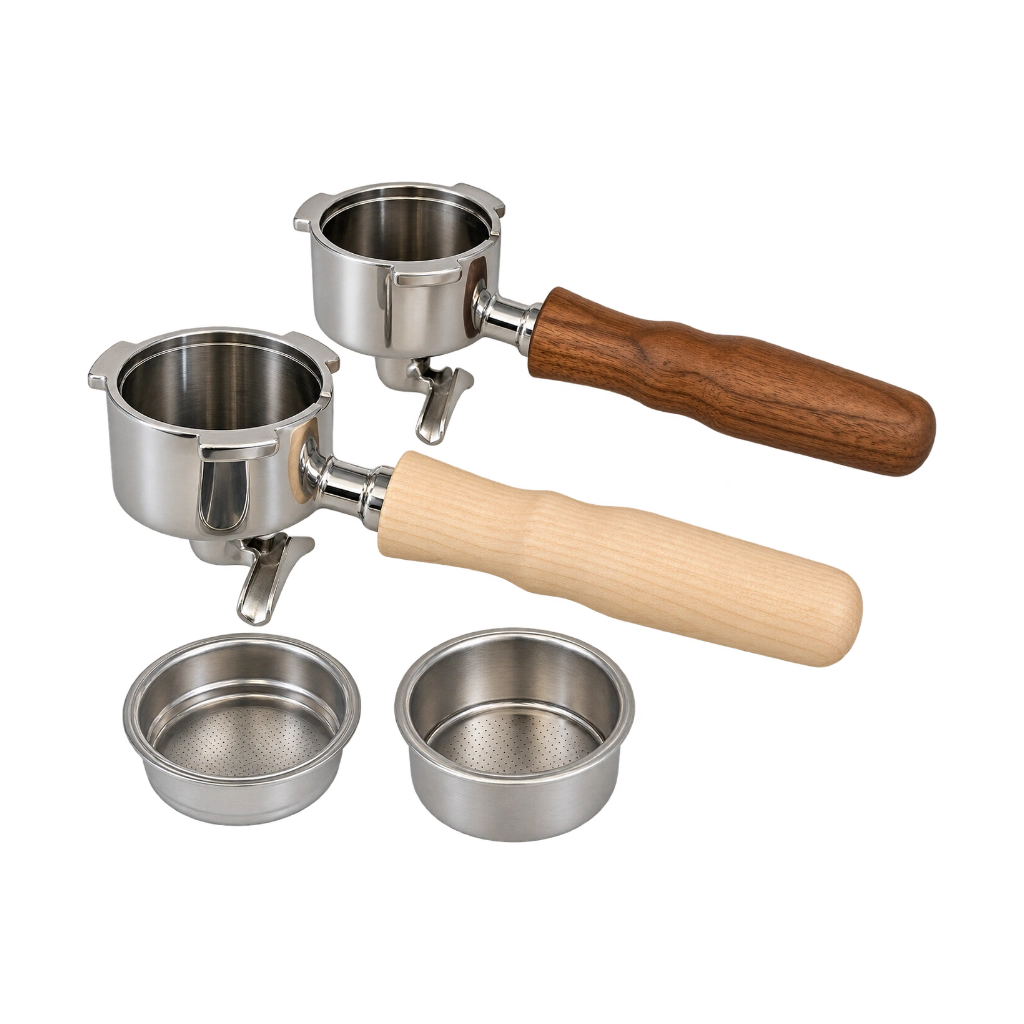
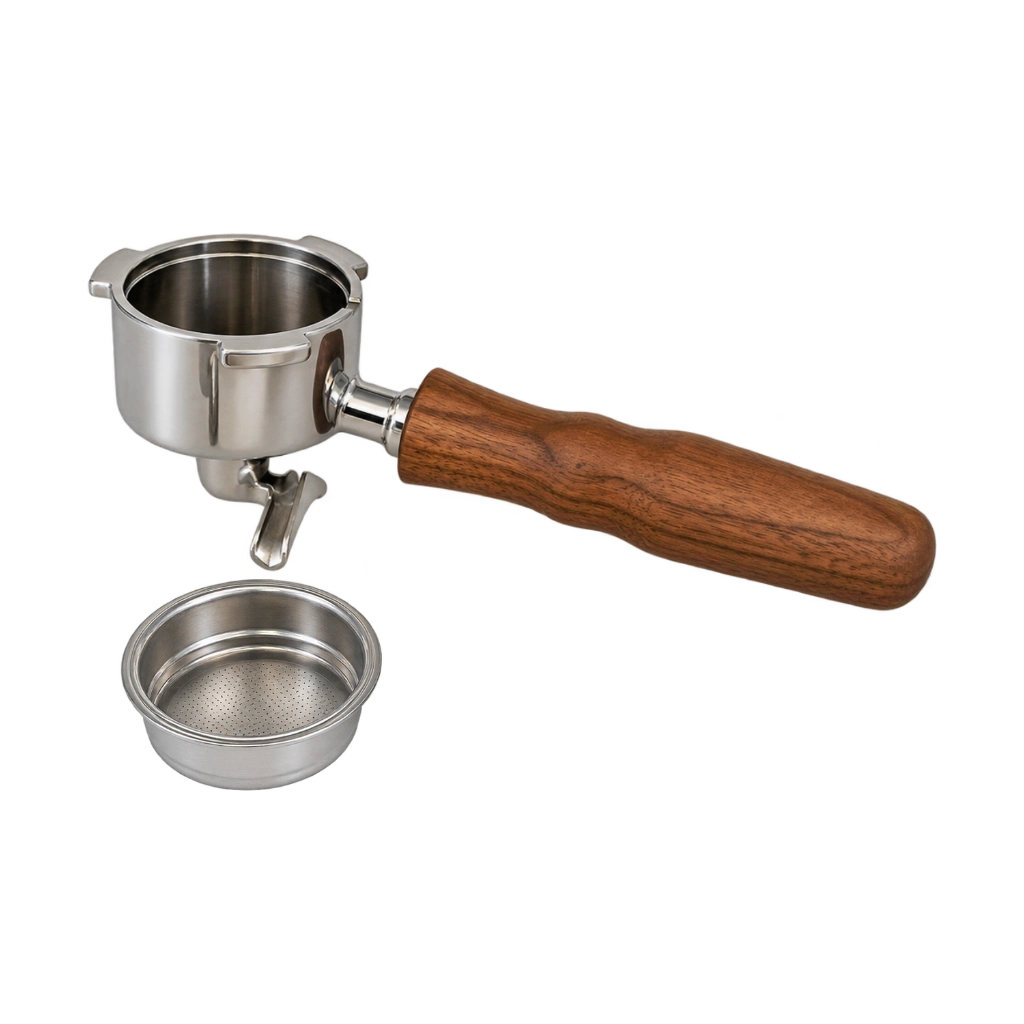
| Espresso with bottomless portafilter | produces a voluminous, rich crema because the coffee stream isn't redirected. This allows the intact crema to go directly into the cup. |
| Espresso in automatic machine | produces a voluminous but less elastic crema. It's more porous because it traps more air. |
| Filter coffee | produces no crema because the pressure during extraction is too low |
| Capsule coffee | produces often very airy crema, less elastic but voluminous |
| Moka pot | produces little stable foam because the ratio of water to coffee is high. |
| Cezve/Ibrik | produces only little foam because it's prepared without pressure |

The crema from an automatic coffee machine is very voluminous, but fluffier and somewhat drier than the crema from a portafilter machine.
Focus: The Crema of Coffee Capsules
Capsule coffee produces a lot of foam. Contrary to rumors that baking powder or some other additive is inside, there's a simple explanation.
- lots of gas in little space
- on average, approximately 5.5g of roasted coffee is pressed into a capsule. The coffee is usually ground and encapsulated directly after roasting. This causes CO2 to flow into the capsule and become trapped there. Often the coffee capsule is also infused with nitrogen, which displaces the last oxygen.
- In relation to the small amount of coffee, the coffee capsule contains a lot of gas that foams during extraction
- larger holes without resistance
- when the capsule is punctured over the filter plate, the coffee shoots out through relatively large exit holes without resistance from the capsule
- the fast flow isn't redirected (=slowed down) and lands directly in the cup
We kindly received this information from Patrizio Frigeri, coffee engineer, who has also reported extensively on capsules here.

For many, a reason to buy a capsule machine: the foolproof layer of foam on the coffee.
More Robusta = More Foam
Often for more classic espresso interpretations an intense layer of foam is desired – even a small portion of Robusta can help achieve the goal. 100% Robusta is extremely foamy; the spouts of the portafilter are almost overflowing with foam during extraction. However, the foam is different in consistency; it's more porous, somewhat drier, less glossy and less elastic.
Why?
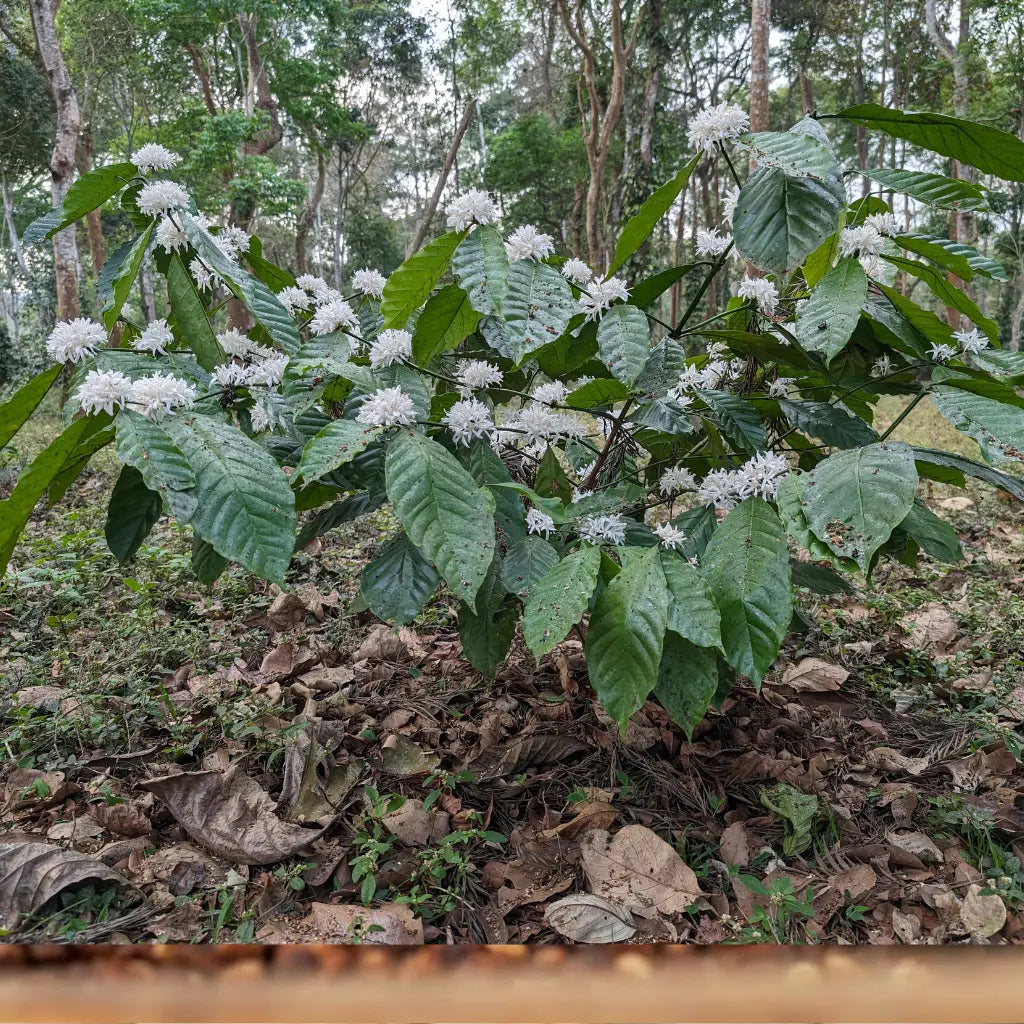
Robusta has up to twice as much CO2 as Arabica coffees, especially in medium-dark roasts. And: Robusta has about only half as much fat in the form of oils as Arabica – and we know that oil doesn't foam. In other words: the oils in Arabica prevent more intensive foam formation.
Is Crema Overrated?
In one of the classics of coffee books, it says that for a "true espresso" at least 10% of the drink must be crema.
I struggle with such hard definitions for a drink that is consumed worldwide and interpreted with different coffee philosophies.
10% crema volume is mainly a visual reason – if only a thin layer of crema were lying on the liquid, then we might think that the coffee is already old, or that it was poorly prepared.
If appearance seems so important, then we can also ask whether espresso is a multi-sensory drink? Does the cup, the spoon, and the glass of water belong to it as well? Probably yes, because espresso is always a brief moment of enjoyment.
 Tiger stripes espresso from our Facebook Community. Left by Marco Rödel, right by Olaf Sühr.
The Tiger Stripes on the Espresso – Are They Important?
Nevertheless: we are strongly influenced by the idea that the crema should be quite present. And it should look good – we repeatedly hear about the tiger stripes, which are supposed to suggest a particularly successful extraction.
Tiger stripes are nothing other than fine coffee particles that loosen during extraction. However, tiger stripes don't appear in all coffees the same way – or not at all.
- tiger stripes are especially visible in darker coffees, because darker coffees are more brittle due to high roasting temperatures.
- in the vast majority, tiger stripes appear with conical grinders that produce more fine particles. Daniel Hofstetter explains this clearly in this video.
Barista Championships and the Crema (R)Evolution
The harsh visual assessment and the supposed influence on taste was overrated for a long time – and also at the World Barista Championships. In the early days and well into the 2000s, crema accounted for 50% of the total score in the espresso category. Fifty percent. The other half was judged on taste – almost unimaginable from today's perspective.
"Back then" people looked for a long time, held the cup at an angle, evaluated elasticity, judged the hopefully reddish-brown color, and the absence of bubbles.
 Felix Hohlmann at the Swiss Barista Championship 2017. At that point, it was only noted whether the crema was present or not.
Imagine that now – almost impossible. And yet that was standard until a bit more than 12 years ago. And today crema – appearance accounts for less than 2%. Thank goodness.
We kindly received this information from Sonja Björk Grant and Gloria Pedroza, two long-time judges at World Barista Championships.
And that brings us to – for us – the most important question of all: is crema actually tasty? And does crema make espresso better?
- The crema is an indicator that extraction certainly wasn't too fast or way too slow, but even then I still don't know if the coffee will taste good.
- We've tasted crema, and specifically only crema. Crema alone tastes bitter. And you feel the CO2. It has an unpleasant acidity, almost like carbonation.
- An espresso without crema is less roasty because it has less CO2, since this is mainly present in the crema.
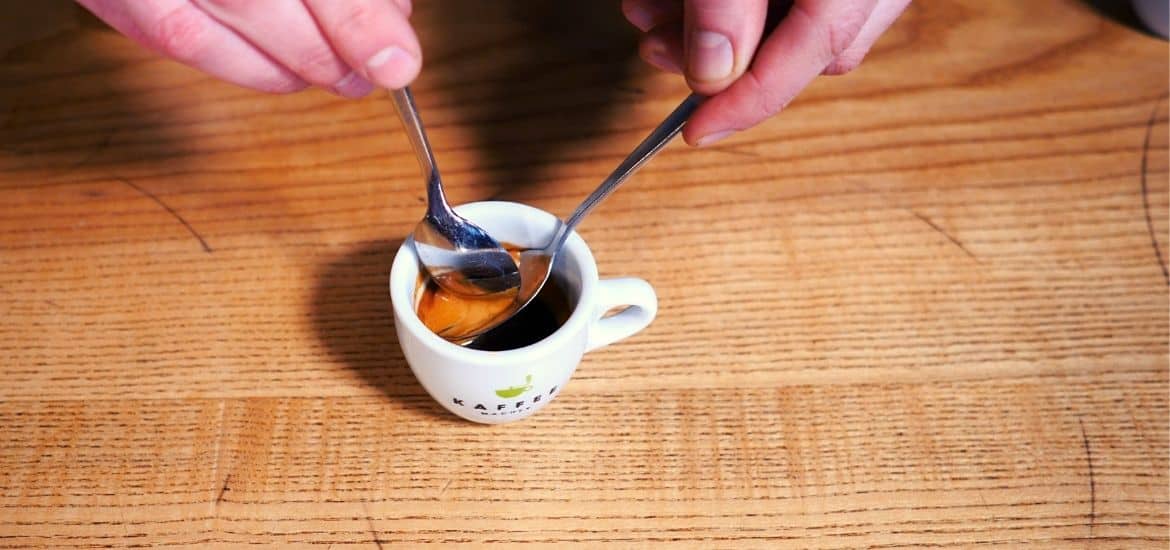
Whether you prefer coffee with or without crema is your decision. Try it out and extract two espressos. From one cup, remove the crema with two spoons, with the other mix it in. The coffees will taste noticeably different.
So. Crema is part of it, mainly for visual reasons, because we've visually internalized this espresso drink that way.
More crema is not better, and no crema doesn't have to mean the coffee is bad.