




Since 2020, we've been publishing our raw coffee prices on our website. However, numbers alone tell little. That's why we're presenting them in our first transparency report 25/26 with the context behind them for the first time: how we source, what exchange prices mean for our partners, and the stories behind three of our coffees.
This article reproduces the complete Transparency Report 25/26. For those who prefer to read the designed version with all images in one go, you can download it here: Transparency Report 2025/26 (PDF).
Context, not just numbers
We're a transparent company and communicate extensively through various channels. So far, we've provided the context for our prices separately from the numbers – on our website, on YouTube, and on social media. We've reported what we do, as well as what we don't do. Now, for the first time, we're bringing context together with the numbers.
In just over eight years as a roastery, with a broad selection and direct relationships with coffee producers, we've learned a lot – and continue to learn. Through our own experience running a coffee farm, through coffee trips and countless conversations with producers, roasters, and traders, numbers take on meaning. Without context, they say little, and that's always a shortcoming when merely looking at FOB prices. Behind every number are stories. Three of them we tell here: those of Farmers Coffee (Brazil), Yulma Argueta (Guatemala), and BridAzul (Nicaragua).
Coffee is a people's business
When a coffee producer told me in Kenya in 2013, "Coffee is a people's business," I believed him. But I could never have imagined that today, despite working with coffee, I'd be dealing with people far more than with the coffee itself.
Since 2017, we've been roasting commercially. Back then, we set up a roastery in the basement of a residential building, bought coffee from friendly traders, and simply got started. Our selection was manageable, yet we had the ambition to know everything about the coffees we purchased. We sought contact with importers who could tell us more about the background. We wanted to understand what the FOB price was and, above all, what it meant – and what it didn't.
As a young company – since January 2017 as an independent GmbH – we had to develop a strategy: being economically successful long-term while staying close to producers and paying fair prices for raw coffee. Good coffee is the result of good relationships. For most of our coffees, the starting point was an encounter with a producer. From that encounter, conversations developed, and when there was a spark, raw coffee samples followed. If we liked them, a first import happened. And from that first import come shared projects – always tailored to work for both sides.
This report is a testament to its time. When we publish it again in a year, I hope many of the names listed here will appear again. We dedicate a substantial portion of our time to nurturing relationships. We actually work with coffee, but we're even more deeply in the people's business.
— Philipp Schallberger, on behalf of the sourcing and roastery team. Basel, June 2026.
Thinking long-term in short-term times
The last five years have been extremely eventful when it comes to raw coffee. The pandemic, supply bottlenecks, record-high coffee futures prices, and growing challenges for coffee farms due to climate change have demanded agility from all players in the coffee supply chain.

Photo: Tatiana Gomez
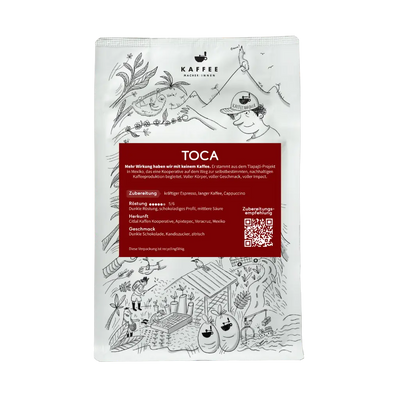
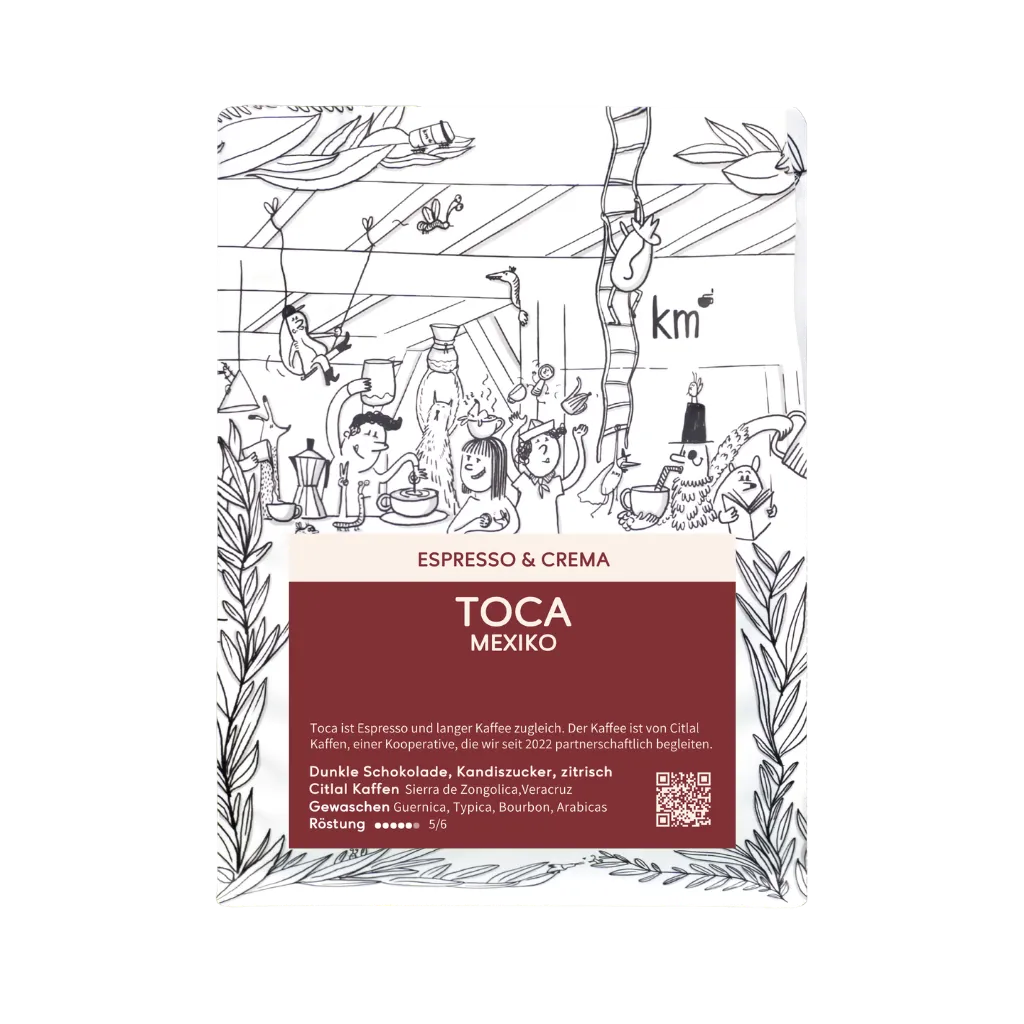
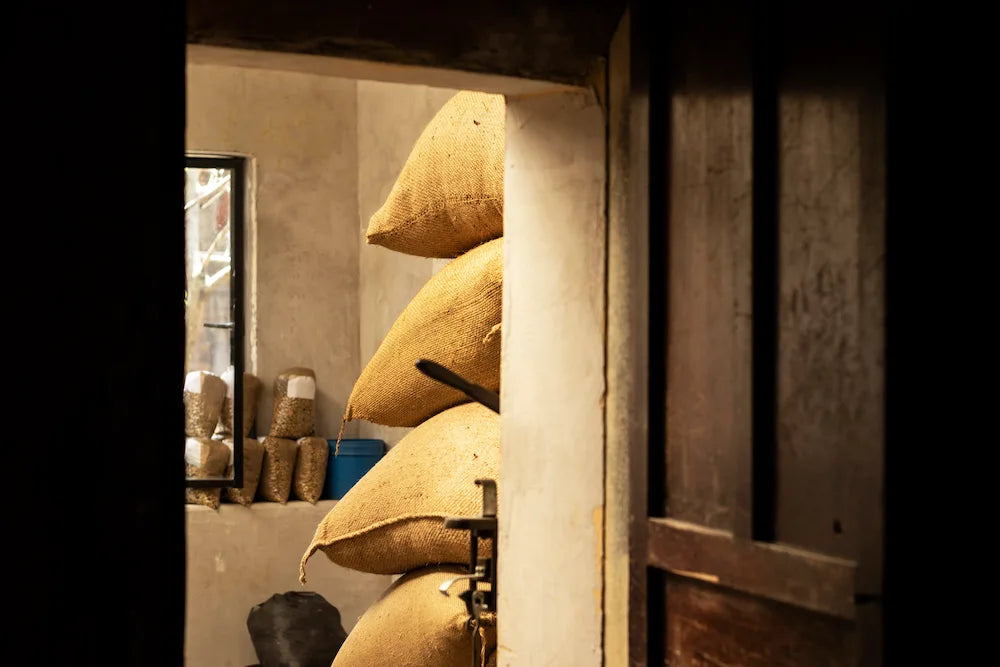
In the Sierra de Zongolica in Mexico, we've been working with Ensambles on the Toca Project since 2021. The young cooperative Citlal Kaffen stores their coffee in parchment at an old processing mill that closed in 2013. They've now brought it back into operation. This beneficio was once a chicken farm – and also a church for the surrounding communities.
How we think about our role as a roastery
We communicate with our production partners daily. They're far away, but they make it possible for all of us to drink coffee. With them, we learn what it takes today so that we can drink coffee tomorrow too. Three formats show how we think about our work:
From Source to Sip – the roasting film
In our roasting film, we take you on a journey from coffee's origin to our roastery in Basel. We show what goes into a cup of coffee and start from where it comes from. Because without coffee producers, there are no coffee roasteries. A film by Larissa Bürgi about the people and stories behind the coffee.
Our 10 Coffee Commandments
Pointed and ambitious: In our 10 coffee commandments, you'll find ten powerful statements that sum up our work as a coffee roastery.
APAS and the Brazil Coffee Trip 2026
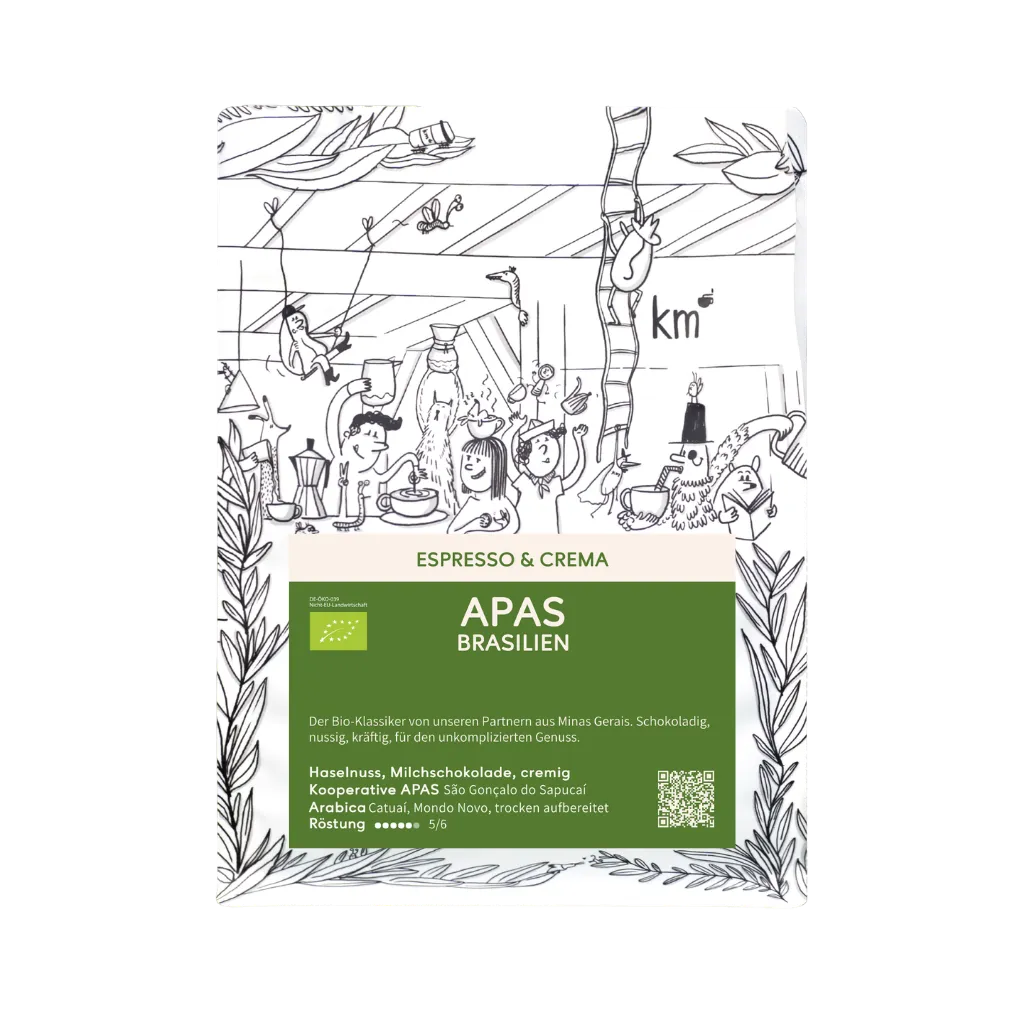
The APAS film is a tribute to the APAS cooperative and the relationship we've been building for several years. On the Brazil coffee trip 2026, Benjamin, Philipp, Gabi, and Larissa traveled 1500 km through Minas Gerais and Espírito Santo: visiting organic producer Marcia, the cooperative export lab Copervass, the APAS cooperative, and Farmers Coffee. What emerges is a different picture of Brazil than what usually sticks in your mind – and conversations about partnership that you can't have via WhatsApp.

Visiting the Brioschi family in Pedra Azul, Espírito Santo.
What we purchased in 2025/2026
The coffee harvest year differs from the calendar year because harvests happen at different times depending on the world region. We've chosen June to May as our reporting period because we also make many contracts in the first half of the year.
The complete purchase data can be found in the PDF
| Key metric | Value 2025/26 |
|---|---|
| Share of partnerships 3+ years | 37 % |
| Ø SCA quality score | 85.8 |
| Origin visits 2025/26 | Ethiopia, Brazil, Mexico, India |
| Number of producers/cooperatives | 43 |
| Countries of origin | 16 |
| Contracted raw coffee | 129,110 kg |
| Ø FOB price (USD/lb), unweighted | 5.76 USD |
| Ø FOB price (USD/lb), weighted | 4.81 USD |
| Ø relationship duration | 4.52 years* |
* We deliberately do not include coffees from our adventure line in these figures. These coffees are often one-time purchases and focus primarily on excellent taste in the cup.

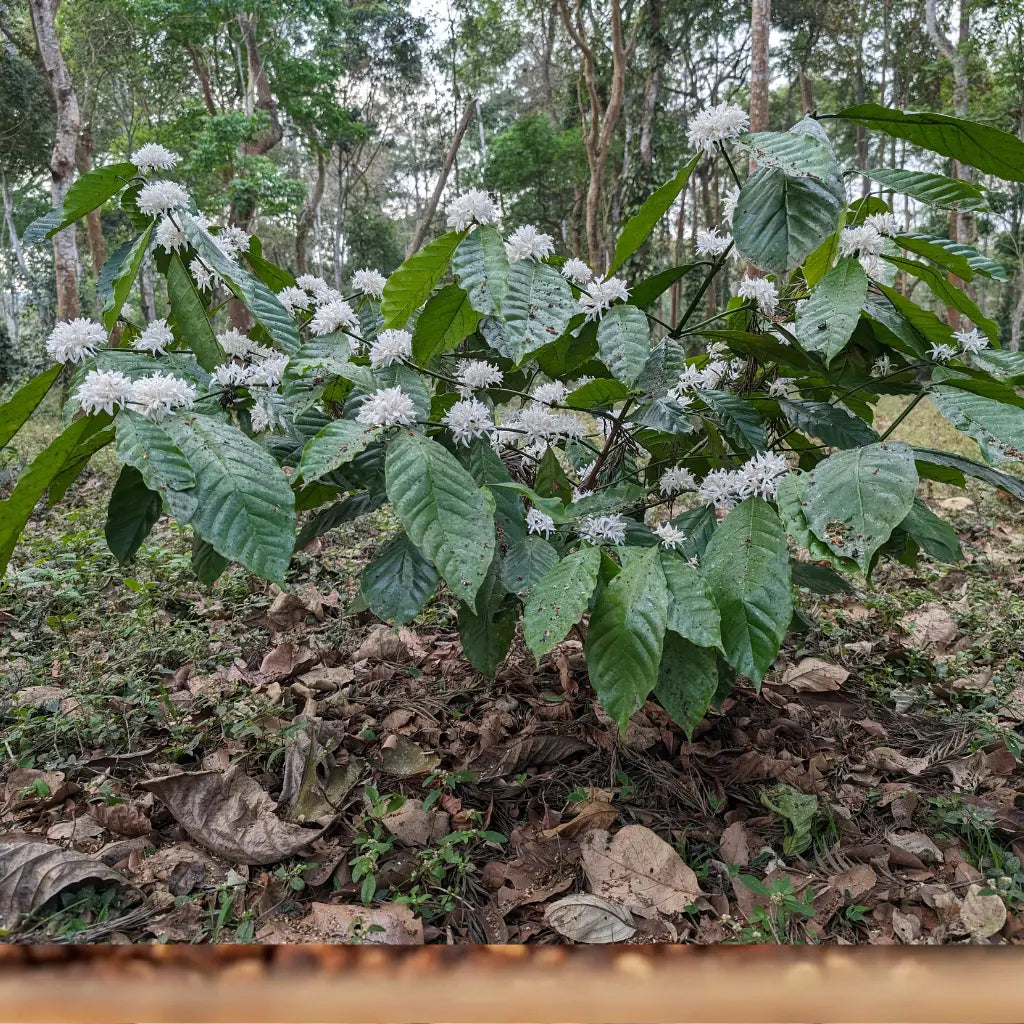
In the mountainous region around Villa Rica, César Marin and his family produce specialty coffee on a farm that operates without external inputs. They produce all fertilizers and plant protection products in-house according to regenerative practices. This makes them immune to fluctuations in the fertilizer market. What producers are not immune to – and this is not a farm issue – are coffee price swings. Although we regularly bring up the subject of fixed prices, we haven't been able to establish one yet. A fixed price could help buffer the fluctuations.
Raw coffee prices from 2025 to 2026
In early January 2025, the C price – the global futures reference price for Arabica on the New York ICE exchange – was around 330 US cents per pound of raw coffee. On February 12, 2025, Arabica reached its absolute all-time high: over 442 cents per pound, more than five times the long-term historical average. The previous record high dated from 1977.
| Date | C Price (US cents/lb) | Assessment |
|---|---|---|
| Early January 2025 | ~ 330 | already significantly elevated |
| February 12, 2025 | > 442 | absolute all-time high |
| Early June 2026 | ~ 250 | nearly halved from the peak |
Three causes behind the historic price surge
In summer 2025, the price first stagnated and then slowly fell. US tariffs created uncertainty on all sides. This led to short-term, sharp fluctuations – and especially caused producers to hold back on selling coffee altogether. Gradually, speculative capital withdrew, and prices fell in autumn 2025.
Spring 2026 brought the turning point. Brazil's 2026/27 harvest is likely to become the largest harvest ever measured, with a projected 66.7 million bags – 18 percent more than 2025. Exchanges react quickly to news, so the positive reports from Brazil immediately affected the price: in early June 2026, the C price fell to just over 250 US cents, nearly half from the peak 15 months earlier.

On our way in the Sierra de Zongolica, Mexico
What do these fluctuations mean for us?
We move with prices overall, up and down – at least for producers who use the C price as a reference. On top of the C price comes a differential, an individually customized premium. Other producers set the price for us, and still others ask us what we're willing to pay. It's a mix of approaches.
All producers know the New York exchange movements very precisely, because they influence the respective national coffee price. What happens in New York affects the national price in Mexico, which in turn determines regional prices in Chiapas, Veracruz, or Puebla. Prices are created from regional prices, mixed with quality premiums, ecosystem services, and a perceived markup. For us, a price discount comes where we've sourced long-term.
What do these fluctuations mean for producers?
The C price swung between 270 and 440 US cents per pound in the past 18 months. For producers, that means: sell or wait? Those who lock in too early leave money on the table; those who wait too long risk a crash. Producers have also realized how speculation works and can influence prices by holding back their coffee.
Brazilian farmers in particular are being cautious about sales in early June 2026, despite the harvest underway. Because every investment decision – new plants, fertilizer, labor – requires planning certainty that simply doesn't exist right now. The Iran conflict and inflation are causing additional costs for fertilizer and logistics, so decisions are also being made hesitantly by our partners.
Coffee producers have grown accustomed to fluctuations because the vast majority ties their prices more or less strongly to the exchange. But this recent scale of volatility has created significant uncertainty. As a result, producers in Brazil, Mexico, India, and Indonesia have sold more coffee to the domestic market than for export. Local sales generate quick cash, while export and payment take several weeks.
Three stories behind the numbers
Farmers Coffee and the Compadre (Brazil)
In 2023, Philipp visited Farmers Coffee in Venda Nova do Imigrante on algrano's recommendation. "They've got drive," he was told. Farmers Coffee is called that because its four founders are all sons of coffee producers. During the first visit, they had just started buying and marketing coffees from producers in Espírito Santo. Their education at the renowned IFES university, their openness, and their youthful drive helped them grow quickly.

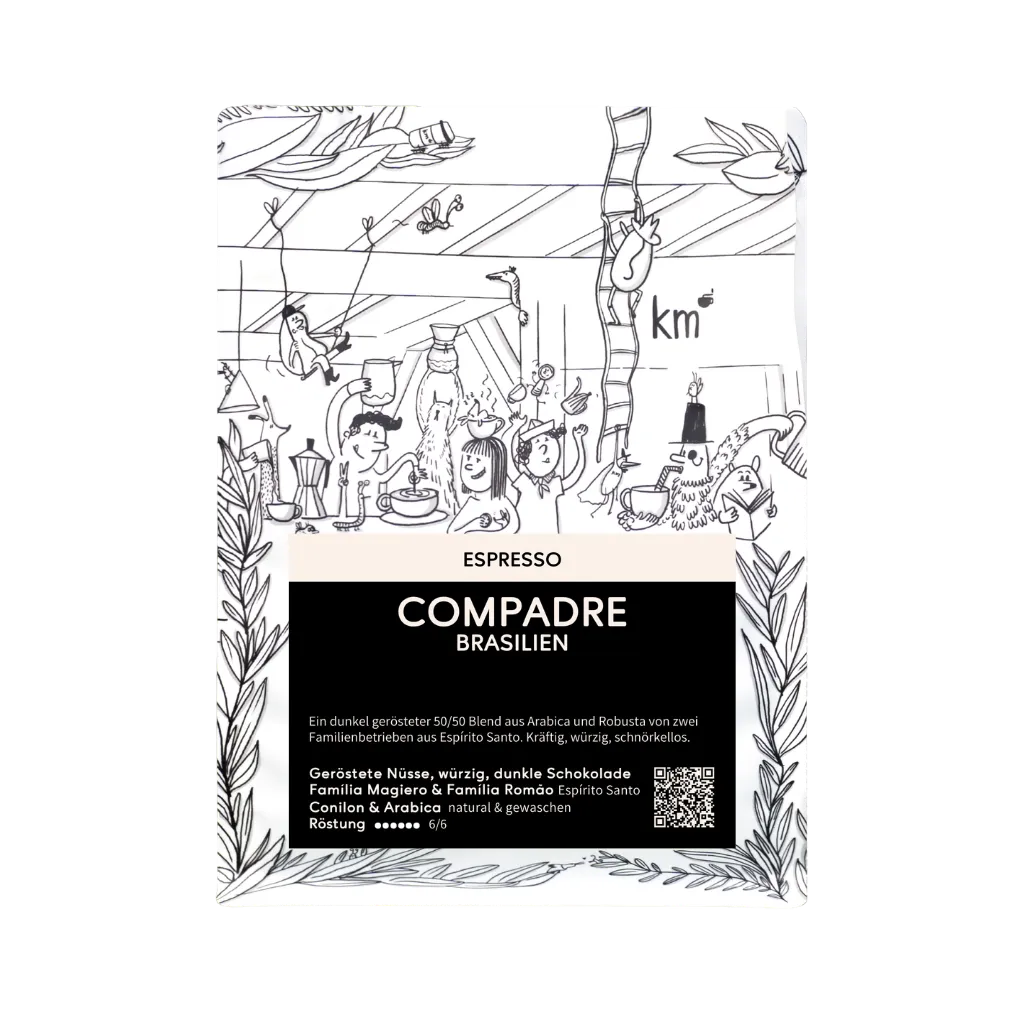
The Romão family contributes the Arabica portion to the Compadre.
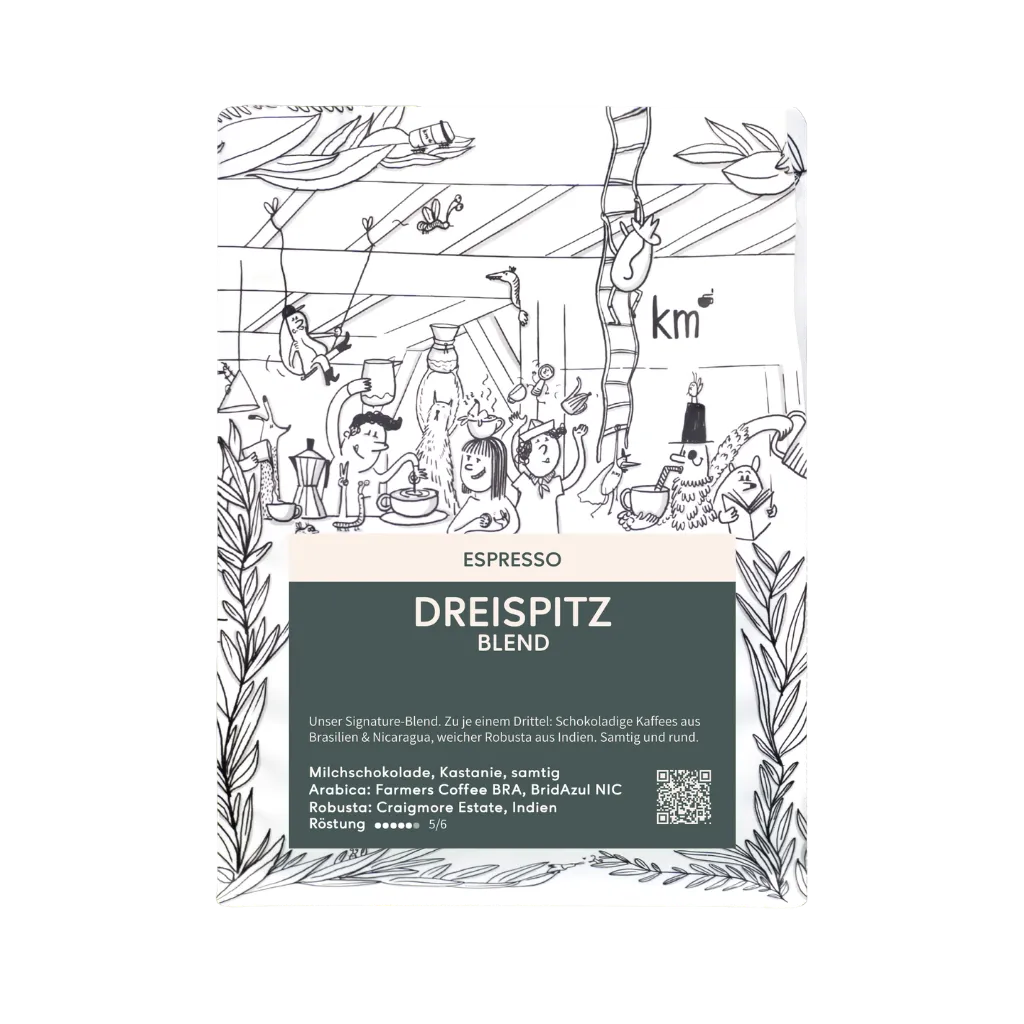
In 2024, they visited us in Switzerland, and we discussed how we could work together. That's how the idea for Compadre Espresso was born. Because they buy from and export both Arabica and Conilon Robusta producers, they could put together the blend according to our idea: a 50:50 blend that Farmers Coffee mixes for us before export and fills into coffee bags as a pre-blend. They established a new process for this and fully committed to the project. The coffee is well-received, and in 2026 we visited them again in a small group – as well as the family contributing the Arabica portion to the Compadre.
Farmers Coffee is extremely customer-focused and sees roasteries as partners they want to understand. We share all numbers, keep each other updated on projects and business performance – the trust is there. Partners like Farmers Coffee show how much fun it is to work with strong, networked companies that are themselves close to producers.
Yulma Argueta and the Amigo (Guatemala)
Yulma Argueta didn't start coffee production until she turned 40. Coffee producers are usually born into a coffee family and take over the operation at some point. Yulma's story was different. With her family, she ran a farm in Baja Verapaz, Guatemala, focused on horse breeding and timber production. But coffee was always her passion, so relatively late, she began planting a few hectares. She sold her first harvests on the local market – she wasn't really aware of her coffee's quality.

Yulma with Nadja and Philipp at the World of Coffee in Geneva, 2025
She came into contact with Grounds for Empowerment, an online program that created a network of Latin American female producers during the pandemic. Philipp gave a workshop on storytelling at the time, and Yulma was there. She shared her biographical story with the group. It was an emotional moment that created a connection. We stayed in touch, and a year later she sent us samples. The washed coffee from 1,800 meters above sea level was very good, but we couldn't find an export partner willing to handle just a few bags of raw coffee.
It worked out in 2025: Yulma was able to export coffee outside Guatemala for the first time. We roasted her coffee for the Amigo filter coffee. It was well-received at other roasteries too, and that allowed us to help her expand her network. So her coffee could be exported with as little effort as possible, we connected her with various exporters; she chose algrano. In 2026, we purchased from her for the second time. We see it as our responsibility to continue networking partners so they can build broad footing. Because that's how we grow together.
BridAzul and the Doña Margarita (Nicaragua)
When we took over Finca Santa Rita in Nicaragua in 2017, the BridAzul team was just beginning to experiment with various fermentation processes. They tried hundreds of processes and stabilized them until they had a handful – with which they still compete in the top 10 at Cup of Excellence competitions multiple times. In one of these processes, the cherries are sorted in the water channel, placed in rainwater barrels, sealed, and fermented for four days. Afterward, they dry in the shade. The hours in the barrel and the duration of drying result in different sensory profiles.

BridAzul christened one of them "Lucid Dreams" – a coffee that was a dream, but whose flavor notes were so clearly visible. Each year it shows notes of sour cherry and passion fruit, is heavy and juicy at once. We were delighted, but wanted to name the coffee after a person, as we do with all our coffees. Since our partner on site didn't want to appear on the packaging, we named it after a former owner of our Finca Santa Rita: Doña Margarita. The sound was right, and so was the coffee.
Each year, BridAzul refined the process and limited the cherries used to two farms – Santa Rita and a neighboring farm – which made the coffee increasingly homogenous. Today we serve it in our cafés for three months. There are regular customers who wait a long time for this period and otherwise ask: "When is Doña back?" When a coffee gets a nickname, it's on its way to becoming a classic.
How we source coffee
"Start with the end in mind" is our guiding principle before we even think about a particular raw coffee. First, we ask ourselves: What purpose should the raw coffee serve? For which beverage, extraction method, customer group, flavor profile, and price point? Once these questions are answered, we first search within our existing network of producers. Ideally, we buy different coffees from the same producers.
Diversification of origin
In recent years, we've broadened our geographic and structural base. We long had a large Brazil proportion in our portfolio and still do, but we're diversifying within Brazil across different regions (Minas Gerais, Campo das Vertentes, Matas de Minas, Espírito Santo). Coffees from India are newer to the selection, and the proportion of Colombian coffees – measured by Colombia's global significance – is still very small. With this diversification, we're preparing ourselves for possible supply disruptions. For larger volumes in particular, we've become more risk-averse and stock up on regularly roasted coffees, because some surprise always awaits.

Sorted and packaged coffee is loaded into containers in Nicaragua.
Diversification of importers
We typically source through carefully selected importers with whom we share much in common. We've worked with algrano since 2017 and source the majority of our coffees through the platform. In Mexico, we work with Ensambles; This Side Up made coffee from India accessible to us. We're connected to Falcon through a long-standing friendship; with Plot Coffee we were in Ethiopia, where they're well networked. We rely on Belco in Colombia. Especially with micro and nanolots, we work with specialized importers who have a clear specialty. This way, we've greatly expanded our importer network.
Ordering as early as possible
We try to give our partners a volume estimate six to eight months before the coffee arrives so they can plan accordingly. Early ordering is followed by a contract, which we also sign as early as possible. Regularity and predictability lead to necessary stability and security on both sides.
Price setting
Price setting is as individual as the coffees themselves. Broadly, there are three ways:
We prefer it when producers name their price and explain it clearly. Prices that are too low make us suspicious, as do fabulous prices that no longer reflect production costs but rather showcase brand value. To arrive at as close to a "right" price as possible, it takes open conversation – so that both sides can say the price was fair. Negotiating prices is part of our practice, as is avoiding speculative practices.
Contact and visits
We've visited all the producers of our most-sourced raw coffees – from one-time visits to regular ones. Throughout the year, we're in regular contact, sometimes superficial, sometimes deeper, the way it is in any partnership. Not every delivery runs smoothly: delays happen, sometimes defective coffee bags, and rarely cancellations because, for example, a community lot can't be mixed. In the coffee industry, there's always a challenge somewhere. But we've learned that there's always a solution. And when we find it together with the producers, we're working on the foundation of a strong, future-proof relationship.

Year after year, we visit the Toca Project, which strengthens trust.
Time zones, calls, and trips
A romantic long-distance relationship works when communication happens regularly. A partnership long-distance relationship follows the same principles. WhatsApp seems to be the favorite tool of coffee producers; we write emails when it comes to concrete contracts. Just imagine: we sometimes discuss six-figure amounts, agree on volumes and prices via WhatsApp – and in the end, an email comes to lock everything in.
Since we source most of our coffees from Central and South America, we communicate with Yulma, César, and others when it's late afternoon here. One of our running jokes: "The Latinos are awake now, time to chat!" It's important that we're in contact not just before and during harvest, but especially afterward – between harvests. This in-between time is our strategic communication time: the pressure is off, we can review and look to the future together. Communication during harvest is like a 90-minute soccer game: focused and fast. Between harvests, it's like training – more time, more space. That's why we typically plan our trips during the off-season.
Trust before control
Much of our daily work as an SME happens through direct communication, personal exchange, and extended trust. Less happens through certifications and formal controls – internally or externally. On one hand, because we know our partners directly, communicate with them, and visit them; on the other, because they themselves forego certifications and we as buyers don't necessarily demand them. Trust before control is our approach. That requires exchange – and closeness.
The proximity framework from Edelmann et al. (2020) distinguishes four types of proximity:
In organizational, social, and cognitive proximity, we're tightly calibrated with many partners; institutional proximity remains informal in nature. To externally safeguard this, third-party certifications (Fairtrade, EU/CH organic, Demeter) would help. But for now, we won't bring all partners to such certification. If they want it, we support it – as with APAS and as we're doing with Toca now.
We also systematically evaluate what role producers' own guidelines can play for us. Participatory Guarantee Systems (PGS) are local, alternative quality assurance systems. They certify producers through active involvement of all stakeholders and are based on physical, social networks, direct exchange, and trust – a bottom-up approach that can adapt to a region's specific ecological and social conditions. When we source coffees without knowing the exact background, they're at least certified coffees – like an organic-certified Robusta lot via InterAmerican. We don't sell coffee in classic retail and therefore aren't bound by third-party certifications that are often required in food retail.
How we as a company understand sustainability is laid out in Sustainability at Kaffeemacher:innen. We openly share our measured CO₂ footprint of the roastery in Our CO₂ footprint, and how many emissions arise during cultivation is shown by the analysis Environmental impact of coffee cultivation using our Finca Santa Rita as an example. We explain the coffee's journey, exchange, FOB, and seals in an overview at Coffee market: trade, seals, transparency.
What are our plans?
For a long time, it was a running joke with us to ask each other: "Come on, let's talk about growth again. How do we think about it?" We're a company in steward ownership, we belong to ourselves and don't need to hit investor-mandated targets. We set them ourselves, grow organically, and invest where we see possibilities for development. We don't have growth pressure – we have growth hunger. Because when we grow, our partners grow with us. If we sell more Amigo with coffee from Yulma, Yulma can supply us more, and we also become more economically important to each other.
That strengthens a connectedness that leads to more retention on both sides. The boundary is mutual dependence, which we need to avoid. Growing together is what we're putting at the center of our first Producers Conference in late June 2026. Its motto is, in essence, Creciendo Juntos – growing together. Our plans include growth, but not just in numbers, but also on an interpersonal level. We'd rather work long-term with the same producers than roast more volume at any cost. We'd rather learn even more from each other than make big promises. Strong growth also requires that we can manage it – that the team can handle it and the infrastructure allows for more volume. We're developing these scenarios at our own pace so that we remain reliable partners on one side and a specialty roastery with high quality standards on the other.
In short
The coffee market has experienced extremes in the past 18 months – from an all-time high of over 442 US cents to nearly halving to just over 250 US cents. What carries us through all fluctuations are relationships: ordering early, talking openly about prices, diversifying, and staying close to the people. This report is like a relationship in flux and will continue to evolve. If you have input or wishes for the next edition, write to us at roesterei@kaffeemacher.ch.
Responsible for content: Philipp Schallberger, Kaffeemacher AG, Güterstrasse 140, 4053 Basel. Published in June 2026.