



Brewing filter coffee is simple when you follow a few basic rules. The amount of coffee grounds per cup of coffee is just as important as the water temperature and the freshness of the coffee. In this guide, we explain everything you need to know to brew filter coffee successfully. At the end of the article, we walk you through the brewing process step by step and illustrate it with images and videos.
With the right technique, it's very easy to brew really good filter coffee. At the same time, there's no cheaper way to brew coffee.
For anyone with little or no experience with filter coffee. This article gives you a very solid foundation.
Reading time: 14 minutes
Author: The author of this article was Swiss Filter Coffee Champion 2014, 12th at the Brewers Cup World Championship, and a three-time Swiss Brewers Cup runner-up.
How much coffee grounds per cup?
The right amount of coffee grounds per cup is crucial for coffee to taste good. However, since cup sizes vary greatly, specifying coffee per cup is not ideal for reliably brewing delicious coffee.
We recommend approximately 6 grams of coffee per 100 ml of brewing water. You can scale this up or down as needed. If you brew with 300 ml of hot water, choose about 18 grams of coffee. For one liter, that comes to around 60 grams of coffee grounds.
Why this ratio works and how it shifts with espresso and French press is detailed in the article about coffee dosage per cup.
If the coffee is too strong at this brewing ratio, brew with 5 grams of coffee per 100 ml. If the coffee is too weak, increase to 7 grams of coffee per 100 ml. Based on experience, Central Europeans prefer their coffee in this range.
A typical coffee cup holds about 150 ml of water. According to the logic above, 9 grams of coffee would be the ideal amount. This type of coffee brewing naturally requires a scale. If you have a kitchen scale handy, the amount is quickly measured. If constantly measuring seems too tedious, you can measure once how much water your coffee cup holds and how much coffee grounds a heaping teaspoon contains. Quick measuring each time removes the uncertainty about whether the coffee will taste as good as it did last time.

What temperature for brewing?
The perfect brewing temperature is about 92 to 94 degrees Celsius. Unfortunately, many filter coffee machines can't be adjusted. This is one reason why hand-brewed coffee often tastes better. The temperature is easy to achieve by bringing the brewing water to a boil in a kettle. After about 2 minutes, it has cooled to the desired brewing temperature of 92 to 94 degrees.
This temperature is a guideline that generally works well for good filter coffee roasts. They taste neither too bitter nor too sour at this brewing temperature, in other words, they're "balanced." That's exactly what makes good filter coffee special.
Lighter roasted coffees can easily be brewed at higher temperatures. At the World Filter Coffee Championship, for example, I brewed a light roasted Kenyan coffee at 98 degrees Celsius. The coffee remained balanced while delivering the full complexity of the coffee bean to the cup.
Darker roasted coffees are naturally more bitter from the roasting process itself. Lower brewing temperatures work better here. High temperatures intensify the bitterness even more. We recommend brewing temperatures of 88 to 92 degrees, which is about 3 to 4 minutes after the water has boiled.
You can also skip the heat entirely: With Cold Brew, coffee steeps for hours in cold water. This produces a completely different beverage, and the grind size is also chosen differently there.
You often find headlines online like: brewing filter coffee, how to brew filter coffee, and brewing coffee. We can't recommend this! Boiling coffee produces strong bitterness, not delicious coffee. That's why we talk about brewing filter coffee instead.
How long should the hot water stay in contact with the coffee?
The best brewing time depends heavily on the amount of coffee grounds and water used, the brewing method, and the roast. If you brew 200 to 300 ml of water, I recommend a brewing time between 2 and 3 minutes. For every 100 ml, you can extend the brewing time by 30 seconds. Above about 800 ml, different rules apply again!
These guidelines can help you set up your brew correctly. Setting is the key word here. As with espresso preparation, with most filter methods (called pour over or drip methods in English), you adjust the brewing time through the grind size. The finer the grind, the greater the resistance to water and the longer the brewing time.
With electronic filter coffee machines, adjustment options are further limited. When brewing by hand, the speed of the brew can be adjusted by pouring the brewing water more slowly or quickly.
With all brewing methods, it's ideal if most of the coffee and the water used stay in contact throughout the entire brewing time. If you pour quickly at the beginning, for example, some coffee grounds will stick to the top of the filter and are difficult to bring back into the brew. In this case, that portion of coffee grounds is less extracted than the rest. These particles are "high & dry" (a common term in coffee jargon), high and dry, and contribute nothing to the coffee flavor in the cup. Since the coffee amount was calibrated to the water, the taste result in the cup might not be perfect.
To set up filter coffee machines perfectly, calculating the brew cycle is practical. You brew a complete brewing cycle without coffee grounds to measure the effective drip time. Getting the most out of a filter coffee machine will be the topic of another article.
The coffee grinder as the key to good coffee

The chapter on brewing time already showed how important the coffee grinder is. Only those who can grind their coffee will be able to control the brewing time by adjusting the grind size. Of course, coffee can be ground in many places at the roaster or in the supermarket. However, the grinder had used quality coffee before at best, or grain or pepper in the worst case.
Buying pre-ground is also not an option. The grind size is not set appropriately. Besides, coffee loses quality with every second after grinding. The whole bean in its unground structure is a kind of protective layer for the coffee. Air only reaches the surface and reacts only with it. Once coffee is ground, the surface increases a thousandfold. The reaction with oxygen and light begins immediately at every cut and break point. Volatile aromas escape from the coffee. Simultaneously, an oxidation process begins that you can taste very quickly.
Even without experience, participants in our sensory courses discover the off-flavor of "old coffee" just two hours after grinding. Coffee first loses complexity and then tastes rancid.
With the grinder, aim for a medium grind size. The coffee should feel approximately like fine polenta. The brewing water should pass through the coffee at roughly the speed indicated above, neither faster nor slower.
What equipment makes sense?
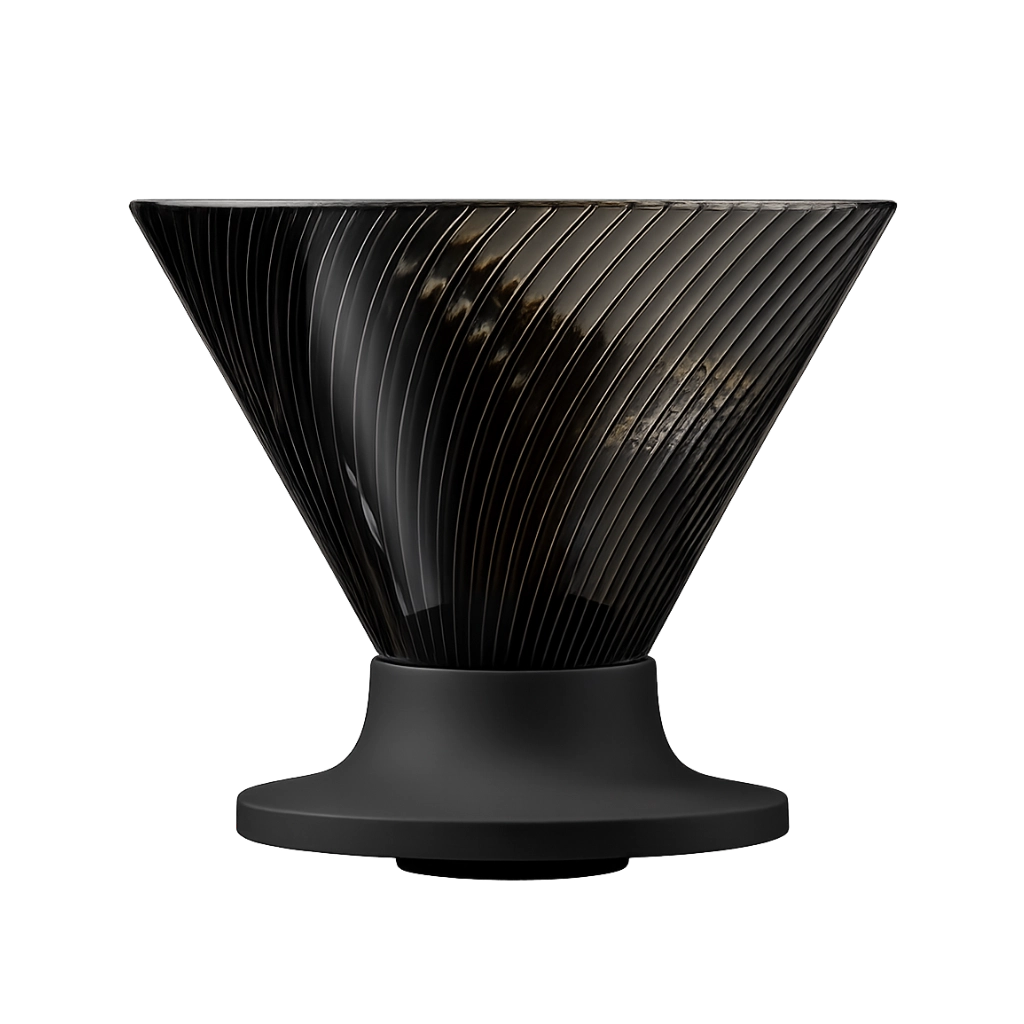
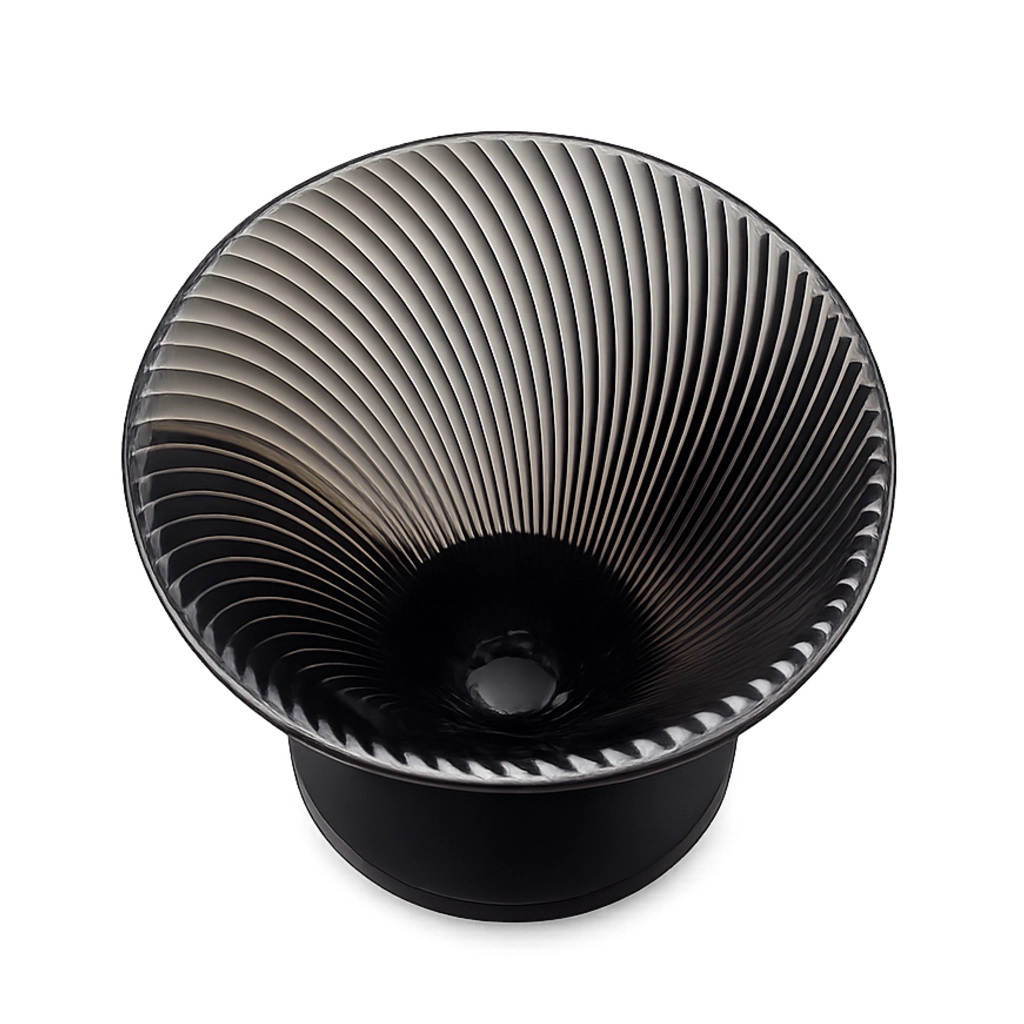
Filter coffee is such a popular method because it's so simple and quick for anyone to master. A huge budget is not necessary either. In many countries, filter coffee is brewed in cloth filters that resemble socks or pantyhose. There are basically no limits to your own experimentation. A classic filter from makers like Melitta, Hario, or Kalita doesn't cost much and works excellently. Inexpensive filter coffee machines are available well under 100 euros.
However, in this price range, I would always recommend a hand filter and spend more on the coffee machine. The main problem with cheap filter coffee machines is that they don't control the brewing temperature precisely. The second, even more important issue is water distribution on the coffee bed. Almost all cheap filter coffee machines drip onto the same spot.
That's a problem! Especially at this point, "turbulence" occurs—swirling between water and coffee. This spot is washed out especially strongly. This leads to over-extraction at this point and subsequently to bitterness. Meanwhile, the rest of the coffee grounds don't get enough wetting and can't realize their own delicious potential in the cup.

Rather the hand filter!
That's why my advice: brew with the hand filter. It brings you closer to the coffee and enables you to truly learn how to prepare filter coffee. How this works in detail with the most common hand filter is in our Hario V60 guide. Those who prefer to work with pressure or brew coffee on the go will find the right way in the AeroPress guide, and those who need several cups at once do well with the French Press.
Those who prefer stronger coffee, something between filter coffee and espresso, will find an inexpensive and uncomplicated option in the Espresso maker. It brews at a TDS of 3 to 4% significantly stronger than filter coffee but requires neither electricity nor special equipment.
I also recommend a simple grinder. A hand grinder is perfectly suited. Of course, many single dosing grinders are also well suited.
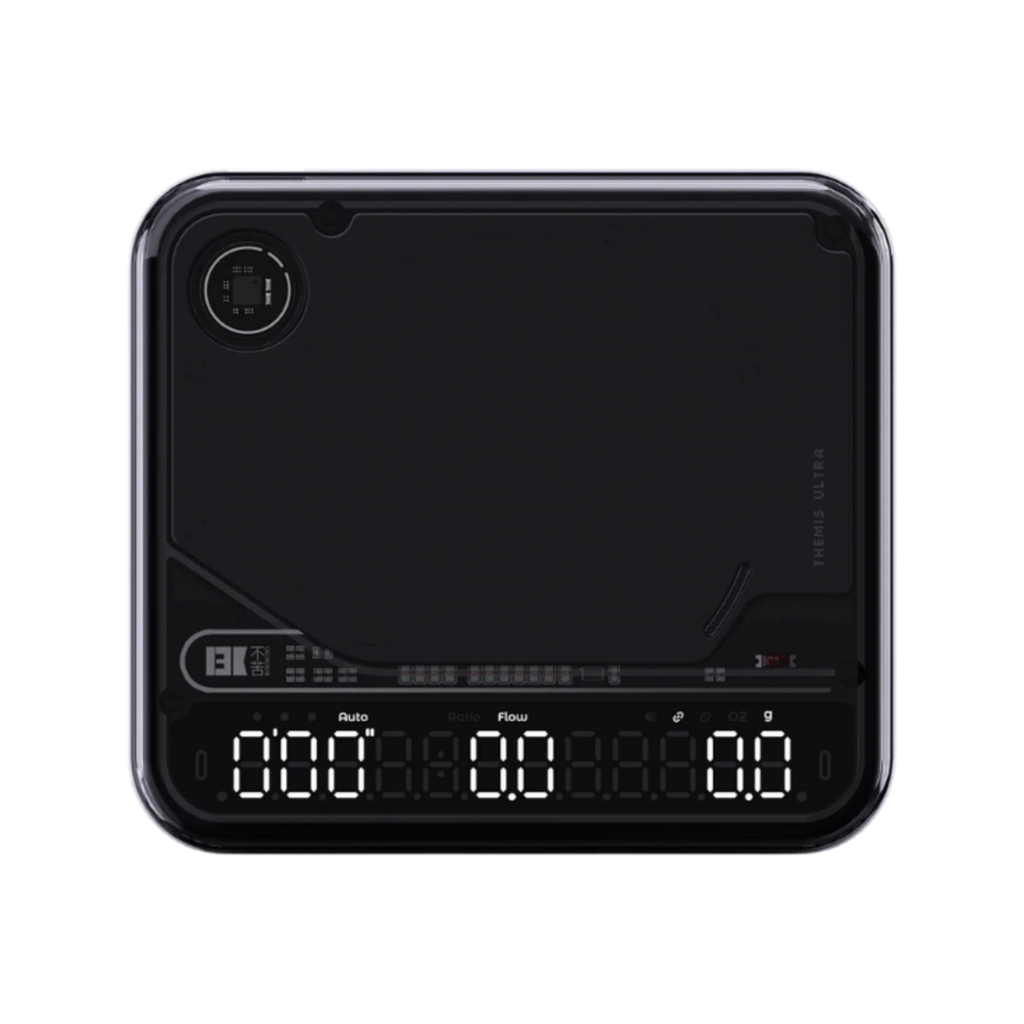
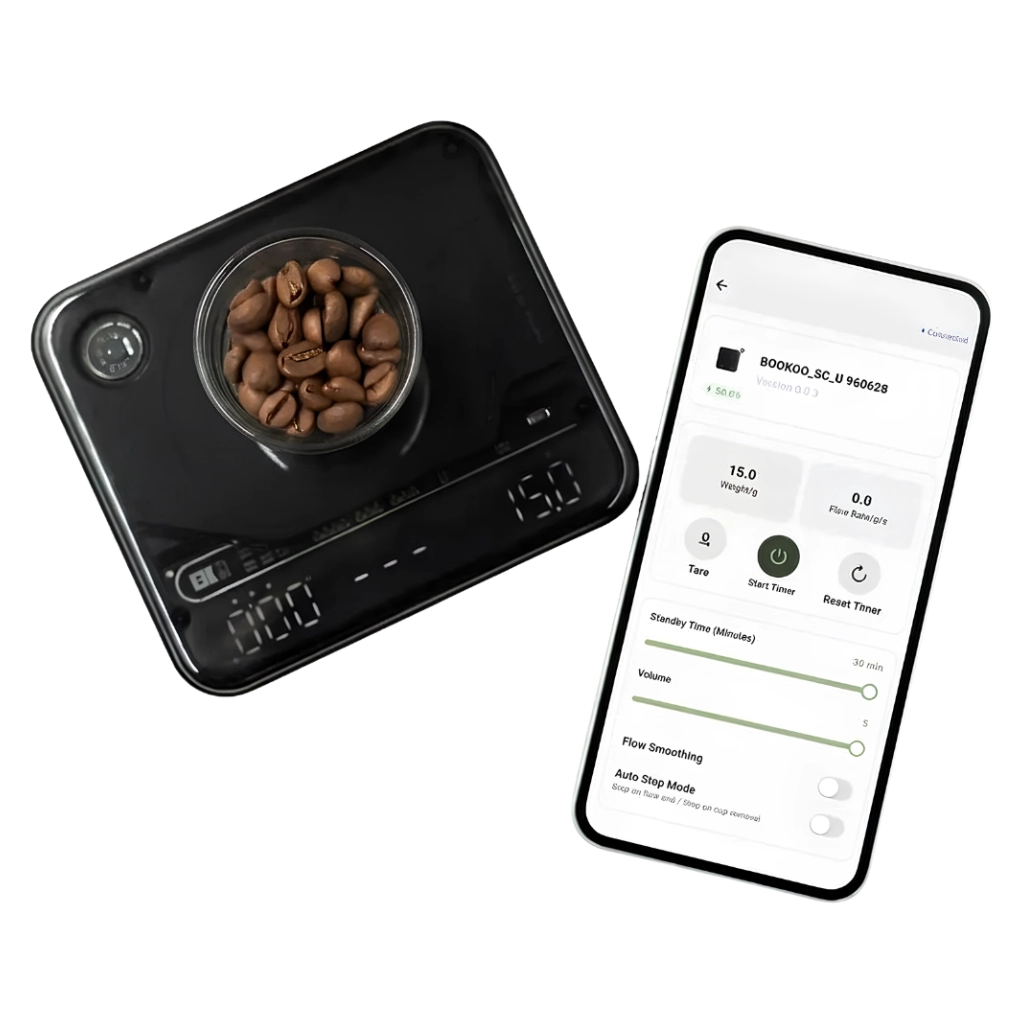
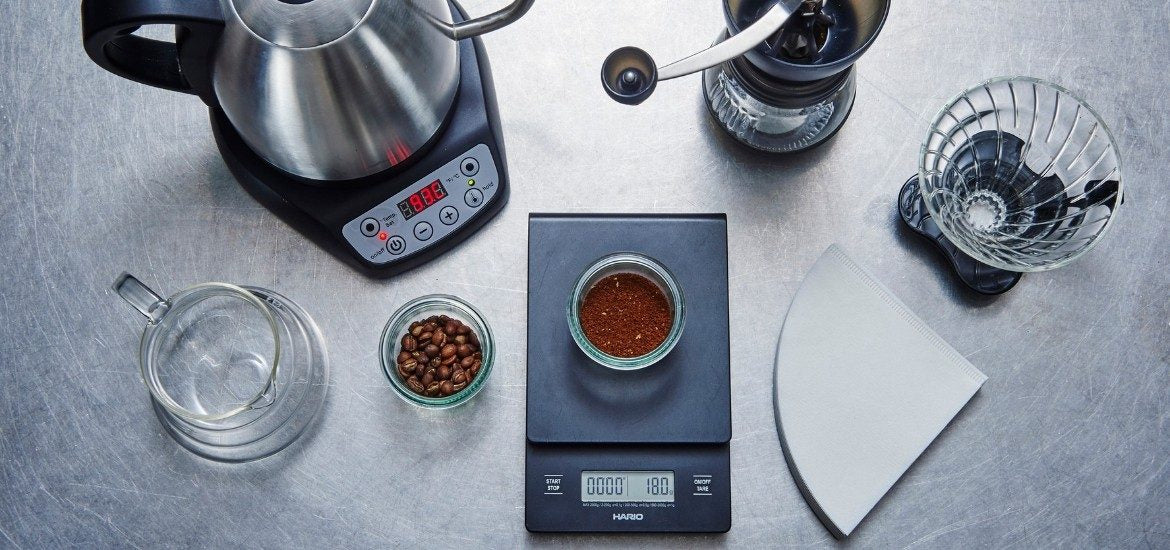
The equipment is complete with a scale and can then be expanded as desired. The scale helps you dose the water and coffee amounts. Any postage or kitchen scale works. Coffee scales also have a stopwatch, a practical tool that gives you control over the brewing time.
Paper, cloth, or metal filters: what's the difference?
The filter bag made of paper, like the cloth or metal filter, does good work. All three separate most of the coffee grounds from the coffee beverage. The paper filter is most thorough. While cloth and metal filters allow some sediment and coffee oils to pass through, filter paper stops the coffee's solids almost completely depending on density.
Personally, I like to drink coffee filtered with paper best. It's clearest, and no sediment residue remains in the cup that bothers me on the last sip. Coffee filtered through paper has a lighter body; it feels less heavy on the tongue. However, when brewed well, this coffee makes up for it with "elegance."
Coffee filtered with cloth or metal is robust and can bring out different notes through the taste of coffee oils than coffee filtered with paper.
If you have to choose between cloth and metal, I choose a very fine mesh metal sieve or screen, like with the Coffee Dribbler. We also made a test video about the Coffee Dribbler that highlights the advantages of this fine-mesh filter.
The major advantage over the cloth filter is relatively easy cleaning. Cloth filters get dirty quickly and heavily and must be cleaned very thoroughly in the machine to develop little flavor of their own. But with a cloth filter, you always taste a bit of patina. Unfortunately, you can't avoid it.
Soft water is good water
When brewing filter coffee, the rule is: the softer the water, the tastier your coffee. The nice side effect: Your kettle will scale up less.
Moderately hard and hard water buffers the acidity in the coffee. Acidity is very important for balance and taste in all complex beverages. Without acidity, coffee tastes bland and empty. It's true: hard water turns very good filter coffee into an average one.
A few years ago, I traveled through Switzerland and tested different waters for their suitability for brewing coffee. You can read the results here.
Soft and very good water for brewing filter coffee has less than 8 German degrees of hardness and more than 2 °dH. You can filter this water or use mineral water.
If you want to buy soft water, you'll find the perfect mineral water for your region in this enormous list.
It may sound exaggerated that water plays a role in this guide for good filter coffee. However, filter coffee is 98.5% water and just 1.5% dissolved coffee particles. These numbers alone highlight the importance of water.
Which coffee is best for filter coffee?
Coffee beans that are roasted light to medium-dark are better suited for filter coffee. They are more balanced in flavor and easier to brew. Darker coffees tend toward bitterness. Lighter roasted coffees show more clearly the typical flavor notes of the origin region. The method of processing the green coffee after harvest is also not overshadowed by overly strong roast notes.
Many modern "specialty coffee roasters" tend to roast coffees too light. In this case, the coffee is under-roasted and the flavor is not yet sufficiently developed. This extreme is also not ideal from our perspective.
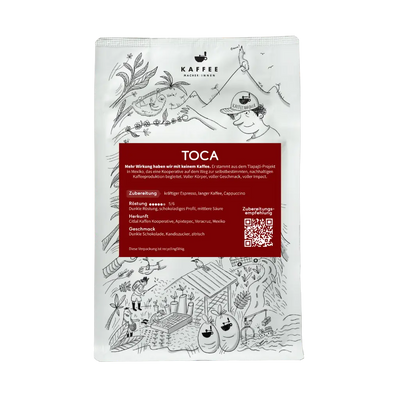
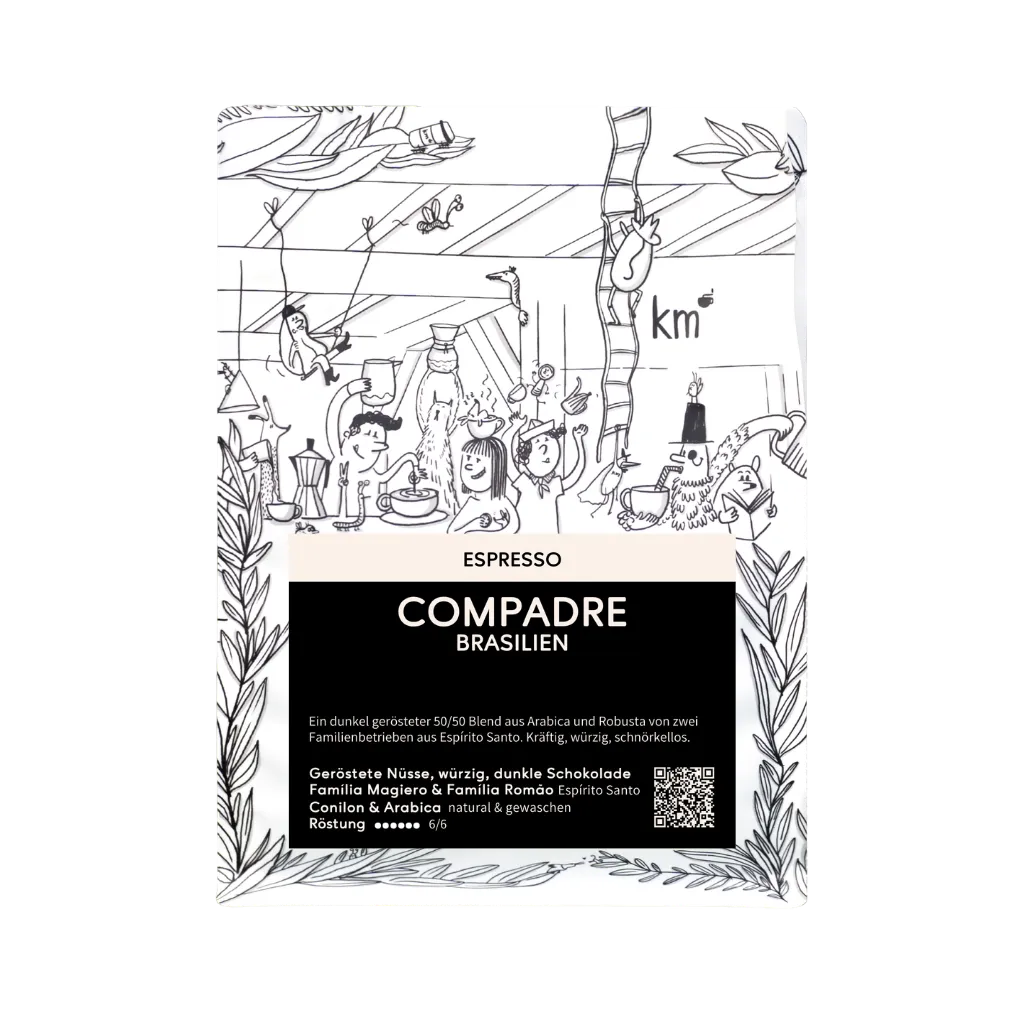
Our daily standard is Amigo. For this, we seek seasonally rotating coffees that are balanced, chocolatey, and mild, and roast them a touch darker than our other filter coffees. So it runs just as well in the French Press as in the V60 or in the classic filter machine. Currently, it comes from the Juntos project in El Salvador.
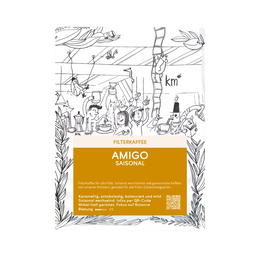
Chocolatey, caramel, balanced. Roasted a bit darker than our other filter coffees and therefore uncomplicated in V60, French Press, and filter machine.
If you want to taste what origin and processing do to coffee, go for our rotating filter coffees. There are around 16 different ones per year, and the differences between washed and natural, or between two growing regions, are right there on the table.
If you don't want to try alone: With the Filter Adventure Subscription, a new filter coffee arrives each month, usually from batches you can't buy from us otherwise. Once a month, we taste it live in a short hour with all subscribers, brew it, discuss it sensorially, and share the recipes.
How fresh should the coffee be?
Perfect filter coffee is not older than two months. You'll know this when a roast date is listed on the package. If you don't see a roast date on the package, that's a reason not to buy that coffee.
Only the roast date lets you determine the coffee's freshness. I like to drink filter coffee starting 3 to 5 days after roasting. The opened bag should be used up within 2 weeks. The reason is the same as with grinding—the reaction with oxygen. Every time you open the coffee bag, fresh oxygen enters, speeding up the aging of the coffee beans.
Coffee can also be brewed immediately after roasting. However, it's then still heavily loaded with CO2, which doesn't contribute positively to the taste and foams so strongly in the filter that the brewing doesn't proceed evenly. That's why a rest period of a few days after roasting makes sense. When preparing espresso, degassing of carbon dioxide for at least 10 days is worthwhile.
Prepare filter coffee step by step
With the following images and video sequences, we walk through brewing filter coffee with the Hario V60 step by step. This guide applies to any standard coffee filter. We use 18 g coffee and 300 g water as an example.

This pre-brew method is called blooming in English. The coffee blooms, so to speak, as some of the coffee's carbon dioxide dissolves and is released. Once the CO2 has escaped, a controlled brew is possible.
Summary and brewing recipe
There is no one right brewing recipe! Nor is there only one right way to delicious coffee. This is very important. Never let anyone tell you otherwise. With coffee: "what matters is in the cup." If your coffee tastes good, you've done everything right.
Have fun trying and brewing. How did it go for you? What tips and experiences have you had? I look forward to your comments and feedback.
If you want to learn more about brewing filter coffee, check out our channel on YouTube.
Further articles and links
This guide is the foundation. If you want to learn a specific method in detail or dig deeper into the variables, read on here.