




Single dosing grinders have been the latest craze in the coffee grinder world for a few years now. The desired amount of ground coffee is weighed out on a scale outside the grinder, placed in the grinder, and with good grinders, dispensed precisely again. In addition to low retention, precise adjustment of the grind setting and consistency from shot to shot are important for a single dosing grinder. The best English description of a single dosing grinder is single dose grinder. Single dosing grinders are used for the preparation of both espresso and filter coffee.
Are you looking for the best single dosing grinder in the price range between 500 and 1000 euros? Then our test and comparison report gives you an overview.
What is a single dosing grinder?
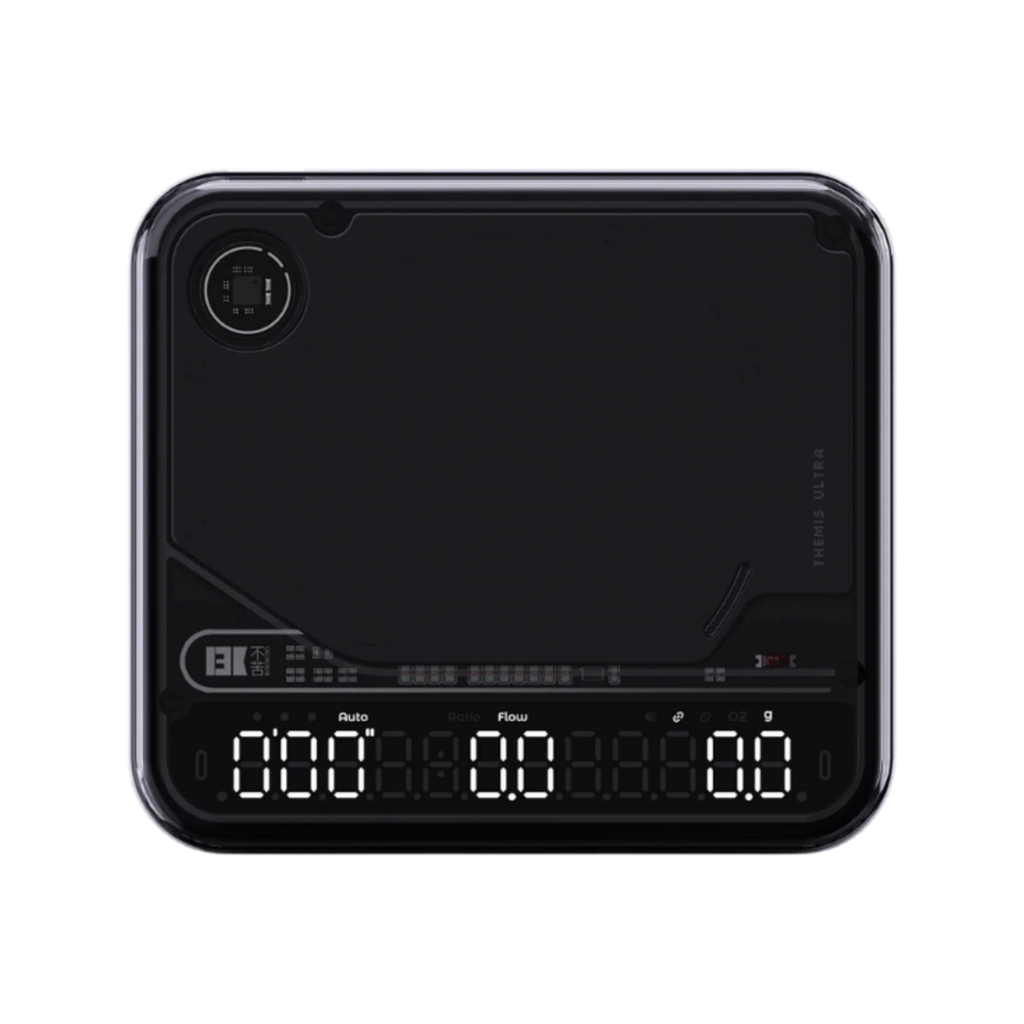
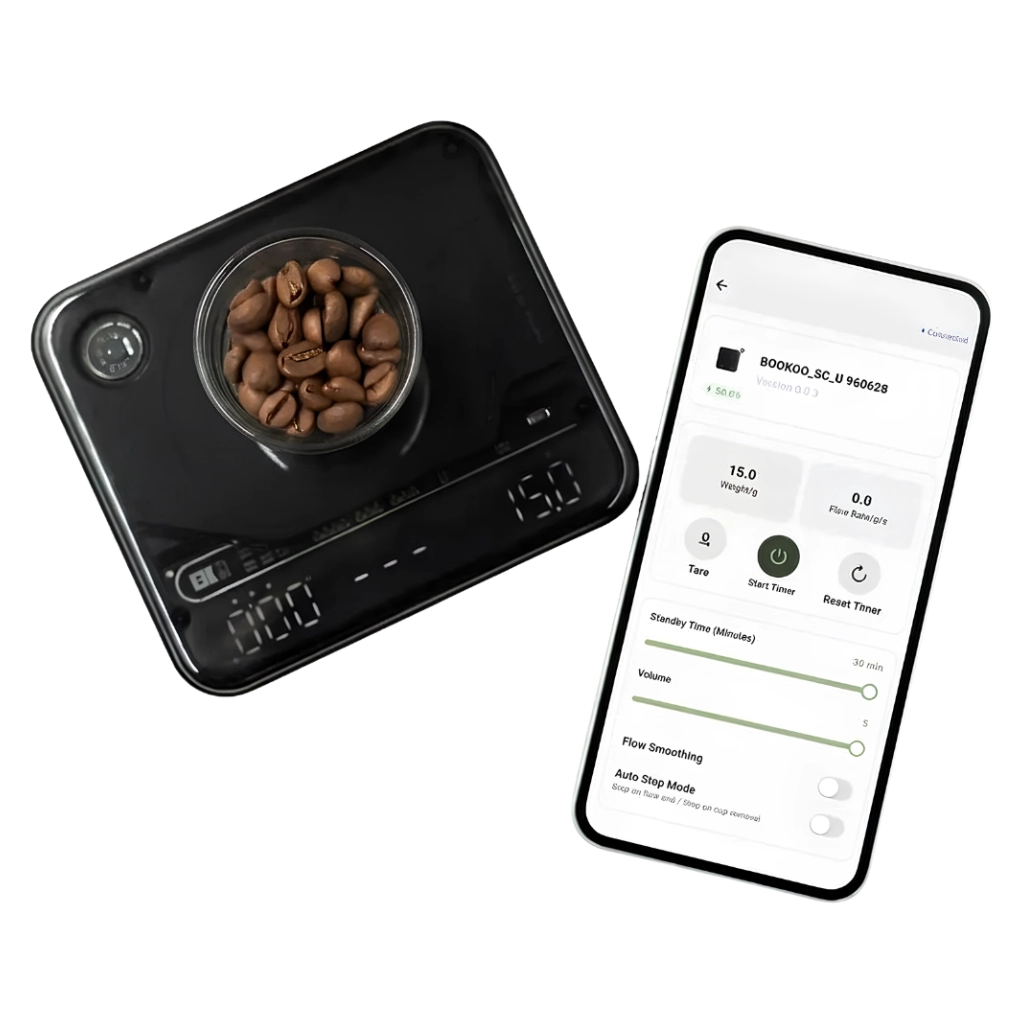
A single dosing grinder has no bean hopper. Instead, it only has a feed chute into which the desired amount of coffee is placed for each grinding. Depending on the coffee and recipe, for example, 19 grams of coffee are placed into the bean inlet. The grinder grinds these 19 grams of coffee at the appropriate preset grind setting and dispenses it directly. Depending on the brewing method and preference, the coffee is ground directly into the portafilter or into a coffee dosing cup. Anyone who wants to treat themselves to a nice gift will find the Subscale by Subminimal a combination of dosing cup and scale.
The alternative to single dosing is grind by weight: grinders with integrated scales dose automatically by weight. The convenience is higher, but retention remains an issue – ground coffee from the last dose remains in the grinder.
Advantages of single dosing grinders
The single dosing grinder has significant advantages over conventional grinders through its operating principle.
- The coffee is always fresh and does not age, exposed to oxygen and light in the bean hopper.
- Adjusting the grind setting uses less coffee and is easier to perform. Coffee does not need to be ground out between the bean hopper slider and grinding burrs each time the grind setting is adjusted.
- It is easy to switch between different coffees. If someone prefers decaffeinated espresso, the corresponding coffee is weighed out, the grind setting is adjusted to the noted recipe, and the coffee is ground. The single dosing grinder is the perfect grinder for getting to know different coffees.
- Cleaning the single dosing grinder is faster and easier as part of the daily routine, as beans and bean hopper do not need to be removed first.
- The single dosing grinder promotes precise work with the scale, brewing recipes, and brewing ratios.
Disadvantages of the single dosing grinder
Single dosing grinders have one decisive disadvantage. They are less suitable if you need to pull larger quantities of espresso or filter coffee in a short time. In a high-volume gastronomic context, these grinders have their limits.
Although some top specialty coffee shops do use single dosing grinders as standard for the preparation of espresso and filter coffee. They do this out of conviction and quality consciousness. In doing so, they accept the performance loss in favor of quality.
What characterizes a good single dosing grinder?
All advantages of a single dosing grinder only come to bear if the grinder performs well in the important core categories. The three most important are:
- No retention, or at least very little retention.
- Precise and easily repeatable grind setting adjustment. The particle distribution should correspond to the last distribution when reset to a specific grind setting.
- A good particle distribution with a narrow main peak that matches the desired grind setting. The extent of fines should be proportional to this.
Other criteria such as noise, speed, or temperature development of the grinding burrs are important, but play no special role for the single dosing operating principle.
It is different, for example, with grind adjustment. If the grinder does not hit exactly the previous grind setting again after adjusting forward and back, the principle does not work. It is then not easy to switch between coffees, which can be one of the main strengths of single dosing.
Comparison of single dosing grinders in the price range of 500 - 1000 euros
In the premium segment between 500 and 1000 euros, virtually every grinder provides an excellent foundation for excellent espresso. The basic principle of single dosing – always fresh coffee, easy switching of bean variety – is well mastered by all models. In our large comparison, we found that the differences are no longer in basic quality, but in specialization and in everyday workflow.
Whoever chooses a new grinder in this price class primarily decides on one of three things:
1. Retention management: Zero retention is possible
Retention (retention), the residual coffee remaining in the grinder, is the most important technical criterion for any single dose grinder. We distinguish here between temporary retention (which exchanges from grinding to grinding) and permanent retention (old coffee stuck in corners).
- The champions of zero retention: Grinders like the Timemore Sculptor 78S and 64S set new standards. Thanks to vertical grinding burrs and direct grinding paths, they achieve a temporary retention of only 0.1 grams – nearly perfect. The Niche Zero also shines with an excellent value of only 0.2 grams.
- The weak point: A critical look should be cast on permanent retention. Here the Varia VS6 stands out, accumulating up to 2.0 grams of old coffee due to its grinding chamber design [Figure 1]. This requires very regular and thorough cleaning, which you don't need with other grinders.
2. Flavor profile: Clarity vs. body
The particle distribution in this class clearly separates the grinders into two camps, which directly shapes the taste in the cup. Choosing a grinder is thus a decision for a specific sensory profile.
- The clarity extremists: The Timemore Sculptor models (78S and 64S) deliver the narrowest main peaks in our entire test field (up to 145 µm).[1] The result is espressos with maximum clarity, complexity, and precise resolution of sweetness and acidity. They are ideal for light roasts, but often require advanced puck preparation (WDT) as the puck is more fragile.
- The body extremist: The Niche Zero (the only one with conical burrs) stands in direct contrast. It emphasizes sweetness, body, and balance. With its broader peak and low fines content (19.8%), it is forgiving and delivers the classic, chocolatey-nutty espresso.
- The punch deliverers: Grinders like the DF83 V and the Profitec Twist SD54 achieve a denser body and more "punch" in the cup through a higher fines content (over 34%), but this requires very clean puck preparation to avoid channeling and astringency.
The ability to adjust variable speed (RPM) on models like the DF64V, DF83 V, and Timemore grinders serves as an important lever to temporarily shift these profiles and generate even more clarity or body.
3. Workflow and haptics: Everyday practicality
Even at the top level, avoidable design flaws can massively disrupt the daily workflow.
- The grind setting disaster: The biggest weakness of the Varia VS6 is that the grind adjustment dial can shift with just a light tap or by using the blower. For a single dosing grinder, where precise grind reproducibility is essential, this is a "total disaster".
- The dosing cup as a killer: The included dosing cup of the Timemore Sculptor grinders is a "workflow killer". Its thick rim leaves a ring-shaped irregularity in the coffee puck when inverted, promoting channeling and forcing the barista to replace the cup or take an awkward transfer step.
- Pleasant consistency: In contrast, the Niche Zero and the Niche Duo score with a very pleasant grind adjustment feel and excellent replicate ability that makes "dial-in" uncomplicated.
In summary, today's home barista in the 500 to 1000 euro segment is paying not only for grinding quality, but above all for a smooth, well-thought-out workflow. Poor haptics (VS6) or bad accessories (Timemore) can overshadow the best mechanics in everyday use. It's worth choosing the grinder whose compromises best fit your own usage profile. More details in our detailed article.
Single dosing grinders we tested
- DF64V - Single dosing grinder with speed adjustment
- Acaia Orbit single dosing grinder in test
- G-Iota DF83 V2 espresso grinder - single dosing test
- Varia VS3 espresso grinder in test
- Niche DUO espresso grinder in test
- Eureka Mignon single dose in test
- Espresso grinder Timemore Sculptor 78s and 64s in test
- Varia VS6 single dosing grinder in test
- Ceado Life in test - all-purpose grinder with potential (and problems)
- EMIL EM1 single dose in test
- Weber Key MK2 in test
- Option-O Lagom P64 in test
- Mazzer Philos espresso grinder in test