





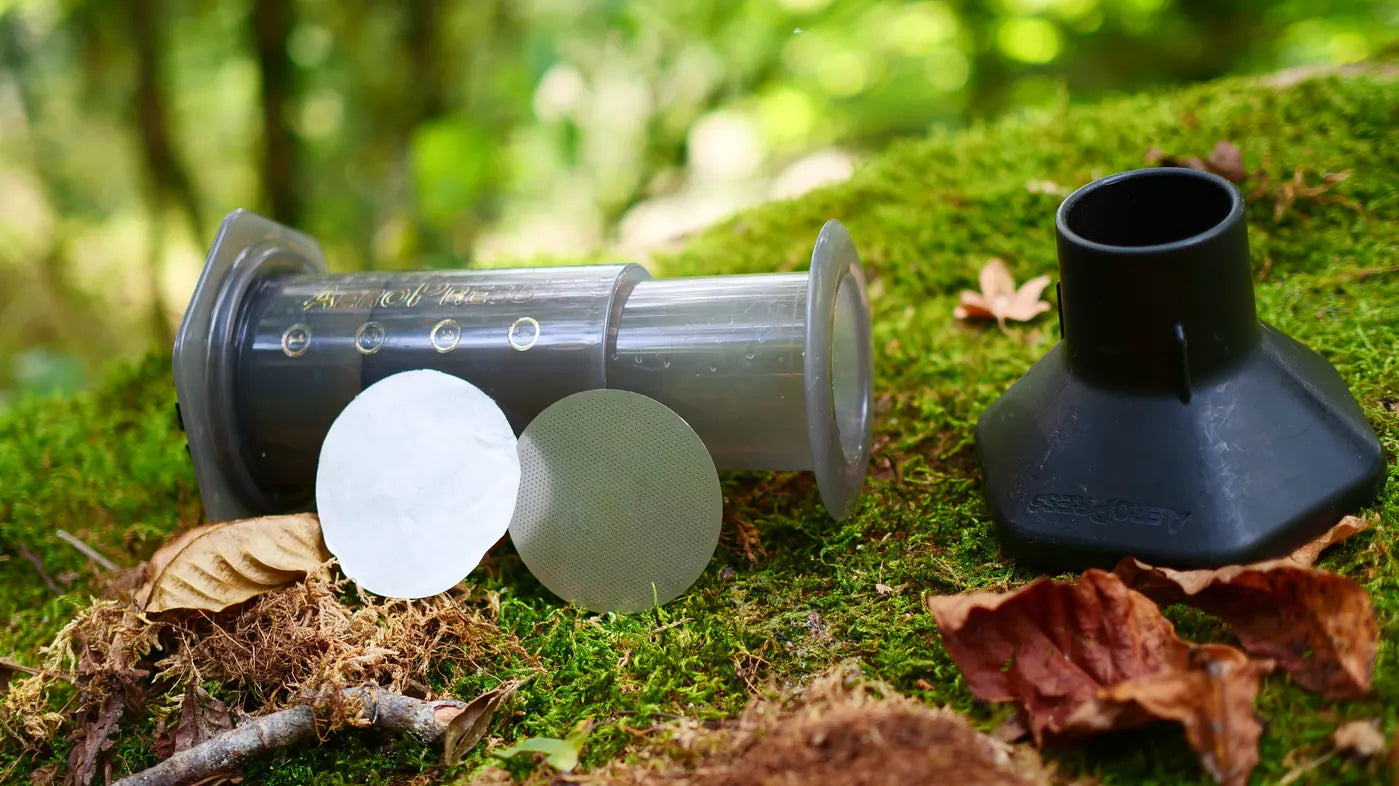

The AeroPress is a multifunctional coffee brewer that lets you make coffee in almost any situation. Whether on a kayak, on long bikepacking tours, on an airplane, or on a train – I've made coffee with the AeroPress just about everywhere. It's compact, robust, inexpensive, and yet capable of producing some of the best filter coffee you've ever tasted. Or some of the worst, if you don't know the basics.
The AeroPress sits in the cabinet of every coffee enthusiast. One of them is my brother Felix Hohlmann, German Barista Champion 2024 and 2026, and Swiss AeroPress Champion 2016.
Over the years, we've developed numerous recipes together and were among the first to use the AeroPress bypass method – which today is the gold standard at all AeroPress championships. Together with Felix, we've compiled everything you need to know about the AeroPress to brew really good coffee with the most versatile of all methods.
What is the AeroPress and why is it so popular?
The AeroPress was invented in 2005 by Alan Adler, the man behind the Aerobie frisbee. He apparently had a good material at hand that was also suitable for a filter coffee method.
Adler probably didn't really know what he had invented. In any case, the first recipes that came with the AeroPress as recommendations were far from the device's potential.
The device combines pressure extraction with the classic immersion method: coffee grounds are soaked in hot water and then pressed through a filter. The result, depending on the brewing ratio, is a concentrated, rounded coffee without sediment, provided you use a paper filter.
What sets the AeroPress apart from the French Press or filter coffee: It's incredibly variable. This became especially clear when enterprising coffee enthusiasts began developing recipes and new brewing approaches. More concentrated methods, cold brew recipes, bypass methods with different parameters were tested. Grind size, temperature, brewing time, and ratio can all be adjusted freely. That's exactly its strength and at the same time its challenge.
The experimental community even founded an official AeroPress World Championship, where hundreds of recipes are submitted each year. Also part of the history: we brought the first AeroPress championship to Switzerland in 2014.
What do I need for the AeroPress?
The equipment list is short:
- The AeroPress (Original or AeroPress Go for on-the-go)
- Paper or metal filters (we generally recommend paper filters because they produce clearer and better-tasting coffee)
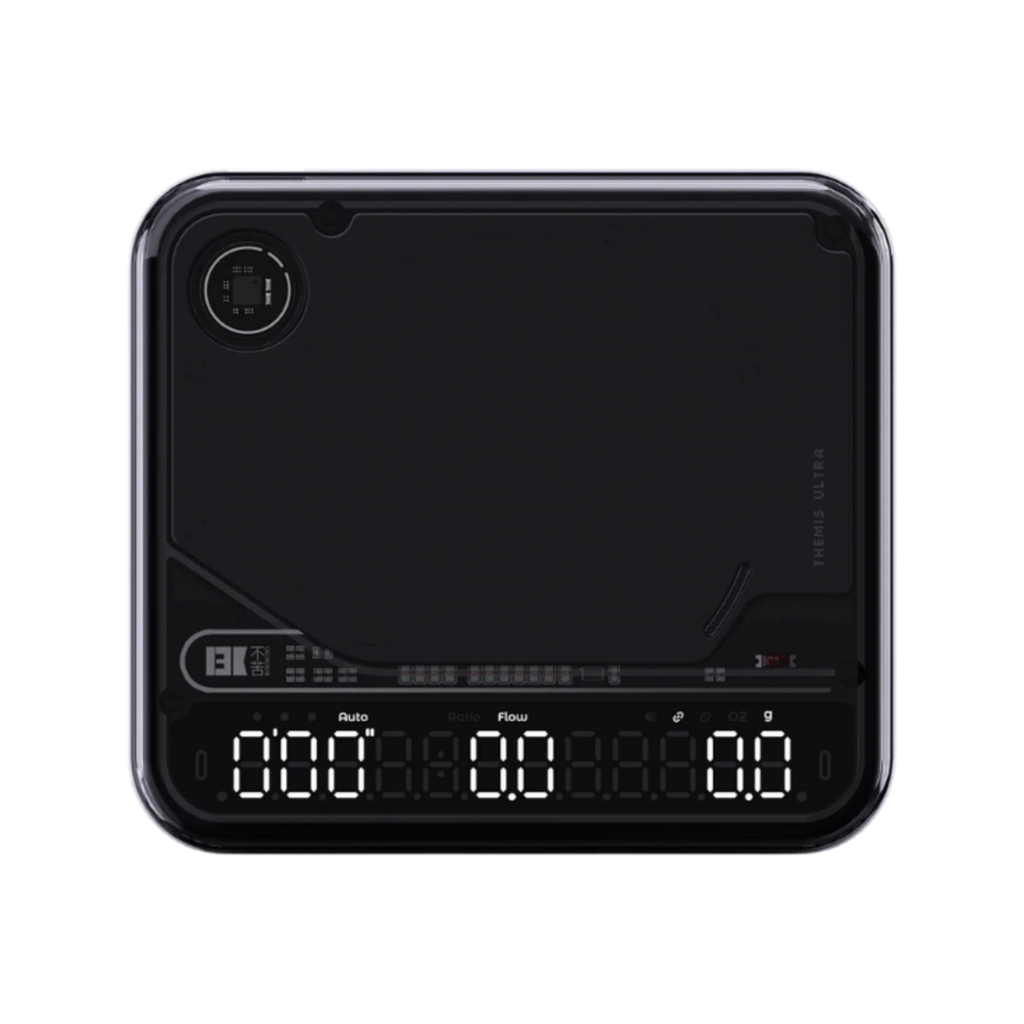
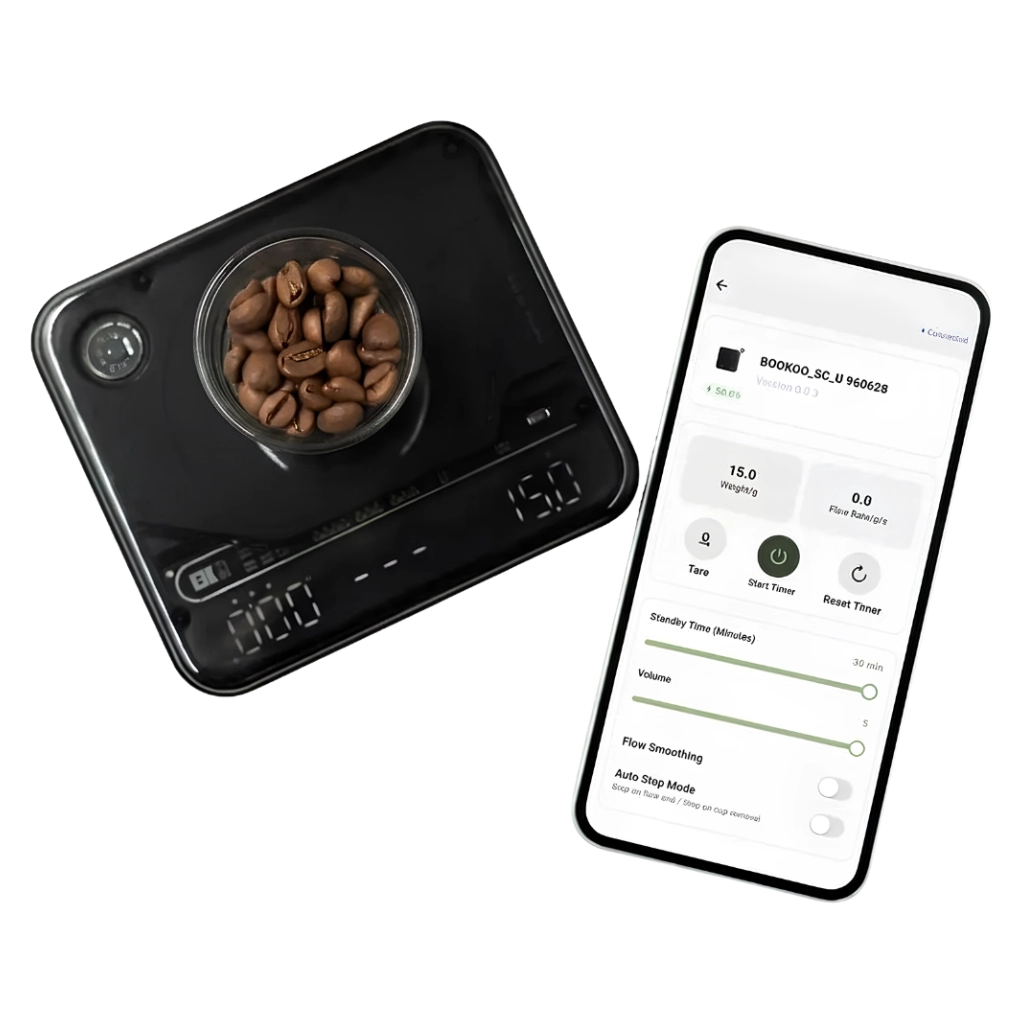
- A scale that measures precisely to 0.1 g
- A kettle with temperature control
- Freshly ground coffee or a good grinder
If you don't have a grinder yet, it's worth checking out our hand grinders. Single-dosing grinders are also a good choice.

The AeroPress Standard Recipe Step by Step (Regular)
This recipe works reliably with light to medium roasts and gives you a solid starting point for all further experiments. Felix recommends filter coffee roasts and a medium grind: "More turbulence when stirring can increase extraction, even if the grind size is a bit too coarse."

The Inverted Method: More Control, More Body
The inverted method is common in competition, and for good reason. You place the AeroPress upside down on the plunger, fill it, and flip it onto the cup only just before pressing. This prevents coffee from running through uncontrollably during the steeping time and gives you more leeway with the extraction time. Felix says: "The inverted method gives me more control. I can decide when to use immersion technique – and when to push the coffee through the filter with pressure."

The Bypass Method: Felix' Championship Recipe
The bypass method is the favorite technique among world champions. The idea: You first brew a strong concentrate with little water, then dilute it in a second step with hot water. It works so well because you can work much more precisely during the extraction itself – and the dilution afterward lets you fine-tune temperature and strength.
Felix developed this recipe in 2016 for the Swiss AeroPress Championship and has used it in several competitions since, including the Open Service at the Swiss Championship in the Brewers Cup.
"With this recipe, you bring the coffee to 90% of its potential. If someone has a V60 recipe and nails it perfectly, they can get more out. But in the short amount of time, this is really a weapon."
What the World Championship Shows: Bypass is Standard
Looking at the winning recipes of the World AeroPress Championship, a pattern emerges: Inverted + bypass has dominated for years. And the doses are significantly higher than what home brewers know. 18 g of coffee is world champion standard, not 12 or 13 g.
Since 2019, practically every finalist has used the inverted method with subsequent bypass. The winning recipes from 2023, 2024, and 2025: all inverted, 18 g, bypass. The full recipes are documented on worldaeropresschampionship.com/pages/recipes.
Carlo Graf Bülow developed this recipe specifically for the AeroPress XL. It scales the bypass method to a full 500 ml. The AeroPress XL is interesting because it eliminates one of the main weaknesses of the small AeroPress: not enough coffee for multiple people. With the AeroPress XL, we make the whole family or friends on long bike tours happy with coffee too.
What Grind Size for the AeroPress?
Grind size is the parameter most beginners get wrong first. Too coarse and the coffee tastes watery and sour. Too fine and the puck clogs, pressing becomes a strength exercise, and the coffee becomes bitter.
As a starting point for most recipes: medium-fine grind, roughly comparable to household sugar. Finer than French Press, coarser than espresso. For the bypass method, Felix recommends a significantly coarser grind, comparable to cupping – and relies on temperature and turbulence to control extraction. Freshly ground is always a must: pre-ground coffee sold ages quickly; after a few days you notice the difference. A good hand grinder pairs perfectly with the AeroPress.
| Grind Size | Comparison | Result in Cup | When to Use? |
|---|---|---|---|
| Very fine | Flour | Bitter, over-extracted, hard to press | Don't. |
| Fine | Fine sand | Intense, round, slightly bitter if too long | Short brewing times under 1 minute |
| Medium-fine | Household sugar | Balanced, sweet, clean finish | Standard recipe, inverted: the sweet spot |
| Medium | Coarse salt | Light body, acid-forward | Light roasts, longer steeping times |
| Coarse (Cupping) | Fine sea salt | Concentrated, soft, suitable for bypass | Bypass method, cold brew |
Water Temperature: Hotter for Light Roasts, Cooler for Dark
90 °C is a good starting point, but not optimal for every roast. The basic rule: Light roasted coffee needs higher temperatures to extract the harder-to-dissolve notes and the full potential of a coffee. Dark roasted coffee extracts faster and becomes bitter easily with high temperatures. With lighter roasts, we go above 95 °C; with darker roasts we stay in the 90–93 °C range. Felix puts it this way: "Your tongue is the best refractometer. If the coffee tastes good, then it tastes good."
| Roast Level | Recommended Temperature | Characteristics |
|---|---|---|
| Light (Light Roast) | 94–97 °C | Fruity, complex, high extraction necessary and worthwhile |
| Medium (Medium Roast) | 88–93 °C | Balanced, caramelized notes |
| Dark (Dark Roast) | 82–88 °C | Strong, chocolatey (slightly bitter at too high a temperature) |
Most recipes work with 90–93 °C as a compromise. With the bypass method, the target temperature can still be corrected by adjusting the temperature of the bypass water. By the way, the AeroPress is also excellent for cold brew – stirring to create turbulence enhances extraction.
AeroPress vs. French Press: when which?
The two devices are often compared, but work fundamentally differently. The French Press is pure immersion extraction without a pressure component, with a metal screen instead of paper. This results in more body, more oils in the cup, but also more sediment.
| AeroPress | French Press | |
|---|---|---|
| Filter Technique | Paper or metal | Metal (screen) |
| Sediment | None (with paper filter) | Always present |
| Body | Light to medium | Full, oily |
| Coffee Oils | Largely filtered out | Completely in the cup |
| Brewing Time | 1–3 minutes | 4–5 minutes |
| Volume | 1–3 cups | 2–8 cups |
| Variability | Very high | Low |
| Travel | Ideal (AeroPress Go) | Risk of breakage with glass; other variants now exist |
In short: If you want clarity, complexity, and control, go with the AeroPress. If you want a robust, "honest" coffee for multiple people, the French Press is your best bet. Both have their merits. It's not an either-or decision.

Common Mistakes and How to Avoid Them
The coffee tastes sour and watery. Classic under-extraction problem. Either the grind is too coarse, the temperature too low, or the brewing time too short. First make the grind finer, then increase the temperature.
The coffee tastes bitter. Over-extraction. Make the grind coarser, lower the temperature, or shorten the brewing time. Pressing too long or too hard can also extract bitter compounds from the puck.
Pressing is difficult. The grind is too fine. Adjust to a coarser grind.
The AeroPress runs through before you press. This happens with the classic method when the grind is too coarse. Either make the grind finer, or switch to the inverted method, which prevents this problem by design.
The coffee cools down too quickly. The AeroPress chamber is plastic; rinsing with hot water helps. But the cup directly underneath is key. Pre-warmed cups make a measurable difference here.
Conclusion: Small, Versatile, Forgiving
The AeroPress is cheaper than most grinders, fits in any travel bag, and with the right recipe produces some of the best filter coffee you can brew at home. It tastes almost always solid – and with our tips, you'll get really good results from any coffee.
Our tip for getting started: Keep the standard recipe constant for a while, then change only one parameter at a time. Anyone who practices regularly with the AeroPress like Felix Hohlmann will quickly notice that the learning curve is steep, but the results justify it.
You'll find the next steps in our shop: We have the AeroPress and the AeroPress XL as well as a selection of coffee varieties that are particularly well suited for the AeroPress. From fruity natural process coffee to washed Ethiopian. Our coffees are seasonal. A very good entry point is our filter coffee blend "Amigo" – developed so it's easy to brew and tastes soft, full, and balanced in the cup.