



Is this synonymous with bad coffee?
Do you know that feeling? You go to a restaurant or a café and want to enjoy a delicious espresso after your lunch. Or you want a milk coffee or a cappuccino, only to be bitterly disappointed. The coffee tastes rancid, bitter, almost undrinkable, and you regret not waiting until you got home to brew your own espresso.
Many say this is mainly because restaurants are using fully automatic coffee machines. And they simply cannot match the perfection of a portafilter machine. But is that true? Does a fully automatic coffee machine have to produce bad coffee? In response to the 16 warning signs of bad coffee in cafés and restaurants, many wrote to us about a 17th warning sign: the fully automatic coffee machine. But we are convinced that the fully automatic coffee machine has its place in the catering industry and that many are not fully realizing its potential.
Misunderstandings regarding fully automatic coffee machines
We believe that the fully automatic coffee machine is misunderstood, not only by cafés but also by roasters and even by the manufacturers of the machines themselves. It starts with the fact that fully automatic coffee machines do not actually function fully automatically!
Sure, the automatic machine handles grinding, distributing, tamping, locking in, and brewing at the push of a button. But there are many aspects that do not function automatically.
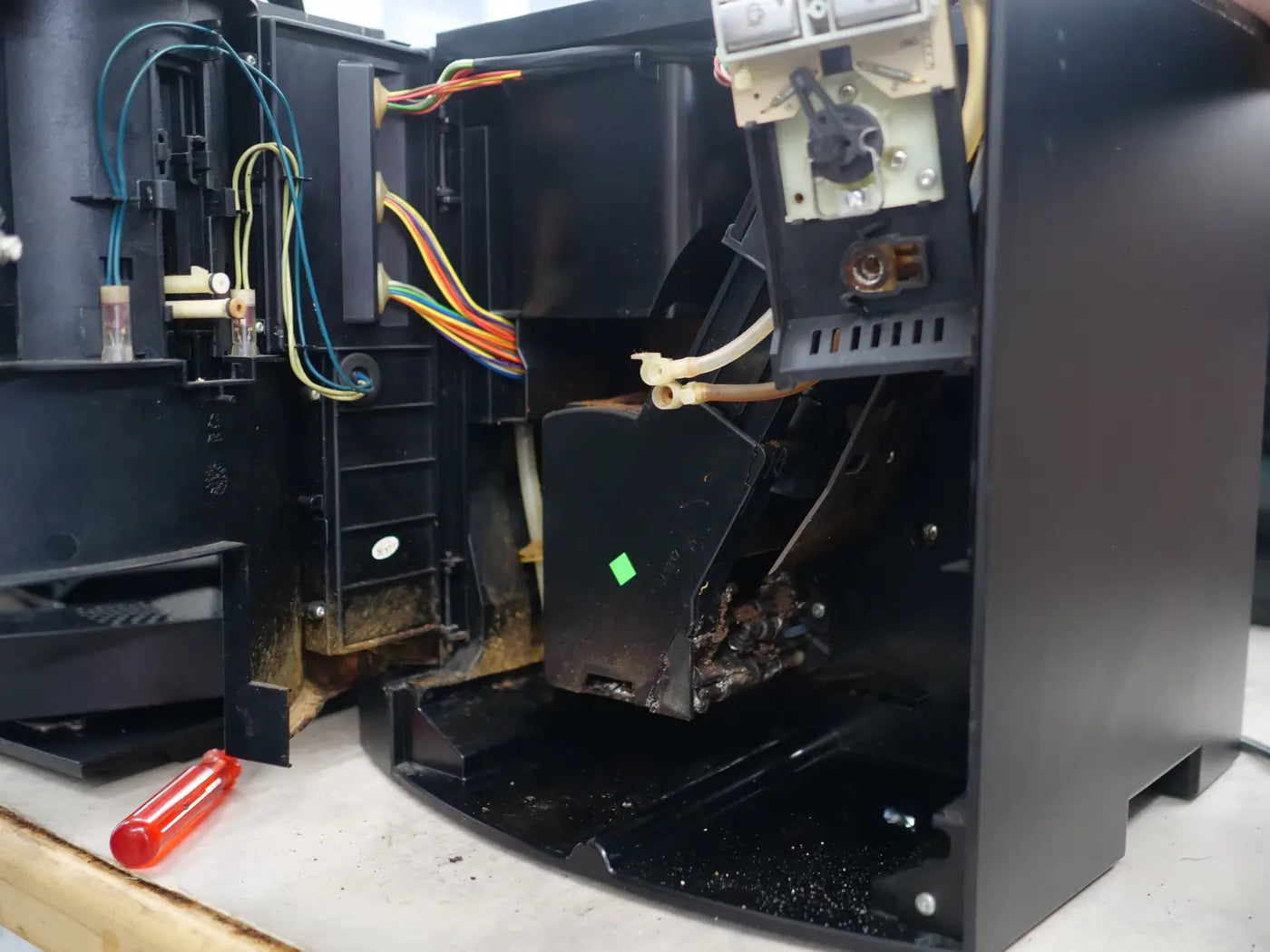
Usually, coffee machines are named according to the brewing method. For example, in a portafilter machine, the coffee runs through a portafilter that must be filled with coffee. Consequently, the fully automatic machine is a so-called piston coffee machine. A piston filled with ground coffee is moved into a brew group to be compressed there and brewed with hot water.
But the dangerous thing about this incorrect naming of the coffee machine is primarily that the name “fully automatic” suggests that no one needs to worry about anything. Buy a machine, pour in some beans, press a button, and you can offer coffee drinks on your menu. But it’s not that simple! Buying a machine is not the end of the work for the restaurateur, but actually just the beginning.
What needs to be done with a fully automatic coffee machine?
A fully automatic coffee machine must be calibrated. The exact drink ratio of coffee to the final beverage in the cup must be defined. This drink ratio must be based on a selection of beans. Which beans work well with the machine? Which ones make the drinks taste good with which brewing recipe? And last but not least, in addition to regular and thorough cleaning, a daily quality check of every coffee beverage must be carried out.
The settings should ideally be adjusted together with a trained service technician. However, service technicians usually work more on the technical side of the machine and are rarely extensively trained in the sensory aspects of coffee.
Another level the restaurateur must tackle: sitting down at a table with roasters and roasting companies to choose beans for their fully automatic coffee machine. Good roasters can support them in the selection process, as they know their coffees well and also know which ones are suitable for brewing in a piston machine.
A small appeal to the roasters here, too. There are catering businesses that have chosen a fully automatic coffee machine for good reason. And we roasters should support these businesses! Many roasters have treated the roasting of beans for automatic machines as an afterthought or have ignored it entirely. That is why the selection of coffees for fully automatic machines is very limited. This is a pity and it is worth changing!

Criticism of the manufacturers of fully automatic coffee machines
A fully automatic coffee machine suitable for the catering industry costs several thousand euros. But if you look at the budgets of the manufacturers—some large manufacturers are even based in Switzerland—we have our doubts. Marketing expenditures far exceed the costs for the further development of the machines.
Our experience with fully automatic coffee machines reflects this policy of some manufacturers. There are many innovations in terms of the exterior. Touch displays, color LEDs, and so on, to make the machines look nicer and more futuristic. But it seems as if many companies are not too interested in really dealing with the food-chemical aspects of the brewing processes. In comparison, the home barista sector has catapulted itself to a completely different quality level in the same period.
Even if it is often sobering to see, for example, gross errors in manufacturers' brochures, there are exceptions. Companies that are truly interested in the further development of fully automatic coffee machines. And these exceptions make us confident that something can change and that we are on the way to better coffee in the catering industry.
The ideal world of the fully automatic coffee machine from our perspective
For us, an ideal world would look like this: After purchasing a fully automatic coffee machine, an interested restaurateur sits down at a table with a service technician trained in sensory analysis and a local roaster to consider together how their coffee should taste. How strong should the espresso taste through the milk, how strong should the acidity or bitterness be? Together, this trio works out quality protocols for EVERY drink. That can easily take two days. Subsequently, the team is trained and introduced to the respective drinks. Every day, the quality of each product (flow time, temperature, taste, consistency) is checked based on a test protocol, ideally by a very well-trained person or the restaurateur themselves.
In such a business, a cappuccino and even an espresso from a fully automatic machine can certainly compete with an espresso from a portafilter. And so, in our view, the fully automatic coffee machine really does have its right to exist, since the staff needs much less training than on a portafilter machine. And remember, an espresso poorly pulled on a really beautiful portafilter machine still tastes terrible. In that case, an espresso from a well-adjusted and constantly monitored automatic machine is better.
Conclusion: The fully automatic coffee machine in the catering industry
If we automatically equate a fully automatic coffee machine with bad coffee, we are making it much too easy for ourselves. You can make a drinkable and even a good coffee with almost any coffee machine if you pay attention to a few parameters. It often depends above all on whether the lead restaurateur is interested in the coffee actually tasting good and in ensuring that the quality is kept constant.
An idea for your next coffee from an automatic machine: Instead of avoiding the coffee when you see the machine and fleeing the restaurant, you should perhaps speak to the staff in a friendly manner. Ask where the beans come from, whether they work with local roasters, and so on. Good restaurateurs recognize what their customers value, and we should show them what we value: Good coffee!
We have decided that we will visit a business and test the coffee drinks using our old test protocol to work out a path to good coffee with you. If you are a restaurateur, you can apply HERE. We would love to turn our visit into an exemplary video that can help other businesses. We look forward to it!