



The Sage Barista Touch is a combined machine. It combines a grinder and an espresso machine. This is practical and has some advantages, such as taking up little space. On the other hand, it's difficult to upgrade.
We tested the grinder and the machine thoroughly and reveal in the following test report how the Barista Touch performed.
Semi-automatic with a fully automatic touch
This machine tries to bridge the gap between a classic portafilter machine and a fully automatic machine. Almost all settings are controlled via the display, except for the grind size. This is adjusted using a dial.
In the menu, you can then select many different coffee drinks, such as Flat White, Cappuccino, or Americano. However, upon closer inspection, you'll quickly notice that most drinks are made with the same settings. This is simply because espresso is used as the base for most milk drinks.
The amount of coffee that is ground on the Barista Touch can only be adjusted in full second increments. That's really unfortunate. The Smart Grinder Pro grinder from the same manufacturer can adjust this to a tenth of a second precisely, and the Barista Pro, also a combined machine, can adjust to half a second. However, one second, like here with the Barista Touch, makes a world of difference. If you want 18 grams of coffee, with one second too little you might only reach 17.5 grams, but with one second more you'll get 18.5 grams. That's annoying.
During the brewing process, the Sage Barista Touch supports the user with tips on the display. However, some of these tips are simply wrong. The ideal extraction time for an espresso is stated at about 10-12 seconds, although a time of around 25 seconds should actually be aimed for. With the suggested 10 seconds, the espresso tastes as sour as hot lemon.
The machine suggests 10 to 12 seconds of extraction time. Instead, aim for around 25 seconds – only then is the espresso no longer under-extracted and sour. How to get there is explained in our article on extraction time for espresso and on the correct grind size.

A touch display and little else
Some settings on the Barista Touch are very helpful. For example, you can adjust the milk temperature and the milk foam level. The milk frothing performance is actually very good. However, the display, which is actually the core of this machine, is not really required for the machine's function. In addition, it responds rather poorly compared to a smartphone display.
Unfortunately, the Barista Touch seems a bit like a combination of the Sage Barista Pro and the Oracle Touch. But it doesn't really come across as convincing.
Temperature extremes – how far over 100 does it go?
The Barista Touch works with a thin-film heater, which Sage markets under the name ThermoJet. So there's no thermoblock inside. This is supposed to be an further development of the flow-through heater. The advantage is that the machine is hot after just 3 seconds. The heat transfer is gigantic and the machine's power consumption is extremely low.
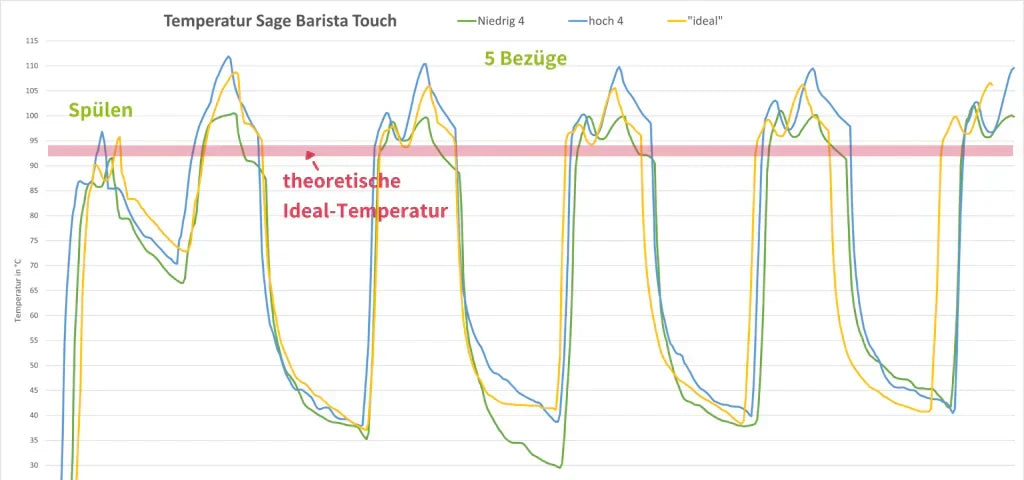
The heat is transferred to the brewing water via a heating plate. This is faster than with a thermoblock, whose intermediate aluminum block works sluggishly during heating. It would even be conceivable to run different temperature profiles with the thin-film heater. However, the Barista Touch unfortunately doesn't have a precise temperature control unit. Although there are a total of 8 adjustable temperature levels, even the lowest level reaches 98 degrees Celsius and is thus far too hot. We aimed for a temperature of 93 degrees, but we couldn't achieve it with any setting.
But what does the overly hot temperature do to the espresso? An espresso brewed too hot tastes very bitter, dry, and harsh. That's just not fun. So you really can't brew a tasty espresso with the Barista Touch.
Milk foam of dual-boiler class
Another chapter is the milk frothing performance. You can froth milk automatically or manually. The steam wand is ready to froth immediately after pulling the espresso, much like a dual-boiler machine. Simultaneous frothing while pulling a shot is not possible. With the automatic function, the temperature of the pitcher is measured via a sensor near the drip tray. The milk temperature can be adjusted and runs very precisely. The automatic function works well, and you can also produce excellent milk foam manually. However, we recommend switching to the manual method to really create fine-pored latte art foam.
Included accessories, size, and expansion
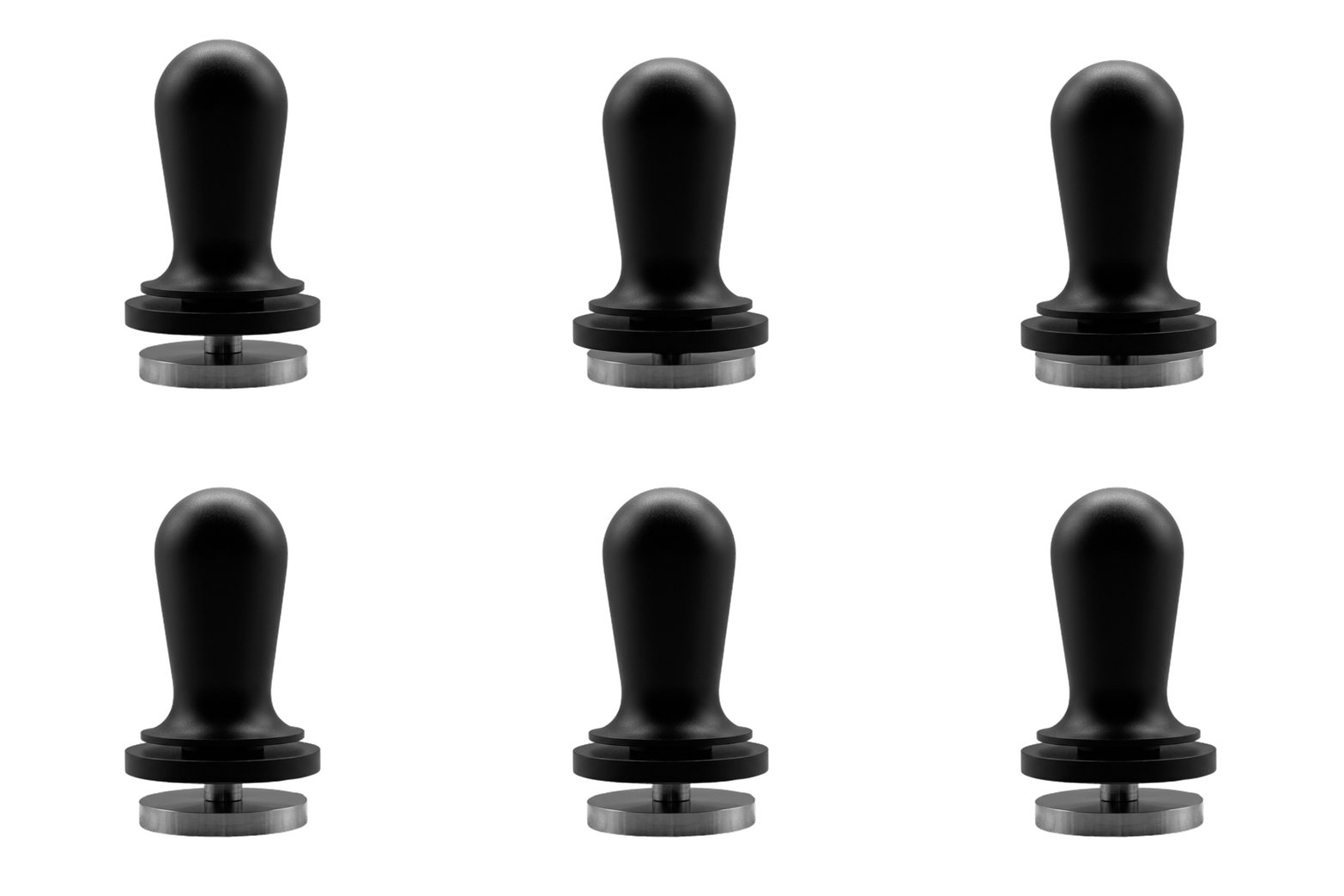
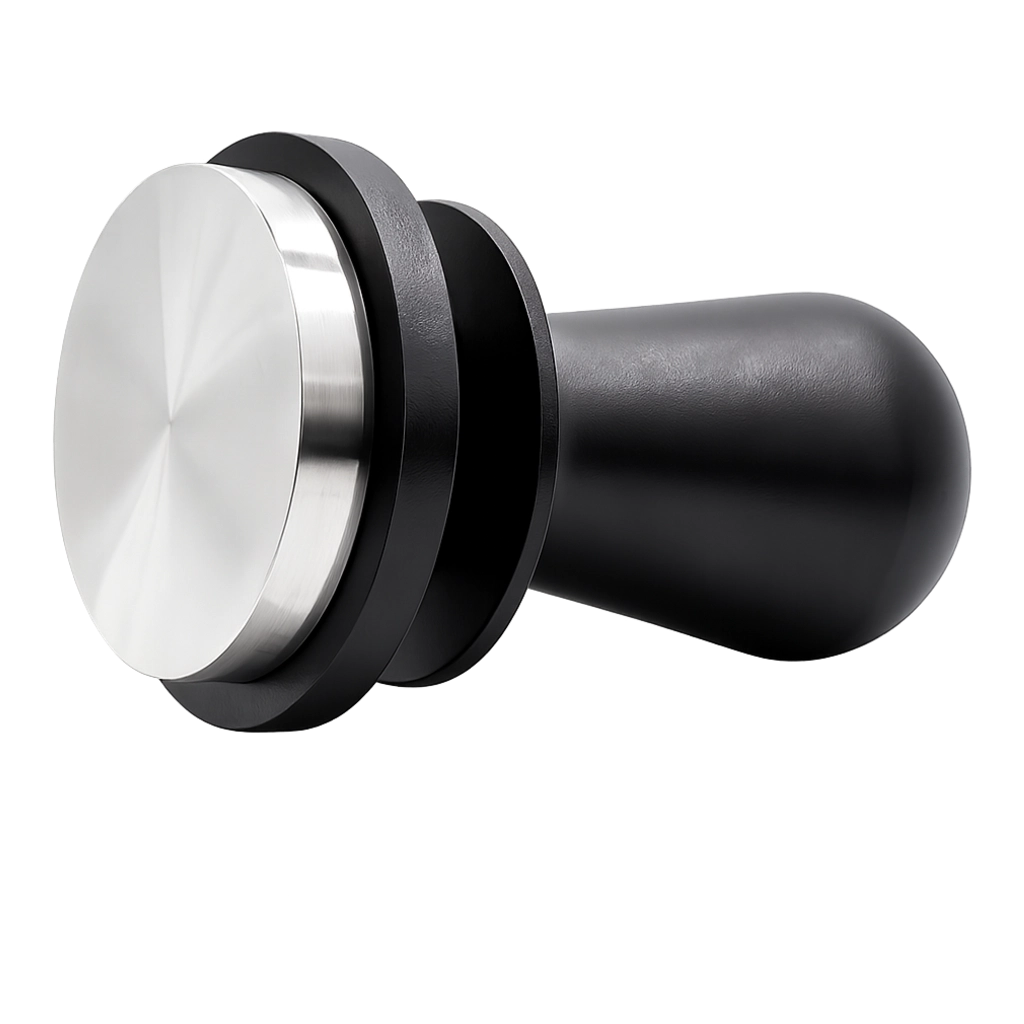
The package includes two single-wall baskets and one double-wall basket. Also a milk pitcher and a tamper. The included Sage Razor is supposed to allow you to remove coffee grounds from the portafilter if too much has been ground. With a properly adjusted grinder, this shouldn't be the case.
The Sage Barista Touch is 34 cm wide, 41 cm deep, and 40.6 cm high. The two-liter water tank is easy to remove and the machine's build quality looks premium thanks to its brushed stainless steel.
| Feature | Sage Barista Touch |
|---|---|
| Machine type | Combined machine with integrated grinder |
| Heating system | Thin-film heater (ThermoJet), ready to operate after 3 seconds |
| Temperature settings | 8 levels, lowest at 98 °C |
| Water dosing | Time control, no volume control |
| Grind dosing | Only in full second increments |
| Milk foam | Automatic and manual, temperature adjustable |
| Dimensions (W × D × H) | 34 × 41 × 40.6 cm |
| Water tank | 2 liters, removable |
| Included accessories | 2 single-wall baskets, 1 double-wall basket, milk pitcher, tamper, Sage Razor |
"Volume control" for espresso
Although the Sage website states that the Touch has volume control, we cannot confirm this. The water amount is not dosed via volume control, but via time control.
Volume control always delivers the same amount of water through the coffee puck. For example, if you set 45 grams of water, this amount will always be delivered. The resistance of the coffee is completely irrelevant. The flow-through time increases or decreases depending on how fine the coffee grounds are, but you always end up with 45 grams of water.
With the Barista Touch, you can set the brewing time. If the coffee grounds are too fine, you might only get a few milliliters in your cup; with a grind that's too coarse, the cup will almost overflow.
For beginners, volume control makes much more sense. The brewing recipe (e.g., 1 part coffee to 2.5 parts water) doesn't change. You only adjust the flow rate through the grind size. With time control, on the other hand, you have to fiddle with your brewing ratio every time you adjust the water amount. This is more complicated and makes using a scale absolutely necessary. This is not beginner-friendly.
Conclusion on the Sage Barista Touch
As a pure milk frother, the Barista Touch would really be excellent. It froths reliably and well, and brings joy to any barista.
But unfortunately, the espresso shots don't taste good. The brewing temperature is inconsistent and far too hot.
That's why you should seriously consider whether the premium price for the Barista Touch makes sense. Other Sage models, such as the Bambino Plus or the Barista Pro, are almost equivalent to the Barista Touch. Whether you're willing to pay the premium for the Barista Touch just for the automatic milk frothing function is your decision.
For 1,000 €, however, there are also alternatives from other manufacturers that you should look at, such as the Quick Mill Orione 3000 or the Gaggia New Classic. Some dual-boiler machines are also available at this price point.