











We have been active in the Sierra de Zongolica in Mexico with the Toca project since 2022. Over the past year, the cooperative has taken a huge step forward. The producers built a micro-beneficio, are processing coffee cherries centrally, and are continuously improving coffee quality. Through co-investment, we evolved from buyers into partners—the potential is enormous, and sustainable change is possible.
The Toca project has made tremendous progress. In March 2025, I was on-site and was impressed and full of joy to see how the producers built their own small processing facility (microbeneficio), became entrepreneurs, and look toward the future with great enthusiasm.
A brief look back
In the autumn of 2022, we kicked off the Toca project in the Sierra de Zongolica, in the south of the state of Veracruz. The idea was to accompany a newly founded cooperative of micro-producers on their path toward regenerative organic agriculture, create new market access, and continuously improve coffee quality.
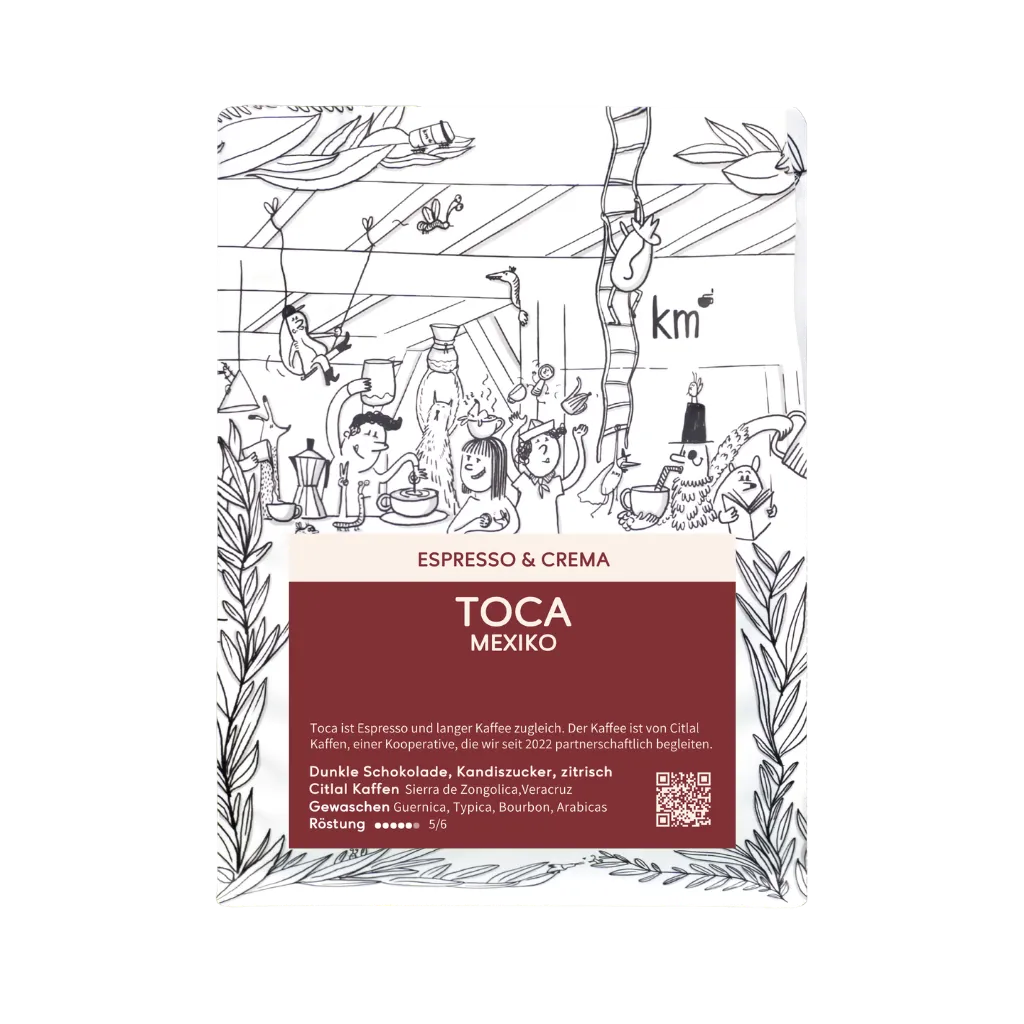
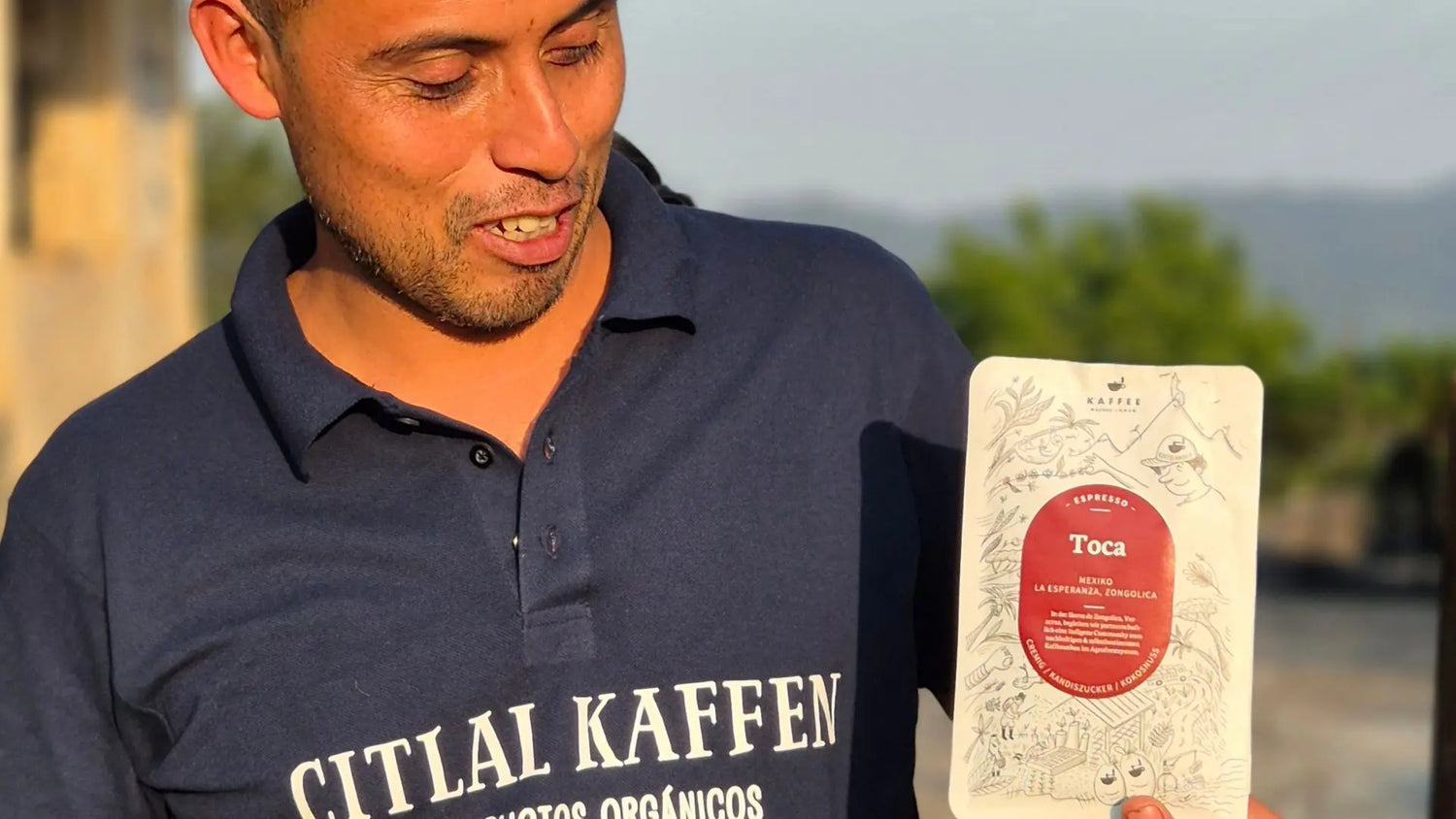
We roast the coffee from this project as "Toca" – a dark espresso with a heavy body, smooth texture, and balanced acidity.

In the spring of 2023, the group dissolved. Disagreements, different ideas, and a lack of consensus on price setting split the group. A smaller, new group came together, which in 2024 resulted in the association "Citlal Kaffen" – meaning "Coffee Star" in German. As of March 2025, Citlal Kaffen is now officially a cooperative.
The significance of the merger
The union of smaller producers into a group is essential:
- As a cooperative, they are efficient in administration,
- benefit from collective purchasing,
- have better sales conditions,
- have expanded market access, and
- receive access to financial support.
Furthermore, they share infrastructure and risk, giving them a stronger voice and more powerful branding through their joint appearance.
Our goal from the beginning was to support the group in such a way that they have every opportunity to go their own way independently.
We want to avoid dependencies. Therefore, organic certification was a priority from the start, as it remains valid even if our relationship were to end. In the meantime, half of the producers are organically certified.

A meeting of the group at Don Germán's finca
The Sierra de Zongolica and coffee cultivation
Zongolica is situated between the hills of the Sierra, surrounded by cloud forests and impressive flora and fauna. The region attracts many day-trippers exploring the mountains and the cloud forest. But despite this beauty, there are also dark clouds: security in the surrounding industrial towns like Córdoba and Orizaba has deteriorated, and coffee and cocoa are frequently stolen.
There are still major challenges on the political and economic level: the US administration has imposed 25% import tariffs on Mexican goods, making coffee exports to the USA unattractive. Furthermore, many US-funded infrastructure projects via USAID, such as road construction and support for long-term development organization projects, are no longer possible as funding has been cut. Mexico is also facing a labor shortage, and migration numbers are rising, contrary to the hostile migration policy in the USA.
Despite these difficult framework conditions, I was able to observe the growth of the Toca project and the positive changes at Ensambles and Citlal Kaffen. This cooperative has taken an impressive step by founding the "Coffee Star" (Citlal Kaffen). I was able to witness the development of the producers and the progress in setting up a micro-beneficio.

With the group in the solar dryer - the drying tent for the coffees
Citlal Kaffen: A young cooperative with big goals
The cooperative has rebuilt the beneficio and is now its owner. The micro-beneficio is located at Don Germán's finca. It is more than 100 years old and was a beneficio until 2013, before the coffee leaf rust (roya) epidemic forced many farmers to give up coffee production. The micro-beneficio fell into disuse, but we have now brought it back to life.

The beneficio stood still for ten years. Now we have revived it
The beneficio is located in the hamlet of Apixtepec, a small village in the Sierra de Zongolica, on the main road. It is amazing to see how the group built a functioning micro-beneficio from simple means – using bamboo, wood, and second-hand equipment. A true example of sustainability and creativity.
The producers not only contributed their expertise but also their labor to build and operate the beneficio. In five so-called "faenas" (day shifts), the 13 members excavated the ground, leveled it, and built the beneficio and the drying facility.

Protected from moisture and UV rays, the coffee is finished drying in the drying tunnel
With this facility, the cooperative can process its members' coffee cherries, but it also has the potential to do so for other producers. This allows Citlal Kaffen to offer a service and diversify the cooperative's income.
In just one season (November 2024 to March 2025), the cooperative learned a lot about the careful processing of coffee. Ensambles conducted workshops with the group to further increase quality. The coffee cherries are now first "floated," meaning they are sorted in a water tank. Unripe and overripe cherries float to the surface and are separated. Afterward, the coffee cherries are fermented in barrels. The barrels are filled about halfway and sealed. A valve allows the CO2 generated during fermentation to escape.
Fermentation times for washed coffees were previously between 20 and 42 hours but have not yet shown significant results. The barrel times for natural experiments were over 60 hours and showed clear, fruity, and chocolatey notes.
Co-investment – how we work
Today, Citlal Kaffen acts as the cooperative owner of the micro-beneficio. The cooperative rents its site from Don Germán, who makes the land on his property available.
Investments for the construction of the micro-beneficio and the establishment of the cooperative came from various sources:
- Ensambles: provided workshops on coffee processing and accompanied the establishment of the cooperative.
- Citlal Kaffen: invested in the form of labor to build the beneficio and by providing building materials.
- Black Hen: financial participation for equipment.
- Kaffeemacher GmbH: financial participation for equipment.
We see co-investment as an instrument to ensure that all participating partners act on an equal footing. All parties contribute, and the project becomes a community effort. As a roastery, we are no longer just buyers, but project partners who, through a monetary contribution, show that we are interested not only in the raw coffee but also in the development of a community and a local project.
Innovation in coffee processing
The process of coffee processing was particularly impressive: the coffee cherries are sorted, fermented, and then dried in a solar dryer. During drying and fermentation, there were small challenges: the group found that the fermentation effects were not yet significant, leading to a discussion about whether more time in fermentation would make sense to improve the coffee's sensory profile. This remains to be clarified as fermentation techniques can be further optimized.

In the cupping lab at Ensambles in Coatepec: the coffees were convincing
The new payment system, which is based on quality and tiered payouts, has also caused a cultural shift in the cooperative.
Step 1:
Producer X brings 100 kg of coffee cherries to the beneficio. She receives 18.50 pesos/kg for first-quality coffee cherries – these are the cherries that are processed further after the floating process. Second-quality is dried and sold on the local market.
Step 2:
The coffee cherries are processed and dried. As soon as the coffee arrives at Ensambles in Coatepec, it is hulled and sorted. This results in the "rendimiento" – the yield of green coffee.
Based on the uniformity and density of the green coffee, a second payment is made by Ensambles to Citlal Kaffen for every kilo of green coffee, which then pays the producer.
This dual payment system had to be established and accepted first. However, it quickly became clear that it brings clear financial advantages for all involved. Most importantly, it enables knowledge transfer between Ensambles, who taste the coffee and then sell it to us, and the producers, who benefit from lab tips to improve their products.

As soon as all coffees are fully dried, they are brought from Apixtepec to Coatepec
Next milestones
- In one year, all producers should have completed organic certification. That will be a major milestone.
- Optimization of fermentation processes continues: Which approaches have a positive influence on taste?
- The parchment should be dried even more slowly, which will have a positive influence on the coffee's shelf life.
- The potential for natural coffees in larger quantities is being evaluated.
- On the fincas, old plants are being replaced by the Tabi and Pink Bourbon varieties, which will further increase quality.
We are more than confident that the cooperation with Citlal Kaffen and Ensambles will become increasingly intensive and are looking forward to the next steps.