








For the first time at Eureka, the Eureka Mignon Libra 65 All Purpose combines an integrated scale (“Grind-by-Weight”) with 65 mm burrs – an exciting concept for home baristas. It promises consistently accurate dosing at the touch of a button and is designed to master both espresso and filter coffee. We tested the grinder extensively in everyday use over several weeks – in our home kitchens, in our coffee school, and in the lab. We focused on workmanship and design, retention, grind quality in the cup, as well as operation and special features. By the end, you’ll know if the Libra 65 All Purpose is the right grinder for your home.
Design
The Eureka Mignon Libra 65 All Purpose features the familiar compact Mignon design – an angular cube approximately 39 cm high, 12.4 cm wide, and 19.2 cm deep. The integrated scale on the front distinguishes it from the many other Eureka Mignon grinders.
Below the chute is a sturdy platform or fork where the portafilter or the included metal dosing cup can be placed. Our test unit in Ferrari red looked elegantly minimalist; alternatively, Eureka also offers it in white, grey, black, and special colors (chrome, dark blue). The clear touch display on the front shows the target dose in grams and integrates discreetly into the design. Overall, the Libra is a Mignon, or simply a Eureka, just like the manufacturer's numerous other models. Unmistakable, a bit boring, but always recognizable as a Eureka. If you don’t know it’s there, you won't even notice the weighing mechanism.
Workmanship
The build quality of the Libra 65 All Purpose is impressive in our tests. The housing is largely made of metal (die-cast aluminum) and feels robust and premium. All parts are precision-fitted, and nothing rattles or wobbles. At 6.5 kg, the grinder has solid stability – important to ensure it doesn't shift while grinding.
The bean hopper holds approximately 350 g and sits firmly in its mount. The new large grind adjustment dial on the top is particularly striking: it is made of aluminum, offers a good grip, and turns smoothly. Eureka has made a significant leap here – previous Mignon models had a tiny, fiddly dial that annoyed many users. Now we have a “king-size” dial with a scale that even counts rotations. This patented solution allows for very precise adjustments and makes it easy to return exactly to the starting point later – ideal for switching between preparation methods without losing your place. Overall, the Libra 65's build quality leaves a premium impression, as you would expect in this price range (~700–800 € depending on the version).
Specialist retailers recommended by us
We look for specialist partners who we know provide good work and good service. We are in close contact with these retailers. These are affiliate links. If you order via these links, it costs you nothing more, but we receive a small commission that we put into new test equipment. We are continuously working on this and looking for competent partners for you in the DACH region.
- Germany [Partner link]: Stoll Espresso
- Austria [Partner link]: Die Röster
- Switzerland [Partner link]: deon
Retention
When it comes to retention, the Libra 65 All Purpose scores points with improvements over the predecessor model. Eureka has downsized the grinding chamber and the upper burr is now screwed in “blind” from the back – this means there are no visible screws in the grinding area where coffee grounds could accumulate. In our test, we measured a total retention of approx. 2.1 g, of which around 1.5 g is temporary. Temporary means: during each grinding process, about 1.5 g of old coffee is replaced by fresh coffee, while the rest (approx. 0.5–0.6 g) remains as permanent retention in the corners. This value is very good for a hopper grinder. For comparison: many classic espresso grinders have 3 g or more of retention. Thanks to the clever construction, Eureka has managed to bring the retention value even below that of its predecessor, despite using larger burrs – a welcome development.
Nevertheless, one should not forget that a scale grinder always operates with a full grinding mechanism. Therefore, if you pull an espresso once a day, the first shot the next day will inevitably contain a small portion of old coffee (the aforementioned ~0.6 g). In practice, this is hardly noticeable, though for very sensitive palates it might cost a hint of freshness. Anyone wanting every single gram fresh should opt for a single-dosing grinder. For standard home use, however, the Libra’s retention is no problem – on the contrary, you notice in everyday use that Eureka has worked on this.

Grind quality
What lands in the cup is ultimately what matters – and here the Libra 65 positively surprised us. The new 65 mm flat burrs are designed as “All Purpose.” A narrow main peak (142 µm!) is balanced by a relatively low fine-particle content of 27–28%. The narrow main peak contributes to clear and complex cups, while the fine-particle content is particularly important for espresso preparation to build up enough resistance in the portafilter.
Our goal: espresso with sufficient body and clearly defined filter coffees – without over-extraction due to fine particles. In practice, this balance is achieved well. The challenges, as so often, lie in the details – and are determined by the choice of coffee.
Do you want to learn more about what particle distribution entails and what the two curves shown above mean? Then the article on particle distribution provides the explanation.
Espresso
In our blind tastings, we brewed outstanding espressos. However, the brewing behavior differs significantly from more classic espresso burrs with a higher fine content and a slightly broader main peak. Due to the lower fine content, the grind for espresso must be set fine. While the x50 value is not remarkably low, the extraction behaves as you would expect from burrs with a very low x50.
It takes about 10 to 12 seconds for the first drops to run from the portafilter. After that, the flow increases quickly, but the total draw-down time remains short. In some cases, the espresso flowed for only 12 to 16 seconds – with very good results.
This brewing behavior makes uniform and very careful puck preparation absolutely necessary. This is easier to achieve with darker roasts. We enjoyed powerful, sweet shots with a full body yet clear aroma. Light roasts showed astonishing complexity – with a slight loss in creaminess and body.
A sign regarding consistency: After dialing in, we were able to return to the exact same grind setting multiple times – and achieved very reproducible results. The particle size distribution showed only minimal deviations in the main peak when switching between settings – a difference of merely ~6 µm! This speaks to the precision of the grind adjustment and the stability of the grinding mechanism.
Filter coffee
The Libra 65 also masters coarse grind settings better than many classic espresso grinders. For our test, we brewed various filter coffees. In addition to our classic Amigo, for me, the quality of a grinder is best shown when I prepare Ichamama – the coffee with which I became the Swiss Filter Coffee Champion in 2014 and which we have had in our range every year since.
Grinding to filter size required a significant adjustment – almost two full rotations of the dial – but worked without any issues. After each grind adjustment, we recommend grinding a few grams to empty the retention and fully set the grinder to the new level.
The brewed filter coffee surprised us with a very clear cup and pleasant sweetness. The All Purpose burrs delivered one of the best filter coffees we have ever prepared with an “espresso grinder.” We would gladly drink such filter coffees any time.
All Purpose or all-rounder?
However, our test also showed the limits of the all-around concept: The Libra 65 can handle espresso and filter – but not in alternating, minute-by-minute intervals. Once you have set it for espresso and want to spontaneously brew a cup of filter coffee, you have to adjust the grind significantly, sacrifice a few grams, and re-tare the scale. Switching “on the fly” is impractical in practice.
In this respect, the All Purpose capability is not designed for spontaneous flexibility. The grinder can indeed handle both espresso and filter coffee, but it likely makes sense to commit to a primary use case. One will only occasionally switch to the other style in everyday life. For frequent changes, a single-dosing grinder – perhaps also with All Purpose burrs – would be the better choice.

Operation
In terms of operation, the Libra 65 proves to be largely and pleasantly uncomplicated, though it does have a few quirks and issues. First, the positive: the touch display reacts quickly and intuitively. You can easily switch between two storable amounts (e.g., single and double) or grind manually. The display of the target amount in 0.1 g increments is clearly readable. A particularly big plus point is that changes to the grind size do not influence the outputted amount – the scale dynamically counters this and repeats the quantity output. For anyone new to the espresso hobby, this is a blessing: you can freely adjust the grind size, and still get, for example, 18.0 g into the portafilter. With timer-controlled grinders, you have to readjust the time or weigh manually after every grind change, which complicates the dialing-in process. A coarser grind leads to more coffee, a finer grind to less. The Libra takes this worry away – it’s a lot of fun and makes experimenting easier.
The new grind adjustment dial also contributes to its good usability. Due to its size and the built-in rotation display, we can make very fine adjustments. In our test, we adjusted the grind for filter to coarse after an espresso shot and later returned exactly to the espresso marking – the next shots were indeed almost identical to the original extraction. This reproducibility impressed us. With some grinders, it takes courage and confidence to leave the “sweet spot” once found, for fear of never finding it again – with the Libra 65, this problem is practically solved.
Dosing accuracy
Of course, we also looked at how precisely the integrated scale actually doses. Our experience: after proper calibration, the scale is very reliable. Over many shots, the outputted amounts hovered around ±0.1 g of the target value, sometimes hitting it exactly to the tenth. However, the grinder does not achieve this accuracy immediately in every situation. We observed that it “learns” over 2–3 shots with a new coffee: the first shots with a freshly filled bean batch were about 0.5 g off the target (e.g., 17.5 g instead of 18 g). After a few runs, the system settled in and hit the target consistently. Eureka seems to use a type of adaptive algorithm here that corrects the output – it takes a moment. Important: if you start every day with an empty hopper and weighed beans (as with single dosing), the scale does not operate optimally. The Libra is designed for use with a constantly filled bean hopper – only then can it “learn” and stop truly precisely. In normal use (one bean variety in the hopper over a longer period), however, we had no problems whatsoever and could rely fully on the set gram amount.
Unfortunately, there was also a small but regarding operation: in our test, it occurred occasionally that the scale displayed an error message. The display flashed “FH,” and the grinder refused to start. This behavior occurred particularly when the portafilter remained on the holder for too long before we started the grinding process – presumably a taring problem. The solution was simple but annoying: briefly remove the portafilter, wait a few seconds, and insert it again, then everything worked. This phenomenon happened rarely, but often enough to be noticeable and annoying. Here, Eureka needs to improve via firmware if possible. Because of this behavior, the scale feels a bit finicky at times. Overall, we still rate the operability positively – with a little routine (and knowledge of the pitfalls), you can get along well. Most of the time, you simply enjoy hanging the portafilter and pressing “Start” without thinking twice.
Finally, a word on cleaning: the classic cleaning with cleaning powder works without any issues. That is the standard cleaning we recommend. Depending on usage, however, every grinder should be opened up to the burrs regularly. This is also easily possible with the Libra. However, the grind adjustment dial must be removed for this. This can be done without losing the grind setting. However, it requires a screw to be inserted into a plastic holder each time. We are not convinced that this is good for long-term durability. We would rather recommend removing the dial and sparing the plastic holder. Therefore, we rated its cleanability as only “average.”
Special features
The Eureka Libra 65 All Purpose has a few special features that set it apart from other home grinders. The central feature is, of course, the integrated scale discussed in detail. Grind-by-weight is still relatively rare in the home sector – only a few models such as the Baratza Sette 270Wi, the Zuriga G2 GbW, or the Ligre Siji work with automatic weight dosing. Eureka’s implementation works well and reliably in our experience if you follow the mentioned instructions (calibration, beans in the hopper). Beginners in particular benefit enormously because you no longer have to worry about the gram count and failed shots due to incorrect dosing are practically eliminated. The Libra saves constant re-weighing and readjusting, which makes brewing espresso more relaxed. Those who are already experienced will also appreciate the precision and comfort. Compared to pure timer grinders, this is truly the next step towards “hitting the target weight and that’s it” – especially when changing the grind (e.g., from a light to a darker espresso), the Libra shows its strength, as it compensates for the changed draw-down time and still outputs the desired quantity.
Another special feature – and namesake – are the All Purpose burrs. Eureka advertises that you can cover all common brewing methods with a single grinder. Our tests confirm: the 65 mm flat “High-Uniformity” burrs (that’s how they could be categorized) deliver very good grinding results both in the fine espresso range and in the coarse filter range. However, as mentioned above, one should not misinterpret the term All Purpose: it is possible to grind for espresso and filter, but not without manual adjustments and intermediate grinding. Ultimately, “All Purpose” is to be read here more as the all-around suitability of the burrs, less as an invitation to jump between espresso and pour-over by the minute. The specialty of the burrs is the particle profile with reduced fine content, which leads to sweet, clear coffees – in espresso with slightly less massive body than a Niche Zero (conical burr) would yield, but with more clarity; in filter with high cleanliness, but minimally less complexity than genuine filter-optimists (e.g., SSP Unimodal Burrs) allow. Overall, we are very impressed by what Eureka gets out of standard steel burrs here. If you like, you can optionally exchange the burrs for the coated “Black Diamond” burrs that Eureka offers as an accessory. These have an identical geometry and are primarily intended to increase longevity – in our measurements, there is no difference in particle distribution or taste. An upgrade to Black Diamond is therefore only worth it for heavy users who use the grinder very intensively every day. For normal home baristas, the included burrs are completely sufficient.
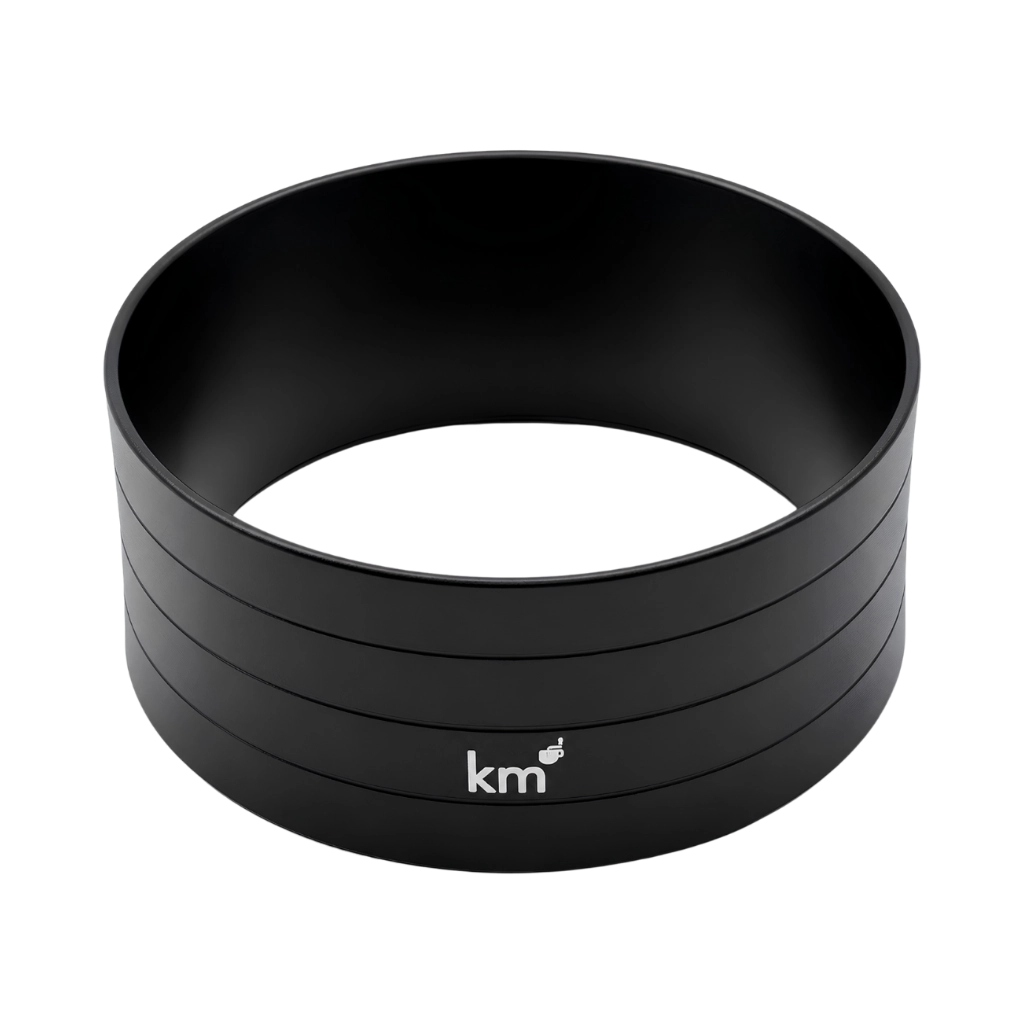
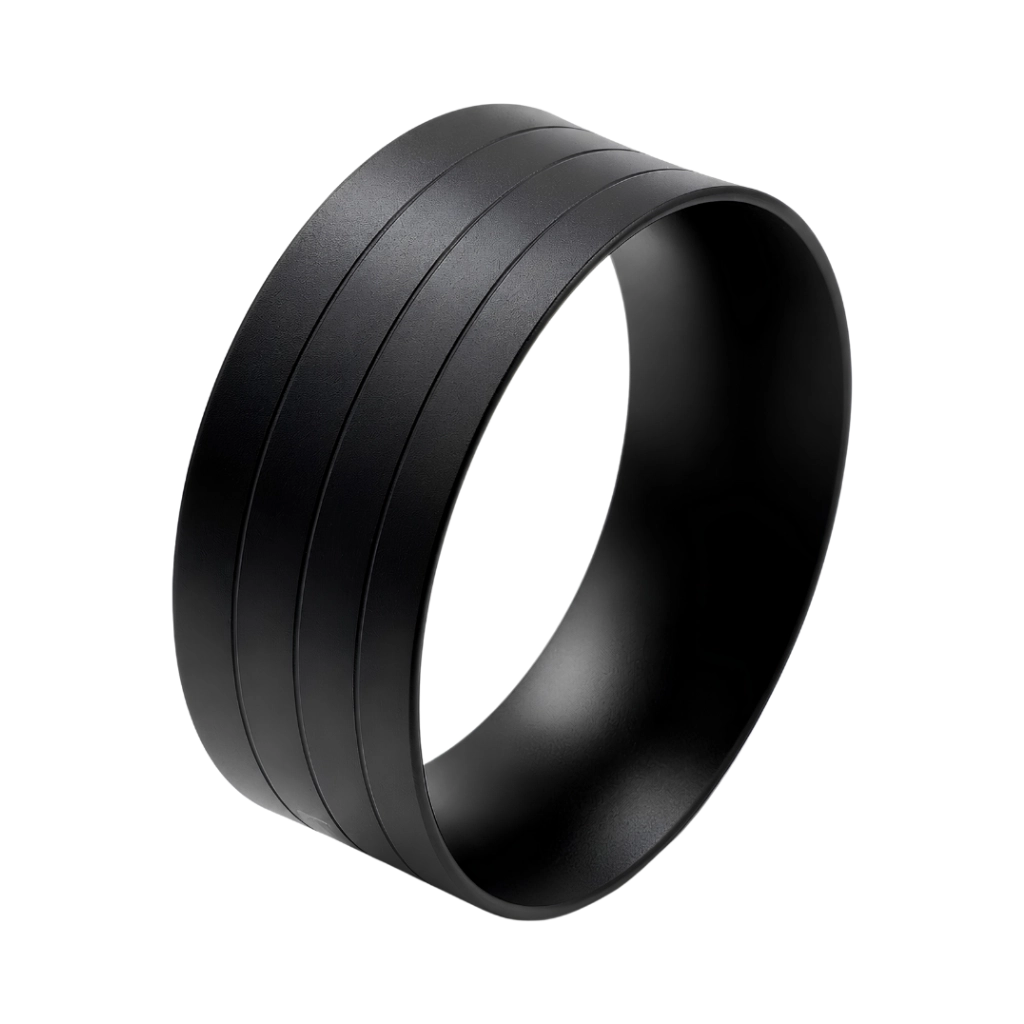
Also to be highlighted positively are the improved details compared to the predecessor Eureka Libra 55: Eureka has clearly listened to feedback. A magnetic dosing ring is now included as standard, which sits cleanly on every 58 mm portafilter. With the first Libra model, we criticized the fact that without a funnel, coffee grounds would spill over and you necessarily needed a separate dosing ring. The new Libra 65 grinds much more neatly directly into the portafilter – with lighter and medium roasts, often even practically stray-free without the funnel. Static has been noticeably reduced, the grounds land more centrally in the portafilter and build up better. Only with very dark, oily beans (or a high Robusta content) is it worth continuing to use the funnel to catch any potential electrostatic scattering. Also new is the aforementioned large grind scale – a blessing for usability and precision. Overall, the Libra 65 seems more mature and well-thought-out than its predecessor. Many small improvements (larger burrs, less retention, scale firmware, accessories) add up to a significantly better overall package.
Conclusion
The Eureka Mignon Libra 65 All Purpose convinced us in our test through its versatility and reliability. It combines precise weight-dosing with a high grind quality – and all in a compact, living-room-friendly form. For home baristas who want an all-around carefree grinder, it is an extremely exciting option.
Beginners, in particular, will benefit: the scale removes a lot of frustration and potential for errors from initial espresso attempts because the quantities are always correct and you can focus fully on the grind size. But advanced users also enjoy the comfort of not having to constantly reach for the scale. In espresso use, the Libra 65 shows no weakness and shines with consistent, delicious shots. In the filter area, it also delivers good results, provided you are willing to make the switch with some “purge” grinding (intermediate grinding to remove the coffee in the retention area). You actually get two capabilities in one grinder here, although in practice, it is best used alternately as needed, not simultaneously. Of course, not everything is perfect. Dosing accuracy was top-notch after calibration for us, but the grinder needs some getting used to if you change beans or recipes – spontaneous changes thanks to All Purpose burrs are therefore only possible with low accuracy for the first cup.

In addition, the scale requires a little bit of patience and knowledge: if you stay within the intended workflow (leave beans in the hopper, do not wait too long when intervening, etc.), everything runs smoothly. Otherwise, there might occasionally be an error message or a gram of deviation. However, these are manageable weaknesses that hardly matter in everyday use once you have gotten to know the Libra. The grinding speed is relatively leisurely at a good 1 gram/second – for us in the home context, however, perfectly sufficient. Better a bit slower and grinding cooler: even with several espressos in a row, the grounds remained cool (max. ~28–34 °C after five shots) and aromas were not impaired by heat generation.
The noise level is in the upper range; we measured 84.2 decibels. The strengths of the Eureka Libra 65 All Purpose are clearly its weight-dosing system, the high build quality, and the all-around grinding mechanism that can handle espresso and filter equally well. The weaknesses are primarily the limitations dictated by the concept: as a hopper grinder, it is not ideal for frequent bean or profile changes, and the scale system occasionally showed small quirks.
In terms of price, the Libra is in the upper mid-range for home grinders at about 750 €. Given the performance offered – 65 mm professional burrs, integrated precision scale, Eureka-typical quality – we consider the price-performance ratio good. You get a piece of technology that was hardly available in this form just a few years ago, and you can use it to prepare consistently excellent coffee for years.
Who is this grinder suitable for? In our view, for ambitious coffee lovers who want to prepare both espresso (main focus) and occasional filter coffee at home and value comfort and accuracy. Those who change beans and preparation methods every day, however, will be happier with a single-dosing solution or two separate grinders – the Libra does not play out its advantages there. In a normal household scenario with a favorite bean (or at least one bean per week) and a desire for maximum consistency, the Libra 65 is a bullseye.
It combines classic Eureka virtues (compact, high-quality, espresso-focused) with modern technology and genuine all-around capability. We give it a clear recommendation – the Eureka Mignon Libra 65 All Purpose is a successful upgrade to its predecessor and enriches the home-barista market with a well-thought-out “do-it-all” tool. Especially in combination with a good portafilter machine, you will have a lot of fun with this grinder – and discover many new taste details in the cup. Cheers to (weight-accurate) coffee!
You can find the comparison with the other GbW grinders in the field in our Grind-by-Weight comparison.