










Acidity in coffee is always a topic of discussion. Some people love it, others prefer to do without it. However, acidity is an essential component of every coffee and is responsible for a balanced flavor. We explain why acidity is so important and define what good and bad acids in coffee are.
I often hear "hipster coffee" when people talk about cafes that serve coffees that don't conform to the known norm. Often, the criticism begins with these coffees being "just sour" and having nothing to do with coffee.
As a coffee roastery and coffee school, we experience the same phenomenon again and again when talking about a "really good espresso." This often goes hand in hand with the idea of a classic Southern Italian espresso all'Italiana.
Of course, coffees with more acidity are not a trend – and if so, it would be one that has come to stay. We see this much more as a development where we, as consumers, get to know more and more perspectives on coffee.
For example, when our partners from Nicaragua are with us and taste an espresso, they can barely finish the coffee.
"Too strong, too bitter, too intense" is how they describe espresso in Europe. "And it lacks acidity!"
Team Santa Rita
Acidity in coffee: all a matter of perspective?
Most people discover coffee anew when traveling. This may be in cities with a high density of specialty cafes or in coffee-producing countries themselves. There, coffee usually tastes different from what we drink in Central Europe. Especially in coffee-producing countries, a lot of filtered or boiled coffee is drunk; espresso is much less common.
In Central Europe, espresso made from rather dark roasted beans is still what many consider good espresso. "A real espresso" often means that they are also really dark.
When I was in a Specialty Coffee Shop in the USA for the first time in 2009, I had an exceedingly bad espresso. It was just sour – and, although I was fully into the acid trip back then, I could barely drink the espresso. The double ristretto was over-dosed and under-extracted, and that with a light roast. I didn't find it tasty, and I wouldn't find it tasty today either, but the coffee shop was doing well and the guests liked the coffee.
Taste is learned. What we find delicious and what we don't is co-determined by our socialization, by our contact with many or few foods. Whether we like coffees with little or a lot of acidity primarily depends on what we already know, and secondly, how open we are to what does not correspond to our experience. And only then does our qualification set in, whether we find the coffee good or not.
Acidity in coffee divides opinions and palates
When I drank my first acid-heavy espresso from a well-known English roastery, I initially found it strange. I was supposed to taste many more flavor notes if I believed the packaging. I literally felt like I wanted to like the coffee – so from then on, I sought out acid-heavy coffees. When I then drank a more normal coffee with hardly any perceptible acidity, something was missing. The coffee was dull, one-dimensional, nothing happened. My tongue wasn't triggered.
At the same time, I realized that acidity is only one part of the whole taste experience. It's about sweetness. It's about complexity, the clarity of the aromas, the intensity of the attributes, and the pleasant texture.
Anyone interested in specialty coffee has probably already drunk coffees with more acidity than the norm. Some stick with it, others go back. Some go back and know what they have learned. Others go back and can gain very little from this type of coffee – and that brings us back to perspectives.
The acidity discussion divides minds and palates and goes in circles. Therefore, in the following points, we explain what acidity in coffee is, what it does, what it can do, and where it comes from.
Sour or Acidity? The pH value of coffee
Regardless of the topic, we can only describe things as precisely as we can express them. Sometimes language presents us with particular challenges. In Swiss German, the noun "Säure" (acidity) is used much less than the adjective "sauer" (sour). Many things are simply "suur." Often, "suur" is also used as an attribute for bad coffee.

Temperature and pH are measured here during the fermentation of coffee cherries.
In High German, the case is quite similar, only – at least in product descriptions – acidity is used more often than sour. Whether it is linguistic or not – technically, they are also different things.
And as is often the case, English is simply more precise here: Acidity in coffee is positive. But if a coffee is sour, that is a negative description.
Acids, on the other hand, are the acids, up to 40 of which can be measurably detected in a coffee.
Why is the distinction between acidity and sour so important?
Because technically, they are two different things.
Acidity (or rather, acidity) refers to the flavor profile of the coffee.
Sour refers to the pH value of the coffee.
With a pH value of approx. 5 (4.85 – 5.1 pH), coffee is a mildly acidic beverage. Tomato juice (pH 4) and soft drinks (pH 3) are significantly more acidic. Significantly, because the pH scale is logarithmic – so a difference of 1 pH unit is 10 times higher/lower. A soft drink is therefore 100 times more acidic than coffee.
Even if the assumption is close: the amount of perceptibly acidic taste has no influence on the pH value of the beverage. A strongly acid-accentuated espresso from Kenya will have the same pH value as a dark-roasted Malabar.
The difference between these coffees therefore lies in the perception of acidity, but they are both sour.
Which acids do we taste in coffee?
Of the almost 40 acids that can be detected in green coffee, chlorogenic acids make up the largest proportion. They occur at between 6-7% in Arabica and almost 10% in Robusta. In relation to caffeine (1-2%), the chlorogenic acid content in coffee is therefore significantly higher.
Chlorogenic acids are a family of different, naturally occurring compounds – those that degrade during roasting (mono-caffeoyl) and those that hardly change during roasting (di-caffeoyl). Chlorogenic acids decompose during roasting into bitter-tasting chlorogenic acid lactones. And since Robusta has more chlorogenic acids than Arabica, it is therefore already more bitter than Arabica. Coffeeness has reported extensively on chlorogenic acids here.
Many of the acids present in green coffee do not survive the roasting process. The longer and darker the coffee is roasted, the more the perceptible acids break down.
However, we can only distinguish a few of all the existing acids by taste.
Citric acid
The acid with the highest concentration in coffee. It is the acid that occurs in every coffee – and depending on the intensity, it can be recognized more easily or with more difficulty. Citric acid occurs naturally in the plant's metabolism, playing an important role as an energy source. In terms of taste, it is reminiscent of – how else could it be – citrus fruits (lemons, limes, oranges).
Malic acid
We find malic acid in apples, pears, or even rhubarb. In wine production, it is replaced by lactic acid in malolactic fermentation because it can have an aggressively sour quality. In coffee, it often appears similar to citric acid, but a bit more palatable, balanced, and for many, in a different place on the tongue.
Phosphoric acid
Phosphoric acid is not an organic acid, but a mineral acid. It is believed to be absorbed by the plant through the composition of the soil and/or the type of fertilization. The acid is often somewhat tart, sometimes sparkling, and harsh. We often perceive it in Kenyan coffees.
Acetic acid
Acetic acid can be extremely unpleasant in high concentrations. It occurs when the coffee has a defect from uncontrolled fermentation. New types of post-processing and fermentation in coffee also bring more acetic acid into the taste. If this process takes place in a controlled manner, a certain degree of acetic acid has a fruity effect and contributes to a positive overall impression.
Lactic acid
The lactic acid in coffee has a similar quality to the acid in quark – somewhat tart, rather sour, but heavy. Through targeted fermentation of the coffee in the post-harvest process, the proportion of lactic acid can be increased, which has an influence on the softness of the texture.
3 Take-Aways at this point:
- one of the most exciting aspects of acids in coffee is the combination of different acids – and at the same time in the same coffee. When several different acids are present simultaneously, the taste impression is also significantly stronger. We then speak of complex acids.
- a coffee is sour if it is not supported by sweetness. Then we are talking about lower quality coffee.
- a coffee without acidity results in a very flat coffee. Or ask yourself the question – how would a white wine taste without acidity? Just flat.
Does acidity upset the stomach?
The topic of health and coffee would deserve a completely separate article – if the evidence were really overwhelming against coffee. Coffee is attributed with as many negative as positive effects. This topic is seemingly brought up during the summer slump and then dissipates again for a year. One thing is certain: everyone reacts differently to coffee. Arne Preuss has beautifully presented this debate in a blog.
Where does acidity in coffee come from?
During the processing steps from the coffee tree to the cup, there are various stages where coffee can retain or lose its acidity. It all starts with the plant.
Plant / Cultivation
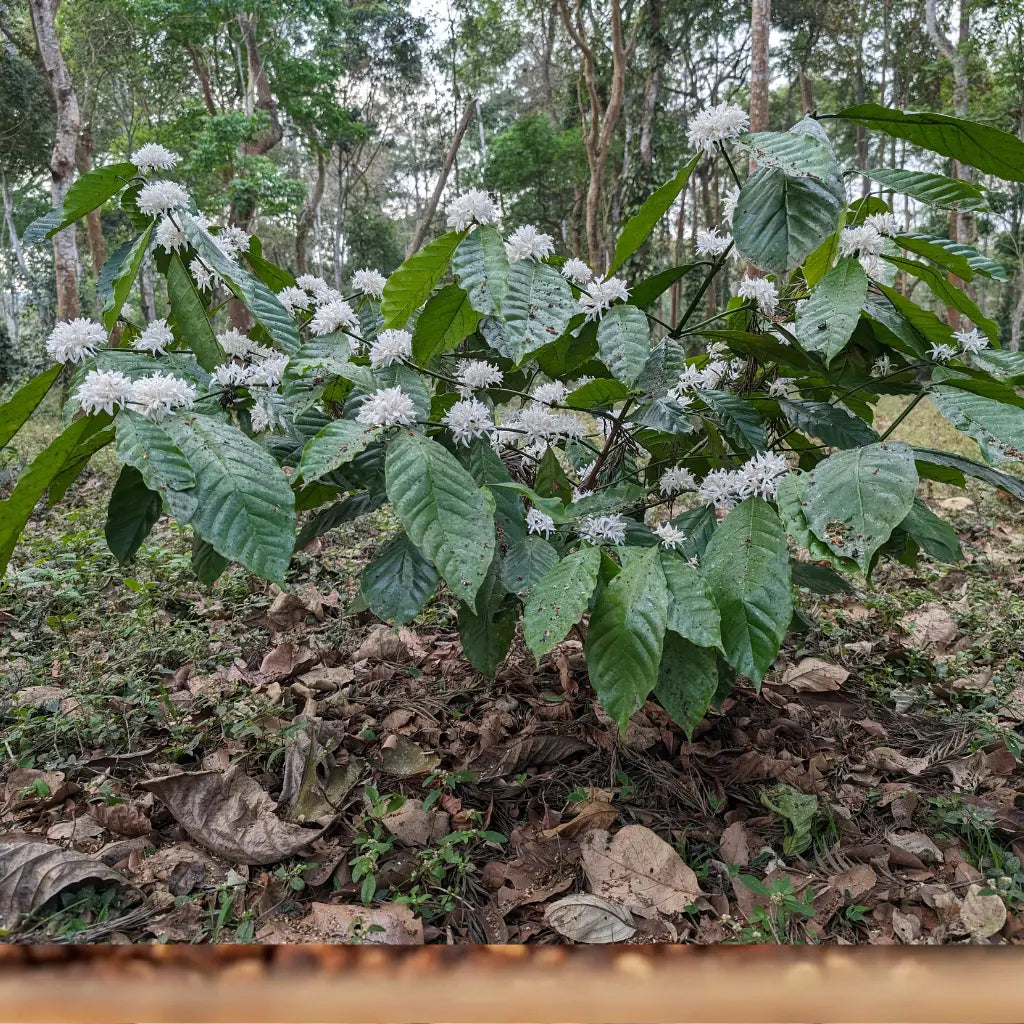
Cellular respiration is responsible for the growth of the plants and the development of the cherries. Various acids are formed in this process. The formation of these acids is influenced by the growing conditions.
One factor in particular plays a major role here – temperature. In higher altitudes, or further away from the equator, and/or in shady locations, temperatures are lower. This slows down the growth of coffee plants and their cherries. With a slower growth rate, the plant focuses more on reproduction and therefore invests more in the development of healthy seeds. Slower-grown coffee seeds show more proteins, sugars, fats, and also acids than those that grew faster. Conversely, the caffeine content is reduced in slowly grown coffee.
Species and varieties
In Arabicas, the acid content is higher than in Canephoras (Robustas). Within the varieties, especially Arabicas, there are also differences, but these are very small. Parainemas, for example, a hybrid from Honduras, shows significantly more citrus notes under the same growing conditions than IHCAFE90, another hybrid. I once tasted a series of experiments with different varieties at an exporter, which were grown under the same conditions. The Parainema stood out. However, the differences are otherwise significantly smaller and are negligible here.
Post-harvest processes
In our comprehensive article on post-harvest processes and fermentations, we precisely detail what exactly happens after the coffee cherry has been picked. In short: de-pulped, fermented, and washed coffees have the potential to show more perceptible acidity than coffees that were dried within the cherry – if the cherry is brought directly to drying. The storage of the cherry (barrel, tank, bag, etc.) can mainly influence the acetic acid level. However, post-harvest processes regulate acids less, but rather add new aromas or can mask existing ones.

How coffee cherries are processed after picking has a big influence on the taste.
Roasting
Longer roasting times and higher final temperatures minimize organic acids. Acetic acid, however, reaches a peak for a short, unstable moment when coffee is roasted into the second crack. All other organic acids break down over the duration and increasing temperature of the roast.

The yellow curve accentuates the acids, the red curve leads to a balanced coffee, while the blue curve reduces many acids.
Preparation
While the type of acid is determined by the factors already discussed, preparation is responsible for the amount of extracted acid. Grind size, brewing temperature, brewing time, pressure, and turbulence during brewing all influence the total acidity that can end up in the cup, if it is not buffered by the water.
Water
Water with high alkalinity buffers, or neutralizes, the perceptible acids in coffee. At the same time, it also shifts the pH value towards alkaline. So, water manages to change both sourness and acidity at the same time, making it the invisible but powerful component. We have described which water is best suited for which drink in this detailed article.
Perceived acidity in espresso, filter coffee, and fully automatic coffee machines
When we talk about "acidic coffee," which drink exactly are we talking about here? This aspect is also strongly linked to our experience of and our expectations for coffee. I personally almost exclusively think of filter coffee when I think of coffee.
Many find it easier to accept acidity in filter coffee. This is primarily due to the fact that the coffee concentration in filter coffee is significantly lower (approx. 1.5% of the drink is coffee, the rest is water) than in an espresso (approx. 10% of the drink is coffee). Espresso is an incredibly intense, concentrated drink. If a coffee shows little acidity in filter coffee, it will have much more acidity in espresso.
Thus, in our roastery, we only use acidic coffees for espresso if we can also detect a lot of sweetness – this pair then forms a taste balance. Without this balance, the coffee would be primarily sour and difficult to enjoy. But even with balanced coffees that are acidic and lighter roasted, the perceived acidity remains.
And not everyone likes that, nor should they have to.
However, for many, the perceived acidity in filter coffee plays a less dramatic role. Since filter coffee is a diluted coffee drink, a perceptible acidity does it good, giving the coffee structure and tension. Without acidity, a filter coffee would be very flat.
The situation is different again with fully automatic coffee machines. Anyone who works with acidic coffees there will have less joy with their espressos.
Why?
In fully automatic coffee machines, which typically brew at temperatures below 90° C in household use, acidic coffees taste much sourer. The brewing temperature is low, the grind size relatively coarse, so less sweetness and fewer texture-forming starch particles can be extracted.
Thus, especially light roasted coffees on a standard household automatic coffee machine taste exclusively sour. That's why we roast differently for automatic coffee machine requests and also teach this in our consultations.
Good Acids, Bad Acids
Good acids give coffee freshness, complexity, tension, and often make us think of specific fruits.
Bad acids are aggressive, drying, sharp, and biting. This is often the case when there is little to no sweetness in the coffee.
Sweetness supports acidity, a former jury colleague once told me. When there's a lot of sweetness, acidity becomes even more exciting. The opposite is equally true.
The challenge of communicating acidity positively
We coffee makers like coffees that show a distinct acidity. So we work with green coffees that already bring this, and roast the coffees mostly light to medium-light. This type of roasting retains many acids in the coffee.
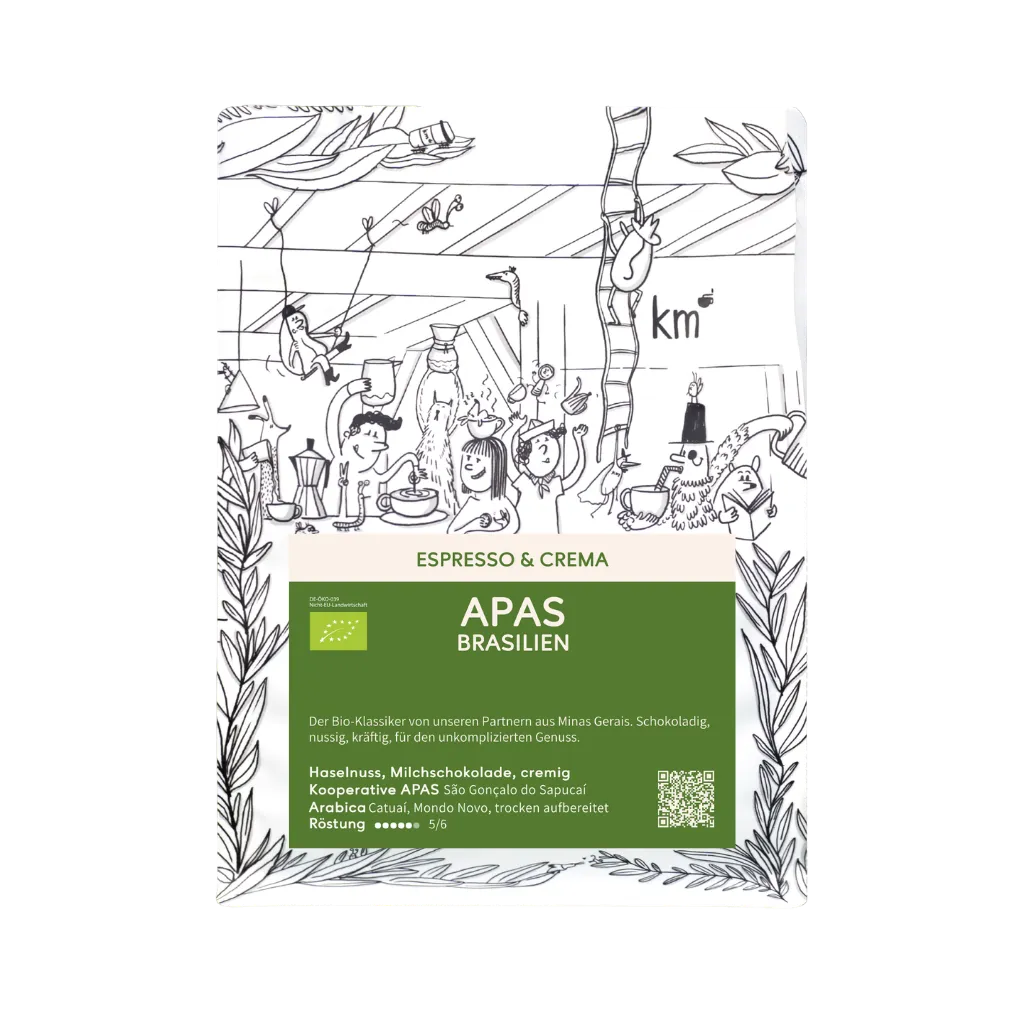
Of course, we also all like coffees that are milder, sometimes a little more chocolatey, and less acidic. For example, our APAS or the Henrique from Brazil – both coffees that, by our definition, have less acidity.
Especially for our courses, we use coffee from the APAS cooperative, as it shows a rather classic, nutty-chocolatey profile with less acidity. This profile is known to most course participants and is much less challenging than if we were to work with a light-roasted specialty espresso.
As has already become clear up to this point, it is not easy to communicate acidity positively – for the simple reason that there is often already a negative attitude towards it. We do not see it as our task to desperately fight against it; that is not productive. And above all, we are staunch opponents of a taste dictatorship. Tastes are individual and change only slowly.
We see a different way to make specialty coffee – with low or high acidity – palatable.
1. Less focus on acidity in communication
At the beginning, I wrote that discussions about acidity in coffee often go in circles. Perhaps it's because sometimes there's a bit too much focus on this topic?
Often in conversations, it sounds as if good coffee only exists between the antagonists acidity and bitterness. But anyone who has delved deeper into the subject knows that worlds of flavors, complexity, and balance lie between them.
Perhaps it would be timely to move away from the acidity-bitterness duality and describe coffee differently?
So why not focus on body and texture? This coffee attribute is so special because it's the only one that isn't learned, as we feel it and don't taste it. Everyone can feel whether a coffee is creamy or watery, without prior knowledge. However, whether a coffee has citric or malic acid is a much more complex matter that requires training.
2. Describing acidity differently
When I participated in the Swiss Barista Championship in 2010, I would have described the coffee as "tasting only like sour toilet cleaner." That's what a somewhat challenged spectator said after my presentation.
I, new to the business at the time, was initially defensive, because I liked my coffee. But when I looked at my descriptions again, they were all quite similar. It was about citrus notes, zesty, "citric," clementines, and citric acid.
If I were to describe the same coffee again today, I would do it much differently. I now know that acidity is only part of the whole, that texture is my focus, and that similar descriptions are not so precise.
So today we describe coffees differently too – a simple lever is that we associate more acidic coffees with fruits. In El Colibri, a Peruvian coffee that we roast as espresso, we find tartaric acidity.
If we were to describe the coffee to a broader audience as having "tartaric acid" in it, it would be more confusing than helpful. The association with wine is there, and very few people have ever tasted pure tartaric acid.
So it makes sense to switch to grapes, which are full of tartaric acid. The coffee generally brings brighter flavors, so we opted for raisins and "white wine-like."
3. Accept that acidity is simply not everyone's cup of tea
Sounds logical? Perhaps, but it's still not easy.
Many appreciate specialty coffee for the variety of flavors, for its distinctiveness, for new sensory experiences, and perhaps the stories behind the coffees.
When I prepared a specialty espresso for a friend for the first time in 2009, the coffee was indeed very acidic. Perhaps it was even very sour, but at the time, I was looking for something different. The friend grimaced, looked at me confused, but tried hard to discover something beyond this aggressive acidity.
He didn't like any of the coffees that evening. I don't even remember if I liked them. But I tried.
So the acidity immediately became the center of the discussion – not the variety, not the roast type, not the origin, not the fancy branding. I tried to explain to him why there was acidity in it, why it was less intense in other coffees, and why it was positive.
I could never convince him. At first, I even thought I had to. Today he drinks our Henrique and is incredibly happy. A medium-dark roasted coffee with less acidity. Right up his alley.
Over the years, I've learned that acidity is often at the center of discussions about specialty coffee. So today, it makes sense for us to showcase slightly more classic, nutty coffees, or the exact opposite – extremely aromatic coffees, for example, naturals from Ethiopia. Coffees that smell so intensely different that we first talk about the aroma, make wine comparisons, recognize the complexity, and only eventually talk about the acidity.
Conclusion
Explaining to someone that acidity in coffee can be a positive thing is a difficult approach to explaining specialty coffee. Rarely do the – albeit valid – arguments meet with approval. However, if the focus is on texture and aroma, the first hurdle is overcome.