



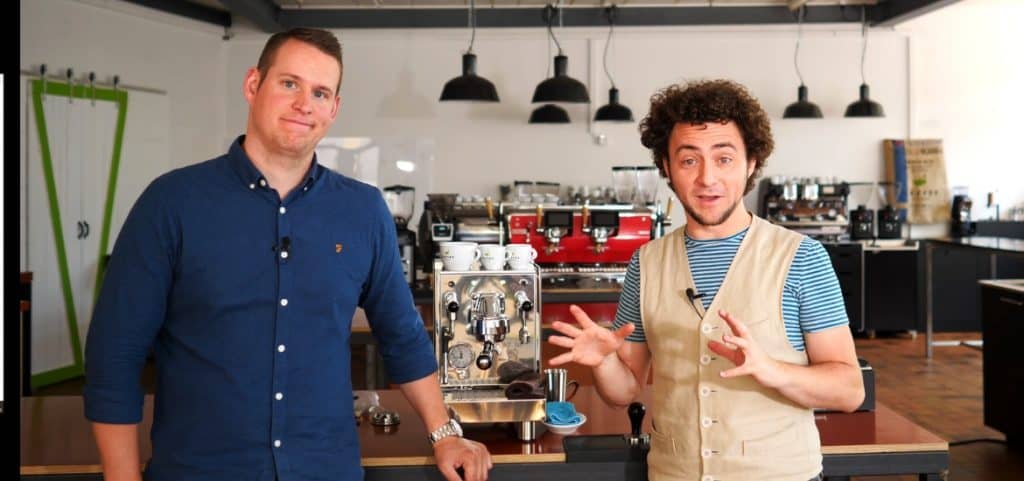

The Bezzera BZ10 performs its main tasks in exemplary fashion. It delivers what is needed for a perfect espresso with great consistency in terms of temperature and pressure. As one of the most affordable espresso machines in the heat exchanger segment, it is a safe candidate for the price-performance podium in our test series.
Find out more about the comparison with 11 other heat exchanger espresso machines here.
Good espresso! What more could you want?
If you primarily want good espresso, you can't go wrong with the Bezzera BZ10. It masters the most important tasks of an espresso machine. The brewing temperature is extremely consistent, fluctuating only slightly between 92 and 94 degrees. Very rare spikes to 95 degrees were hardly significant as long as no more than one espresso was brewed per minute.

Bezzera BZ10 front view
The steaming performance of the Bezzera BZ10 also leaves nothing to be desired. Creamy milk foam can be easily produced with this espresso machine. The pressure is sufficient and the quality is just a matter of practice.
Given a price starting at 1460 CHF in Switzerland and 1100 € in the EU, the Bezzera BZ10 is a very good entry-level choice for anyone primarily interested in beverage quality.
The machine makes compromises in some places regarding materials and convenience. If you don't care about that, you don't need to read any further. However, if you have heat-sensitive fingers, for example, you should take a look at the next few sections.
If you want to learn how to prepare good espresso, then visit our Home Barista Online Course or get a good overview with our article "Preparing Espresso".
Sharp edges and sensitive fingers
An espresso machine gets hot! Naturally, as the water has to be heated. In a heat exchanger, the boiler is heated to over 120 degrees Celsius. The pipe running through it then transfers this temperature to the brewing water. Starting from the boiler, the temperature spreads throughout the espresso machine. In higher price segments, boilers are insulated to keep the temperature primarily inside the boiler. With the BZ10, this temperature is generously distributed everywhere—wherever temperature can be absorbed: in the metal!

Another heat source—intentionally included in the BZ10 with its own heater—is the brew group. Temperature also spreads from there along all heat-conducting parts. And with the BZ10, it gets especially hot. You should never touch brew groups anyway. But buttons and switches?
You can barely touch the on/off switch of the BZ10 or the switch for coffee dispensing for more than 2 seconds, even with milk-frothing-resistant hands. The temperatures at the switch reach well over 60 degrees! This is not very user-friendly.
The steam wand is a classic steam wand—not a modern cool-touch wand. However, a rubber sleeve here allows it to be touched.
Bezzera skimps on deburring the edges of the curved stainless steel housing. If edges inside are sharp, it doesn't bother you much and only requires caution when, for example, removing the water tank. But even on the front, highly visible corners of the machine, you can cut yourself when reaching quickly for the espresso cup. This could be done much better.
Size, weight and technical information on the Bezzera BZ10
With a width of 25 cm, a height of 37.5 cm and a depth of 42.5 cm, the Bezzera BZ10 is quite compact—but still weighs in at 19 kilograms. The vibration pump is clearly audible and also causes some vibration, which makes the lid over the water tank rattle noticeably. The boiler volume is 1.5 liters and the water tank holds 2 liters.
Tubes have to be inserted into the water tank to draw the water. Nowadays there are much nicer versions with an outlet in the bottom. But as I said—we are in the entry-level range of espresso machines and the Bezzera BZ10 was deliberately kept affordable.
The hot water dispensing of the machine is activated via a lever, as is the steam for frothing milk. A beautiful dual pressure gauge shows the boiler pressure as well as the water pressure during espresso brewing.

Barista trainer Michel Aeschbacher testing the Bezzera BZ10
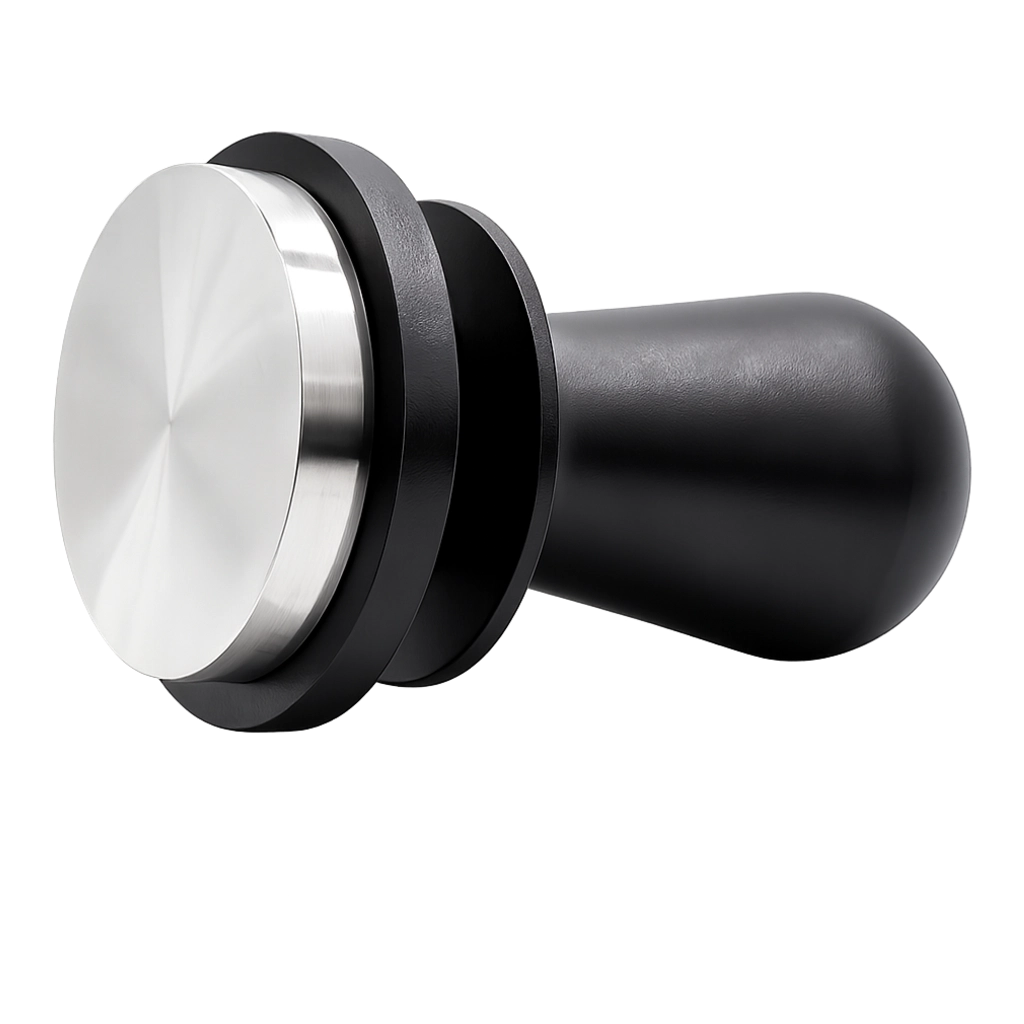
The machine comes with a plastic tamper that is only fit for the trash. The included basket is significantly larger than the stated 16 grams. We effectively filled 21 grams into the basket without any problems. This has consequences for the size of the final beverage. If you follow our recommended beverage ratio of 1:2.5, the final beverage will be correspondingly large (21 g * 2.5 = 52.5 = 2 espressos of 26.25 grams each).
In the picture of the side view, you can clearly see that the drip tray is a bit short. 3 cm more would have prevented drops from constantly dripping off the front of the machine.
The backflush valve also contributes to the fact that there are always drops around the espresso machine. We explain this in more detail in the video.
Heated BZ10 brew group vs. Faema E61 brew group
Most heat exchanger espresso machines are still designed with the E61 brew group, which will soon celebrate its 60th anniversary. The E61 brew group is essentially brought up to temperature by a heating water circuit.
A brew group is the front part of the espresso machine where the portafilter and thus the coffee is inserted. A well-heated group temperature is important, otherwise the brewing water will transfer its heat to the metal and thus no longer reach the temperature required for brewing espresso. In our tests, we defined a desirable temperature of 93 – 94 degrees.
The Bezzera BZ10 uses a brew group with electrical heating. The consistent temperature of the BZ10 proves Bezzera right here, and the group leaves nothing to be desired.

Constant brewing temperature of the Bezzera BZ10
In our view, neither an E61 nor an electrically heated group has fundamental advantages. It is much more important that it ultimately delivers the right temperature to the group. However, this does not depend on the brew group, but on the overall design of the machine. How long is the water's path from the boiler to the group? How quickly does the heat exchanger heat the water? When does the boiler reheat?
Dismantling the Bezzera group is perhaps a bit easier than dismantling the E61 brew group for maintenance, as only three screws need to be opened. In our view, however, this is not significant.
The heating-up time of the machine is not significantly faster either. The BZ10 also took a good 22 minutes to reach full temperature.
Conclusion on the BZ10 from Bezzera
The BZ10 delivers what it should: good espresso and good milk foam quality. That is a pleasure! So, anyone who focuses primarily on drink quality will be very satisfied with the BZ10.
In return, the machine makes compromises in its build and included accessories. The supplied plastic tamper is not usable for preparing good espresso. The machine has many areas that overheat, which are actually important, such as the toggle switches for operating the espresso extraction.
We also do not like the unfinished metal edges on the machine, as they pose a risk of injury in everyday use.
As a very consistent espresso machine in the entry-level heat exchanger segment, the Bezzera BZ10 is for us a candidate for the podium in terms of price-performance, despite its material flaws. Consistency is very important, especially for beginners in espresso preparation. And the Bezzera BZ10 undoubtedly provides that attribute!

Preparing espresso with the Bezzera BZ10
We are currently testing all commercially available heat exchanger espresso machines and will subsequently summarize the test series with a comprehensive comparative review.