


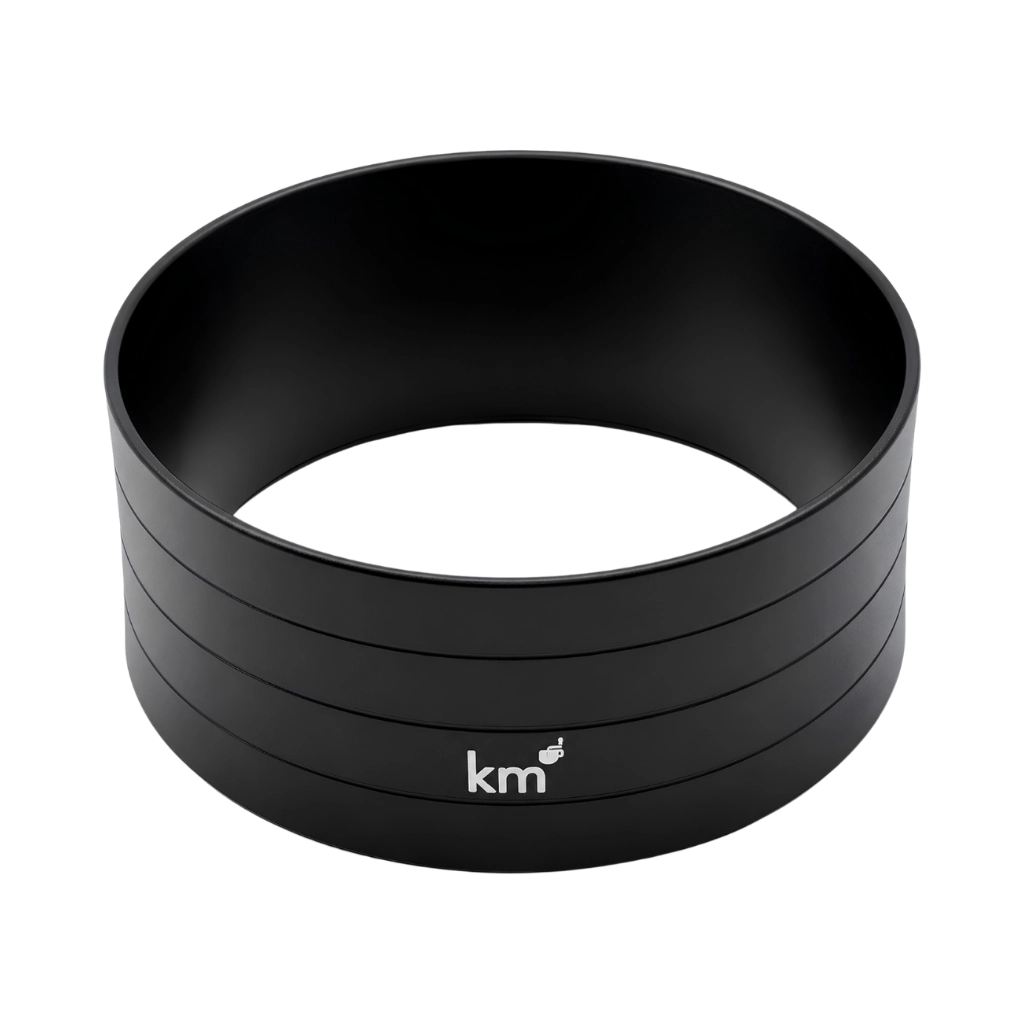
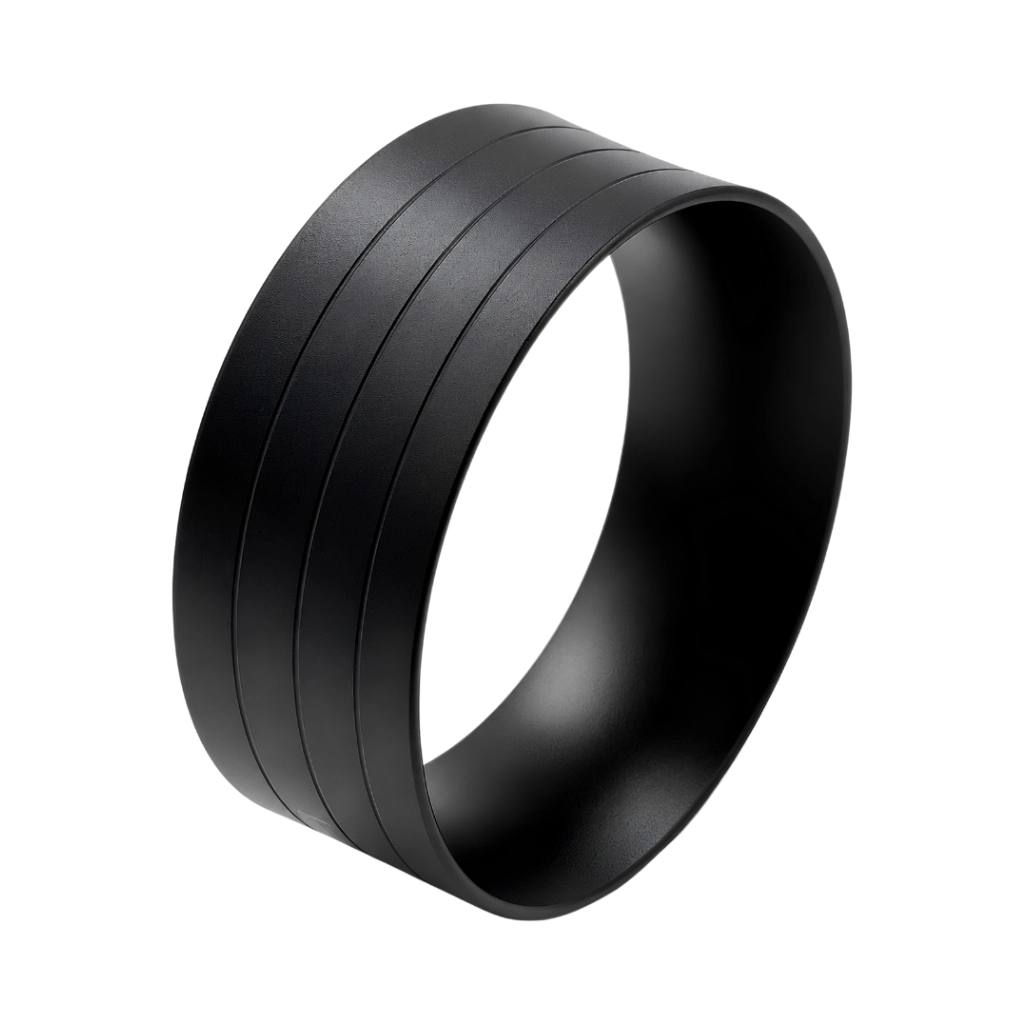



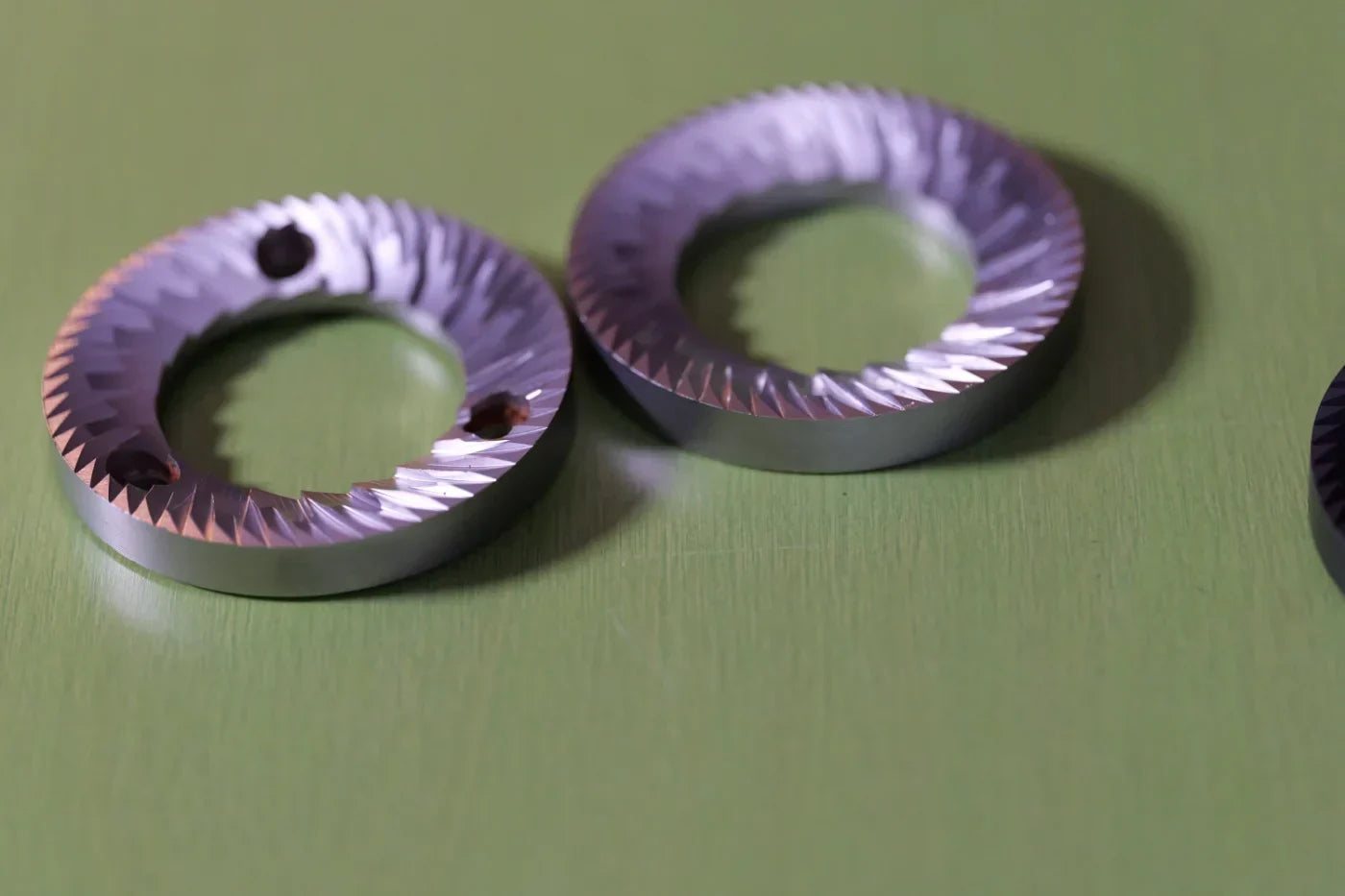

It's grinder burr time again. The same question kept coming up from our community: Which Eureka grinder burr should I buy, which one fits my Kaffeemacher and my espresso preferences? So we tested the various Black Diamond grinder burrs, installed in the Eureka Single Dose Pro and, in the case of the all-purpose burr, in the Eureka Mignon Libra 65 All Purpose. We had a particle distribution measurement done for each burr and drank our way through quite a few espressos. The result is clearer than we expected.
Black Diamond is two different things, and that's often confused
Before we get to the measurement values, we need to break down a term. Because "Black Diamond" refers to two completely different things, and if you mix them up, you'll end up buying the wrong burr.
One is the coating. The black burrs are mechanically identical to the standard ones installed, just coated and therefore more durable. The coating has no effect on the grind pattern or the taste. We've measured this multiple times by now, including with the Magnifico and the Mignon XL. So if you simply want to grind longer before the burrs wear out, you can confidently buy your existing geometry in black. Nothing more happens there.
The other is the geometry of the grinder burr. And that massively changes the cup. Eureka offers multiple geometries under the Black Diamond label, and they taste so different that we wouldn't have guessed the same coffee in a blind tasting. That's exactly what this article is about.
The three geometries compared
We measured three burrs: the Italian Espresso Taste, the Espresso Specialty, and the All Purpose. All values in the table come from the same test setting (espresso basic setting, T4) and were determined in collaboration with ZHAW.
| Grinder Burr | x50 (Median) | Fine fraction (<100 µm) | Coarse peak width | Character |
|---|---|---|---|---|
| Italian Espresso Taste (standard burr) | 275.4 µm | 29.7 % | 218.5 µm | body-focused, chocolatey, marzipan |
| Espresso Specialty | 292.9 µm | 27.4 % | 215.4 µm | complex, sweet, less body |
| All Purpose (in the Single Dose Pro) | 239.5 µm | 27.7 % | 152.5 µm | clear, acid-focused, elegant |
| All Purpose (native in the Libra 65) | 254.0 µm | 27.3 % | 142.0 µm | clear, acid-focused, elegant |
Measurement values T4 (espresso basic setting), determined with the Retsch Camsizer X2 in cooperation with ZHAW. Reference coffee: Apas Espresso.

Italian Espresso Taste: the standard burr, and it's already strong
This is the burr you get when you order the Single Dose Pro normally. And we have to be clear about it: This is a great burr. The main peak is spot-on at around 218 µm, plus a slightly higher fine fraction of just under 30 percent. This provides resistance in the puck and body in the cup.
With the Apas we pull body-focused, rather dark extractions, clearly towards chocolate, very distinctly marzipan. Lots of body, dense texture. Interestingly, even though the burr isn't called "All Purpose," it also covers lighter roasts surprisingly well. If you're bringing home the reflex from your home barista course that "I need to upgrade," we say this: The baseline you already have is really delicious.
Espresso Specialty: coarser, fewer fines, more complexity
You would think the Specialty burr has a narrower main peak. It doesn't. We're talking about around 15 µm difference from the Italian, and that's not significant—both stay in the range of very good burrs. But what does shift: The fine fraction drops by about three percent, and the x50 moves clearly towards coarser.
In the cup, this brings more complexity and much sweetness with fruity coffees. Great with the Apas, especially with medium and darker roasts. With the lighter Chirinos, however, we missed a bit of texture—the espresso ran a bit thin and lost presence. Not a bad espresso, but not the burr that lets this light coffee shine.
All Purpose: uncompromising clarity, but not for casual use
This is where it all comes together. The main peak narrows to around 150 µm, turning the mountain into a point. This removes heaviness from the coffee and gives it clarity, acidity, and complexity. Elegant instead of bulky. With the Apas, this brings out a completely different side—light marzipan, grape sweetness, notes that are actually atypical for our Apas.
But: This burr set demands appropriate brewing. With the light coffee, we found the result at flat 9 bar too acidic and no longer balanced. The All-Purpose burr set only shows its strength when you can reduce pressure on the back, meaning with a lever machine, pressure profiling, or flow control. An example from our test: The light coffee took 28 seconds total time, but the first drops didn't come until 14 seconds. A puck like this needs long saturation and then shoots through at the end. On a machine that only grinds flat and hard, that hurts the coffee more than helps. These are the most advanced burr sets in the field, and you can learn a lot working with them.
"If we drank these side by side and didn't know it was the same coffee, I wouldn't assume it. Completely different."
Which burr set fits which grinder?
Important so nothing goes wrong here: The All-Purpose burr sets come standard in the Libra 65 All Purpose, and the grinder is perfectly calibrated for them. All-Purpose burr sets grind very slowly, and the Libra is designed for that.
The other Black Diamond geometries only make sense in the Single Dose Pro. The dimensions and threading are the same, so theoretically many things fit together. But in practice, the different grinding speed in unmatched grinders quickly causes problems, including clogging, and with scale grinders, the scale might not keep up. In short: We can't guarantee our support for such modifications.

You don't need to buy new burr sets at all. The standard burr set in your grinder is already very good. Changing burrs is a deliberate character change for experimenting, not a mandatory upgrade. But if you're interested, it's a fascinating field that can keep you engaged for weeks.
Burr Changes: Recipes Are No Longer Transferable After
One point that's often underestimated in daily use: When you change the geometry, your grind setting shifts noticeably. On the Single Dose Pro, the grinding point (where the burrs scratch against each other) for the Apas is around grind setting 12 with the standard burr, around 9 with the All Purpose, and around 11 with the Espresso Specialty. For the light coffee, we needed about five more numbers finer.
This means: If you have a tried-and-tested recipe and install new burrs, you can't just transfer that recipe. You have to dial in from scratch. Plan a few days to get comfortable with the new burr set again.
Which Burr Set for Which Espresso?
In the end, it's a matter of taste, and all three are good burr sets. As a rule of thumb:
- Heavy, powerful, complex: Stick with the Italian Espresso Taste or the Espresso Specialty. Both bring body and sweetness, with the Specialty offering a bit more complexity with fruity coffees.
- Clarity, acidity, profiling: Then the All-Purpose burr sets are highly interesting, provided you can work with pressure or flow control on your machine.
Black Diamond isn't a flavor upgrade, but rather two things: a coating for longer durability that doesn't change the grind pattern, and multiple burr geometries that significantly alter the espresso. If you just want longer grinding time, get the black version of your existing burr set. If you want to change the character, choose according to taste: Italian and Specialty for body and complexity, All Purpose for clarity and acidity—but then only with a matching machine.
And the most important sentence first: You don't need any of this. The standard burr set in your Eureka is already very good. But if you want to experiment with your coffee, it's a field where you can really get a lot out of it over weeks.
You can best figure out which Eureka grinder suits you in our Eureka buying guide.