





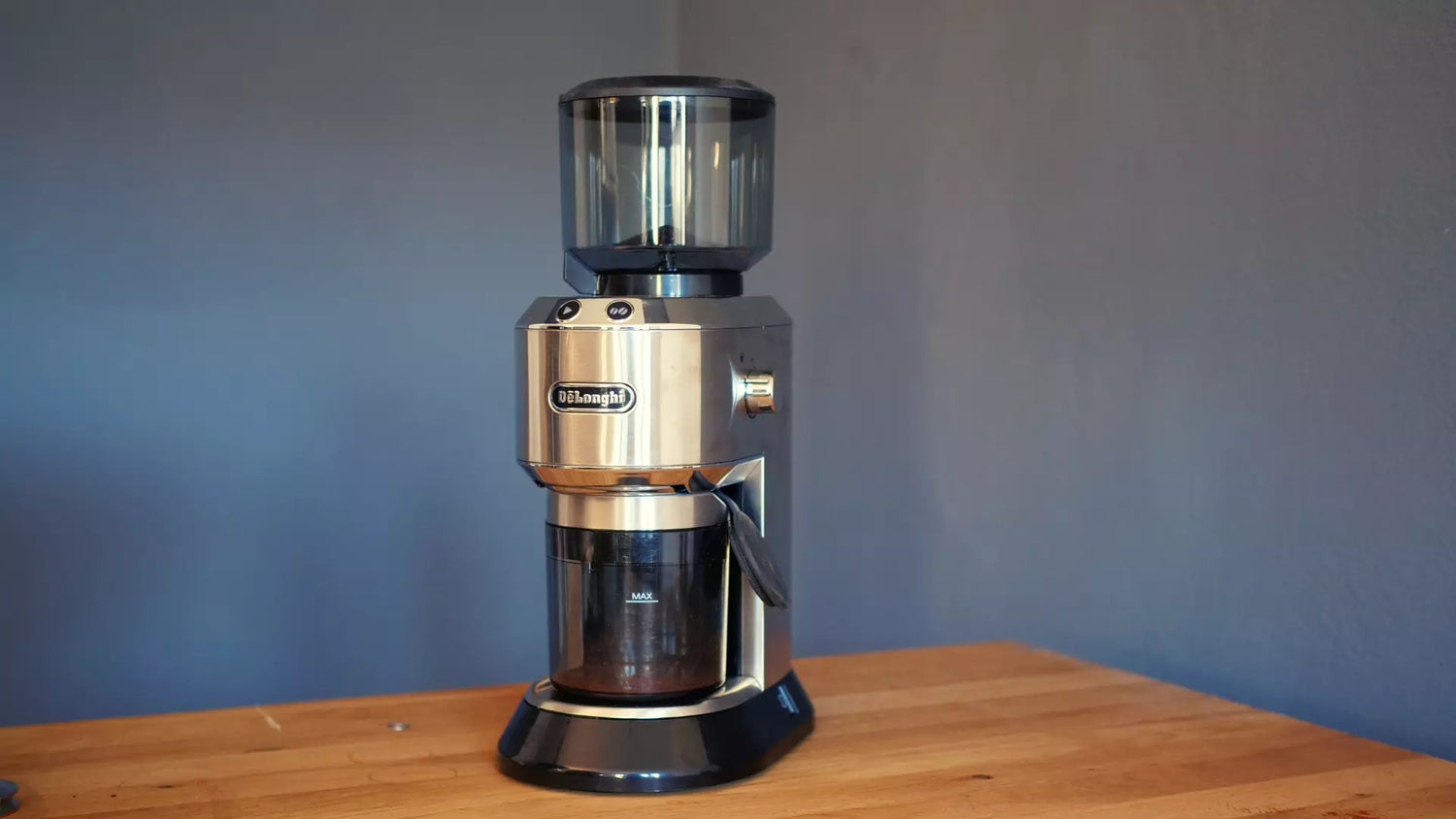

Searching for the best budget espresso grinder to kickstart your home espresso journey inevitably leads to the De'Longhi KG521. This coffee grinder sells in Switzerland for as low as CHF 120 and retails across Europe for around €140. That makes the De'Longhi KG521 one of the cheapest models in our comprehensive espresso grinder comparison.
However, low prices often come with severe limitations—and for grinders at the bottom of the price scale, that limitation is usually grind fineness. Many grinders marketed for espresso simply cannot grind fine enough, earning them the label of "coffee grinder" rather than a true "espresso grinder".
So how does the De'Longhi KG521 perform—a grinder frequently sold as the natural companion to the entry-level De'Longhi Dedica EC685 espresso machine? We cover this and much more in our detailed grinder review and video guide. And of course, we share crucial tips and tricks on how to modify the grinder to unlock its full potential.
The Limits of Grind Fineness
Let's not beat around the bush—or should we say, the coarse coffee grounds?! Out of the box, the De'Longhi KG521 does not grind fine enough for most coffees!
What does "not fine enough" mean in practice? A traditional espresso shot requires a target extraction time of around 25 seconds. Many specialty roasts require even longer extraction times to achieve balanced flavor balance.
We tested three different coffee beans on the finest stock setting, and not a single shot exceeded an extraction time of 19 seconds. In some cases, liquid gushed into the cup in under 15 seconds. Is that bad? Taste-wise, absolutely. Such rapid flow causes severe under-extraction, producing sharp, sour, and unpleasant flavors in the cup.
Increasing the dose didn't help either. Upscaling the dose—such as using 19 grams of coffee instead of 18 grams to add puck resistance—did not solve the issue. Even at its finest factory setting, the burr gap remained too wide for true unpressurized espresso baskets.
In short: In its stock factory configuration, the De'Longhi KG521 fails as an espresso grinder.
Tricks, Context, and Workarounds
This raises the question: why remains the De'Longhi KG521 so popular among entry-level espresso enthusiasts? There is a specific reason for this! The grinder is bundled and sold as the natural match for the De'Longhi Dedica EC685. We actually consider that small espresso machine quite interesting; to date, we haven't found a better ultra-budget machine to recommend for beginners.
However, the De'Longhi Dedica EC685 ships with pressurized (double-walled) filter baskets. The basket's internal wall creates the artificial backpressure that, in standard commercial baskets, is generated by finely ground coffee particles.

The core purpose of these pressurized baskets is to produce something looking like espresso using old, stale, or coarsely ground coffee, creating artificial espresso crema through a single pinhole aperture. While these baskets serve a purpose for beginners, they cannot extract truly great specialty espresso. We dedicated a full video to upgrading the De'Longhi Dedica with unpressurized baskets.
Unassisted, the De'Longhi KG521 grinder cannot reach an espresso-fine grind size. Using a pressurized basket creates a artificial slow extraction that looks good to the eye. But that trick only fools the timer and the eye. Poorly extracted coffee still tastes bad.
We recommend a different trick instead—a mechanical mod that alters the burr calibration internally.
Tuning the Burr Set — Adding a Shim Washer
The De'Longhi KG521 is a conical burr grinder. A inner upper burr cone fits into an outer ring burr. The higher the inner cone pushes into the outer ring, the tighter the burr gap and the finer the grind.
We accept no liability or guarantee if you decide to perform this modification. Any physical modifications are done at your own risk and will likely void your manufacturer warranty.
For our grinder modification, we bought a matching third washer at a hardware store. The factory washers have an inner diameter of 10 mm and an outer diameter of 13.5 mm. They are very thin—roughly 0.4 mm thick.

Do not start at the finest setting right after reassembly. The entire grind range shifts significantly finer. Starting at setting 1 risks burr-on-burr contact, which will dull the metal burrs.
How Does the Espresso Taste After the Washer Mod?
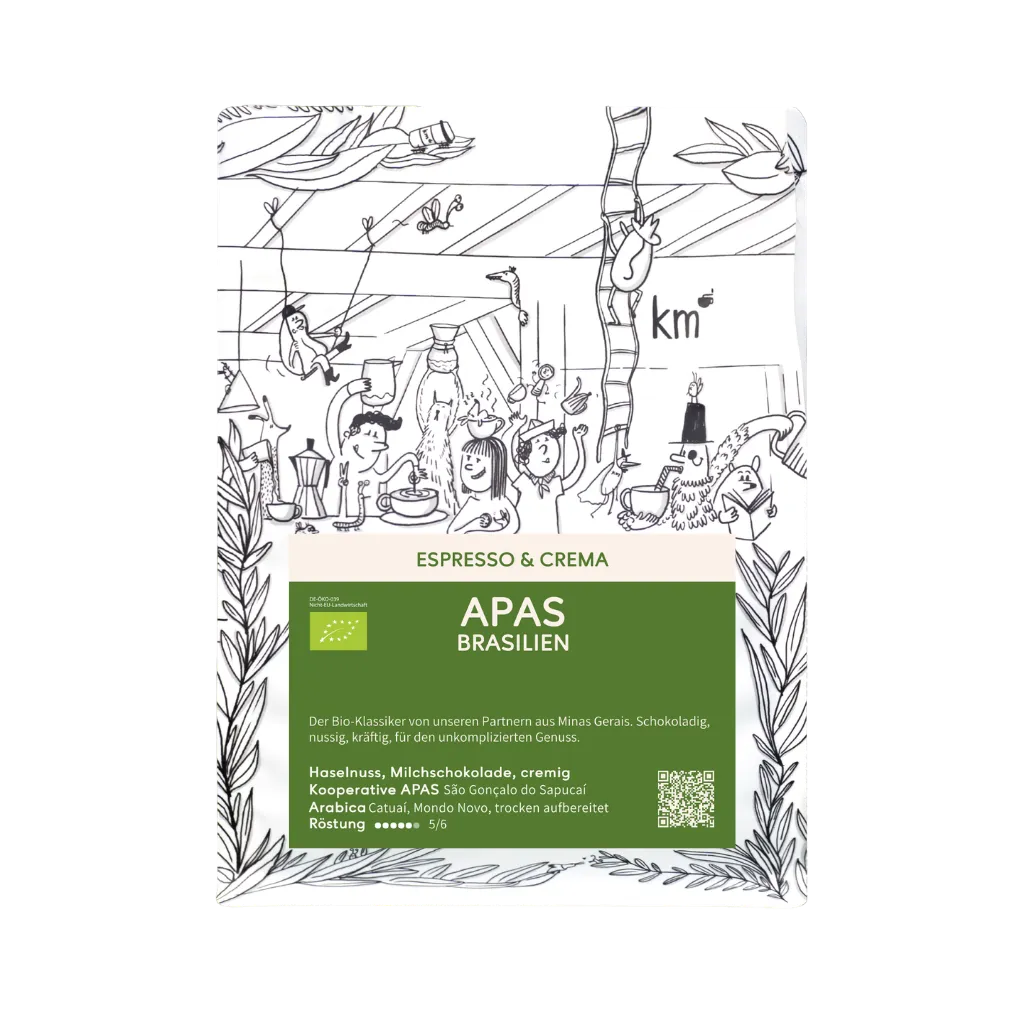
It's remarkable: a single thin shim washer brings the De'Longhi KG521 back into the game. A double espresso pulled with 18 grams of finely ground coffee yielding 45 grams of our Apas Espresso in the cup tasted drastically better on our evaluation scale.
Retention, Speed, and Dose Consistency
The washer modification doesn't magically turn the De'Longhi KG521 into a high-end commercial grinder, but it turns it into a viable option in the ultra-budget category.
It also offers several surprising strengths. Operating at 86.2 dB, its noise output sits in a moderate range. In terms of retention, it performs well with only 1.4 grams total retention. With single-dosing retention measuring just 0.2 grams when purged for 30 seconds, the De'Longhi KG521 is actually usable as a single-dosing grinder. However, grinding 17.1 grams in 10 seconds makes it a relatively slow grinder.
| Metric | De'Longhi KG521 | Rating / Category |
|---|---|---|
| Noise Level | 86.2 dB | Moderate volume |
| Retention | 1.4 g | Good |
| Single Dosing Retention | 0.2 g | Suitable for single dosing |
| Grinding Speed | 17.1 g in 10 s | Slow |
| Dose Consistency (Std Dev) | 0.28 g | Average |
Timed dosing, however, remains disappointing. While dose consistency (0.28 g standard deviation) is average, dialing in precise dose weights via the timer dial is almost impossible.

The side dial only allows coarse dose adjustments in 4 to 6 gram increments. The secondary "Light - Normal - Strong" switch attempts micro-adjustments in ~2 gram jumps. At setting 5 on "Strong", we got 22 grams of coffee. "Normal" yielded 20 grams, and "Light" dispensed 18.2 grams. Hitting a precise target dose of 19.0 grams using the factory timer is virtually impossible.
Particle Size Distribution
We performed particle size analysis on the unmodded stock unit, testing machines in their out-of-the-box factory state as consumers receive them.

Accordingly, factory grind sizes were coarse, resulting in a low percentage of fines compared to true espresso grinders. Beyond the coarse factory limit, the particle distribution curve revealed an issue with mechanical adjustment tolerances.
In Test 4, we set the dial to its finest setting (Setting 1). In Test 7, after sweeping coarseness to filter settings, we returned the dial back to Setting 1. We expected identical particle distributions. However, particle curves showed a noticeable variance between runs, revealing mechanical play in the adjustment collar that compromises shot-to-shot consistency.
De'Longhi KG521 Verdict
Out of the box, the De'Longhi KG521 cannot grind fine enough for true unpressurized espresso extractions. The stock settings are simply too coarse. Only through performing the washer modification can it achieve true espresso-fine grinding.
Thus, we can only recommend this grinder to home baristas willing to open up the burr assembly and install a custom shim washer. Once modified, the De'Longhi KG521 becomes a surprisingly viable option in the ultra-budget category.
We particularly like its performance as a budget single-doser. The clunky timed dosing dial becomes irrelevant when weighing whole beans per dose.

Check out our complete Espresso Grinder Comparison Guide for all budget alternatives.