






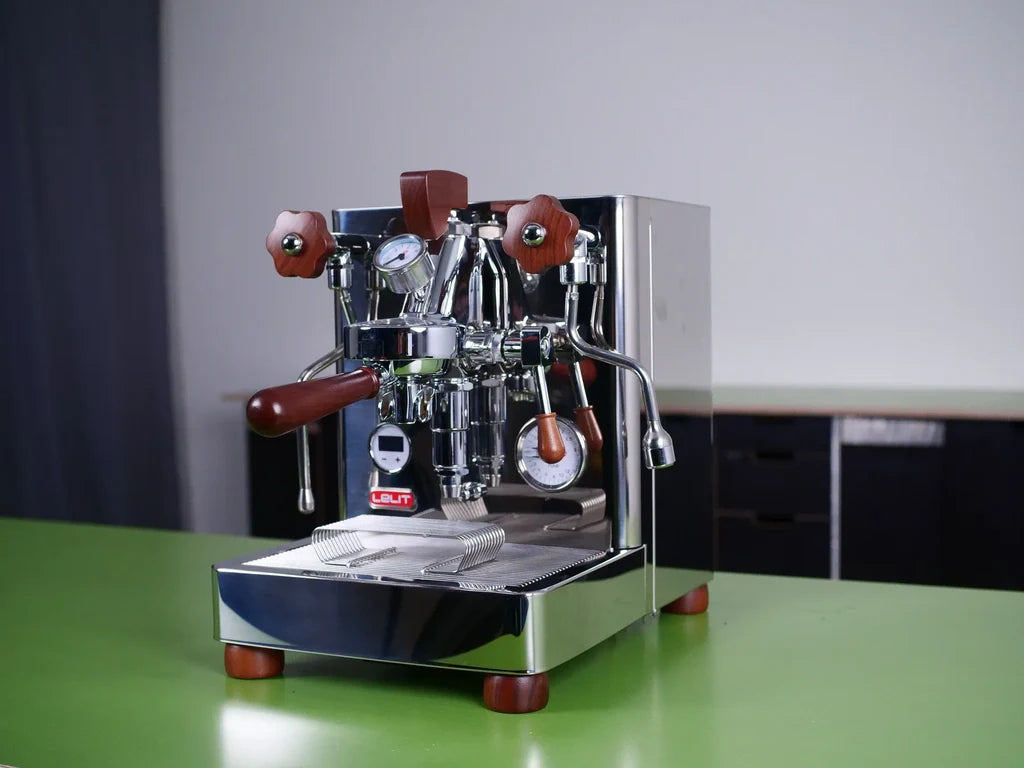

We can talk about the Lelit Bianca V3 from various perspectives and barista levels. It is a very good dual boiler espresso machine that, in terms of its core capabilities as a dual boiler, doesn't need to hide from any other dual boiler in its price range. While the potential for adjustment and operation is endless, we can operate the Bianca V3 just as easily as any other espresso machine with a Faema E61 brew group.
We state this clearly and explicitly at the beginning of this article so that no beginner home baristas get lost later on when we delve into the depths and possibilities of the Lelit Bianca V3.
You decide what kind of espresso machine the Bianca V3 is for you and how you operate it. You can pull the brew lever and let the rotary pump work at a standard pressure of 8–9 bar. Or you can open up the world of flow rate, pre-infusion, and puck resistance.
In any case, you can grow as a home barista with the Lelit Bianca V3. And there are hardly any limits to the possibilities.
Buy the Lelit Bianca V3
The following specialist shops sell the Lelit Bianca V3, and we recommend buying from these businesses. All of them offer the option to adjust the machine's offset.
Germany:
Austria:
We are looking for specialist partners for you from whom we know they provide good work and good service, and we are in close contact with the mentioned retailers. The links are so-called affiliate links. If you order through one of these links, you don't pay a cent more – but we receive a small commission, which we invest directly in new testing equipment.
We continue to search for competent partners in the DACH region for you.
About the Lelit Bianca V3 Review
We purchased our model of the Bianca V3. When Lelit launched new color models of the machine, we were offered one free of charge for marketing purposes. We declined. We generally buy the espresso machines we test. In a few cases, we have borrowed very expensive espresso machines, such as the Faema Faemina, on loan. If so, we indicate this. Furthermore, we do not have a consulting partnership with Lelit and have tested this espresso machine, like all others, to the best of our knowledge and belief. In addition to the present espresso machine, we have compared and measured numerous Lelit Biancas in our home barista courses over the past few years (and adjusted the offset, more on that later).
This test took a long time. This is partly because the Bianca V3 is a complex espresso machine. On the other hand, it is because we wanted to understand and investigate the entire topic of flow rate control, pressure profiles, and their consequences for taste, as well as the change in the coffee puck during brewing, more deeply. This process is far from complete. Nevertheless, today we are ready to present a first version of a review of the Lelit Bianca.
We are working on many more investigations into the above-mentioned topics, which will sometimes occupy us for months or even years. Therefore, this test will continue to grow with our research and learning. Do not understand it as completed, but as a preliminary picture describing the Lelit Bianca as an espresso machine.
Do you have experience with the machine? Then write to us in the comments. If you have questions about the machine, you can also reach us by email. However, we are grateful if you first ask the community, because many people have the Bianca espresso machine at home.
Test Report and Material Collection for the Lelit Bianca V3
Here's an overview of what we'll be releasing about the Lelit Bianca.
-
Long review video (German)
- Videos in English and Spanish (release to follow)
- Material collection with curves, measurements, etc.
- Test report
In a nutshell – that's the Lelit Bianca V3
- Flexible espresso machine that can grow with you. Good for beginners and with a steep learning curve for those who want to delve into the depths of espresso brewing.
- Quiet dual boiler with sufficient power and good temperature stability.
- Double flow rate control via paddle and electronic low-flow control.
- Suitable for light, medium, and dark roasts, short and long coffee beverages, and for milk frothing.
- Smart in many ways, e.g., through repositionable water tank or fast heat-up time through override at the beginning.
- Low power consumption without steam boiler. High energy consumption with steam boiler.
The Dual Boiler and the Faema E61
A "Faema E61 with dual boiler" sounds as ordinary as many other espresso machines on the market. But the paddle on the thermosiphon already signals: "I am different." No, not different like a La Marzocco Mini with a fake paddle, which is nothing more than a brew start, but different, with manual flow rate control. And not only that: Lelit spoils us in version V3 with a double needle valve, which we can control manually and electrically. More on that later.
Let's stick to the Faema E61 and the dual boiler. The former is so classic in principle that we can refer to what feels like four dozen articles in our blog. Except for the insertion of the needle valve and the downstream pressure gauge, which shows the pressure against the resistance of the coffee puck.
The Lelit Bianca V3 features a brew boiler of 800 ml and a steam boiler of 1.5 liters. In terms of size, this is in the mid-range for boiler espresso machines and promises solid performance. The water is driven by a quiet rotary pump, which we measure at 61 decibels.
The 2.5-liter water tank is an indication of what Lelit likes to do more often: think outside the box. Symbolically, the water tank is not integrated into the espresso machine but hangs on the back. If we loosen one screw at the top and one at the bottom, the tank can be removed and optionally attached to the left or right side of the machine. Sounds nice, but what for? The Bianca gives you the flexibility to be placed on the right or left, and those who don't have depth on their work surface will also be happy about the reduction of the back part. However, the water tank itself can only be removed upwards, but it slides in nicely and does without hoses.
Other noticeable features: A double pressure gauge for steam and brew pressure, the "Lelit Control Center" with PID control, and many smart setting options.

Size, Design and Workmanship
The Lelit Bianca comes standard in stainless steel with wooden handles and a wooden paddle. Optionally, it is also available for a considerable surcharge in white or black. The aesthetics, for diplomatic reasons, are in the eye of the beholder. We have heard everything from "old" to "stylish" about the Lelit Bianca. The fact is that the stainless steel variant, like all stainless steel behemoths, seems to chronically attract fingerprints. If we tap against the machine, it sounds tinny. Other espresso machines in the same price range appear more solid in terms of material thickness. The white and black variants, however, appear significantly more robust, even if that may only be the additional coating of the stainless steel body.
The Bianca V3 is a compactly designed espresso machine with a height of 40.5 cm at the paddle. The cup tray of the machine is at a height of 38.5 cm. The Lelit Bianca has a width of 29.3 cm and a depth of 50.0 cm. However, the water tank can be mounted on the side, reducing the depth by 8.7 cm. Also to be considered: The portafilter protrudes at the front and adds 9.5 cm to the depth. The weight of the machine is 27.0 kg.
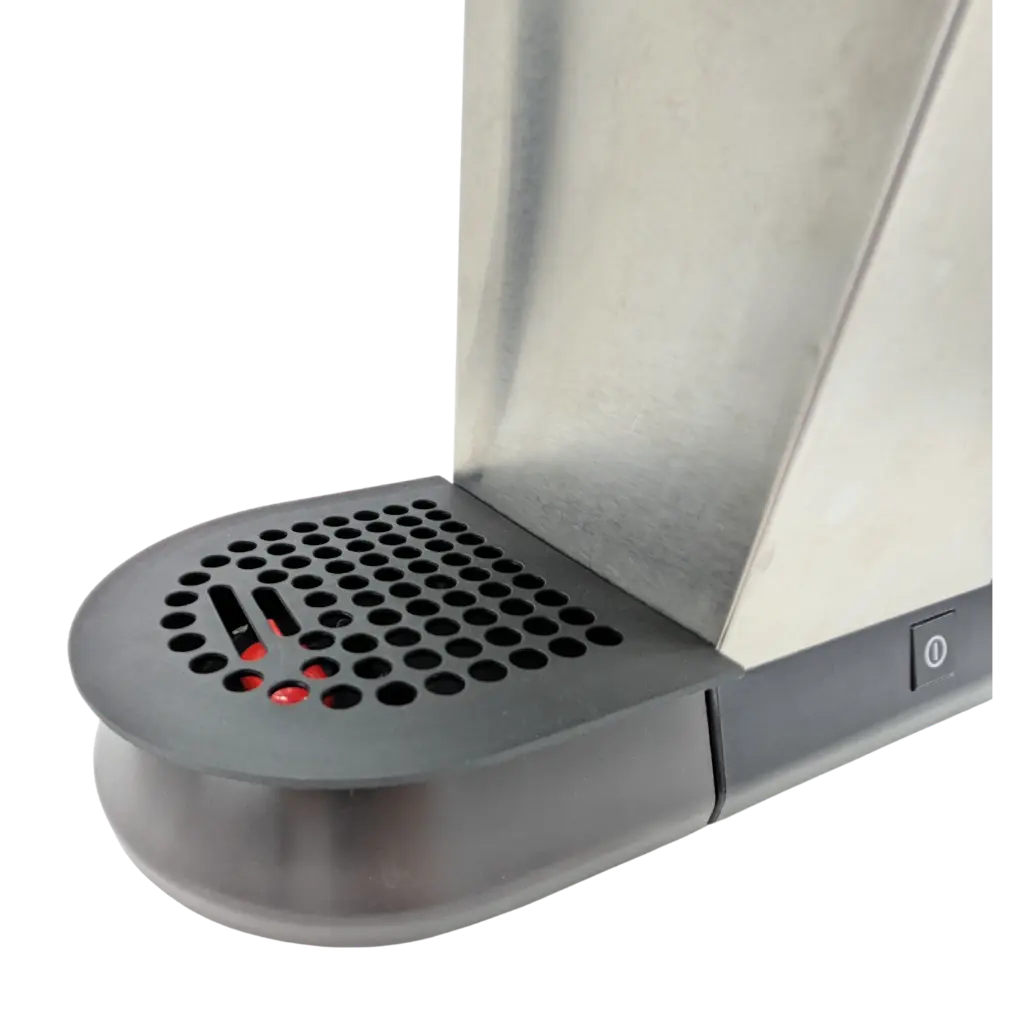
We have already mentioned the low noise level of the Bianca. In addition to the quiet pump, the rubber protectors in many transition areas are responsible for this. Whether on the grids of the drip tray, the cup tray, or the lid of the water tank, rubber stoppers everywhere prevent vibrations and thus noise.
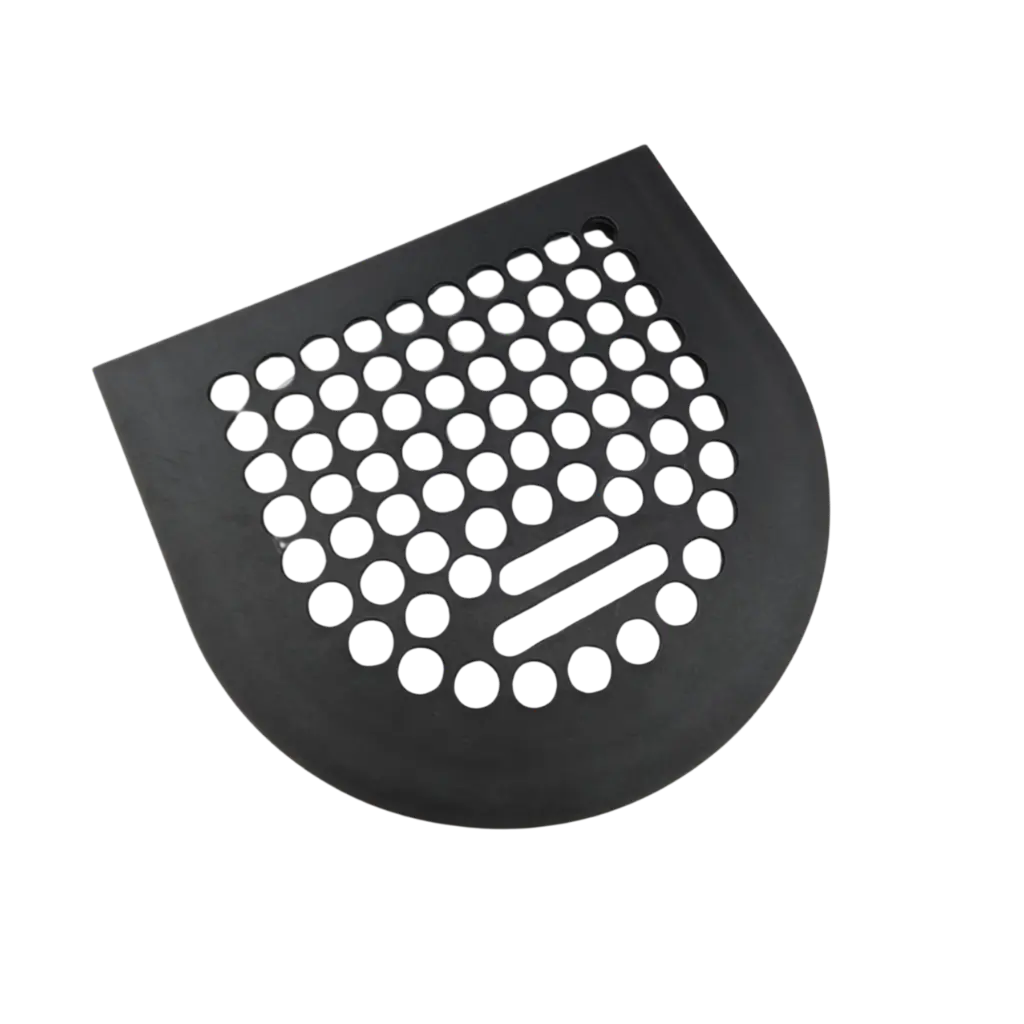
Below the drip tray, we notice sharp edges. However, the visible edges are curved and thus unproblematic. The drip tray holds 0.98 liters.
Scope of Delivery
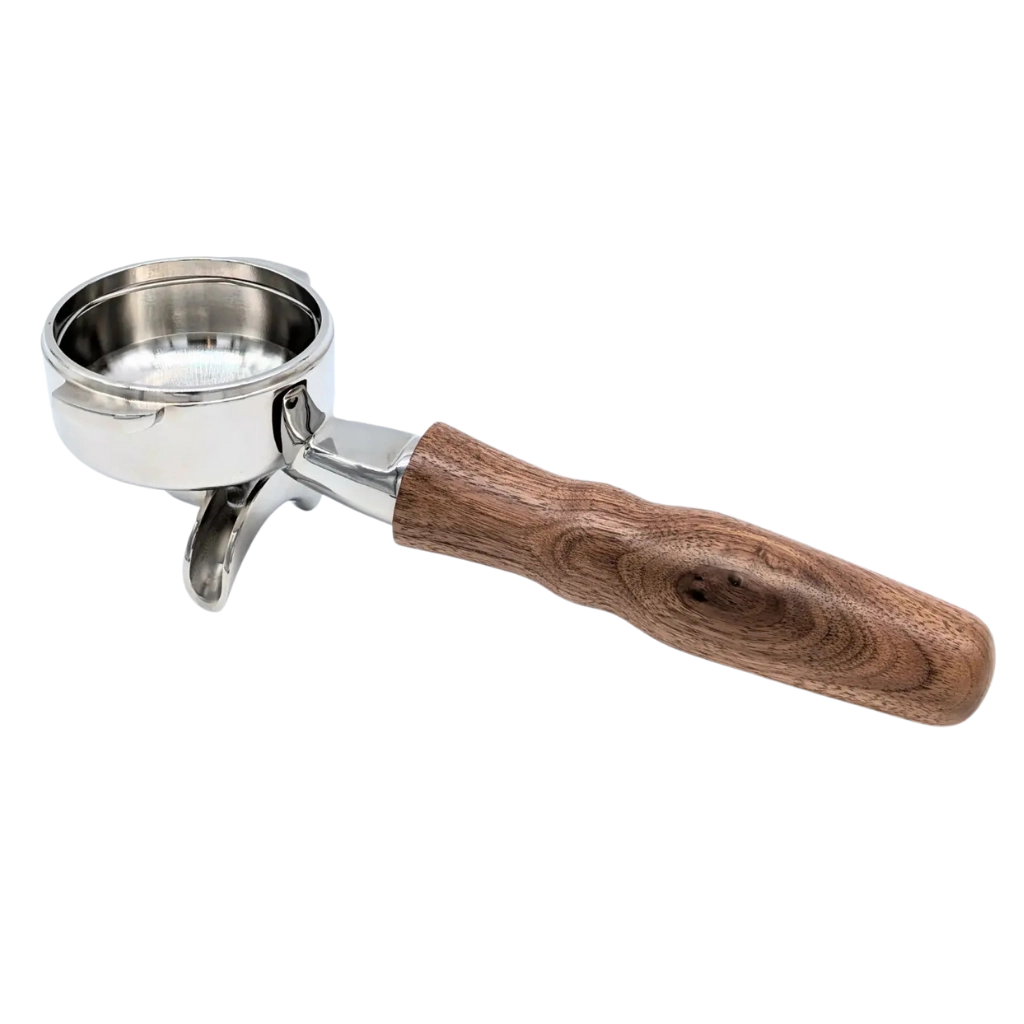
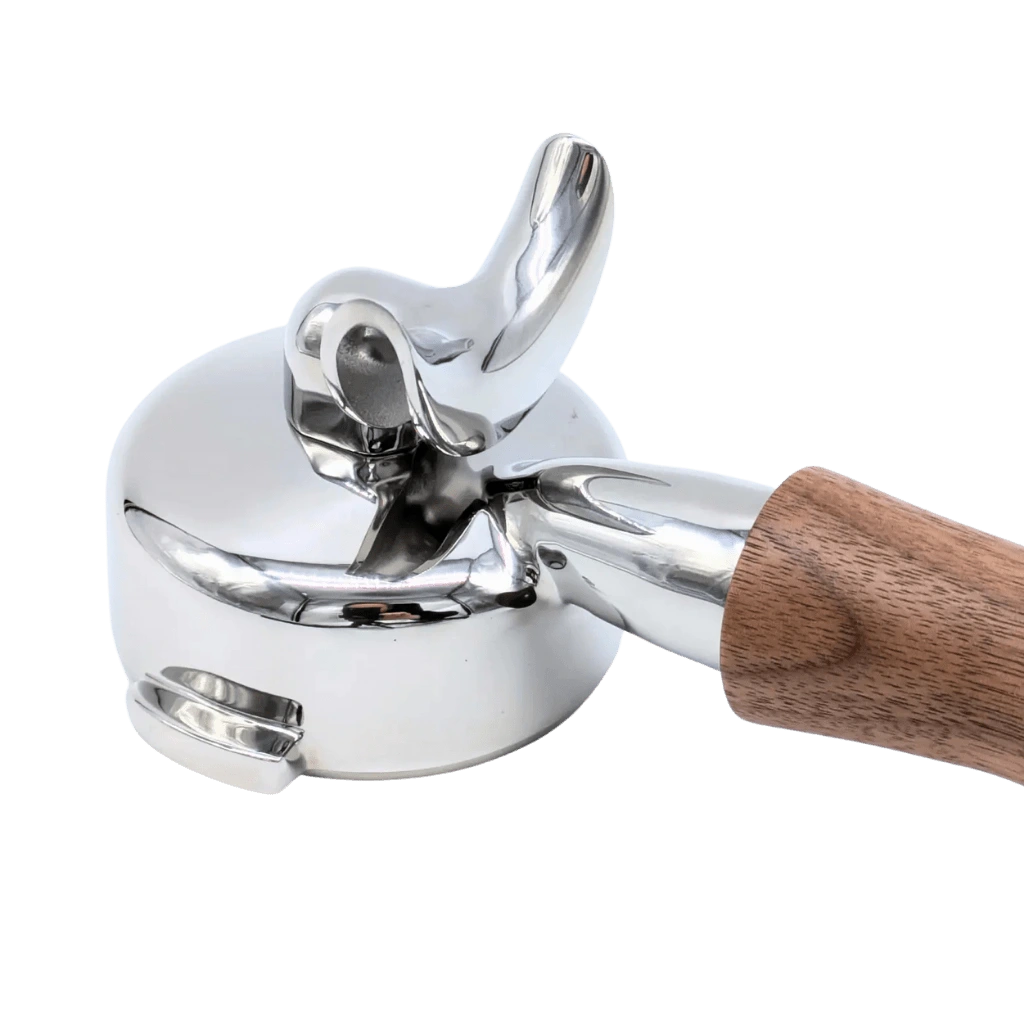
The Lelit Bianca's scope of delivery is impressive. In addition to a bottomless portafilter, the typical Lelit portafilter with two spouts is also included. These are so close together that they are also well suited for extracting into a single espresso cup. Therefore, it can also be used as a 1-cup portafilter. However, the proximity of the two spouts requires precise aiming to fill two cups. Since the distance between the spout and the drip tray is quite high, an included grid riser facilitates aiming. Only balancing a scale on it could be a challenge.
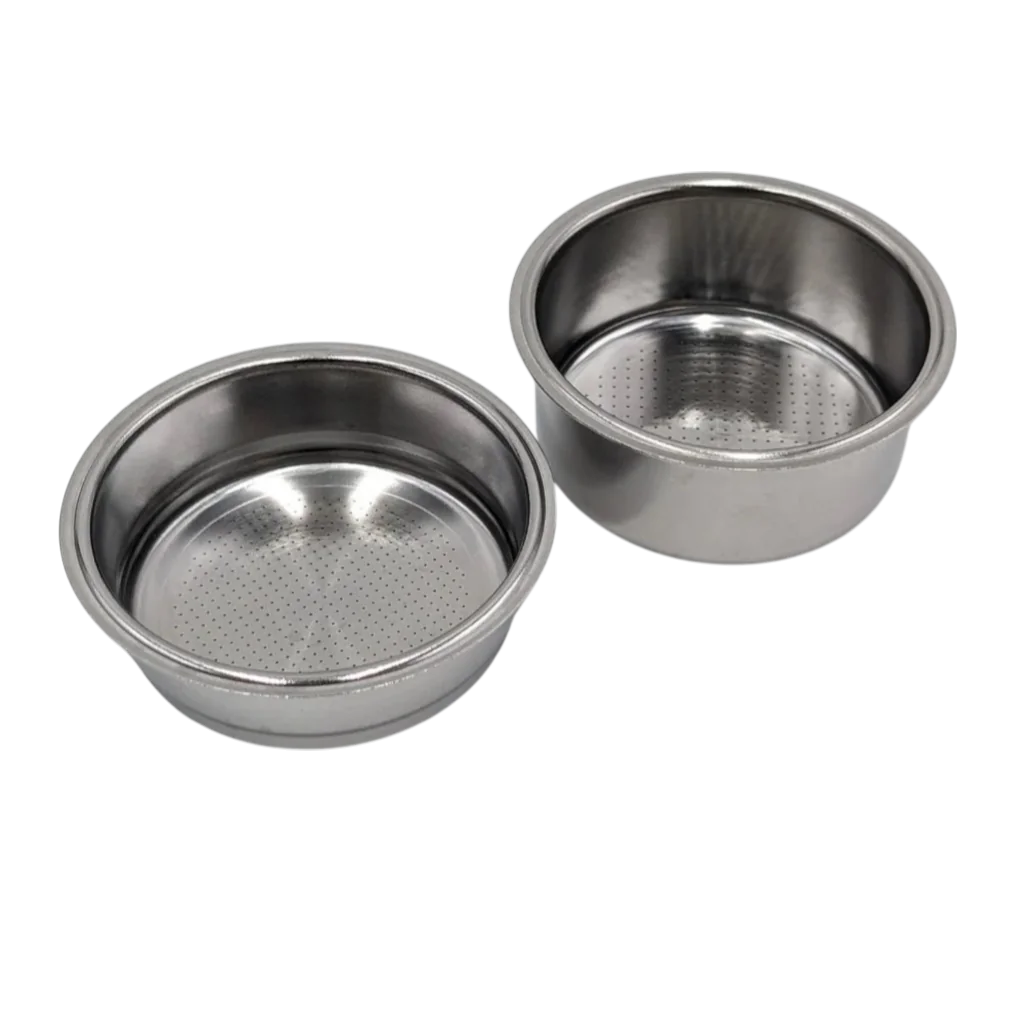
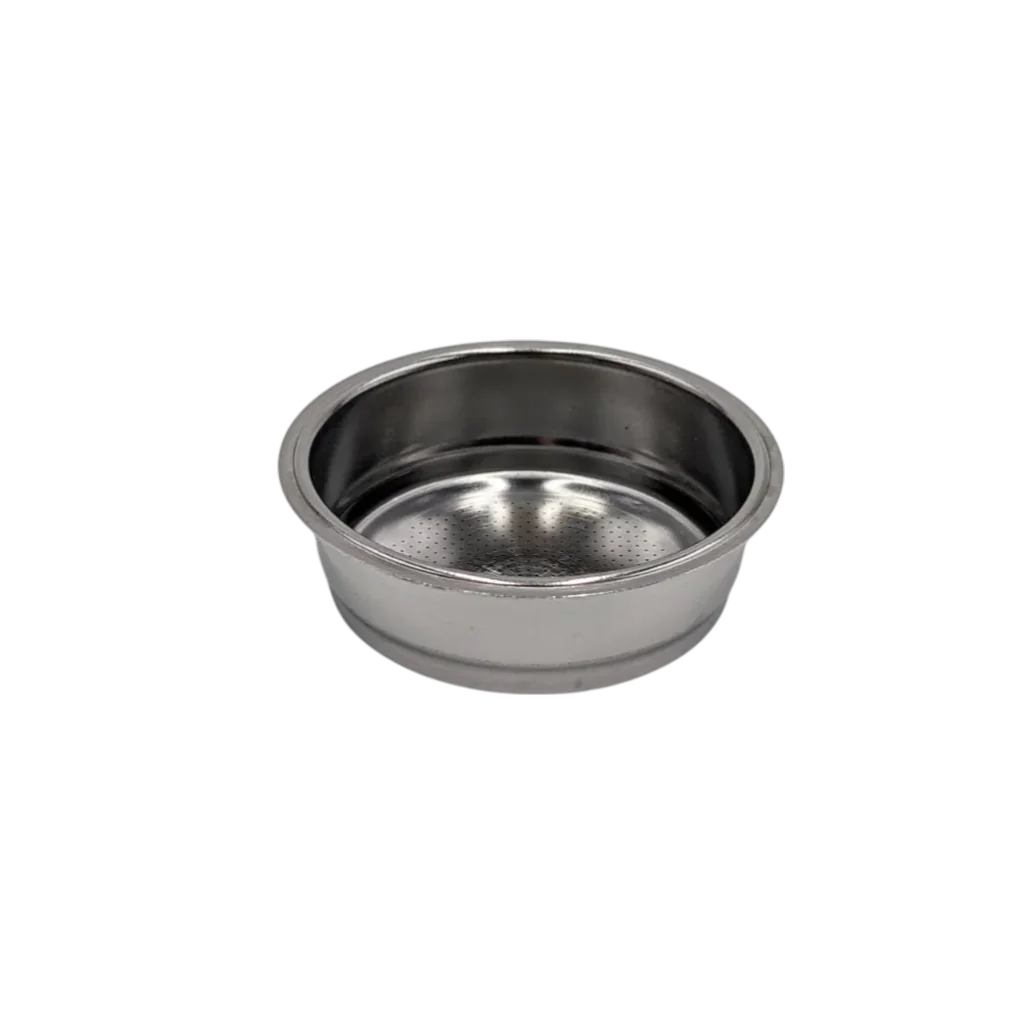
Also included are a water filter cartridge, which is not recommended in our filter cartridge test, a blind filter, a plastic spoon (Why?), and an 18g and a 20g basket.
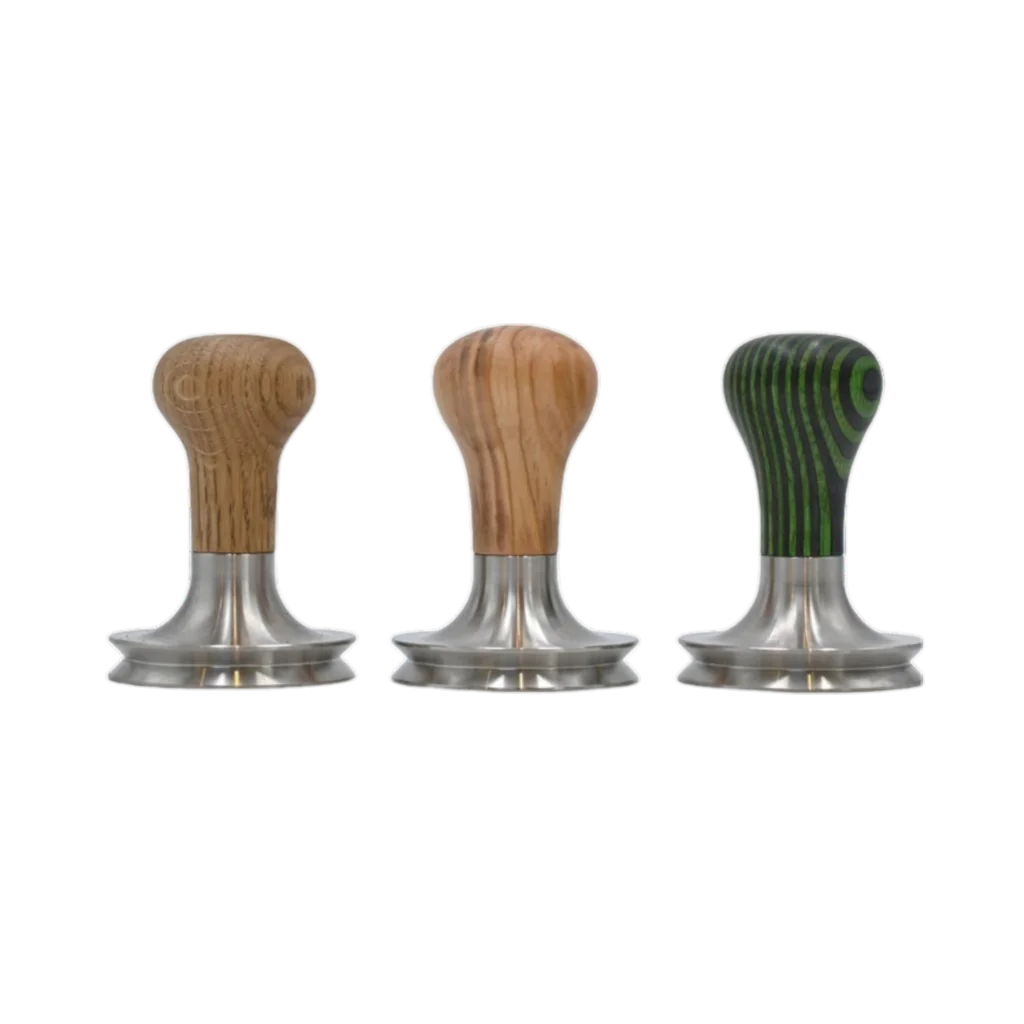
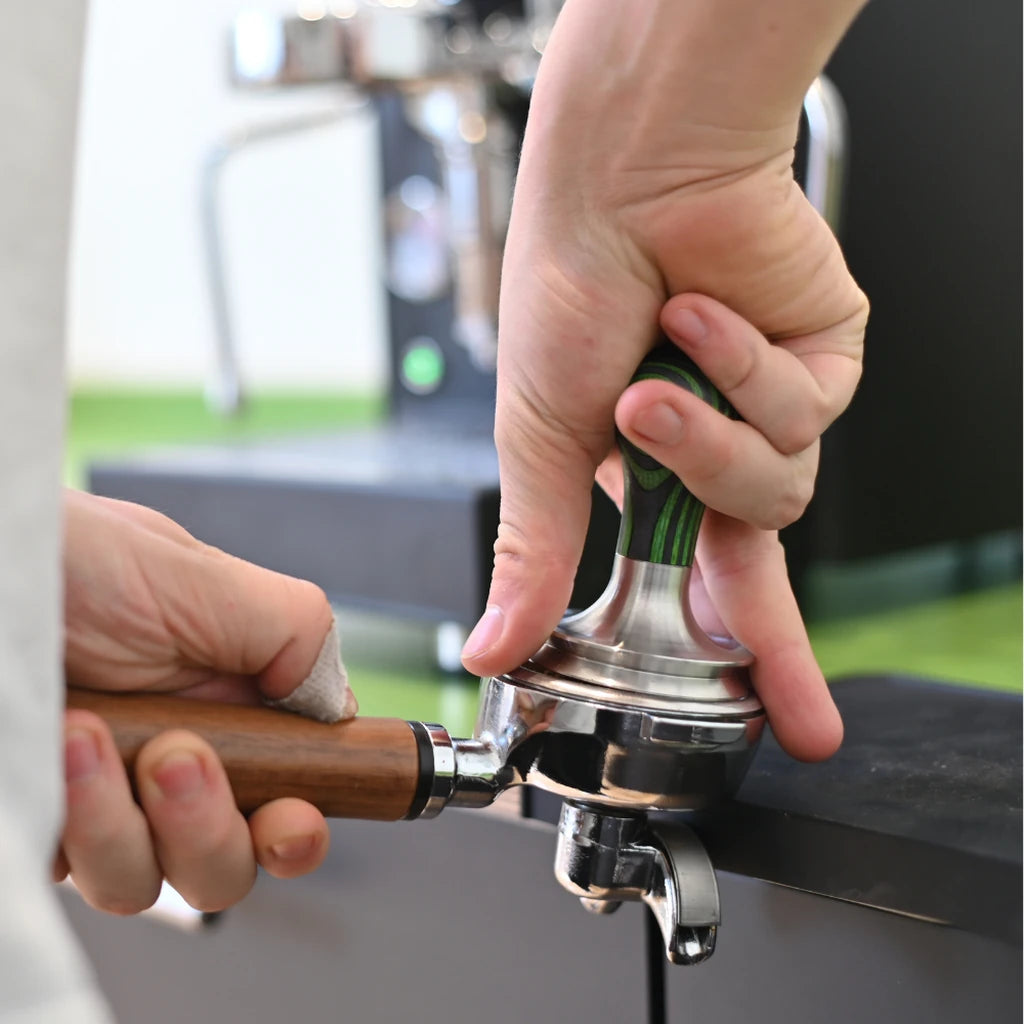
We particularly like the polished tamper, which according to Lelit has a diameter of 58.55 mm and is almost flush with the supplied basket. The distance to the rim is only 0.4 mm. Incidentally, the Lelit Bianca's portafilter holder is standard 58 mm, so many portafilters are compatible.
In addition to a connection kit for fixed water, a microfiber cloth and an additional 4-hole tip for the steam wand are also included.

Lelit is Smart
Time and again, the manufacturer Lelit from Baitella, Brescia, in Italy surprises with an extra mile. Faema E61 espresso machines are abundant, and most of them work quite similarly. But Lelit not only relies on this proven technology but doesn't stop there. The engineers in the company constantly look for smart solutions to improve the machine.
This is noticeable in the details, such as the portafilter bent forward, which shows the home barista the creamy espresso flowing out. This goes in-depth when we look at the control options of the LCC or the strategic overheating when starting the machine. Lelit deliberately heats the brew boiler beyond the target temperature to heat the portafilter faster, and then lets the temperature drop back to the desired value. With the Lelit Bianca, this leads to a heat-up time that we measure at 17 minutes until the target temperature and heated portafilter are reached. This is about 8 to 12 minutes faster than with the average Faema E61 portafilter espresso machine.
The double flow rate control, the programmable pre-infusion, and the convertible water tank outside the machine are further evidence that even a proven system can accommodate innovative ideas.
Access to the boiler below the machine makes servicing the Lelit's heating element significantly easier, as it does not have to be removed.

10 seconds of low flow at the start (slow flow rate).
Flow Rate Control squared
The Lelit Bianca V3 is equipped with a dual flow rate control. An upstream needle valve can be programmed for low and normal flow (low flow = low-flow), and a downstream needle valve can be used with a paddle for further flow reduction.
It's astonishing how little is discussed about the water flow rate in espresso machines, considering its crucial importance for beverage preparation. Pressure is often specified, and not infrequently, especially with inexpensive espresso machines with vibratory pumps, a pressure potential of 15 bar is advertised. However, high pressure does not equate to good coffee or even consistent extraction.
Excursion: Pump
The pressure is generated by the espresso machine's pump. Inexpensive espresso machines are equipped with a vibratory pump, which relatively sluggishly translates the speed of the water delivered to the portafilter to then build up pressure against the coffee. A rotary pump gets going faster, and accordingly, the pressure buildup against the puck and in the manometer is significantly quicker. With rotary pumps, we set the grind slightly finer. Nevertheless, the first extraction drops often appear after just 5 to 6 seconds. With a vibratory pump, we usually wait over 8 seconds. The third, very rarely used pump is the gear pump. This pump can be regulated up and down in its "pressure application" during brewing. Vibratory and rotary pumps traditionally deliver the set pressure relatively statically. However, espresso machines like the Decent or San Remo YOU show that even with these pumps, more flexibility is possible than often used.
We can reduce the actual pump pressure on the coffee puck by reducing the flow rate through valves after the pump. In the case of the Lelit Bianca, two needle valves are used for this. Figuratively speaking, we, or rather the needle valves, "sit on the hose." But why does Lelit equip the Bianca with two needle valves? And what is the consequence of the reduced flow rate, which then also manifests itself in the pressure on the puck?
Does Low Flow Mean Consistent Extraction?
Yes and no. The brewing of an espresso can be divided into different phases: a saturation phase, during which the brewing water fully wets the entire coffee, a main extraction phase, and finally a phase in which the extraction capacity of the coffee puck decreases and the resistance of the coffee puck rapidly breaks down. This knowledge helps to modulate the flow in espresso machines with flow rate control.
If we brew an espresso not with full pressure of 8 to 9 bar against the puck, but for example with 6 bar, it is easier to achieve a more even extraction. High pressure increases the likelihood of channeling and also reduces the resistance of the coffee puck more quickly. However, with low pressure, we cannot extract everything from the coffee.
However, those who want to spend little time on careful puck preparation are generally better off with lower brewing pressure. The reduction of pressure is not limitless, because if the pressure built up against the puck drops too much, the extraction is reduced or the strength of the coffee beverage is too low. In terms of taste, it will no longer be perceived as espresso.
Low Pressure at the Start
Low pressure at the beginning, in conjunction with very low pressure, allows for complete water saturation of the coffee puck. If this can be achieved before full brewing pressure is applied, a more even extraction is guaranteed. If dry spots remain in the coffee puck, they will be avoided by the subsequent water. Dry coffee is fundamentally water-repellent (hydrophobic) until saturated.
If a pressure increase follows complete saturation, the coffee puck can offer consistent resistance for a long time, provided it has been carefully prepared and compacted.

Manual Flow Rate Control
The Lelit Bianca's paddle allows for manual control of the espresso machine's flow rate. Almost all possibilities are available to the home barista here. First, the brew lever of the espresso machine must be pulled.
When the paddle is at 9 o'clock, there is hardly any water flow delivered. When the paddle is at 6 o'clock, we measure 2.5 to 2.8 g/s on the scale without resistance. At 3 o'clock, we observe a flow between 4.9 and 5.1 g/s. With the paddle fully open, we achieve just under 6 grams per second of flow on the scale.
Important: These values are not measured against pressure. Against the standard pressure of our Scace portafilter, the pressure manifests as follows:
With the back pressure of the Scace, we measure a flow of around 2 g/s and 4.8 bar pressure at 6 o'clock. At 3 o'clock, we achieve 2.5 g/s with 7.5 bar pressure against the Scace. Fully open, we reach between 2.7 and 2.8 g/s with 8.1 bar pressure. These values should be interpreted with caution. The water flowing out of the Scace is sprayed onto the bottom of the cup with relatively high pressure, which negatively affects the accuracy of the scale's measurement.
The pressure values with the Scace only provide an approximation of what happens in a portafilter and when used with coffee. During coffee extraction, the resistance of the coffee decreases over the course of the extraction.
For your Lelit at home, it is important that you can adjust the settings of your needle valves to control the flow in each area.
Tips for working with the paddle
To achieve repeatable results, we generally recommend working with fixed positions. A changing pressure on the manometer is normal because the resistance of the coffee puck reduces with brewing time.
By the way: If the paddle is not exactly at 6 o'clock, it has only minor effects. However, orienting towards fixed points still makes sense.
The paddle also offers possibilities to "repair" extractions. If the water rushes through the puck too quickly, a decisive grip can reduce the flow rate and thus slow down the extraction. This will taste better than a watery, super-underextracted shot.
Electric Flow Rate Control
While the Lelit Bianca V2 was only equipped with manual flow rate control, the V3 version features additional electric control. This not only gives the machine many new possibilities but also allows defining fixed profiles and sequences. The reproducibility of extractions has significantly increased.
The electric needle valve control is not as flexible as the manual one. Essentially, two "low-flow" phases can be defined: once at the beginning and once at the end. At the beginning, the duration of the low flow is set. At the end, the start of the low flow is set.
We measure approximately 1.5 - 1.7 g/s and 3.1 Bar with the resistance of the Scace in the low-flow phase.
Nesting of electric and manual flow rate control as well as pre-infusion
Nesting manual and electric flow rate control unlocks further operating possibilities for the Lelit Bianca. For example, the low flow can be further reduced by using the paddle.
The programmable pre-infusion offers additional possibilities. Activating pre-infusion enables a pause option. If pre-infusion is not further nested with low flow, the Bianca starts with normal flow and pressure and then pauses for a selected time.
It makes sense to combine the pre-infusion time with a low-flow time. For example, 10 seconds of pre-infusion could be combined with 10 seconds of low flow and a subsequent 5-second pause.
Espresso Quality Potential
We've discussed the possibilities of preparing espresso. Of course, we still need to get hands-on, adjust the grind size on a good grinder, and prepare the espresso cleanly. If that succeeds, the espresso will also succeed. The Lelit Bianca V3 provides all the prerequisites for good espresso. The options discussed above are paving the way for this, as is the good temperature stability, which we will discuss next.
We are often asked whether a particular espresso machine "suits" certain coffees. And indeed, there are some espresso machines that excel with lighter or darker roasts. We award the Lelit Bianca the distinction: "can do everything". From a complex Doña Margarita from our Purple Line to the more robust all-rounder Dreispitz, and even filter coffee brewed as espresso – with the Bianca and its influence options, virtually anything can be brewed.

Temperature Stability
Regarding temperature, three questions are interesting:
- How quickly does the espresso machine heat up?
- How consistent is the temperature during extraction?
- How consistent is the temperature from one extraction to the next?
To check temperature consistency and heating time, we use the Scace 2 with a K-type sensor and a PCE-T 330 data logger. We use this to record the WBC protocol and the KM protocol, which we use for heating control, e.g., at 15, 20, or 25 minutes. In between, we let the espresso machines cool down completely for a whole day. So, a really elaborate testing protocol.
According to our measurements, the Lelit Bianca reaches its target temperature of 93 degrees Celsius (+/- 1 degree Celsius) after 17 minutes. While the initial temperature in our measurement was an average of 92.03 degrees, the temperature rose to 93.16 degrees over five extractions, each one minute apart. The standard deviation over these five extractions, measured from second 4 to 25 of the extraction, was 0.99 degrees in the KM protocol after 17 minutes. This is a good value.
When measuring the WBC protocol after one hour of operation, we achieve a standard deviation of 0.69 degrees Celsius. This means the Lelit Bianca is not far from the World Barista Championship target of 0.55 degrees Celsius.
We can confirm very good temperature stability for the Lelit Bianca from shot to shot and during the shot. For longer idle times, as with all Faema E61 brew groups, we recommend a flush shot before the extraction.

Offset Problem
The biggest and most important problem to consider is the sometimes massive offset. Over the past six months, we have measured over 20 Lelit Biancas. The Bianca is also regularly with participants from our Home Barista courses at our academy. We also use this opportunity to check the temperature of the espresso machines. Of course, we also want to send the participants of our courses home with a well-calibrated espresso machine (all Home Barista participants bring their espresso machine as standard).
The offset of the Lelit Bianca typically ranges between 4 and 8 degrees Celsius. In all cases so far, this was negative, meaning the machine was effectively too cold. Offset means that there is a measured deviation between the temperature displayed on the PID control and the effective brewing temperature. To rely on the temperature display, a check of the temperature by a specialist dealer is essential. Be careful when buying online – a cleanly set temperature is not likely.
The offset of the test machine was 6 degrees Celsius. This means that at a displayed temperature of 93 degrees, we effectively had a brewing temperature of 87 degrees. It is important to note that the Lelit control knows two offset values: one on the user interface and one in the technician or sub-menu. The latter value is the one that needs to be adjusted.

Steam and Frothing Performance
From a dual boiler costing over 2000 Euros, we expect not only good frothing performance but, of course, also parallel frothing during espresso extraction. What feels confirmed when frothing can also be objectively illustrated. The frothing performance – and here again, the spectrum of possibilities that Lelit has provided – allows us to tailor the Lelit Bianca to everyone.
To assess the steam power, we use 300 ml of 20-degree cold water and check how long it takes to heat it to 60 degrees.
In the standard setting with a 125-degree boiler temperature, we need 47 seconds with the standard 2-hole nozzle. If we want more power, we set the Bianca to 135 degrees. The same exercise is then completed in about 36 seconds. If even more pressure is desired, switch to the 4-hole nozzle, which is also included in the scope of delivery. Now we need 25 seconds to heat the 300 ml to 60 degrees.
As mentioned: The Lelit Bianca can be the frothing partner everyone desires. Those who want to froth well and safely set it to 4-hole at 135 degrees. Those who prefer to take their time to go through the frothing phases calmly stick to 125 degrees and try it with the 2-hole nozzle.

Energy Consumption of Lelit Bianca
Depending on how espresso machines are used, their energy consumption varies. Espresso machines primarily consume electricity when heating the boilers to temperature. The power consumption of the pump or displays is low compared to the energy-guzzling heaters in the boilers.
Those who only drink espresso consume significantly less electricity than cappuccino drinkers. This is assuming the often larger steam boiler can be switched off. With the Lelit Bianca, this is possible. If we only switch on the 0.8-liter insulated brew boiler, energy consumption is significantly reduced. We reach a consumption of 0.133 kWh for heating up and preparing 5 double espressos. In this scenario, preparing one espresso consumes 0.1194 kWh, including heating up.
If the steam boiler is also switched on, consumption is more than three times higher. We measure 0.4259 kWh, taking into account the same criteria with heating up and 5 double extractions. Preparing one cappuccino, including heating up, costs 0.34616 kWh.
Conclusion on the Lelit Bianca V3
When we consider the overall performance of the Lelit Bianca, what remains above all is appreciation for a consistently excellent espresso machine. Few wishes remain unfulfilled, as the overall package is right. The variety of setting options and variants in the area of flow rate control, the possibilities of the LCC, the good technical implementation, and the extensive scope of delivery make the Lelit Bianca an outstanding espresso machine. In addition, the espresso machine is very competitively priced, and not just when we consider the overall package in relation to other dual boiler espresso machines.
Only a few wishes remain that would make the Lelit Bianca the perfect espresso machine: a precise and good pre-setting of the offset, slightly more material thickness on the sides, optimized energy usage when using the steam boiler, and finally, a quiet wish for a flow meter and thus a programmable shot stop.
Honestly, it might even be a good thing that the Lelit Bianca can't do all that too. Because even now, not only espresso machines in the same price range have great difficulty keeping up with the Lelit Bianca.
At the beginning, we asked who the Bianca is the right machine for. Even at the end, we would say: It is an espresso machine that can grow with you, and therefore we have no reservations in recommending the investment in this machine to even espresso beginners.
Appendix and Supplementary Materials
Pressure and Flow Rate Measurements
Below, we show you some ways the Lelit Control Center can be used to run different profiles. These curves were recorded using the Espresso Smartsensor and its accompanying app. However, we used a Scace 2 as a portafilter. The curve would look slightly different with coffee because the resistance would decrease when using coffee. The resulting pressure on the puck would therefore decrease. However, we find this visualization helpful to illustrate the principle of the different curves.

5 seconds pre-infusion followed by a 5-second pause.

5 seconds pre-infusion, 5 seconds pause with 20 seconds low flow. After a total of 40 seconds, low flow again.

5 seconds low flow pre-infusion, 5 seconds pause.