







In 2024, Ligre not only introduced an espresso machine called Ligre Youn, but also the first grinder from the spin-off of the German-Austrian company Gronbach. Ligre Siji is the name of the espresso grinder in Ligre design, which thanks to an integrated scale promises consistent dosing of ground coffee.
We conducted an initial test of the grinder at the beginning of the year. At that time, we still had some difficulties using the grinder, as the scatter, the angle of the portafilter holder bracket, and the fill height of the basket in combination with static charge distributed some of the coffee instead of grinding it into the portafilter.
After our first test of the production model, Ligre quickly made improvements and sent us a revised unit in exchange for the grinder we had purchased. We were accordingly eager to see whether the Siji met our expectations for a high-quality espresso grinder with weight dosing. In typical Kaffeemacher style, we have thoroughly measured the grinder, gathered practical experience, and now share our results after hundreds of espresso shots and measurements.
Design & Build Quality
Optically, the Ligre Siji appears as an attractive unit together with the Youn espresso machine. In the current version, the grinder is finally parallel and flush with the machine – a detail that bothered us on the first model. The design looks modern and clean: the front and sides are characterized by anodized aluminum, giving the Siji a premium appearance. However, upon closer inspection, you can also spot less noble materials. The bean hopper lid is made of plastic on the underside (with a seal) and has an aluminum plate on top. The entire portafilter holder – the bracket into which you hang the portafilter – is also made of black plastic. These plastic elements fall a bit short compared to the otherwise premium aluminum housing.
Tactilely, there is little to complain about: the grinder stands stably, and all parts fit precisely. Inside, you can see that much of the space is due to the stylish design – the Siji feels somewhat hollow, as the housing is larger than technically necessary. In everyday use, this rarely bothers you, especially since the construction is based on proven technology: at its core, the Siji is a Eureka Mignon Specialità – a solid 55mm burr grinder with direct drive – supplemented by Ligre's own scale technology. The clear design language of the Siji perfectly matches the Youn machine, but somewhat restricts it stylistically. Apart from this duo, the striking design language is likely to polarize – the Siji wants to stand next to its partner machine and less next to any other espresso machines. Overall, the build quality leaves a mixed impression: externally attractive and largely premium, but not quite at the level you would expect at around €1,200 retail price.

Operation & Everyday Practicality
In terms of operation, the Siji shows an intuitive side. On the front display, you select between single and double shot with a touch. A brief touch on the display leads to the menu, where you can switch to timed grinding, among other things. This switch between grind-by-weight and classic time dosing is a clever function that many other weight-based grinders don't offer. In everyday use, it allows you to, for example, quickly grind a larger amount of coffee into the dose container without having to hang in a portafilter. The menu interface itself felt logical and clear: you can adjust grinding time or target weight via the display, adjust brightness, etc. The display shows exactly what you need at the moment – no more and no less. Overall, the electronics seem well thought out and user-friendly.

A small weakness of the Siji reveals itself in the grind setting adjustment. Like the Eureka Specialità, this is done via a small adjustment wheel on top of the grinder, with a scale from 1 to 6 (continuously adjustable in between). Unfortunately, this little wheel is quite delicate – precise fine adjustments are tricky with it, especially if you frequently switch between different recipes. In the test, we made extreme jumps (from espresso setting to ristretto and lungo and back) and noticed how difficult it is to precisely hit the original grind point again. Often we landed slightly off, which led to deviations in flow time (e.g., the espresso suddenly ran ~5 seconds faster). Eureka itself recognized this shortcoming and now offers larger adjustment wheels as an upgrade for the Specialità – all the more incomprehensible that Ligre missed the opportunity to improve this from the factory. In everyday use, this means: frequent bean switching or recipe variation is less suitable for the Siji. If you stick with one coffee and only adjust occasionally, handling is straightforward.
We also found the grinder cleaning to be impractical for everyday use. The Siji – like its Eureka core – is not designed to be opened quickly. To access the burrs, you have to do quite a bit of screwing and fiddling; putting it back together requires patience. Our tester Michel certainly cursed here, because the grinder is obviously not designed for frequent opening. Sure, you can use cleaning powder (which we recommend weekly), but thorough manual cleaning every few months would be important, especially with darker, oily roasts – and that's really no fun with the Siji. We would have liked a more user-friendly design here.
One more note on ergonomics: The grind setting of the Ligre Siji is not readable from the front. The display and controls are on the top; you have to look down at it from above. In our test environment, the grinder stood next to the not exactly delicate Youn machine – both devices are quite tall. If you are short or work sitting down (wheelchair), you will have difficulty seeing the display. This aspect of operation is not solved inclusively. In an average kitchen, this may not be a problem, but it's a detail that stands out – especially since we've always criticized it on Eureka grinders and it's even more pronounced here due to the special housing.

Grind-by-Weight Function in Focus
Let's come to the heart of the Siji: the grind-by-weight function. The grinder has an integrated load cell that should first tare the hung portafilter and then monitor the weight of the coffee in real time during grinding. In practice, this works impressively precisely. We checked the dosing accuracy over many shots: if we set, for example, 17.5 g as the target amount, then pretty much exactly 17.5 g ends up in the cup. The deviations in our test were usually no more than ±0.1 g, which is absolutely negligible. Often the Siji hit the weight to the tenth of a gram exactly – exemplary!
Even vibrations couldn't rattle the scale. In the test, we even tapped hard on the table without the grinding process being thrown off. The algorithm seems robust enough to filter out everyday vibrations. For the extreme case (e.g., suddenly moving the grinder or maybe a slight earthquake), there's always the manual time control as a fallback option.
The functionality of weight-based grinding convinced us overall. Especially for beginners, it eliminates a potential stumbling block: you no longer have to worry about the gram amount, the grinder automatically delivers the right amount. This means the user can focus entirely on the grind setting – and here the Ligre Youn machine helps again, which gives tips ("go a bit finer" or "a bit coarser"). In combination, the system makes the path to a successful espresso significantly easier.
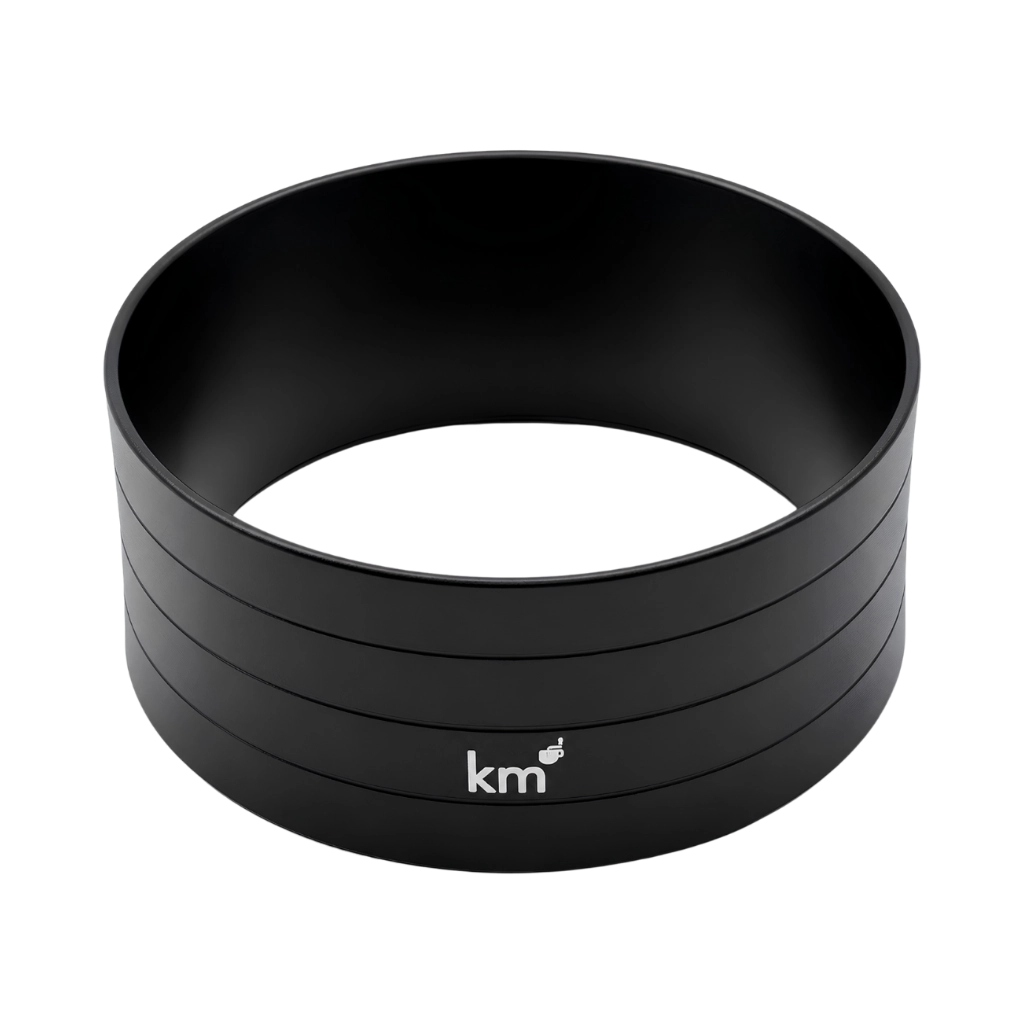
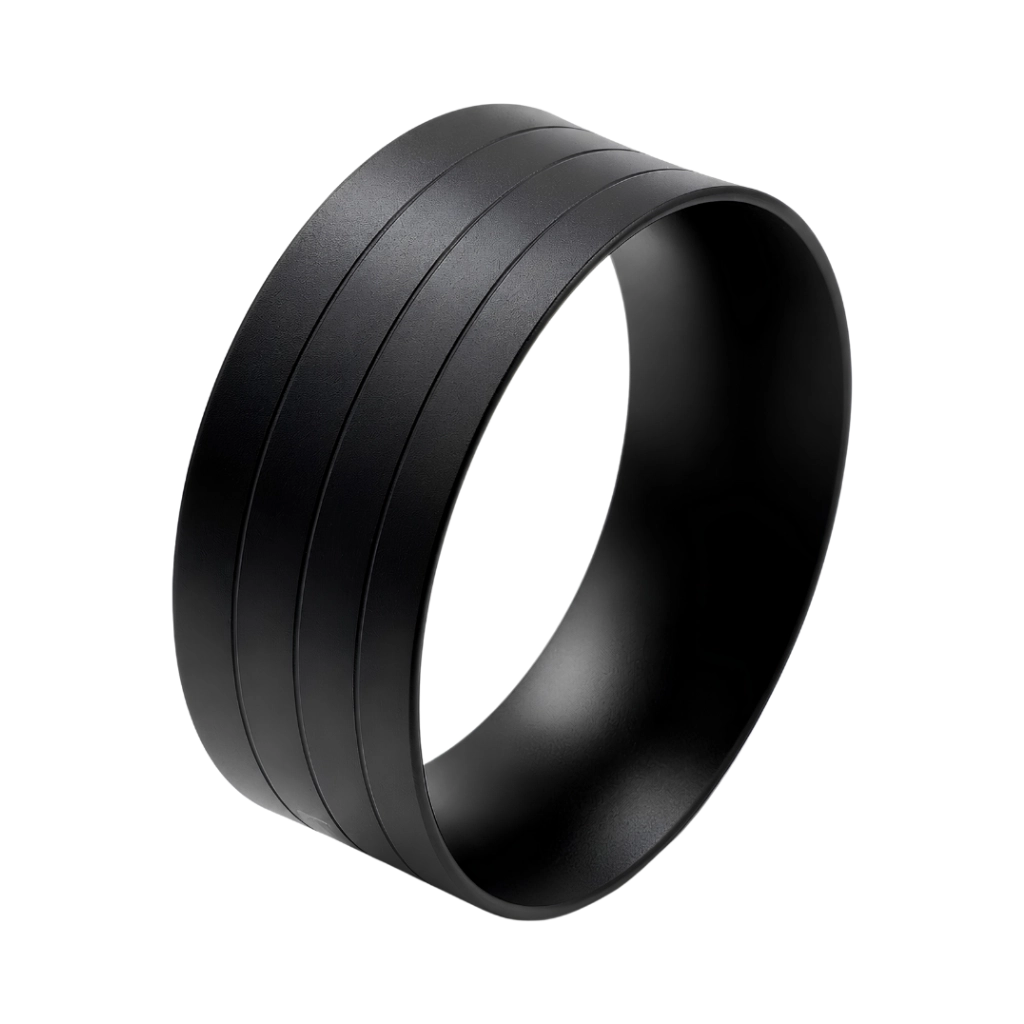
Our everyday experience with the scale also shows one important point: static charge of the ground coffee can cloud the nice theory. With certain beans (usually very light roasts or fresh coffee), static electricity builds up, and the ground powder then shoots into the portafilter very "fluffy". In the original model, this meant that at around 16 g so much ground coffee scattered that practically nothing fit into the portafilter anymore. Ligre responded: the new version of the Siji grinds much more compactly into the portafilter, the powder doesn't scatter as much. In our test, we could easily dose 17 g without having to use the included dosing ring. Should too much still go astray for you, you can reduce the target amount slightly or put the ring on – with the funnel, everything definitely stays in the basket, but you also risk channeling faster due to its edge. In normal operation, it worked for us without a ring, which represents real progress from the first version. Overall, the grind-by-weight function of the Siji is a precise and extremely convenient solution – it takes work off your hands and makes espresso brewing more consistent. Only with very unruly static charge do you need to be careful or make small adjustments.

Ground Coffee & Particle Distribution
Particle distribution of the Ligre Siji: The measured particle size distribution (laser diffraction) shows a typical espresso profile. The main amount of particles is around 200–250 µm (main peak at ~211 µm), the proportion of fine particles (~fine peak) is around 28%. The median (X50) of the ground coffee in espresso setting was around 250 µm – a good average value for espresso. The curve is relatively narrow, meaning the Siji produces a narrow spectrum of particles without excessive outliers up or down.
This means in the cup: the espresso turns out well balanced. That's exactly what we tasted – the shot with the Siji produced a soft espresso with nice sweetness and medium body. The texture was silky, flavors of cocoa and roasted almonds came through – a profile we know and appreciate from the Eureka Specialità. No question, the Siji grinds espresso at the level of good household grinders.
An important point in our test was particle distribution reproducibility. Here we really put the grinder through its paces: After the first espresso run (Test 4), we set extremely fine for a ristretto (Test 5) and then very coarse for a lungo/caffè crème (Test 6). Then we went back to the original espresso grind setting (Test 7), which we adjusted by eye. The result: The particle size distribution of Test 7 matched the original measurement remarkably well. Median, fine peak and main peak were almost identical to before – evidence that the grinder delivers the same performance at the same setting and our visual adjustment was pretty accurate. In theory, the Siji can therefore grind reproducibly.
In practice, however, we had – as mentioned in the operation chapter – small differences in extraction time. This was less due to the grinder itself than to the difficulty of turning the tiny adjustment wheel back to the old value with hair-like precision. Those who proceed carefully and in small steps can certainly switch between different recipes and return to the starting point. For consistent taste, however, we recommend not jumping too often between drastically different grind settings – but that applies to most espresso grinders with such sensitive adjustment.
Comparing the Siji's grinding profile to well-known grinders shows: It matches the character of the Eureka Specialità. No wonder – identical grinding unit. In plain terms: The Siji delivers a good all-around espresso profile, as we know from good flat 55mm burrs. Compared to larger 65–75mm grinders (or single-dosing grinders with special burrs), there may be a touch less clarity or the very last nuance of fineness in the particle distribution. But the result is delicious and balanced right away – and many coffee lovers even prefer it to overly "sharply" differentiated flavor profiles. With the Siji, you can handle both light and darker roasts well. It produces enough fine fraction for a full crema and body, but not so much that the espresso becomes unpleasantly bitter. In our courses, we've worked with the Specialità for years and brewed thousands of espressos with it – the Siji fits right in there flavor-wise. So if you like this proven flavor profile, you won't be disappointed by the Siji.
Special Features / History
Our test of the Ligre Siji held a few surprising findings that go beyond the mere data sheet. First, we were pleased that the manufacturer takes feedback seriously and continues to work on the grinder. Since our test of the first iteration of the grinder was finished but not yet published, it seemed sensible to wait for the improvements. And it was worth it.
Also noteworthy is the background of the Siji. Ligre is a young company on the German-Austrian border, but draws on a long family tradition. They dared to take an established grinder (the Eureka Specialità) as a basis and enhance it with their own expertise. You can tell from many parameters – from grinding noise to retention – that Eureka technology is under the hood, but the integration of the weighing technology is Ligre's merit. This scale is not a Eureka Libra unit, but its own development. The excellent weight dosing accurate to 0.1g speaks for Ligre, and the menu and function are better than those of the Libra, and most importantly, the Siji delivers no F4 error...

Conclusion
The Ligre Siji proves to be a successful espresso grinder with grind-by-weight that primarily impresses with its dosing precision and solid grinding quality. After the necessary revision, we can recognize many strengths:
Dosing Accuracy: The integrated scale works extremely reliably – deviations were around 0.1g or less. This eliminates one source of error for the home barista and greatly increases shot reproducibility.
Grinding Quality: Based on the Eureka 55mm burrs, the Siji delivers proven good espresso grounds. The particle distribution is even and the flavor profile balanced, with pleasant body and sweetness.
Noise & Speed: At ~78 dB, the Siji is relatively quiet. Plus it grinds fast – 18g in approximately 8 seconds. This is above average for this class and allows for efficient work.
User-Friendliness: The menu interface is simple and intuitive. Weight and time modes are easy to select, the display clearly shows relevant information. For beginners, there's no need to fiddle with a scale; for advanced users, the precision brings joy.
Design Integration: If you own the Ligre Youn, you get the perfectly matching grinder with the Siji – both visually and functionally. Designed as a combo system, it eases the "guided" espresso process that Ligre envisions.
Of course, there are also weaknesses or points to consider before purchasing:
Price-Performance: Around €1,180 (MSRP) is a bold statement when you consider that a Mignon Specialità is at its core. So you're paying a significant premium for housing design and scale technology. Other grinders with similar technology (e.g., Eureka Libra) are sometimes cheaper.
Grind Setting Adjustment: The small adjustment wheel does allow infinitely fine adjustment, but is fiddly. Frequently switching back and forth between different drinks requires a lot of finesse – reproducibility suffers a bit here.
Cleaning & Maintenance: The Siji is relatively difficult to clean. Without disassembly, you can't reach all corners; opening requires time and care. If you use a lot of dark, oily beans, you absolutely must stick with cleaning powder so that old coffee residue doesn't spoil the aroma.
Scatter Loss with Static Beans: Although improved, not completely eliminated – with some coffees the Siji scatters a bit. A dosing ring is included and can help direct the coffee into the portafilter.
Limited Placement Options: Due to the specific design and top-mounted controls, the Siji feels most at home in combination with the Ligre machine. In other setups, the top display can be impractical, and the futuristic look needs to fit the environment.
So who is this grinder suitable for? In our view, the Ligre Siji is ideal for home users looking for a comfortable espresso experience and who may already use the Ligre Youn.
- Beginners benefit enormously from automatic weight dosing – a major source of uncertainty with espresso disappears.
- But also advanced users who like to work consistently and appreciate the luxury of precise gram control will enjoy the Siji.
- Those who frequently entertain guests or simply want to make multiple shots in quick succession will appreciate the speed and smoothness of this grinder.
We would not recommend the Siji for hardcore experimenters who constantly switch between filter, espresso, and different beans – the grind adjustment and cleaning are too cumbersome for that. It's also not a classic single-dose grinder for those who want to grind freshly measured beans for each cup; there are more suitable devices for that with virtually zero retention.
All in all, Ligre has created a fresh take on a proven classic with the Siji. The grinder is competently implemented, feels natural to use, and delivers approachable results – you get delicious espresso in the cup right away without guessing. At the same time, Ligre shows thoughtfulness: criticism of the first version was taken seriously and addressed. The Ligre Siji is certainly not a bargain and not perfect either, but it's fun, delivers on its promises, and brings fresh momentum to the espresso grinder segment. For anyone who values convenient precision and is willing to invest in it, this grinder is definitely worth considering. Cheers – and to good coffee!
You can find all GbW grinders in direct comparison in our grind-by-weight comparison article.