


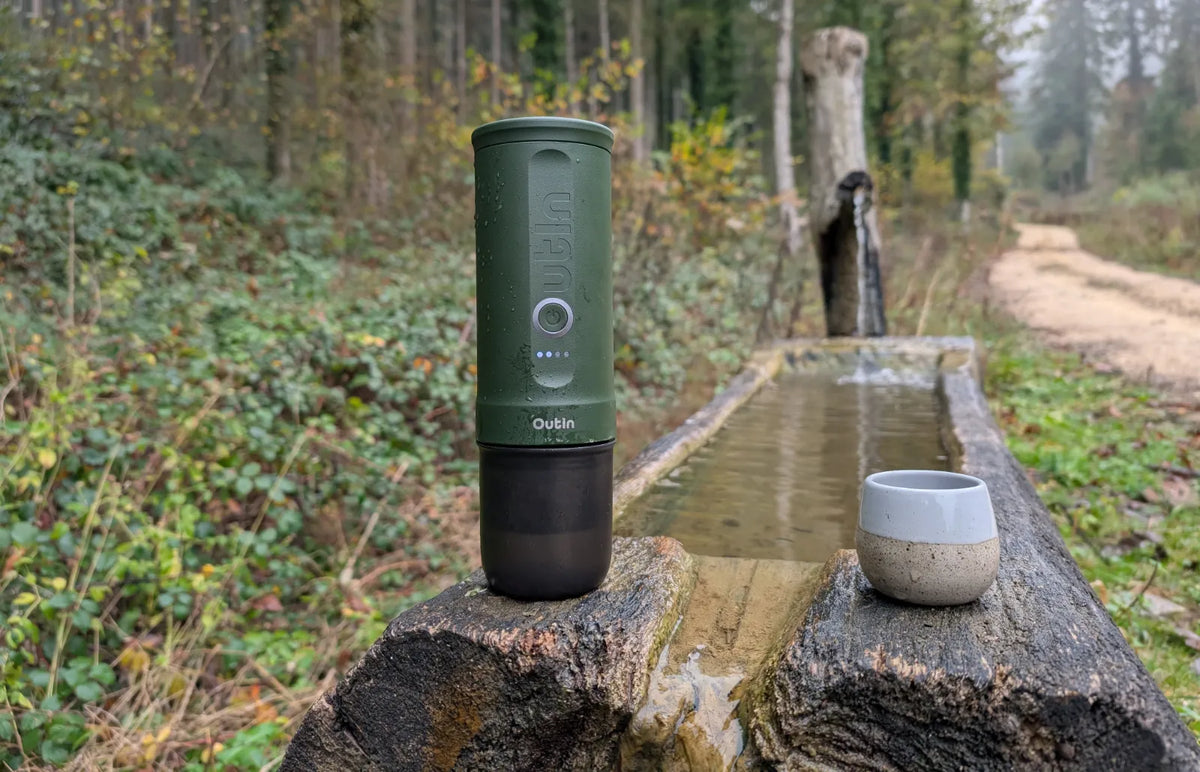

The concept behind the OutIn portable espresso maker is brilliant. OutIn solves the fundamental problem of portable espresso devices: we no longer need to carry a kettle, a camping stove, or hunt for hot water. OutIn has an integrated water heater. A 7500 mAh battery charged via USB-C has enough power to heat cold water multiple times and build up sufficient pressure. That is the theory and marketing pitch. We took a closer look in real-world testing—and unfortunately reached slightly different results.
The Best Portable Espresso Concept
Getting hot water is one of the main challenges when making espresso on the go. That is why many manufacturers completely bypass water heating and leave it to the user, who then needs a kettle, a gas stove, or a campfire.
Heating the water isn't the only challenge with portable espresso makers—heating through the entire device is just as important! Preparing coffee on the go is the core topic of our detailed outdoor coffee guide and video.
With the Nano, OutIn doesn't leave you stranded with the challenge of boiling water; instead, it integrates a small water heater directly into the brewer. It claims to heat enough water for up to 5 brewing cycles, depending on water volume and starting temperature. Here, we encounter one of the manufacturer's slightly embellished marketing claims. Achieving 5 heating cycles is only possible if you use the absolute minimum water volume—and even then, with compromises. There are several other marketing claims we don't fully agree with, which we discuss further down.

OutIn Temperature Reality
According to the manufacturer, the espresso maker brews at 92 °C (198 °F). In our tests, we reached 90 °C in the upper chamber only once. That was when using a minimal fill of just 40 ml of water. With larger water volumes, temperature in the heating chamber remained between 85 °C and 88 °C. At volumes like 70 ml, temperatures dropped to 85–86 °C. We verified these test results on our OutIn unit and cross-checked them against temperature readings from two additional units.
In practice, actual extraction temperatures at the coffee bed are even lower, as water loses additional heat to the metal and plastic components on its way from the heating chamber to the coffee grounds.
Lower brewing temperatures directly affect espresso taste, noticeably emphasizing acidity—especially in lighter roasts. We therefore recommend selecting specific espresso roasts for the Nano that complement this flavor profile.
You can easily bypass lower temperatures by pre-heating the water externally with a kettle. In that case, we recommend filling it with boiling water above 95 °C. This pre-warms the internal components and delivers great extraction temperatures, ideally hitting 92 °C to 94 °C at the coffee bed. Working this way also solves battery life limitations on long day trips.

Marketing vs. Reality
Promoting flashy, exaggerated numbers seems to be the trend nowadays. We only address these marketing claims when the discrepancy is glaring. OutIn follows this line—but as soon as you put the brewer to the test, several claims crumble:
| Marketing Claim | Real Test Results & Reality |
|---|---|
| 200-Second Heat-up Time | Only applies to the absolute minimum water volume. With 70 ml of cold water, we measured 4:30 minutes. |
| 5 Heating Cycles per Charge | Achievable only with minimal water fill. At full water capacity, you get significantly fewer cycles. |
| 20 Bar Pressure | A marketing spec with zero practical benefit. Espresso extraction at the coffee puck ideally requires 6 to 9 bar. |
| 92 °C Brew Temperature | In reality, the heating chamber reaches only 85–88 °C; temperature at the coffee bed is even lower. |

So Much (More) Potential!
Our findings shouldn't leave the impression that we think the OutIn is a bad product. We think it's brilliant! When paired with a roast that performs well at lower brewing temperatures, the OutIn fulfills everything we want in a portable espresso maker:
This is a complete game-changer, making the OutIn Nano the most flexible and practical manual espresso maker for countless outdoorsy scenarios. In theory, you can brew coffee almost anywhere, because it heats water independently and includes a cup to catch the shot—whether kayaking, riding a ski lift, camping, or on a road trip.
Two minor tweaks would make this device even better:
Note: The heater draws more power when heating water than can be supplied simultaneously via USB-C passthrough. It cannot be run purely on wall power without battery charge.

Scope of Delivery and Build Quality
The OutIn espresso maker feels sturdy and well-built. The base unit weighs under 700 grams and is compact at 23 cm in height and 7 cm in diameter.
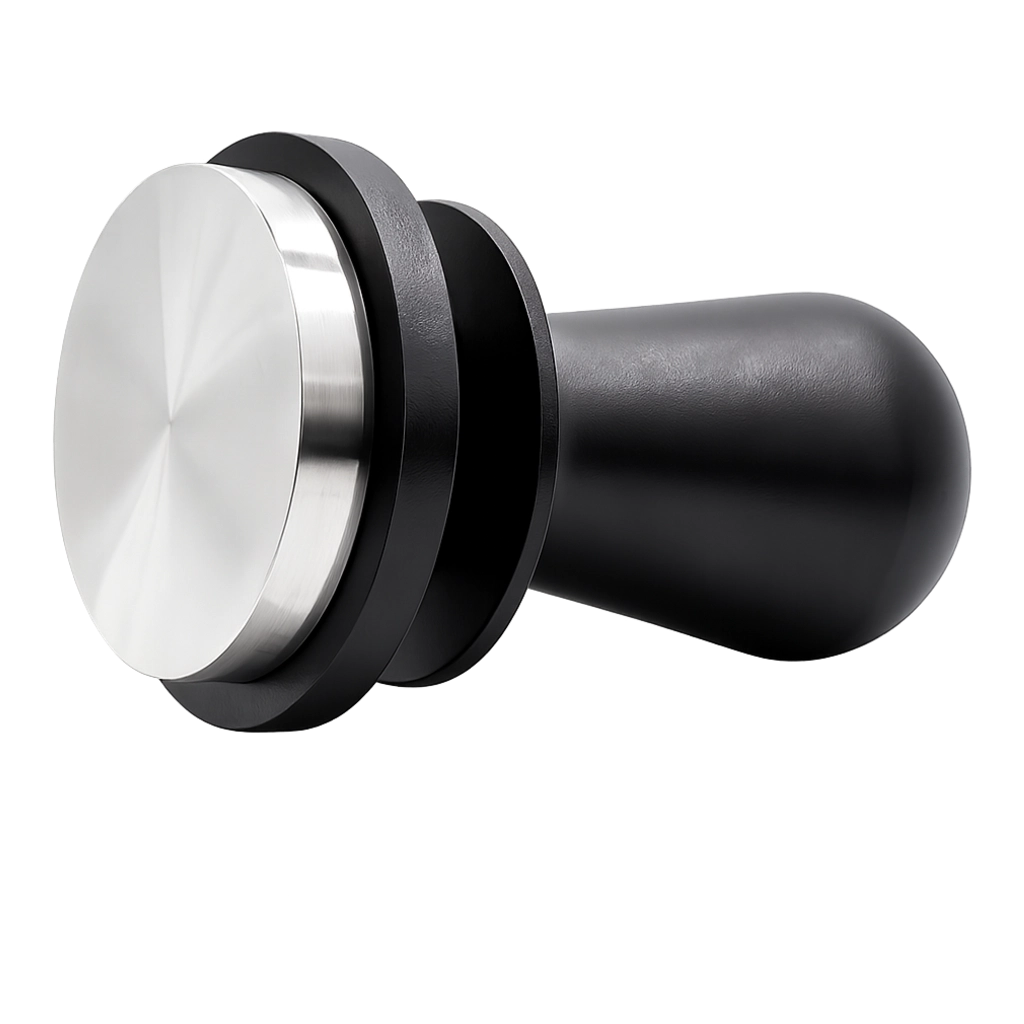
The standard box includes a small basket chamber for 5–6 grams of ground coffee, an Nespresso-style capsule adapter, and a shower screen cap. A small dosing cup doubles as a tamper. All these stock accessories are molded from black plastic.
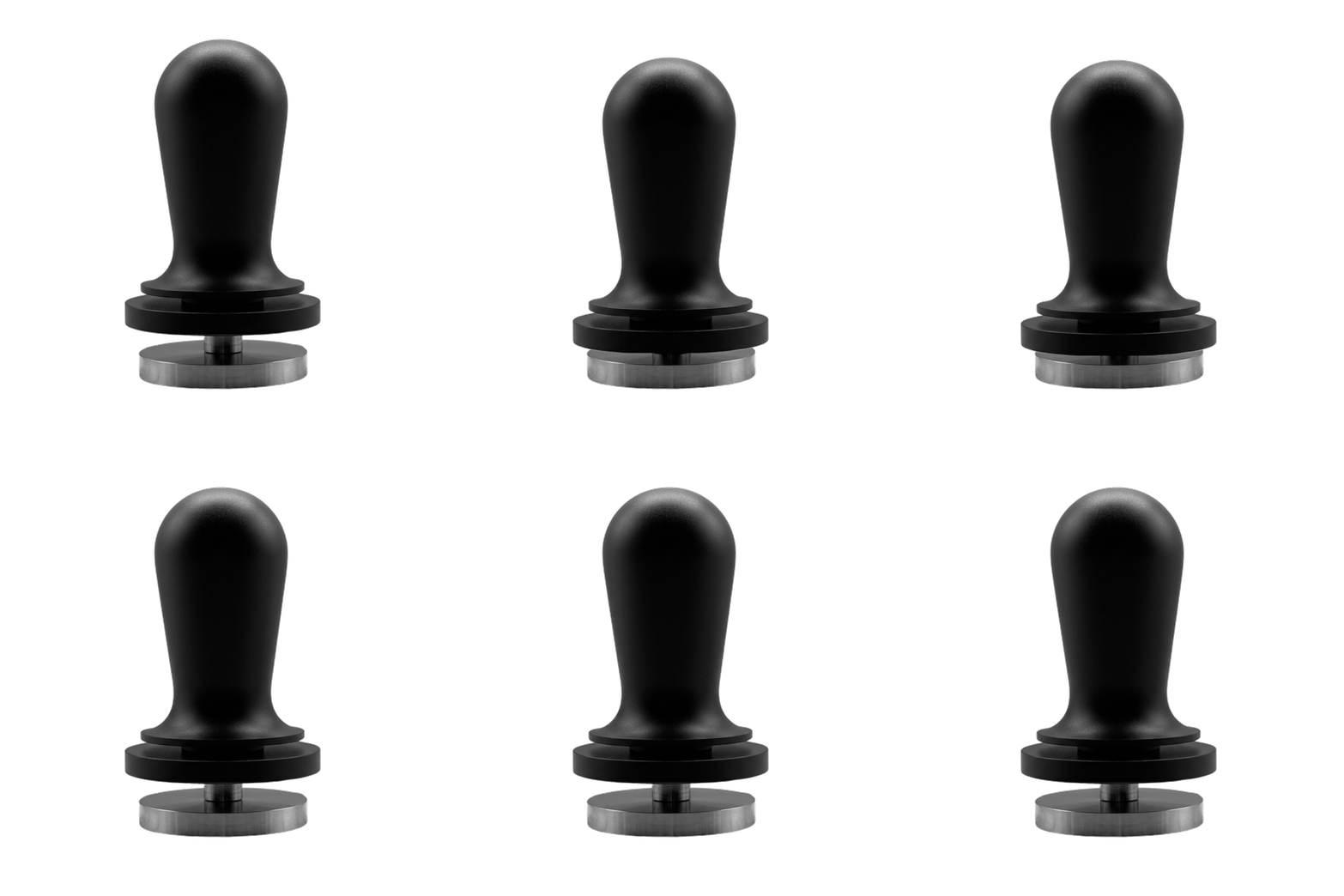
To unlock the device's full potential, we strongly recommend getting the Basket Plus Set with the stainless steel tamper and 16–17g precision basket. Working with the larger basket and proper metal tamper dramatically improves workflow and elevates the overall quality feel. Using 16 grams of coffee at a 1:2 ratio yields a true 32-gram double espresso shot in your cup!
Links & Gear
*This is an Amazon affiliate link. Purchasing through this link costs you nothing extra, but provides us with a small commission to fund future testing equipment. Thank you!