


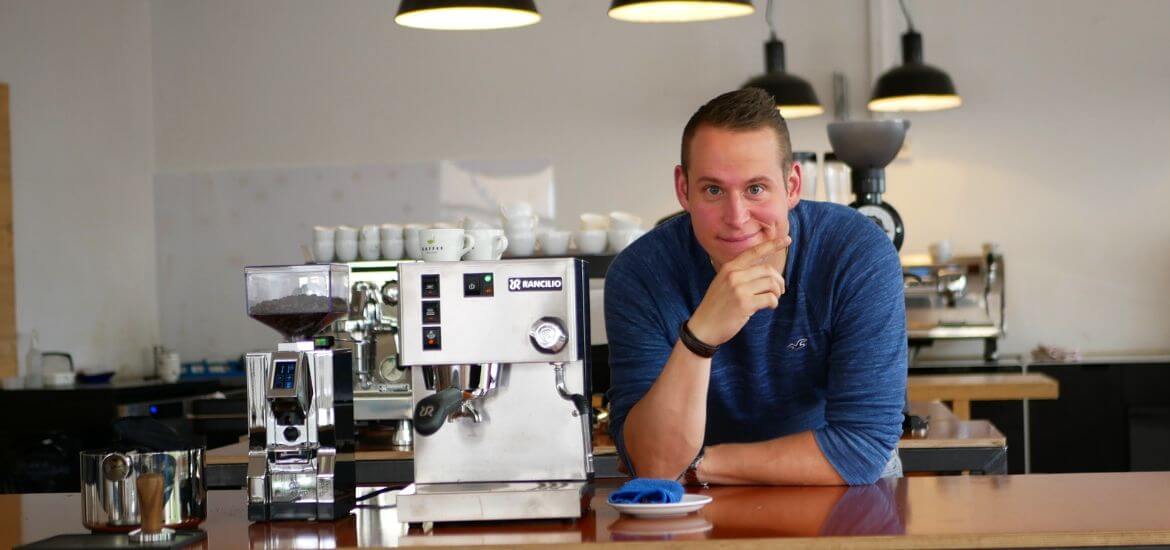

When exploring budget-friendly espresso machines, it is impossible to overlook the Rancilio Silvia. For a small price, this compact little machine delivers impressive performance. If it feels like it. And that is the crux of the matter. The Silvia is about as temperamental as a teenager in their prime. The speed at which it switches from pure joy to utter despair is unmatched. When brewed to perfection, the espresso tastes just as delicious as models costing over 3000 euros. If you miss the mark, you'll wish you hadn't bothered.
This article provides an honest overview of what the Rancilio Silvia can and cannot do. There are numerous online shops and test reports that praise it as a winner and recommend it (e.g., here and here). We also agree: there are many arguments in favor of the Rancilio Silvia. But only if you know what you are getting into will you be happy together in the long run.
And the espresso tastes great
We brewed some truly fine espressos with the Rancilio Silvia. Strong, balanced, and sweet. The Rancilio Silvia brews exactly the kind of espresso you want, provided you show it a little love. We enjoyed both classic darker roasts and lightly roasted fruit bombs. With the Rancilio Silvia, there are no limits.
The Rancilio Silvia makes better espresso than almost any other model in this price range. The prerequisite, of course, is a good grinder and mastering the temperature fluctuations (more on this below). The Silvia's double portafilter basket holds a good 17 grams. We used this to brew 38 to 42 ml as a double espresso.
Solid, durable, and well-made
The espresso machine weighs about 14 kg. That is quite substantial and ensures that the Rancilio Silvia stands firm and solid. This is especially important when you want to lock in the portafilter. Lighter espresso machines tend to turn or slide. Here, the Silvia feels high-quality and well-built with its stainless steel casing. With a width of 23.5 cm and a height of 34 cm, it fits well on most countertops, and its depth of 29 cm is also quite manageable.
The Rancilio Silvia has proven to be durable and resilient in all its versions. A flaw in the design is the shallow depth of the drip tray. It fills up after just a few shots and threatens to overflow. It is also very important to push the drip tray all the way back until it hits the stop. If you fail to do this, water from the overflow valve may run under the tray. This is not just messy, but over time, it also poses a risk of rust.
Single-boiler and temperature challenges
The Rancilio Silvia is a single-boiler espresso machine. Single-boiler machines use a single boiler to both brew the espresso and generate the pressure for frothing milk. A good brewing temperature for espresso is generally around 90 – 94 degrees Celsius. To build up enough pressure for steaming milk, the boiler must be heated to a much higher temperature. At about 120 – 130 degrees, the pressure generated is well-suited for frothing milk.
If the Silvia only had to perform one of these two tasks, it would rank among the top in its class in both categories. In "espresso" mode, the Rancilio Silvia is surprisingly constant at around 94 – 96 degrees and can be quickly brought to the target temperature with a brief flush (letting hot water run out of the brew head without locking in the portafilter).
The steaming pressure generated by the Rancilio Silvia is also truly impressive. Even a 0.6-liter pitcher can be frothed easily in a short amount of time. Many dual-boiler espresso machines have more trouble with this.
The challenge lies in switching between the two functions. Once an espresso has been brewed, the boiler can be brought to the required steam pressure via the switch in about 1:30. The milk can then be frothed, and the workflow is perfect.
However, if you then want to pull the next espresso, the challenges begin.
Temperature surfing with the Rancilio Silvia
The fastest way to reduce the boiler temperature is by emptying the small boiler. It holds only 0.3 liters and is thus emptied quite quickly. The steam pressure must also be removed, so it is recommended to release hot water and pressure via the steam wand. At the same time, water can be refilled using the manual fill button.
This procedure is carried out until the orange heating light turns on. This is the signal that the temperature in the boiler has dropped enough for the machine to start heating up again.
Since it is now in "espresso mode," it heats up to the aforementioned 96 degrees and can be brought back to the target temperature with a quick flush.
A portafilter that feels good in the hand
The high-quality impression of the machine is reflected for us in the portafilter. It is a genuine portafilter that is in no way inferior to those on professional catering espresso machines. You can really feel the quality in your hand. It weighs over 600 grams.
The 58 mm diameter of the basket is a classic size, which is also used in all Faema E61 group heads. Consequently, you can find a wide variety of different baskets to purchase and use. It comes with a 1-cup basket stated to have a capacity of 7 grams. The 1-cup basket can easily hold 8.5 grams, although this depends on the roast level of the coffee. The 2-cup basket, specified as 14 grams, held 17.5 grams in our test with a medium-roast coffee.
Temperature 2.0 with the Rancilio Silvia
As you may have noticed: temperature is the challenge that needs to be mastered. It determines whether the Rancilio Silvia is a very good or a bad machine. As explained above and in the video, the temperature can be controlled manually. Of course, there are also technical solutions. One such solution is the subsequent installation of a PID controller. This allows the Silvia's temperature to be controlled precisely. Seattle Coffee Gear has explained the installation very well in English. We will provide a corresponding explanation in German here.
Technical info and user manual for the Rancilio Silvia
- Single-boiler espresso machine
- Water tank: 2.5 liters
- Width: 23.5 cm, Height: 34 cm, Depth: 29 cm
- Power: 1100 watts
- Price: approx. €550 / 770 CHF
- Weight: 14 kg
- Vibration pump
- Brew boiler: 0.33 l, made of brass
- Boiler control via thermostat
You can download the user manual for the Rancilio Silvia directly from the Rancilio company in German here.
Pros of the Rancilio Silvia
- Truly great espresso
- Truly great milk foam
- Steam wand with plenty of power
- Compact, solid, and durable
- Relatively high intrinsic weight for such a small machine provides a firm stance
- Unbeatable price-performance ratio
- Stainless steel housing looks the part
- Portafilter follows professional gastronomy standards
Cons of the Rancilio Silvia
- Laborious switching between brewing and steaming (typical for single-boiler machines)
- Only one hole in the steam wand requires some practice when frothing, as the steam comes out in concentrated pulses
- A lot of water must be drained from the wand before steaming to avoid overly diluting the milk foam
- Small drip tray and risk of overflowing
Conclusion
The Rancilio Silvia is a genuinely good espresso machine. We agree with many esteemed coffee colleagues, such as Arne Preuss from Coffeeness. The emphasis is on espresso. If you mainly want to make espresso, the effort involved in temperature control is quite low and very easy to master. It becomes more challenging if you want to drink cappuccino and other milk-based beverages regularly. The Silvia is perfectly capable of creating fine-pored or voluminous foam and is therefore also suitable for latte art patterns. However, after frothing the milk, some detours are required to bring the temperature in the boiler back to the espresso range.
If you are prepared for this and willing to accept it, then the Rancilio Silvia is the right machine for you. If you know that you get frustrated by equipment that isn't simple and hands-off, save yourself the hassle and invest in the €1000 / 1200 CHF price category and get a dual-boiler machine instead.
Read more here:
- 20 mistakes when preparing espresso
- Why strong and weak coffee actually make sense
- Which espresso machine is right for me? And for you?