






Slow Feeding – the %20sslowed-down feeding of coffee beans%20i into the grinder – can significantly influence the particle size distribution of the ground coffee and thus the extraction of espresso. In this study, we examine this effect using laboratory measurements of particle distribution, extraction metrics (brew time, TDS, extraction yield) as well as sensory tastings.
Based on prior research, including by %20fLance Hedrick%20f, Jonathan Gagné, Christopher Hendon and Samo Smrke, we expect that slower bean feeding reduces the fines content and makes the ground coffee more uniform. Our test series with various specialty coffees (Apas, Limontitla, Chirinos, Hamasho) confirm: Slow Feeding results in coarser ground coffee with significantly lower fines content at the same grinder setting, which increases the flow rate and accelerates extraction.
To achieve comparable extraction times, the grind size must be adjusted correspondingly finer. The results show differences in extraction behavior: slower infeed can increase puck permeability (resistance), resulting in shorter brew times at the same grind size, but also affects puck structure and thus taste.
Sensorically, Slow Feeding tended to result in clearer, more flavor-transparent and complex cups with somewhat less body, depending on bean variety and roast freshness. The discussion links these findings to the role of triboelectric charging (static electricity) and the known "Popcorning" effect with individually fed beans. Finally, practical implications for grinder design and barista workflows are derived.
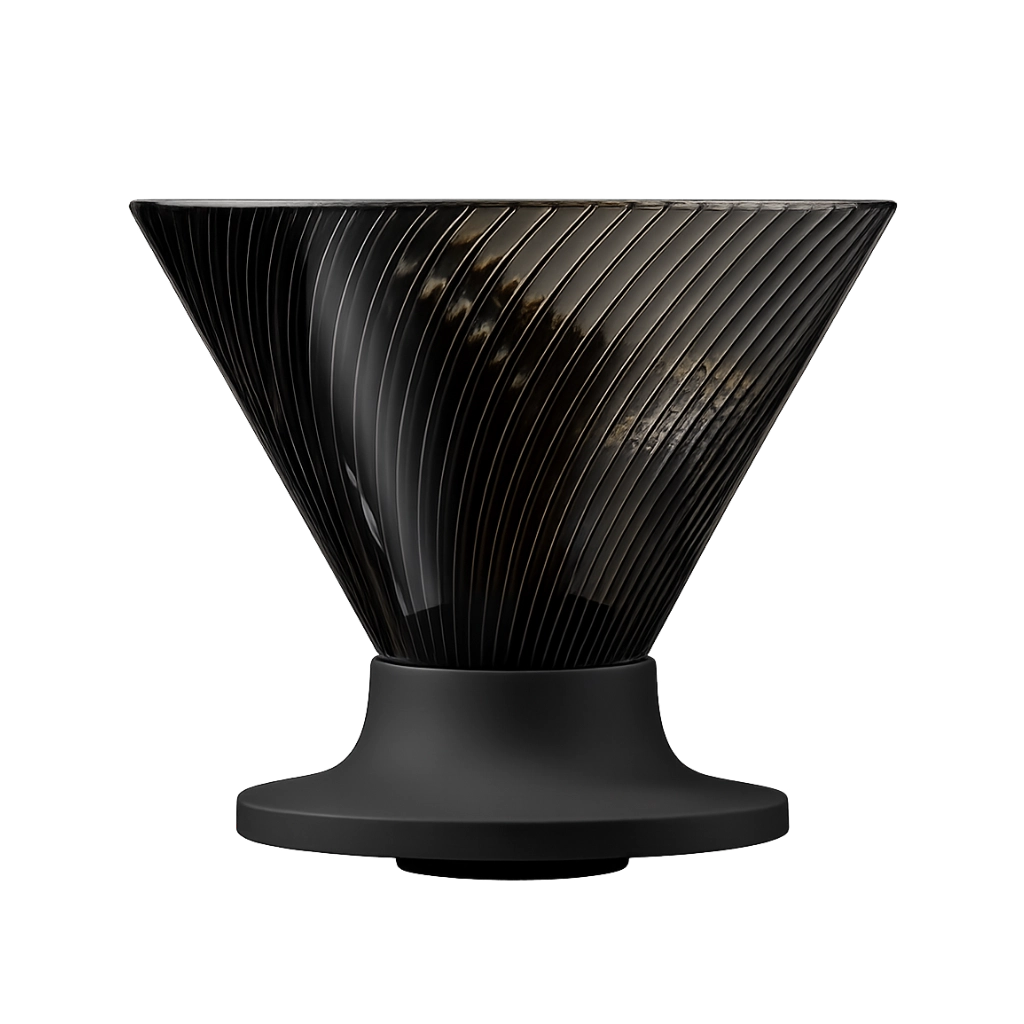
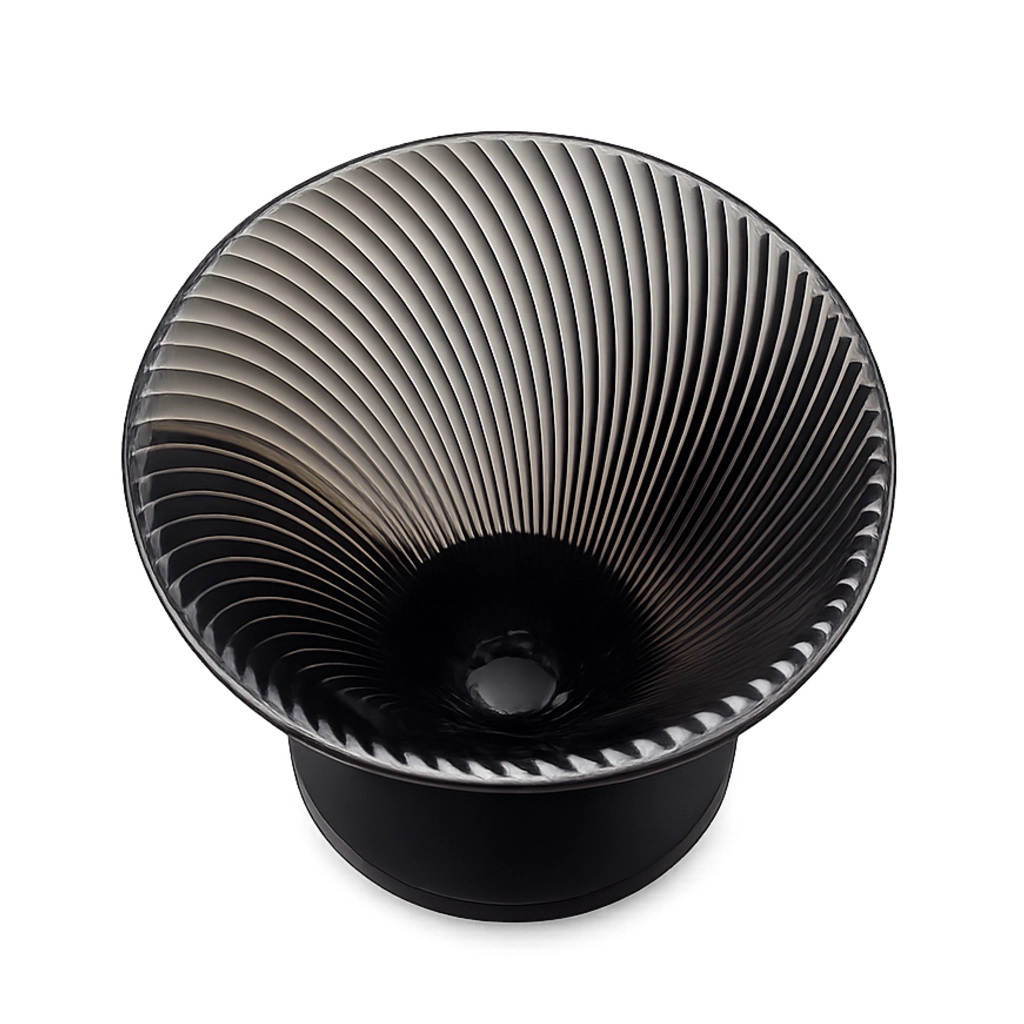
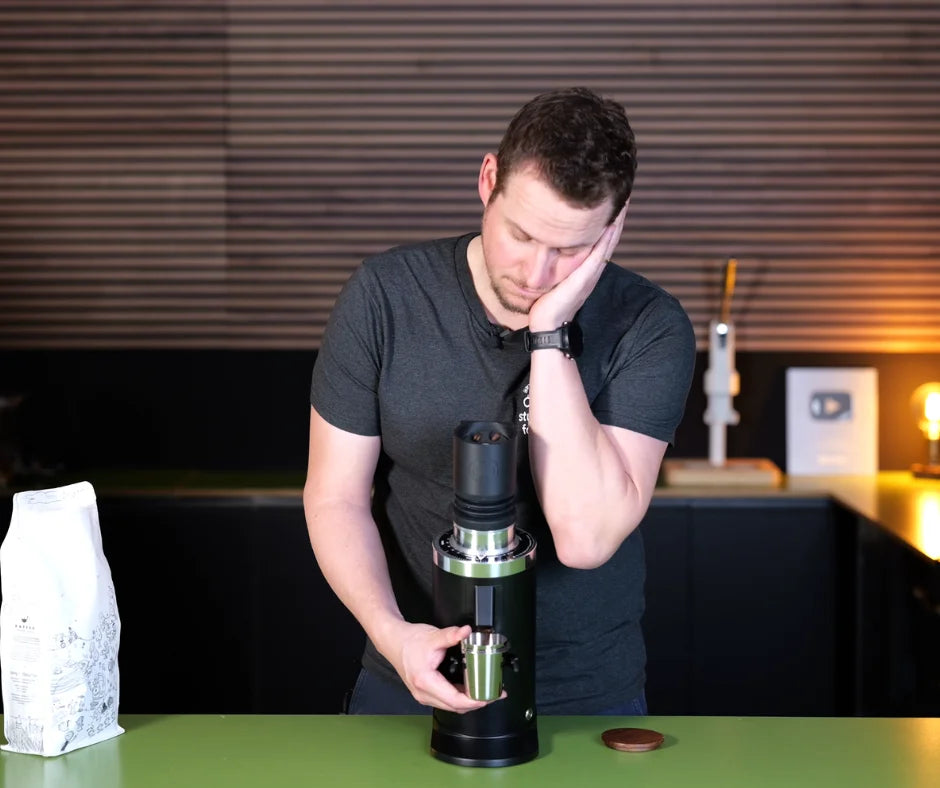
We performed Slow Feeding by hand, as well as with an ingenious Slow Feeding Tool from a Swiss startup named
Introduction
The %20iparticle size distribution of coffee grounds%20i is a key factor for espresso extraction. In particular, the proportion of very fine particles ("fines" <100 µm) significantly affects the water flow rate through the coffee puck (%20fThe role of fines in espresso extraction dynamics | Scientific Reports%20f). %20iSamo Smrke%20s et al. (2024) demonstrated in a systematic study that a higher fines content reduces the permeability of the coffee bed and leads to slower flow rates and longer extraction times. At the same time, a finer grind (with more fines) increases the extraction yield and intensity of the espresso to a certain extent, until %20ftoo many fines cause clogging%20i and uneven extraction. The art is therefore to create a %20fbalanced particle spectrum%20i that provides sufficient extraction surface while also enabling a stable flow rate.
Beyond obvious parameters such as grinder geometry and setting, the method of bean feeding is increasingly coming into focus. In the coffee scene, Slow Feeding refers to the %20ideliberate slowing of bean feeding%20s into the grinder. Instead of adding all beans of a dose to the grinder hopper at once, they are fed gradually in Slow Feeding – sometimes even individually. This procedure is intended to improve ground coffee quality, but how exactly?
A well-known phenomenon when single-dosing beans is the so-called "%20iPopcorning%20i". The term describes individual beans bouncing in an empty or nearly empty hopper, causing them to pass uncontrollably between the burrs. As %20iJonathan Gagné%20i explains, a single bean in an empty hopper can bounce around and potentially slip through a larger gap between the burrs, as there is no bean backup to push it down (%20fGrind Quality and the Popcorning Effect – Coffee ad Astra)%20i).
This Popcorning results in on average coarser ground coffee and a somewhat broader particle distribution with more coarse particles ("boulders"). Such larger particles contribute less efficiently to extraction due to their smaller specific surface area. Gagné's measurements showed that while the effect is limited at typical dosing amounts (for a 10 g dose, bean-by-bean ground samples were on average about 0.08 mm coarser than with a full hopper) and the fines content can even be slightly lower. Nevertheless, these results illustrate that the %20dfeed rate%20s influences the grind curve: A full bean supply in the hopper leads to a more homogeneous grinding process, while individual beans tend toward a more bimodal distribution.
Beyond mechanical effects, %20istatic charging%20f also plays a role in grinding. Through friction and fragmentation of the beans, particles become triboelectrically charged (%20sGrinding coffee with a splash of water reduces static electricity and makes more consistent and intense espresso | ScienceDaily)%20i). These charges lead to agglomeration (clumping) and adhesion of coffee powder to the grinder and discharge. %20fChristopher Hendonhref="https://youtu.be/w4ILzxnAXLA?si=a5tr8OgD5fev7qID" and colleagues investigated the causes and effects of these triboelectric effects in 2023/24. They found that beans with higher residual moisture content become less strongly charged during grinding, resulting in lower losses to scatter and more consistent particle release. Pre-wetting beans before grinding ("src="https://www.youtube.com/embed/w4ILzxnAXLA?si=SIc-eJ-rj3Dt4EWA"Ross Droplet Techniquehref="/en/blogs/kaffeewissen/kaffee-partikelverteilung"") can thus reduce static charging and resulted in their experiments in href="https://www.nature.com/articles/s41598-024-55831-x#:~:text=analysis%20and§0§ensory%20evaluation%20of,aroma%20compounds§1§nfluence%20the§2§inal"more uniform ground coffee as well as more intense espresso extractionhref="https://www.comunicaffe.com/smrke-the-grinding-has-a-high-impact-in-the-exctraction-from-capsules/#:~:text=However%2C%20grinding%20too§3§ine%20produces,%E2%80%9D". This finding underscores that href="https://coffeeadastra.com/2019/04/12/grind-quality-and-the-popcorning-effect/#:~:text=The§4§dea%20behind%20this§5§s,is%20what%20%E2%80%9Cpopcorning%E2%80%9D%20refers%20to"triboeffect managementhref="https://www.sciencedaily.com/releases/2023/12/231206115853.htm#:~:text=The§6§racturing%20and§7§riction%20of,more%20consistent%20and§8§ntense%20espresso" (e.g. through bean moisture or ionization) significantly influences the distribution and dispersion of ground particles.
Against this background, the question arises: Can deliberate href="/en/blogs/kaffeewissen/wasserspray-rdt"slowing of bean feeding – Slow Feedinghref="https://www.reddit.com/r/LanceHedrick/comments/18nlfgu/impact_of_slow_feeding_is_nuts/#:~:text=Impact%20of§9§low§10§eeding§11§s,eg1%20a%20bean%20or" – offer similar benefits? Anecdotal reports from the Specialty Coffee community as well as initial experiments suggest that Slow Feeding reduces fines production and can improve extraction (href="https://cremaloop.com/products/electric-slow-feeder-df64-df64p-e?sca_ref=8710443.jevIJbk9Axno"Impact of slow feeding is nuts : r/LanceHedrick - Reddithref="https://link.kaffeemacher.ch/apas-espresso"). However, systematic scientific investigations have so far been lacking. In our report, we build on the aforementioned work and examine with scientific methodology the influence of Slow Feeding on ground coffee distribution, extraction behavior and sensory properties. We particularly address the hypotheses from Gagné's Popcorning analysis and Smrke's fines study and test the extent to which slow feeding shifts href="https://kaffeemacher.de/products/limontitla-espresso-aus-mexiko"particle size distributionhref="/en/blogs/kaffeewissen/refraktometer-und-tds" (e.g. lower fines content) and what href="https://www.zhaw.ch/de/lsfm/institute-zentren/icbt/analytische-chemie/analytical-technologies/coffee-excellence-center"extraction dynamicshref="https://www.microtrac.de/de/produkte/partikel-groesse-form-analyse/dynamische-bildanalyse/camsizer-x2/" (flow, puck resistance) result from it. We also consider possible differences depending on src="https://cdn.shopify.com/s/files/1/0406/3343/4269/files/Partikelverteilung-Slow-Feeding.webp"bean additionhref="https://coffeeadastra.com/2019/04/12/grind-quality-and-the-popcorning-effect/#:~:text=As%20a%20result%20of%20this,coffee%20with%20a§12§ull%20hopper" (manual vs. continuous feeding) and roast profile to classify the observed effects.
Methodology
Experimental Overview
Two main test series were conducted. src="https://cdn.shopify.com/s/files/1/0406/3343/4269/files/PSD-veraenderungen-slow-feeding.webp"In the first testsrc="https://cdn.shopify.com/s/files/1/0406/3343/4269/files/Extraktionen-slow-feeding-1.webp" (January 2025), we examined the effect of Slow Feeding qualitatively with two different coffees (Apas (medium roast) and Limontitla (lighter roast)). In the src="https://cdn.shopify.com/s/files/1/0406/3343/4269/files/Partikelverteilung-helle-roestung-slow-feeding.webp"second testhref="https://coffeeadastra.com/2019/04/12/grind-quality-and-the-popcorning-effect/#:~:text=Another§13§nteresting%20part%20of%20this,am%20under%20the§14§mpression%20that" (April 2025), quantitative measurement series followed with Apas coffee, including TDS measurements to calculate extraction yield. Additionally, we conducted accompanying particle size analyses at ZHAW and assessed sensory differences between shots with and without Slow Feeding for four coffees (Apas, Limontitla, Chirinos, Hamasho) in tastings.
Equipment and Conditions
Both tests used a DF64 burr grinder (64 mm flat burrs). In the first test, a DF64 (1st generation) was used; in the second, a DF64 Gen 2. A La Marzocco Linea (commercial espresso machine) served as the espresso machine. The temperature was set to 93 °C. IMS Competition 24.5 g baskets in a La Marzocco 58mm portafilter were used. The input dose was 18 g coffee for all shots, with a target output amount of approximately 45 g espresso (ratio ~1:2.5), unless otherwise specified. Each shot was prepared with identical puck preparation (distribution with WDT/Moonraker, leveling and tamping with 12 kg pressure).
Slow-Feeding Mechanisms
To ensure slow bean feeding, two methods were employed:
- href="https://www.nature.com/articles/s41598-024-55831-x#:~:text=analysis%20and§15§ensory%20evaluation%20of,is%20that%20both%20extraction%20efficiency"Manual Slow Feedinghref="https://www.sciencedaily.com/releases/2023/12/231206115853.htm#:~:text=electricity%20that%20causes%20coffee%20particles,more%20consistent%20and§16§ntense%20espresso" through incremental hand dosing. For this, the 18 g was added in small portions to the hopper while the grinder ran, assisted by light tapping on the dosing cup. The feeding duration was approximately 50–70 seconds per dose (instead of ~5–10 s for normal grinding "all at once").
- href="https://www.comunicaffe.com/smrke-the-grinding-has-a-high-impact-in-the-exctraction-from-capsules/#:~:text=extraction%2C%20or%20too%20long%20extractions,%E2%80%9D"Mechanical Slow Feedinghref="https://www.option-o.com/pcs" using an Electric Slow Feeder attachment (Crema Loop Slow Feeder href="https://link.kaffeemacher.ch/unsere-kaffees"
href="https://www.sciencedaily.com/releases/2023/12/231206115853.htm#:~:text=electricity%20that%20causes%20coffee%20particles,more%20consistent%20and§17§ntense%20espresso"). This 3D-printed device is placed on top of the DF64 hopper and uses a rotating disc to feed beans into the grinding chamber in a controlled manner. With the Slow Feeder, we could set a constant feed rate (approx. 1 bean every ~1–2 seconds) to have uniform conditions.
First Test Design
For the coffees href="https://coffeeadastra.com/2019/04/12/grind-quality-and-the-popcorning-effect/#:~:text=The§18§dea%20behind%20this§19§s,is%20what%20%E2%80%9Cpopcorning%E2%80%9D%20refers%20to"href="The%20role%20of§20§ines§21§n%20espresso%20extraction§22§ynamics%20|%20Scientific%20Reports)."Apashref="https://www.nature.com/articles/s41598-024-55831-x#:~:text=analysis%20and§23§ensory%20evaluation%20of,aroma%20compounds§24§nfluence%20the§25§inal" (Natural, Brazil)href="https://www.nature.com/articles/s41598-024-55831-x#:~:text=analysis%20and§26§ensory%20evaluation%20of,aroma%20compounds§27§nfluence%20the§28§inal" and src="https://cdn.shopify.com/s/files/1/0406/3343/4269/files/blank-25.gif"Limontitla (Washed, Mexico)§61§, multiple shots were pulled under various grinding and bean feeding conditions. First, a reference shot was created with §62§normal feeding§63§, i.e. all beans at once into the running grinder ('without Slow Feeding'). Subsequently, shots with §64§manual Slow Feeding§65§ as well as with §66§Slow Feeder Tool§67§ followed, initially keeping the grind size unchanged compared to the reference shot.
Since we observed that Slow Feeding significantly increased the flow rate (shots ran too fast), we subsequently varied the grind size to bring the flow time back into the target range (~25–30 s). Specifically, for example, Apas' grind size was adjusted step by step from initially about "20" (on the DF64 scale) toward finer (~11.5). Each condition (e.g. Apas without SF, Apas with SF unchanged, Apas with SF finer) was tested multiple times to check reproducibility. The achieved §68§shot times, output amounts and brew rates§69§ were recorded. Sample doses of ground coffee were packed airtight and prepared for particle analysis.
Second Test Design
Building on the initial results, a more detailed investigation was conducted with Apas coffee (new roast batch from 03.25.2025). Here, three scenarios were compared directly:
- (A) Normal feeding (no Slow Feed) set to a target output of 1:2.5 in ~25 s,
- (B) Slow Feeding at §70§the same grind size§71§ as (A), and
- (C) Slow Feeding with §72§finer grind size§73§ adjusted so that approximately 25 s extraction time was also achieved. Five shots were pulled consecutively for each scenario.
In scenario A, a grind setting value of 21 (DF64 scale) resulted; in scenario C, significantly finer grinding occurred (value ~10.5). Immediately after pulling, the §74§§75§TDS value§76§ (Total Dissolved Solids§77§, in %) was measured from each shot using a VST refractometer and the §78§extraction yield§79§ (%) was calculated (based on input, output weight and TDS). This gave us average values of extraction yield and brew time for conditions with and without Slow Feeding.
Particle Size Analysis
The collected ground coffee samples from Test 1 (approximately 13 g each) were sent to the §80§University of Applied Sciences (ZHAW)§81§ for particle distribution measurement. The ZHAW used the §82§Camsizer X2 from Retsch Technology§83§ to measure the particle size distribution (PSD) of coffee grounds. This device is based on dynamic image analysis and is particularly suitable for analyzing particles in the size range of approximately 0.8 to 8,000 µm.
For each sample, we received parameters of the particle distribution, in particular the §84§median x50§85§ (median particle diameter in µm), the §86§fines content Q<100µm§87§ (mass fraction of particles <100 µm, in %) as well as the §88§peak width of the main fraction§89§ (width of the particle spectrum, here defined as the range covering 60% of the coarse particle mass). This data enables an objective comparison of grind sizes and distribution widths between the various bean feeding variants.
Sensory Tasting
To evaluate practical effects on taste, we conducted two descriptive tastings with KM Espresso Score Sheet. Additionally, a further discriminating tasting with filter coffee was conducted.
We summarize in this report the results of the descriptive tastings with KM Espresso Score Sheet. These are also explained in our test video. To verify the results, further tastings must be conducted.
For each coffee, espresso pulls with and without Slow Feeding were compared. The espresso samples (temperature ~60 °C, 1:2.5 ratio) were evaluated by tasters according to a simplified scheme: bitterness, sweetness, acidity, balance, aroma, body, texture, aftertaste – each on a scale from 1 (weak) to 6 (strong) with half points.
Individual attributes served for discussion; however, the focus was on an overall judgment of sensory quality and possible differences in clarity, complexity and body between Slow Feed and Normal Feed shots. Tastings took place immediately after extractions.
Results
Particle Size Distribution (ZHAW Analysis)
Laboratory analysis of the ground coffee samples clearly confirmed that Slow Feeding affects particle distribution. Table 1 shows the parameters for Brazil Apas and Mexico Limontitla under four conditions: without Slow Feeding (baseline), manual Slow Feeding (unchanged grind size), Slow Feeding with device (unchanged grind size), and Slow Feeding with device and adjusted finer grind size.
| Coffee | Condition | x50 (µm) | Fines content <100 µm (%) | 60% Main Peak Width (µm) |
|---|---|---|---|---|
| §91§Apas§92§ | Normal (Baseline, Grind Size 20) | 250 | 33.0% | 193.1 |
| Apas | Slow Feed Manual (GS 20) | 299 | 23.9% | 210.1 |
| Apas | Slow Feed Device (GS 20) | 291 | 26.2% | 207.4 |
| Apas | Slow Feed Device (GS ~11.5 fine) | 178 | 38.2% | 146.1 |
| §93§Limontitla§94§ | Normal (Baseline, GS 16) | 229 | 33.4% | 178.4 |
| Limontitla | Slow Feed Manual (GS 16) | 255 | 28.4% | 185.8 |
| Limontitla | Slow Feed Device (GS 16) | 250 | 29.3% | 182.0 |
| Limontitla | Slow Feed Device (GS ~8 fine) | 164 | 38.3% | 130.3 |
§95§Table 1: Particle size distribution (median x50, fines content <100µm, and 60% main peak width) for Apas and Limontitla under various bean feeding conditions. GS = set relative grind size on the DF64 scale.§96§
Already the comparison of the §97§baseline§98§ (all-at-once) to the Slow Feeding conditions with §99§the same grind size§100§ shows clear trends: Through Slow Feeding, the median x50 shifts upward – i.e. the particles become on average coarser.
- For example, x50 in Apas increased from ~250 µm to ~299 µm (+20%) with manual Slow Feeding.
- At the same time, the fines content (<100 µm) dropped dramatically: from ~33% to only ~24% for Apas (or from 33% to ~28% for Limontitla).
- Even with the electric feeder (device), there was a fines reduction compared to the reference (Apas ~26%, Lim. ~29%).
These results support the hypothesis that slow, incremental feeding of the grinder reduces fines formation. Interestingly, the effect was slightly stronger with manual Slow Feeding than with the continuous feeder – possibly because manually, truly individual beans really did slip in, while the automatic feeder maintains a constant small "bean stream". Regardless, the trend was clear: §101§Slow Feeding makes the ground coffee coarser at an identical grind size and significantly reduces the fines fraction.§102§
The §103§width of the main particle fraction§104§ (60% peak width) changed only moderately. The trend was for it to become somewhat wider under Slow Feeding (Apas: 193 → ~210 µm; Lim: 178 → ~182–186 µm), suggesting a somewhat broader distribution of coarse particles. This fits with the fact that Popcorning produces some coarser "boulders" (§105§Grind Quality and the Popcorning Effect – Coffee ad Astra§106§). However, at the same time, scatter in the fines range decreased considerably, which overall can be perceived as a more homogeneous distribution (i.e. less pronounced bimodal character). Gagné's finding that bean-by-bean grinding can result in a slightly tighter distribution similar to high-quality grinders is reflected here insofar as the undesired fine "edge expression" of the distribution is trimmed.
Finally, Table 1 also illustrates data from the "finer adjusted" Slow Feed conditions (ASF_444, LSF_444). Here – based on the excessively fast flow rates – the grind size was adjusted significantly (Apas from GS20 to ~11.5; Limontitla from 16 to 8). As expected, this shifts x50 dramatically toward the fine end (178 µm for Apas, 164 µm for Limontitla) and the fines content increases (each ~38%). These values are even above the original fines content of the baseline. This shows: §107§In order to achieve the same extraction time despite Slow Feeding, significantly finer grinding was required – which again§108§
§110§Fig. 1: Effect of Slow Feeding on particle size distribution for Apas (blue) and Limontitla (green). Left: Median particle size x50; Right: Proportion of ultra-fine particles <100 µm. Shown are each baseline (no Slow Feed), Slow Feed (manual), Slow Feed (device) at the same grind size, as well as Slow Feed with finer grind size to compensate for flow time. Data source: Kaffeemacher PSD data 2025§111§
Extraction Times and Yields (With/Without Slow Feeding)
The extraction metrics measured in the test series clearly reflect the particle distribution changes mentioned above. In the §112§first test§113§, it was immediately apparent that with unchanged grind size, the shots ground with Slow Feeding §114§ran much faster§115§ than the reference. For example, Apas without Slow Feeding extracted in approximately 25 s, whereas with Slow Feeding (same grind size 20) the puck was so permeable that the liquid reached the target volume after just ~10 s – §116§an extreme difference§117§. Accordingly, these shots also had significantly lower strength (concentration of dissolved solids).
By gradually adjusting finer, the flow time could be extended again; ultimately only a grind size of ~11–12 slowed the Slow Feed shot to ~25–30 s. Limontitla showed analogous behavior: at GS 16, the Slow Feed shot ran ~5 s faster than normal (27 s → 22 s), and only at drastically finer grind size (GS 8) did a Slow Feed shot reach ~25 s. These observations align with the expectation that fewer fine particles increase puck permeability – water flows through more easily, shortening the extraction time.
The second test quantified these effects for Apas. Table 2 provides the average results of the three scenarios (A: no Slow Feed, B: Slow Feed same grind size, C: Slow Feed finer grind size):
§119§Table 2: Mean values (n=5 shots) of extraction parameters for Apas in the second test. Without Slow Feeding vs. Slow Feeding at identical grind size (21) vs. Slow Feeding with adjusted grind size (10.5) for approximately 25 s brew time. TDS and yield measured with refractometer.§120§
In the §121§baseline scenario§122§ (without Slow Feeding), the set grind size 21 resulted in an average brew time of ~26 s and an extraction yield of ~20.9%. This served as the reference. When §123§fed slowly at the same grind size§124§ (scenario B), the brew time dropped dramatically to ~10 s. The extraction yield decreased accordingly to only ~17.4%. Such a short espresso shows clear §125§under-extraction§126§ (TDS ~6.8% vs. ~8.2% normal).
These figures quantify the previously observed qualitative effect: Slow Feeding makes the puck so permeable at unchanged settings that standard extraction fails. Only significantly finer grinding in scenario C brought the parameters back to baseline levels (∅ 24 s, 20.9% yield). Interestingly, the achieved yield did not exceed the standard despite much finer grinding – apparently the factors offset or excessively fine grinding prevented effective extraction due to clogging behavior. Theoretically, finer grounds have greater surface area and should therefore extract more effectively. However, extremely fine grounds hinder flow through the puck.
Notably, even at practically identical yield, sensory properties (see below) differed, suggesting altered extraction dynamics (e.g. different flow profile, layered extraction in puck, etc.).
In summary, the extraction data confirm: §127§Slow Feeding significantly increases the flow rate,§128§ provided the grind size is not adjusted. To maintain the desired extraction time, correspondingly finer grinding is therefore required, which however increases the fines content again. Our previous tests and measurements of particle distribution curves have shown that a narrower main peak has positive effects on taste. But if it is too narrow, the grind size must be set so fine that an §129§overshooting effect occurs§130§, resulting in a very large fines peak.
Sensory Results (Tasting)
Tastings of the various coffees supported some of the analytical findings but also revealed nuanced differences depending on coffee and setting.
- §131§Apas, medium roast (Brazil, Natural)§132§: In direct comparison, the espresso with Slow Feeding appeared clearer in aroma. Panel descriptions were "cleaner, more organized flavor" and more pronounced sweetness and acidity, while the shot without Slow Feeding had somewhat more body and "punch". For Apas, Slow Feeding did not lead to a better result in scoring. What the coffee gained on the side of flavor balance, it lost in quality in terms of texture, aftertaste and body.
- §133§Chirinos, medium-light roast (Peru, washed):§134§ Here the clearest advantage of Slow Feeding became apparent. The grind-adjusted Slow Feed shot extracted in 23 seconds and impressed with pronounced floral notes and high overall complexity. Tasters noted "much more floral" and awarded on average the highest score (32.5 of 36 points; without Slow Feeding 27.5 of 36 points) to the Slow Feed espresso. The balance of acidity, sweetness and texture succeeded excellently here and the coffee was rated better in all categories.
- §135§Hamasho medium-light roast (Ethiopia, natural)§136§: This coffee was very challenging to dial in with Slow Feeding. The grind size had to be set very fine, which led several times to clogging or channeling. Taste-wise, Hamasho did not gain in quality with Slow Feeding. Like Apas, Hamasho also showed slightly more clarity and complexity of aroma and similarly lost some texture and body through Slow Feeding. However, dialing in the grinder and finding the right grind size was so challenging with this coffee that it cannot be ruled out that the tasted pulls also suffered from non-visually apparent micro-channeling. For a coffee with a density structure like Hamasho, an adaptive flow profile or lever machine profile that counteracts declining puck integrity might make sense.
In summary, the sensory results show: §137§Slow Feeding measurably changes the flavor profile§138§. Frequently mentioned keywords were clearer, more defined, more floral, sometimes accompanied by somewhat less body/bitterness. However, the extent depends on the particular coffee and fine-tuning. Particularly with complex, high-quality beans like Chirinos, Slow Feeding seems to favor more complete extraction of desired aromatic compounds (higher intensity and clarity), while with demanding setups (Hamasho, very light) the benefits only manifest with optimal adjustment.
The results of the sensory evaluation correspond with the analytical data in that altered fines content and flow behavior do have sensory effects – for instance, more fines could tend toward more astringent and bitter notes, while fewer fines and more even flow highlight finer aromas. These relationships are discussed in the next section.
Discussion
The present results confirm that Slow Feeding has a substantial influence on ground coffee and extraction. Below, the mechanisms and implications are interpreted in detail.
Effects on Ground Coffee and Extraction Behavior
Through Slow Feeding, bean grinding is essentially §140§relieved§141§: Instead of many beans being forced between the burrs simultaneously, they pass through the grinding zone individually or in small groups. Our particle analysis showed a resulting decrease in fines content of ~5–10% absolute (relatively ~20–30% fewer fines). This means that with slow grinding, fewer particles are severely crushed; instead, more particles remain in the comparatively coarse range. One explanatory approach is that individual beans experience less shear force from neighboring beans in the grinding gap – they are reduced in size, but possibly not fractured multiple times through collisions. Moreover, each bean can be processed by the motor at constant speed and torque when the feed rate is low. §142§Gagné noted§143§ that bean-by-bean grinding in his experimental setup allowed for more constant grinder speed, which contributed to a slightly tighter distribution. In our setup (DF64 direct grinder), you could sometimes hear the motor struggling when normally feeding on full load, with the grinding behavior potentially causing slight slowdown. With Slow Feeding, the grinder runs at a continuous tone and seems to grind the beans effortlessly. The beans may spend less time in the grinding chamber, resulting in less friction and fewer "grinding cycles". The result is a coarser median and less fines.
The consequence for the coffee puck is higher porosity or permeability. Fewer fines means more voids between particles and a lower proportion of "§144§quasi-colloidal§145§" substance that could clog the pores. Smrke et al. supported this: additional fines clog the pore space and significantly reduce permeability. Our flow data are fully consistent with this – Slow Feed shots practically flew through the puck at identical grind size, as water resistance was lower. Interestingly, despite vastly different flow rates in scenario A vs. B (26 s vs. 10 s), the extracted solubles were overall proportionally lower (~17% yield), suggesting that actual §146§under-extraction§147§ occurred and not simply the same extraction amount obtained in shorter time. The water simply did not have enough contact time and surface area to extract sufficient solids.
Puck Resistance and Flow Dynamics
A more homogeneous but coarser-grained ground coffee behaves differently under pressure. On one hand, pressure builds more slowly in the brew chamber (because water seeps through more quickly, more liquid escapes initially before full pressure is applied). On the other hand, the puck may tend to remain more stable since fewer fine particles migrate. In espresso pucks, fines often play the role of a "cement" that, deposited in upper layers, affects flow (fines can shift and cause local density variations). Fewer fines could thus also counteract channeling, provided the particle distribution is otherwise uniform throughout the puck. Our observations with Chirinos support this: the Slow Feed puck showed no apparent channeling despite extremely fine grinding – possibly because the lower absolute number of fines did not lead to local clogging and pressure spikes that favor channels. Apas also benefited in a sense: While there was no obvious channeling problem in the standard, Slow Feeding enabled grinding finer (GS ~12 instead of 21) without overpressure or extraction failure – the puck withstood the fineness, likely because the fines content remained relatively moderate overall.
However, there is a limit: if, as necessary with Hamasho, one must go extremely fine to even achieve ~25 s, then the absolute fines content and potentially the negative effects increase again (clogging, channeling).
In the §148§Hamasho case§149§, extraction with Slow Feeding feed into the grinder was only successful at very fine grind size, which effectively meant the puck contained significantly more fines than without Slow Feed. This complicated the entire extraction behavior, as no grind-size middle ground could be found that provided sufficient puck resistance while not causing clogging, or that was not too coarse and caused early puck integrity destruction (extraction times under 18 seconds despite fine grind).
With §150§Apas and Chirinos§151§ (medium and medium-light roasts), the grind size could be significantly refined and still achieve stable flow behavior – here the fines were essentially "replaced" by overall finer grinding, which apparently led to more efficient extraction of desired compounds (greater clarity, sweetness, etc.) without drifting into over-extraction. With Hamasho (light, difficult to extract), however, Slow Feed required a grinding spectrum that was almost outside the sensible range (very many fines needed to have enough resistance, which negates the hoped-for benefits).
Additionally, one must consider that Slow Feeding can change the dosing volume. Coarser particles mean lower bulk density – the puck could be fluffier and more voluminous at the same mass, which could increase puck height. This in turn can influence extraction (taller puck = longer path, different pressure distribution).
Notably, all three mentioned beans and also the additionally tested Limontitla tended to §152§lose puck integrity much faster§153§. This was evident in pulls with the Decent espresso machine and led to higher flow and lower back pressure. Even the Apas espresso, which as a §154§medium roast should have higher puck stability§155§, behaved like a lighter roast from the middle of extraction onward. As conclusions and subject for further investigation, work with adaptive flow profiles or profiles that significantly reduce pressure from the middle of extraction should be conducted. It is possible that coffees ground with Slow Feeding and overall having a lower median grind size give up a large portion of their extraction potential much faster. Then an adjusted flow might prevent undesired notes from over-extracting from fines that contribute to bitterness and astringency.
Static Charging and Particle Dispersion
An aspect closely linked to Slow Feeding is loss prevention from scattering. With full bean load, many particles are created at once that collide with each other and surfaces – ideal conditions for triboelectricity. That Slow Feeding might reduce static charging is an interesting side effect: since continuously only few particles are created, charges could more easily dissipate at the metal of the grinder before large accumulations form. Our experiments did not directly measure this, but indirectly the ground coffee dispersion looked noticeably different with Slow Feed: The coffee powder landed more evenly in the cup/portafilter and formed fewer clumps. This aligns with §156§Hendon's investigations§157§ showing that reducing charging decreases clump formation.
While we did not use water RDT, Slow Feeding might work similarly by reducing particle collision frequency and thus generating less charging. Hendon et al. showed that even small changes in conditions (e.g. more moisture) noticeably improve espresso quality – in our context, Slow Feeding might thus also contribute to sensory clarity because ground coffee falls loose and de-clumped into the portafilter. De-clumped coffee bed allows better distribution and tamping, making puck density more homogeneous. The result is more even extractions and fewer zones with different flow rates.
To verify this hypothesis, we ordered a device to measure electrostatic charge.
Influence of Bean Format: Popcorning vs. Bean Descent
Slow Feeding should particularly contribute to a more even particle distribution in single-dose grinders. While with espresso grinders with bean hoppers, beans are continuously pushed and thus "bean pressure" exists on the burrs and lower beans throughout the grinding process, this is not the case with single dosing. Toward the end of grinding, we always see some Popcorning when only the last stragglers bounce on the burrs.
How strong the effect on particle distribution is with only a few beans in the grinding chamber can be derived from our Slow Feeding measurements. Consequently, single dosing always has a less even ground coffee distribution than grinders with bean hoppers or when applying the Slow Feeding method.
Interestingly, in newer grinder designs (e.g. Weber EG-1, Lagom P64 with optional Slow Feeder) this topic is being addressed.
It is sometimes argued that Slow Feeding reduces friction heat in the grinding chamber. If grinders develop §158§high temperatures§159§ during grinding, this can negatively affect taste (temperatures above 40 degrees are required for this).
§160§We were able to rule out this conclusion with a measurement series. For this purpose, we measured the temperature of the ground coffee output both after grinding with Slow Feeding and without.§161§ In typical home use (we checked 6 consecutive pulls), a slight temperature increase was detectable with both feed methods over the pulls. However, the temperature of the coffee ground with Slow Feeding was on average only about one degree cooler than the "normal" grinding. Given this small difference, we do not expect an effect that has taste implications.
Theoretical Framing of Mechanisms
Putting all puzzle pieces together, the following hypothesis emerges:§162§ Slow Feeding changes grinding conditions from a highly dynamic, stochastic multi-bean system to a quasi-stationary single-bean system.§163§ In the multi-bean system (normal dosing), there are intense bean-bean interactions: crushing, friction, wear of cellulose and roast fragments – many fines form early in grinding and can even be re-ground. In the single-bean system, by contrast, each bean is reduced in size largely in isolation; once through, it leaves the gap before the next arrives. This produces fewer additional fines per bean. The particles that form are tending toward the "natural" fragments of the bean, without those fragments being further ground to dust because the next bean doesn't immediately push down. This picture aligns with the finding that §164§roller grinders (multi-stage gentle grinding§165§) produce fewer fines – Slow Feeding in a sense imitates part of this effect by giving the burr grinder more control and less randomness.
Conclusion
Our scientifically-grounded investigations demonstrate that Slow Feeding – slow bean feeding during grinding – has a real and relevant impact on ground coffee quality and espresso extraction. In summary, we were able to show:
- Slow Feeding §166§substantially reduces the fines particle content§167§ in ground coffee at the same grinder setting, suggesting gentler bean fragmentation.
- This results in §168§higher coffee puck permeability§169§: flow rate increases, espresso runs faster through. To maintain the desired extraction time, a significantly finer setting is required.
- With adjusted grind size, Slow Feeding enables espressos with equally high extraction yield. Initial sensory results point to more complex aroma structures, better flavor balance and more transparency, sometimes at the cost of texture and weight as well as certain dryness in the aftertaste. Further testing is needed and blind tastings with larger panels are necessary.
- Since Slow Feeding initially produces fewer fines particles, the grind size must be set significantly finer. This can cause problems. On one hand, §170§many grinders cannot reproducibly grind so finely§171§. On the other hand, the entire structure of the coffee bed in extraction changes and thus also puck integrity. With some coffees, achieving even extraction with a traditional 9-bar flat profile was almost impossible without channeling. It needs further investigation whether brewing profiles with declining pressure or flow lead to desirable results.
- Possible negative effects (§172§under-extraction§173§) occur mainly when the grind size is not adjusted accordingly. A certain level of fines seems necessary even for balanced extraction ("happy medium of fines" per Rao).
- The benefit of Slow Feeding depends on roast level and bean profile: with uncomplicated roasts, it can increase clarity; with very light roasts, correct adjustment is more critical to achieve sufficient extraction at all.
§174§Relevance for Practice:§175§ For roasters and baristas in the specialty coffee scene, these findings offer valuable guidance. Grinder designers could integrate Slow Feed mechanisms – some manufacturers already do, such as Option-O with their recently introduced §176§Preliminary Crushing System (PCS)§177§. Our data support the fact that such innovations are not mere gimmicks but can bring measurable quality benefits. Even without special equipment, a barista can experimentally add beans more slowly or even attempt "single bean grinding" to possibly improve extraction with problematic shots. However, one must consider that Slow Feeding slows the workflow – in a busy café environment, it is not always practical to spend 30–60 seconds per shot on grinding alone. Here tradeoffs must be weighed: for a championship shot or perfecting a high-end espresso, Slow Feeding can be a worthwhile tool; in everyday use, benefit must be measured against time investment.
§178§Who Should Consider Slow Feeding?§179§ Certainly, Slow Feeding opens another factor that can influence taste. If you are just starting with other elements of espresso preparation, don't open another door in parallel. The foundation for everything is good standard recipes and perhaps engagement with flow and pressure profiles. However, if you are already advanced with these topics or your machine perhaps doesn't offer such capabilities, then Slow Feeding could be an exciting experimental field for you.
Please share in the comments what you discover!
- §180§Our Coffee§181§
§182§Sources:§183§
The central data in this article was collected by our Kaffeemacher test team at the House of Coffee in Basel. Andrea Perin deserves mention as the lead, working as a barista trainer at our coffee school who pulled all samples and espresso shots. The test series was directed by Michel Indelicato as head of our coffee school and Benjamin Hohlmann as author of this report. Sensory analyses were performed by sensory specialists, Q-graders and national barista champions (Nadja Schwarz, Michel Indelicato, Felix Hohlmann, Philipp Schallberger, David Wistorf, Benjamin Hohlmann).
The discussion drew on current scientific publications and expert reports, including
- Hendon et al. (2024) on electrostatic charging during grinding (§184§Grinding coffee with a splash of water reduces static electricity and makes more consistent and intense espresso | ScienceDaily)§185§
- Gagné's analyses on the Popcorning effect §186§(Grind Quality and the Popcorning Effect – Coffee ad Astra)§187§ as well as
- Smrke et al. (2024) on the role of fine particles in espresso extraction §188§§189§(The role of fines in espresso extraction dynamics | Scientific Reports)§190§.
- Also worth mentioning is Lance Hedrick's recent §191§YouTube video on Slow Feeding§192§.
These and further sources are referenced in the text.
*If you order via this link, it doesn't cost you more, but we get a small commission that we put toward new test equipment.