


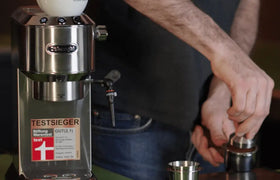
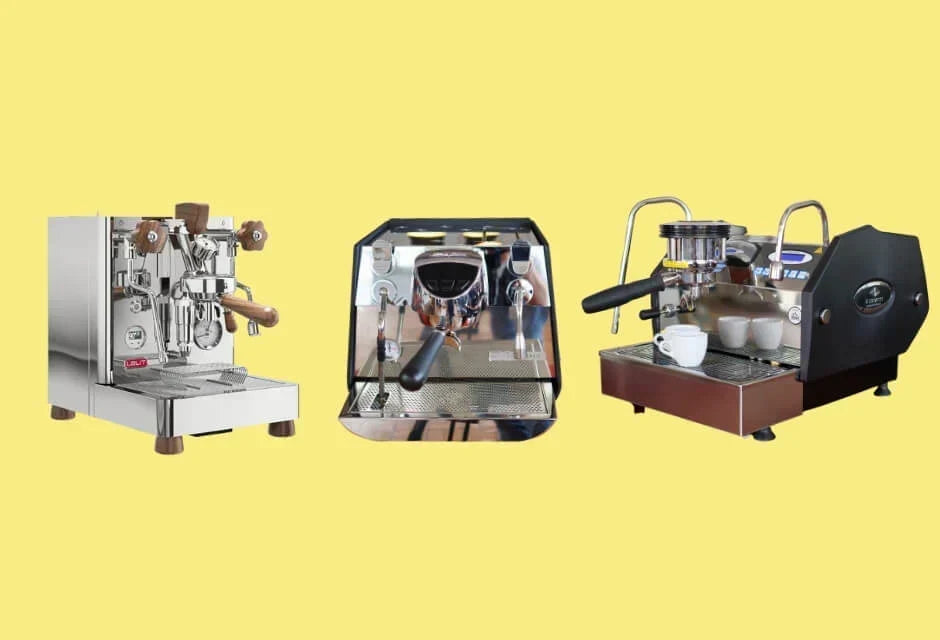

Dual boiler espresso machines are characterized—as the name suggests—by two boilers. On this page, however, we also list other systems that consist of a combination of a boiler and a thermoblock or thin-film heater. What they have in common is that both boilers have individually controllable heating systems. The brew boiler, for example, operates at a solid brew temperature of 93°, while the steam boiler operates at 120 degrees. This ideally guarantees performance, consistency, and parallel steaming while brewing. Espresso machines with a boiler and a second, different heating unit are called multi-heating systems or, in the table, combo thermo-boiler or combo thin-film boiler.
The following table shows all espresso machines that we have already tested in this category. By clicking on the name of the machine, you will go to the respective article. "To Video" takes you to the YouTube video.
✓ tested and published · ⏱ tested, coming soon · 📦 ordered, not yet tested
We will cover different dual and multi-boiler models from entry-level to premium class. Below this post, we collect suggestions for tests of dual boiler espresso machines.
Here you can read what else we have tested.
| Manufacturer | Machine | Technology | Status | Video |
|---|---|---|---|---|
| Arkel | Coast | Dual boiler | ✓ | To Video |
| Ascaso | Baby-T | Combo Thermo-Boiler | ✓ | To Video |
| AVX | AVX HERO (DB1X) | Combo Thermo-Boiler | ⏱ | — |
| Bezzera | Duo Top DE | Dual boiler | ✓ | To Video |
| Dalla Corte | Studio | Dual boiler | ✓ | To Video |
| Dalla Corte | Mina | Dual boiler | ✓ | To Video |
| ECM | Synchronika 2 | Dual boiler | ✓ | To Video |
| ECM | Synchronica | Dual boiler | ✓ | To Video |
| Faema | Faemina | Dual boiler | ✓ | To Video |
| Gaggia | Classic GT | Dual boiler | ✓ | — |
| La Marzocco | Linea Mini | Dual boiler | ✓ | To Video |
| La Marzocco | Linea Micra | Dual boiler | ✓ | To Video |
| La Marzocco | Linea Mini R | Dual boiler | ✓ | To Video |
| La Marzocco | GS3 | Dual boiler | ✓ | To Video |
| Lelit | Bianca V3 | Dual boiler | ✓ | To Video |
| Lelit | Elizabeth | Dual boiler | ✓ | To Video |
| Ligre | youn | Combo Thermo-Boiler | ✓ | To Video |
| Meraki | Meraki Espresso | Dual boiler | ✓ | To Video |
| Profitec | Pro 300 | Dual boiler | ✓ | To Video |
| Profitec | Move | Dual boiler | ✓ | To Video |
| Profitec | Pro 600 | Dual boiler | ✓ | To Video |
| Quick Mill | Sunny | Combo Thermo-Boiler | ✓ | To Video |
| Quick Mill | Essence | Dual boiler | ✓ | To Video |
| Rancilio | Silvia Pro X | Dual boiler | ✓ | To Video |
| Rocket | R Cinquantotto | Dual boiler | ✓ | To Video |
| Sage | Oracle Dual Boiler | Dual boiler | ✓ | To Video |
| Sage | Dual Boiler | Dual boiler | ✓ | To Video |
| Sanremo | YOU | Dual boiler | ✓ | To Video |
| Victoria Arduino | Eagle One Prima | Dual boiler | ✓ | To Video |
| WPM | PRIMUS | Combo Thermo-Boiler | 📦 | — |
What is a dual boiler?
Dual boiler espresso machines have separate boilers for heating the brew water and for generating the steam to froth the milk. By separating the boilers, the brew water for espresso preparation can be perfectly tempered. The steam boiler, on the other hand, is set to high pressure ranges and temperatures without affecting the brew temperature.
Dual boiler espresso machines are typically used in gastronomy settings. Some manufacturers also offer dual boilers with a group for home use.

Community Wishlist: These machines you want to see
The community has nominated the following dual boilers for future tests. Which machine should we test next? Share your favorites and new suggestions in the comments – we'll come up with a voting format to set priorities together.
| Dual Boiler Wishlist | ||
|---|---|---|
| Slayer One | Rocket R NINE ONE | Quickmill Sebastiano |
| Crem ONE 2B Dual R-GSP | Elektra Verve | XLVI STH9 |
| GILDA | VBM Domobar Junior 2B | Expobar Brewtus IV |
| Bezzera Matrix TOP DE | Quickmill Silvano | Izzo Alex Duetto |
| Kees van der Westen Speedster | Synesso MVP Hydra | La Spaziale S1 Dream |
| Fiamma Vela | ACS Minima | |
Why do our tests take so long?
Our comprehensive test protocol requires several weeks per machine. Additionally, we purchase all test devices ourselves, which is why we must balance different price segments. Quality over quantity – that way you get honest, independent test reports.
→ Learn more about our test protocol
Single-group dual boilers in gastronomy
Powerful single dual boilers like the GS3 or Eagle One Prima are definitely suitable for use in gastronomy. Here, mainly professional-grade components are built into the machine, which also allow for higher frequency use.
Choosing an espresso machine with just one group can certainly make sense, especially if it's unclear how strong the coffee interest of your clientele is. Should coffee develop into an interesting revenue stream, you can add a second machine to complement the first one.
If there are periods in the morning or evening when fewer customers drink coffee, you can work with one machine. This saves electricity and cleaning. Also, in the evening, you can clean and shut down one machine or group early. Practical.
Two boilers give you temperature control; the rest is up to the recipe. Standard recipe, grind size, and troubleshooting in Preparing espresso.


Ja da ist was in der Pipeline ;)
Grüsse
Andrea

ist ein Test der Gaggia Classic GT in Planung?
Die Maschine wird unter anderem mit einer schnellen Aufheizzeit sowie mit automatischer und manueller Preinfusion beworben.
Aktuell ist kein Test der Maschine geplant. Ich habs mal ins Test-Team weitergegeben.
Grüsse
Andrea

und vielen Dank für eure extrem wertvolle Arbeit! Die ganzen Tests nehmen einem am Ende die Entscheidung leider auch nicht ganz ab, aber machen sie zumindest etwas einfacher.
Ich schwanke aktuell zwischen der La Marzocco Linea Micra und der Lelit Bianca, wobei ich zu letzterer tendiere, da ich dort einfach mehr "Gestaltungsmöglichkeiten" sehe.
Was mich noch interessieren würde: Habt ihr geplant die Profitech Drive zu testen?
Von den Spezifikationen ist die der Bianca sehr ähnlich. Daher fänd ich einén Vergleich sehr spannend.
Grüße aus Mainz

Zuerst ein mal vielen dank für eine 'Nerdigkeit'. Ihr testet genau so ausführlich wie ich es mir wünsche!
Gibt es schon einen ungefähren Zeitpunkt wann die XLVI getestet werden soll ?
Und habt ihr Interesse daran auch die Steamhammer mal unter die Lupe zu nehmen ?
Bin nämlich kurz davor eine zu kaufen :P (Ich weiss dass sie overkill ist für den privaten Gebrauch aber sie ist ja auch ein Einrichtungsgegenstand :D)
Aktuell sind für beide Maschinen keine Tests geplant.
Grüsse
Andrea


Noch nicht terminiert, aber schon in den Gedanken:)
Michel

danke für eure tolle Arbeit! Ich habe seit einigen Jahren die Bellezza Bellona und würde mich da sehr über einen ausführlichen Test von euch freuen.
Grüße

Ist im Moment nicht geplant. Sorry

Im Moment ist die nicht geplant.

Plan ihr da in nächster Zeit etwas ?

Wir haben keinen detaillierten Video Plan, sondern Benjamin und Michel entscheiden immer kurzfristig, worauf sie Lust haben.
Uns macht es großen Spaß, viele verschiedene Dinge zu testen, deshalb bewahren wir uns bewusst Spontanität und Flexibilität.
Dementsprechend können wir leider keine genaue Vorhersage machen.

Eure Tests waren bis jetzt immer super und denke das dies tolle Hilfe bei Kaufentscheidungen sind.
Ich hatte bis Jetzt auch eine Thermoblock Einkreiser mit der ich zwar ganz netten Espresso hin bekommen habe aber ich bin eben auf der Suche nach einem Siebträger der was Taugt.
So hab ich mich bei euch mal inspirieren lassen und wäre auf die Lelit Bianca gekommen.
Leider ist die vom Preis her meiner Frau zu teuer.
So komme ich in den Bereich der etwas Günstigeren Dualboiler Proo 300 sagt ihr im Video ja schon das die Alt ist . . . Nun hab ich aber gesehen es kommt die Move . . . . könnt ihr da mehr dazu sagen bzw habt ihr die auf dem Schirm ? die ist Optisch schon mal toll und wenn die auch verarbeitet ist wie die Pro 300 dann eben mit ein paar Extras dann könnte ich mich mit der ja anfreunden:
Habt ihr sonst noch Tipps für mich ?
LG Martin


danke für deinen Input. Aktuell haben wir sie noch nicht im Programm
Aber wir leiten es gerne an das Test-Team weiter.
Grüsse Berfin

Bevor ich dies allerdings tue, auch von meiner Seite aus ein riesengroßes Lob und vor allem DANKESCHÖN, für Euren Einsatz und unermüdlichen Tipps und Informationen. Und vor allem auch, dass Ihr Euch die Mühe macht, komplexe Dinge auch mir als Laien verständlich zu machen - und das auch noch schafft!
Nachdem ich nun aus meiner Sicht mit meinem Wissen und (hoffentlich) auch meinen Fähigkeiten, bei meiner Maschine im Einstiegssegment in die Siebträgerwelt (Quickmill Oreone 3000) ziemlich am Ende angelangt bin, möchte ich nun gerne quasi auf das nächste Level umsteigen. Daher bin ich hier auf der Suche nach einer Dualboiler-Maschine im Preissegment 2300 - 3500 Euro.
Hier denke ich z.B. an Maschinen wie die Rocket Cinquantotto (schon getestet), die Lelit Bianca V3 (schon getestet), oder die Elektra Verve (noch nicht getestet, trotz interessanter Features???).
Ich kann mir vorstellen, dass es einige begeisterte Siebträgereinsteiger gibt, die ähnliche Überlegungen anstellen.
Da ich tatsächlich keine bessere Quelle für Rezensionen (und ich habe schon etliche Stunden YouTube, von der Mühle, über das Tampen, bis hin zu Reviews zu Maschinen, hinter mir) gefunden habe als Euch, wäre mein riesen Wunsch ein Vergleich eben solcher Einsteiger bis Mittelklasse Dualboiler. Dies ist sicherlich nicht in den nächsten Tagen realisierbar, aber selbst wenn dies bei meiner Kaufentscheidung keine Rolle mehr spielen wird, für viele weitere Interessierte wäre das bestimmt ein großer Benefit!
Nochmals ganz lieben Dank und viele Grüße
Tobias

ich bin schon seit September 2021 Kunde im shop und follower von euren interessanten Vorstellungen. Habe auch eine Niche Zero und den Dualboiler Bellezza Bellona. Könntet ihr mir bitte etwas über diese Espresso-Maschine erzählen oder sogar testen?
Herzliche Grüße aus dem Schwabenland

was wäre denn eure Empfehlung für eine Maschine für zu Hause, die etwas kosten darf und folgende Attribute mitbringen soll: Schnelle Aufheizzeit , kompakt und schönes Design, super Allroundperformance ?
Grüsse Pascal


Dann auch mal eine generelles Video zu Maschinen/Hersteller die dem Nutzer Telemetrie mittels software zugänglich machen um Extraktionen zu individualisieren (a la Sanremo You, Unica, Maro etc.)


kann schon bekanntgegeben werden, wann der Test zur Xenia Dualboiler abgeschlossen und eurer Review-Video veröffentlicht wird?
Beste Grüße Al

ich hatte angenommen, dass die Etappe der Xenia Roadshow bei euch euer Interesse geweckt hat und Ihr die Xenia daher mit auf die Testliste aufnehmt. Es scheint ja aus der Community auch ein gesteigertes Interesse zu geben. Es wäre bestimmt ein interessanter Test für uns alle.
Viele Grüße,
Al
danke für die Rückmeldung.
Mal eine Frage bzw. Anregung off-topic. Könnt Ihr euch vorstellen in den nächsten Monaten (außerhalb der laufenden Testserien) einen genaueren Blick auf die Meticulous zu werfen oder wäre dies dann ggf. erst in einem umfangreichen Hebel-Maschinen-Test geplant?
Viele Grüße
Al
Ein Punkt der mich etwas verunsichert ist die Standard-Durchflussrate der Rocket. In manchen Kommentaren habe ich gelesen, dass diese wohl immer zu hoch sei. Da sich diese nicht verändern lässt: Habt ihr hier ebenfalls einen Wert gemessen bzw. muss man sich hier sorgen machen? LG Hanno


Grüsse Pascal

vielen Dank für eure tollen Videos.
Mich hat würde auch euer Test der Xenia DB interessieren. Ich hatte die Möglichkeit auf der Xenia-Roadshow ein spannendes Gespräch mit Holger Dreißig zu führen und finde das Konzept der Xenia DB sehr vielversprechend. Eure Meinung und Testergebnisse interessieren mich sehr. Könnt Ihr schon grob abschätzen, wann das Video zum Xenia DB veröffentlicht wird? Noch im Januar oder zumindest im 1.Q?
Wäre klasse, wenn Ihr eine grobe Prognose geben könntet.
Viele Grüße
Luis

Ist die ECM Synchronika mit "Fast Heat Up" bei euch erhältlich?
Gruss Pascal

Übrigens. Ein Test der. Bezzera Strega wäre cool. Auch ein Zweikreiser.
Wenn die gut abliefert, … haben die etablierten ein Problem :)
Diese Nähe hat jedoch auch zur Folge, dass euer Anspruch an Unabhängigkeit und Neutralität langsam nicht mehr zu erfüllen ist.
Z.B.: Ich meine du hattest mal angekündigt, dass Michel nicht mehr bei Tests zu einem Hersteller dabei sein wird, weil er von denen Geld erhält. Das färbt ih Wahrheit natürlich auch auf alle anderen ab. Was menschlich ist.
Worauf ich hinaus will. Die Xenia DBL sollte eigentlich von der Ausstattung und den Rückmeldungen der Nutzer so unfassbar einzigartig und attraktiv sein, dass eure Neugier da eigentlich siegen müsste.
Da steht ein Einhorn im Stall und ihr wollt es euch nicht ansehen??? :-)
Zum einen zweifelst du unsere Neutralität an, weil wir die Nähe zu der technischen Entwicklung von Herstellern suchen. Diese Zweifel können wir dir nicht nehmen. Wir erlangen dadurch einen tieferen Einblick in die Maschinen und erleben, dass unsere Tests dadurch besser werden. Wir schließen so Fehler aus, weil wir die technische Funktion von Maschinen nachfragen können. Dialog mit den Herstellern halten wir für unabdingbar, insbesondere mit unserer gewachsenen Reichweite. Oft hat dieser Dialog auch dazu geführt, dass von uns festgestellte Auffälligkeiten von Maschinen bei zukünftigen Iterationen nicht mehr vorkamen. Mit Zusammenarbeit meinen wir z.B. auch, dass wir einen Stromstandard zur Messung des Energieverbrauches erarbeiten, der das Feedback von vielen Herstellern einbezieht und von Herstellern nun selbst als Referenz verwendet wird. Das bringt die gesamte Kaffeeszene weiter und wir halten es für wichtig und bereichernd.
Wir veröffentlichen bald einen Artikel, mit welchen Unternehmen wir laufende und abgeschlossene Projekte haben. Das sind übrigens mehr Röstereien als Espressomaschinen- oder Mühlenhersteller. Dann kannst du dir selbst einen Eindruck machen, ob sich die Annahme erhärtet, dass das positive oder negative Auswirkungen auf unsere Tests hat. So viel vorab: einige der von uns am schlechtesten bewerteten Tools kommen von Unternehmen, bei denen wir auch ein Beratungsmandat haben.
Was das alles mit dem Dualboiler von Xenia zu tun hat erschließt sich mir nicht. Für viele war die Lelit Bianca ein "Einhorn im Stall" und wir haben es erst kürzlich angeschaut und vorher 40+ andere Maschinen.
Das ist weniger als direkter Vorwurf gemeint, als mehr als ein Hinweis, über den es mich freuen würde, wenn ihr mal in ruhiger Minute darüber nachdenken würdet. Vielleicht habt ihr ja auch jemanden externes, der euch ehrlich Feedback bei so schwierigen Fragen gibt.
Und klar, Xenia ist ein winziger Hersteller im Vergleich zu den Etablierten. Dennoch denke ich das die Geräte sehr interessant sind. Für mich heißt das, dass eure Beziehung zum Hersteller einem Test im Wege steht.
Stichwort Neutralität. Im Fall besserer Kommunikation testet ihr einen Hersteller dafür eventuell lieber bzw. öfter. Und schon haben die Hersteller ein Interesse mit euch positiv zu kommunizieren. Von euch Honig um den Mund zu schmieren bis hin euch Kritik vorzuenthalten wegen zu befürchtender Konsequenzen wie nicht mehr getestet zu werden - was sich auf Verkaufszahlen auswirken könnte.
Ich wiederhole: das ist kein Angriff auf euch, sondern mehr als Denkanstoß gemeint. (Ursprünglich motiviert weil ich Xenia spannend finde. Aber da mir die zu teuer ist, auch wegen anderer Maschinen.)
Das klingt jetzt vielleicht nicht so raus, aber ich schreibe die Anregungen (Kritik im eigentlichen Sinne) nur weil ich eure Arbeit schätze - sonst würde ich mir die Mühe nicht machen.
Eins noch: Es ist natürlich zur Vergleichbarkeit eurer Tests bzw. der Maschinen einerseits sinnvoll Standards anzulegen, wie feste Intervalle beim Testen. Das birgt aber auch Risiken. Die Hersteller könnten wegen eurem steigenden Einfluss z.B. auf eure Messverfahren hin optimieren. Im schlimmsten Fall z.b. ist die Temperatur dann im vorgegebenen Intervall nach 45 Sek. gut, aber nach 90Sek. völlig daneben.
Einfluss zu haben hat halt Vorteile, aber auch Nachteile.

ich benötige bitte einen Rat:
Ich möchte mir, da ich bislang gute Erfahrungen mit Dualboilern gemacht habe, eine Empfehlung. Wenn das Budget bis 1500 Euro reicht, empfehlt ihr eher die Rancilio Pro X (hatte ich mal zum testen und kam gut klar), die Lelit Elizabet oder doch eher die Profitec 300 Pro? Vielen Dank für eure Hilfe im Voraus. Marc

Mir gefallen eure ehrlichen Videos sehr, ein Test von euch wäre eine große Hilfe für eine Kaufentscheidung für die XLVI STH9.

Liebe Grüße

Schwanke zwischen der Lelit Bianca und der Verve Mini, da sie doch beide sehr ähnlich vom Umfang sind


super Videos! Ich schaue mir gerne eure Tests an.
Die Bellezza Bellona hatte ich schon gelesen, dass sie vorgeschlagen wurde - die große Schwester "Bellezza Francesca Leva" würde mich auch sehr interessieren.
Preislich kriegt man ja einiges an Features geboten, aber ob diese auch alle so gut umgesetzt sind...? Jetzt kommt ihr ins Spiel ;)
Viele Grüße
Tim

wann geht es mit den Videos mit den Dualboiler Tests weiter?
Beste Grüße
Luis

ein Test der neuen Xenia mit Dualboiler, Leistungsregler und den 150W Heizmodulen wäre sehr interessant!
Viele Grüße,
Stefan

Ich bin total gespannt auf einen Test der Expobar Brewtus iV PID. Die Maschine ist mein Favorit bei den Dual-Boiler-Maschinen und bei dem Preis ein absoluter Geheimtipp, falls die Werte passen. Also, macht mich schnell zu einem neuen Espresso-Junkie!
Liebe Grüße

tolle Videos macht ihr! Mich würde ein Test der Xenia Dualboiler interessieren. Viele Grüße

Bezzera Matrix MN wäre cool

Werde dich auch in mein Nachtgebet mit einschließen. Gruß Hans

Ich würde mich auch für einen Test der Bezzera Duo MN aussprechen.
Macht weiter so!

Ich freue mich so sehr auf das Video zur Lelit Bianca

ich verfolge mit großem Interesse und viel Freude Eure Videos auf YouTube. Im Moment fällt es mir schwer, mich zwischen einer R Cinquantotto und einer Bezzera Duo DE als Upgrade zu meiner Cellini Evo2 zu entscheiden.
Ich würde mich freuen, wenn Ihr die Bezzera einmal testen würdet. Über die Rocket habe ich bereits genug Informationen.
Danke und beste Grüße
Klaus Schreiber

vielen Dank für Eure tollen Videos.
Die Quickmill Luna besitzt ebenfalls zwei Thermoblocks und steht in Konkurrenz zur Ascaso Steel Duo. Wäre schön, wenn ihr sie in Eurem Test aufnehmen würdet.
VG
Moritz


mir ist eben zufällig die Bellezza Bellona ins Auge gefallen.
Falls es noch Kapazitäten auf der Liste gibt und ihr sie auch interessant findet, wäre diese dort vielleicht doch noch eine sinnvolle Ergänzung. I
Ich würde mich auf jeden Fall freuen!
Liebe Grüße

würde mich auch super über ein Testbericht von der Bellezza Bellona freuen! Die Maschine ist mit 1300€ ziemlich günstig und bringt für den Preis echt viel mit!
Schnelle Aufheitzzeit, kompaktes Format, Edelstahlkessel, PiD, Shot Timer, praktischer externer Glaswassertank, pre Infusion, speicherbare Bezugszeiten, …


ich denke zur Rancilio Silvia Pro x würde als Vergleich besser die Profitec Pro 300 und die Lelit Elizabeth PL92T passen, als jetzt die Profitec Pro 600.
Liebe Grüße
Thomas


Macht weiter so, ihr seid die besten!
Grüße

ich würde mich sooo sehr über einen baldigen Test der Sanremo YOU freuen, da es noch keine ausführlichen Tests zu dieser sehr neuen Maschine gibt. Zu den anderen aufgeführte Maschinen existieren bereits verschiedenste Tests von anderen Testern. Daher wäre der Test der YOU echt gewinnbringend :)
PS: Ihr macht das echt super. Weiter so.

die „Profitec Pro 300“ findet Ihr so toll, daß sie zweimal auf der Liste steht. Testet Ihr die dann auch zweimal? ;-)

viele Bekannte in meinem Umfeld haben sich für die Quickmill Sebastiano entschieden - gerade als günstigere Variante zur Synchronika. Wäre definitiv ein Test wert gerade da es noch nicht viel Video Material zu der Maschine gibt.


LG
Miguel (ein wahrer amante del buen café)

Über einen Test der ECM Synchronika oder der gleichwertigen Profitec würde ich mich freuen.

Bei den Dual Boiler Maschinen bin ich auch sehr an einem Test der Sage Dual Boiler interessiert - sie wurde schon des öfteren hier vorgeschlagen, jetzt mit einer Stimme mehr Gewicht :-).
Viele Grüße und weiter so!
Ich bin am überlegen mir eine ECM Synchronika zu kaufen und würde mich daher sehr über einen Test freuen.
Viele Grüße
Marco


Although I understand German, I can't write it.
Thanks for the great videos about espresso.
I'm in the middle of making a decision for a new semi-automatic espresso machine. So I viewed the recently Ascaso Steel Duo PID, which is my favorite. Even more after the review of the '22 model. But unfortunately Ascaso made this machine some unbelievable 500,- euro higher 🤨. So I want to compare it with the Profitec Pro 300. Which has better taste and steam?
So when can we see the test of the Profitec Pro 300?

Beste Grüße,
Martin.

Besten Dank :)

Ich würde die Maschine vlt sogar Testen anbieten :)
LG aus dem Schwabenland

Herzlichen Dank für eure informativen und unterhaltsamen Test. Ich verpasse keins von euren Videos.
Nach den Tesst der "La Marzocca GS3" und der "Victoria Arduino Eagle One Prima" darf ein Test der "Rocket R NINE ONE" auf keinen Fall fehlen. Ich weiss, die Liste ist schon lang und wird laufend länger, aber "Rocket R NINE ONE hat sicher darauf einen Platz verdient.
Macht weiter so.

Wenn ich hier die Kommentare durchgehe scheint es als hätten wir schon genug Vorschläge für die nächsten paar Jahre dual Boiler Videos von euch. :)
Freue mich auf jeden Fall schon darauf.
Trotzdem würde ich an dieser Stelle noch eine Maschine vorschlagen : elektra Verve mini bzw elektra verve.
Preis Leistung sieht hier sehr interessant aus und auch das Design mit der gesättigten Brühgruppe finde ich spannend.
Liebe Grüsse

Auch Lelit Bianca (aber wie ich sehe, steht sie bereits auf Ihrer Liste).


Gibt leider nur wenige (unabhängige?) Tests im Internet und die Maschine klingt vom Preis/Leistung sehr gut.

könntet ihr vielleicht einmal die Lelit Elizabeth PL92T testen? Wenn ich es rihtig verstehe, handelt es sich hierbei um einen DUalboiler auf Thermoblockbasis, bei dem der Dampfboiler abgeschaltet werden kann, wenn kein Dampf benötigt wird. Dadurch ergibt sich auch wieder eine Energieeinsparung.
Danke und Gruß
Peter

auch ich würde, wie u.a. Sarah, einen Test des Sage Dual Boiler begrüßen. Danke im voraus!


Ihr macht das echt super. Ich freu mich immer über eure Youtube Videos.

Ich habe seit kurzem eine Rocket R60V und bin insbesondere von den Druckprofilen begeistert - die holen noch etwas mehr aus dem jeweiligen Espresso raus.
Würde mich sehr interessieren sie bei Euch im Test zu sehen.

Ich würde mich freuen, wenn Ihr auch noch die GILDA auf die Liste nehmen würdet. Sie ist vom technischen und ökologischen Standpunkt her eine sehr interessante Maschine - zudem kommt sie aus der Schweiz. Vielleicht wie bei Zuriga ein Video auf Schweizerdeutsch? 😀


erstmal ein Riesen Kompliment an eure Arbeit. Ich folge euch schon seit Jahren und bin immer noch begeistert von euren Inhalten! =)
Da ja die Liste der Dualboiler noch erweitert wird, hätte ich einen Vorschlag (wie auch schon einige andere). Und zwar bin ich dieses Jahr auf die Rancilio Silvia Pro X gestoßen. Sie hat meiner Meinung nach einen sehr ansehnlichen Funktionsumfang (einstellbare Preinfusion, Shot-Timer, PID, Reinigungsprogramm,..). Und das für einen Preis von unter 1.600 EUR - in Deutschland.
Vielleicht schafft ihr es ja, sie in den Test mit einzubauen.
Vielen Dank und weiter so =)
Herzlich.
Benjamin


Gerade weil die Maschine preislich sicher für viel mehr Leute in Frage kommt als manch anderer Dual Boiler fände ich einen Test unserer Profis hier sehr interessant :)

Ich schaue eure Videos und Teste ernorm gerne. Herzlichen Dank hierzu.
Ich sehe, in der Testliste ist eine Lelit Bianca. Da ich mich aktuell auch mit diesem Thema befasse, möchte ich höflich anfragen, ob bekannt ist, wann diese Maschine getestet bzw. Veröffentlicht wird.
Besten Dank für ein Feedback.
Mit herzlichen Kaffe Grüssen
Stefan Bach

Dualboiler mit 6 Sekunden Preinfusion, zwei Vibrapumpen, 300mL Kaffeeboiler und 1 L Dampfboiler, Ringbrühgruppe, in vier verschiedenen Farben.
LG Thomas

erstmal Danke für eure tollen Tests.
Ich würde mich sehr über eine Test der Sanremo YOU und der Faemina freuen.

Liebe Grüße


Ich würde mich über einen Test der Sanremo You freuen. Glaube, die macht ganz, ganz viel richtig!
Außerdem bitte auch dem besten E61 Dualboiler auf den Zahn fühlen. Der ECM Synchronika!
Viele liebe Grüße aus Frankfurt
Leon

Liebe Grüße und danke für die tollen Videos


Viele Grüße und frohes neues 👍🏽
Die Oracle ist ja ziemlich einmalig in ihrer Art, da nahezu vollautomatisch. Dadurch eigentlich schon eine eigene Kategorie.
Gerade deshalb ist sie sicher sehr interessant für Leute, die von Kapselmaschine oder Vollautomat zu Siebträger bzw. mehr Qualität wechseln wollen, ohne dabei aber deutlich längere Zubereitungszeiten bzw. deutlich mehr manuelle Eingriffe in Kauf nehmen zu müssen. Da wird dann als Kompromiss auch mal auf die "letzten zehn Prozent" an Qualität verzichtet.
Als einziges Konkurrenz-Produkt, dass noch in die Kategorie fällt, würde mir die Delonghi La Specialista Maestro einfallen. Ein Vergleich sicherlich auch nicht uninteressant.
Außerdem wäre aufgrund des Dual Boiler Aufbaus natürlich interessant die Performance der Oracle bzgl. Temperaturkonstanz zu sehen. Gerade nachdem ja zuletzt andere Sage Maschinen (mit anderem Aufbau) diesbezüglich eher schlecht abgeschnitten haben. Vielleicht kann Sage hier wieder Punkte holen.

zuerst einmal ein fettes Dankeschön für eure sehr guten Tests und Berichte. Ihr bringt nicht nur jede Menge Know How rüber, sondern seid auch immer sehr unterhaltsam -weiter so!
Ich wünsche mir im Dualboiler Segment die Rancilio Silvia Pro und die Lelit Elizabeth im Test. Warum? Sehr kompakte Maschinen abseits des klassischen E61 Designs und in einer "verträglichen" Preisregion, in der sich viele gute HX Maschinen tummeln. Da wäre es hochinteressant, ob die Dualboiler Technik dieser beiden hier echte Vorteile bringt.
Viele Grüße, Richard
danke für Deinen Kommentar und die Hinweise. Diese beiden Maschinen müssen wir uns unbedingt anschauen. Stehen oben auf der Liste. Grüße, Benjamin

Nur zur Info,-wäre doch super wenn gleich das aktuellste Modell getestet werden würde :)

nehmen wir gerne auf die Liste. Wird aber noch eine Weile dauern mit den Dualboilern. Grüße, Benjamin

Für einen Kaffeetrinker, der sich Maschinen für 4.000 bis 7000 Euro Schleichweg nicht leisten kann oder möchte, sind Dualboiler zwischen 2000 und 3000 Euro sehr interessant. So z.B. die
- ECM Synchronika oder die
-Quickmill Sebastiano als Nachfolgemodell der Veterano (oder so ähnlich)
Euch allen eine schöne Weihnachtszeit und einen guten Rutsch in ein gesundes neues Jahr
O

schauen wir uns dann bei Zeiten an, hat aber im Moment keine Priorität. Danke und Grüße, Benjamin


Spannend fände ich auch einen Test der La Spaziale Mini Vivaldi. Mit Ihren Boilergrößen würde mich Aufheizzeit, Temperaturkonstanz und Dampfpower interessieren.

Faema Faemina 2021
XLVI STH9 (Top Materialien + Top Design)
Eure Arbeit (und Videos) sind top! Ihr seid der beste deutschsprachige Kaffeekanal!
LG aus Wien

Danke für euren unermüdlichen Einsatz
Gruß
Stephan

vielen Dank für die vielen hervorragenden Tests und Tutorials! Ich würde mich freuen, wenn ihr demnächst mal die Profitec Pro 300 und 600 testen könntet.


Unschlagbarer Preis für einen Dual Boiler. Wäre super und wohl Preis/Leistungsmäßig für viele eine Option.
Liebe Grüße 🖖


Ein Test der neuen Rancilio Silvia Pro wäre ganz cool. Für den Preis im Dual Boiler Segment sehr interessant.
LG

also mich würde brennend die Elektra Verve interessieren. Ich selbst brühe seit einem Jahr (sehr zufrieden) mit der Lelit Bianca und ich frage mich, ob die "gesättigte Brühgruppe" der Elektra hier noch was optimieren könnte. Vor allem bei den zickigeren, trocken aufbereiteten Arabica-Mischungen.
Und mit 3000 Euro wäre die Maschine auch noch bezahlbar.

Günstiger Dualboiler oder Zweikreiser Lelit Mara x ist meine Frage aktuell.

Ich würde mir einen Test mit der Quick Mill QM67 Evo wünschen! LG Susanne


Und vor allem hat sie einen seitlichen Wassertank, was sehr praktisch ist in all den Küchen mit Hängeschränken...


Duo DE, das ist eine tolle Maschine, die einige spannende Features zu bieten hat! Und es ist mal keine E61 Gruppe... ;) Außerdem wäre es super interessant zu sehen, wie präzise das „DE“ hier tatsächlich ist!


statt der super teuren Slayer und Della Corte lieber 2 Maschinen a la Profitec Pro 600 (keine Rota + kleiner Dampfboiler) und der Rocket R58 (Steuerung über digitales Display, auch interessant wäre eure Meinung zu Kupferkesseln). Die San Remo Cube ist, soweit ich gelesen habe, eine Zweikreiser (Edelstahlkessel + Wärmetauscher).


Ihr seid echt spitze mit der Mühe die ihr euch gebt und der Präzision die ihr euch bei der Ausarbeitung vornehmt. Ich finde es gibt sonst keine community, die so ausführlich testet und alle wichtigsten Fragen, vor allem bezüglich der Funktionalität und Tauglichkeit beantwortet.
Auch wenn dies hier bereits ein paar mal angefragt wurde und ihr schon eine Antwort drauf gegeben habt, wollte ich euch auch noch einmal sagen, dass ich mich wundere wie gut dir Sage Dual Boiler wirklich ist.. Da gibt es so unterschiedliche Haltungen zu, doch keiner geht natürlich auf Temperaturkonstanz etc etc ein.. In den ganzen Meinung im Internet fehlen halt die objektiven Fakten, wie sie bei euch immer geliefert werden.
Weil ich selber noch auf der Suche nach meiner ersten Maschine bin, erhoffe ich mir von der Sage, dass diese eine gute Kombination aus schneller Aufheizzeit, konstanten Temperaturen, richtigem Druck zum Brühen, und guter Milchschäumungsfähigkeiten besitzt und trotzdem erschwinglich ist...
Ich freue mich schon auf euren nächsten Kaffeemühlentest.. Macht Spaß euch zuzuschauen :)


Macht weiter so.

Rocket R58
Betters Duo Top
....


würde die test folgender Maschinen sehr begrüßen:
Profitec Pro 300
Lelit Bianca
Bezzera Duo DE
Izzo Alex duetto
Quickmill Vetrano 2B oder Sebastiano
Vbm domobar junior 2b
Grundsätzlich Maschinen an dem man die zwei Boiler getrennt voneinander schalten kann finde ich interessant.
Vielen Dank.

Wir haben unsere zu Beginn des Jahres mit pulverbeschichtetem Gehäuse in anthrazit bestellt und können es kaum d'warten bis sie endlich geliefert wird. Beste Grüße und macht weiter so! Bis kommenden Samstag um 17Uhr. Man(n) sieht sich. Stefan.

LG, Danke Tim

-Kees van der Westen Speedster (Idrocompresso vielleicht als Option diskutieren?)
-Profitec Pro 300
Um mal beide Enden der Dualboilerrange abzustecken.
Ansonsten noch die La Spaziale S1 Vivaldi II


mich würden gerade auch Alternativen zur E61er Brühgruppe interessieren, z. B. Bezzera Duo/Matrix DE, Elektra Verve, oder die von euch schon genannte Dalla Corte Studio :)
Ich freu mich schon auf eure Tests!
Viele Grüße

mich würde am allermeisten ein Test der ECM Synchronika interessieren. Abgesehen davon, dass ich sie schön finde, halte ich sie nach allem, was ich gelesen habe, für die beste Maschine in puncto Preis-Leistungs-Verhältnis.
Viele Grüße
Jens

die Ascaso Baby T Plus würde mich interessieren. Die Zeit bis zum ersten Espresso ist für mich wichtig.
Danke für Eure Arbeit und die mitreißenden Videos.
Mit freundlichen Grüßen


Mich würde auch ein Test der Bezzera duo top de interessieren. Evtl. Hier sogar der Vergleich der MN (e61) zur bezzera eigenen Brühgruppe wär interessant.


Da über beide schon sehr viel berichtet wurde, würde ich mich sehr über das Einhorn unter den Löwen freuen: Leva X 1
Die Freudensprünge von Michel wären den Beitrag doch schon wert!
Macht weiter mit der tollen Arbeit!
Mein Wunsch wäre ein Test der XLVI ST9 und/oder der XLVI Steamhammer Electric. Diese Maschinen könnten vielleicht die erwähnten Mängel schon ausgemerzt haben.
Grundsätzlich noch ein großes, großes Lob an Euch: Für mich der einzige und beste deutschsprachige YouTube Kaffee-Kanal, vielen Dank für Eure tolle Arbeit! Ich freue mich auf jeden Beitrag, wobei mich „Billigmaschinen“ nicht interessieren. Eine Kaffeemaschine ist eine längerfristige Investition, da kann man auch sparen, wenn man momentan nicht genug Geld hat. Wer billig kauft, kauft ...usw. mit besten Grüßen aus Wien.


ECM Synchronika ist bereits mehrfach erwähnt - interessiert auch mich!
Viele Grüße
Thomas

Für eure Testreihe mit Dualboiler würde mich interessieren: Bezzera Matrix DE und Gilda. Beide Maschinen bieten doch einiges an Innovation in dieser Klasse, wenn auch sehr unterschiedlich und mit Gilda dazu ein Schweizer Hersteller.
Zusätzlich ein grosse Kompliment für eure toll aufgemachten und kompetenten Streams.
Beste Grüsse
Reimund

Mich würde die La Spaziale S1Dream interessieren und wenn möglich ein Quervergleich mit der ungefähr gleich teuren Ascaso Steel Duo PID.
Von mir aus ein großes Kompliment an eure Streems.
Danke
Andreas

Mich würde die La Spaziale S1Dream interessieren und wenn möglich ein Quervergleich mit der ungefähr gleich teuren Ascaso Steel Duo PID.
Von mir aus ein großes Kompliment an eure Streems.
Danke
Andreas


Ich würde mich sehr freuen einen Test der Lelit PL92T Elisabeth zu sehen. Denn die entspricht mal nicht dem typischen E61 Bombern und ist unter den Dualboilern wohl eine der preiswertesten Maschine die dazu noch jeder Menge Einstellmöglichkeiten bietet. Euren letzten Test der Eagle One Prima fand ich super, obwohl ich mich da als Heimbarista schon aufgrund des Preises nicht ganz angesprochen fühle. Aber natürlich eine tolle Maschine und Schmuckstück zugleich.
Vielen Dank
Liebe Grüße


Ich warte schon lange auf den Dualboiler Test. Ich würde mir sehr einen Test der Rocket Cinquantotto wünschen. Sie ist m.E. preislich gerade noch für die heimische Küche eines ambitionierten Espressotrinkers zu rechtfertigen und interessant wäre, inwiefern sie den Zweikreisern wie z.B. Rocket Mozzafiato tatsächlich überlegen ist.
Ansonsten macht weiter so. Finde Euch und was ihr macht echt Klasse!
VG Lars


Ein Test der neuen Rancilio Silvia Pro mit Dual PID wäre sehr interessant, da sich diese Maschine preislich von den ganz teuren Dual Boilern absetzt und man für eine Silvia Pro z.B auch einen guten Zweikreiser mit E61 bekommen würde.
LG

Sie wurde schon ein paar mal genannt, daher schließe ich mich einfach an... Ich fände es auch super, wenn Ihr die Bezzera Duo DE/ Matrix DE testen würdet. Hab sie mir selbst kürzlich nach langer Recherche gekauft, da es in dem Preissegment kaum vergleichbare Maschinen mit Dosierautomatik, Rota und elektrisch beheizter BG (mit PID geregelt) gibt.
Bin persönlich super zufrieden, fände es aber total spannend ein qualitativeres Bild und den Vergleich zur Konkurrenz zu bekommen...

Altbekannte Expobar Brewtus IV (massiver Panzer) mit solider Technik
Recht Neu am Markt (Vorstellung Host 2019) und kaum bekannt: Crem One (hier das Top Modell mit Dualboiler / Roationspumpe und Druckprofilsteuerung)


Danke für die spannenden Videos!
- die neue Lelit Elizabeth (mit Präinfusion, etc.)
- ACS Minima
- die neuen Ascaso Baby Ts
Beste Grüße, danke für den tollen Content!


Lelit Bianca
Rocket Cinquantotto R (bitte gleich das neue Modell, statt die alte R58)
Rocket R Nine One
LM GS3
Vielen Dank!!


Danke für Eure tollen Videos! Ich würde mich über einen Test der Rocket R Nine One freuen. Sie kostet ähnlich viel wie die Eagle One hat aber ein Pressure Profiling System.
Freue mich auf die reviews. Macht weiter so!

Grüße vom Bodensee


Herzliche Grüße, macht weiter so,
Matthias


Habt Ihr Quickmill boykottiert?
Beste Grüße
Andreas


ich denke da gibts fürs Geld am meisten Maschine, ich würde aber gern auch eure Meinung dazu hören.
Grüße

Die DE-Version scheint mir wegen der 2 PIDs ganz interessant zu sein, würde mich interessieren, wie temperaturstabil das Gerät ist. Preis/Leistung scheint mir zumindest beim Blick aufs Datenblatt ganz attraktiv zu sein.


Grüsse
Thomas
Wie wäre es wieder einmal mit einem Mühlentest als Zwischendurch... . Bin Fan von Profimühlen fur zuhause. Als Vorschlag: MAHLKÖNIG E65s GBW.
Danke für eure Videos, bin begeistert von euch!
Grüsse aus Bern
Thomas

Ascaso Baby T Plus (Ja ich weiß, ist auch ein TB drin, würde ich aber mit im Oberklasse-Test sehen)
Die Elektra Verve vielleicht noch?
Untere Preisrange:
Lelit PL92T
Rancilio Silvia Pro
La Spaziale
E61er:
VBM Domobar
ECM Synchronika
ACS Vesuvius
Rocket R60
Wenn ne Slayer dabei ist, dann vielleicht ne Kees v.d. Westen Speedster?
Danke für euere Arbeit, ich liebe eure Tests!
Grüße

Fiamma Vela PP (Pressure Profile)
https://www.fiammaespresso.com/de/machines/vela-pressure-profile/
VBM New Domobar Super Digital