







Grind size is the variable that influences your espresso most strongly — more than brew temperature, more than tamping pressure, more than the machine. Yet "how fine do I need to grind?" is the question with no universal answer. We explain why that is, how to find your grind size, and what you can do if it doesn't taste right. (You'll find the basics of espresso preparation in our brewing guide.)
Why there's no magic number
"Set your grinder to 12" is something you see constantly in forums. The problem: setting 12 on your grinder produces a completely different particle size than setting 12 on an identical grinder of the same type. Even two identical grinders from the same factory can grind differently at the same setting. The burrs sit slightly differently, the calibration varies, and usage has worn the burrs unevenly.
Grind size isn't a number you can transfer. It's a setting you have to find yourself for your grinder, your coffee, and your machine. The good news: it's less complicated than it sounds.
The method: Finding the right grind size through timing
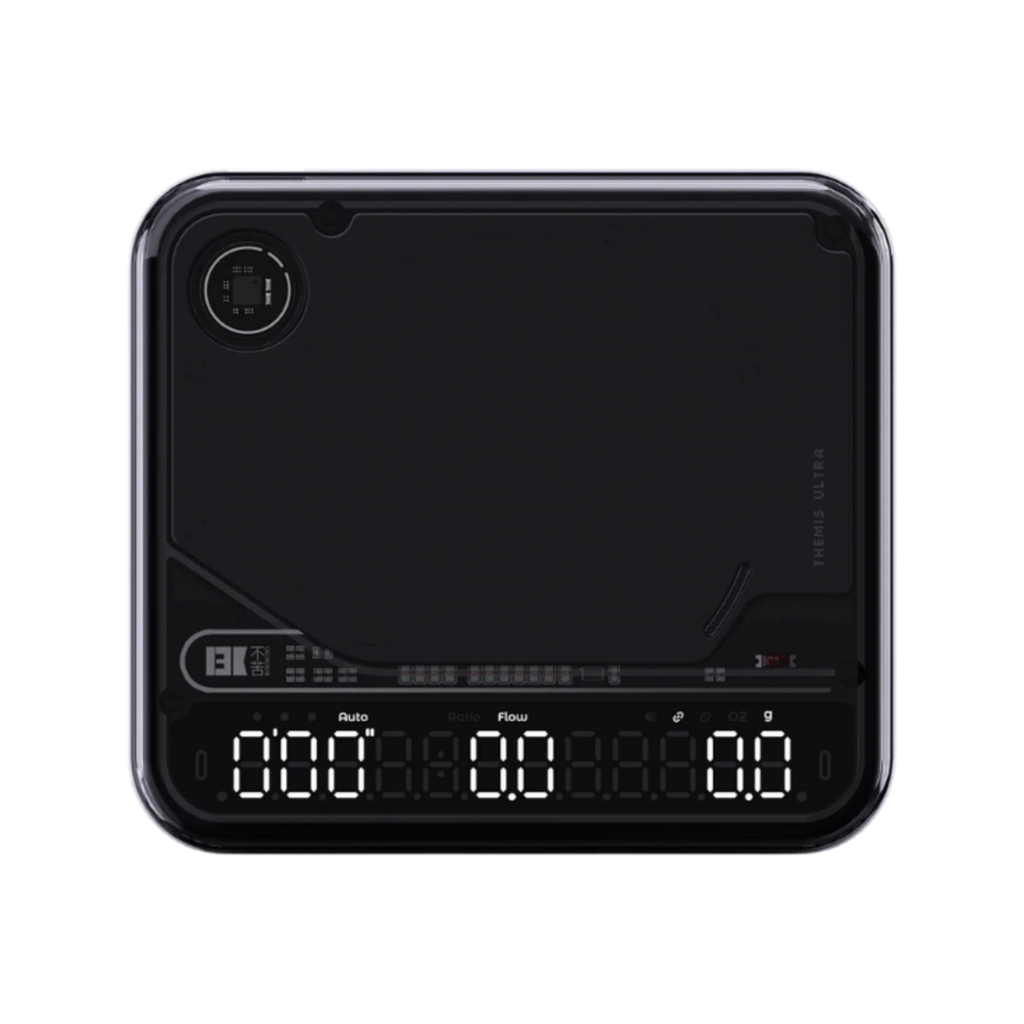
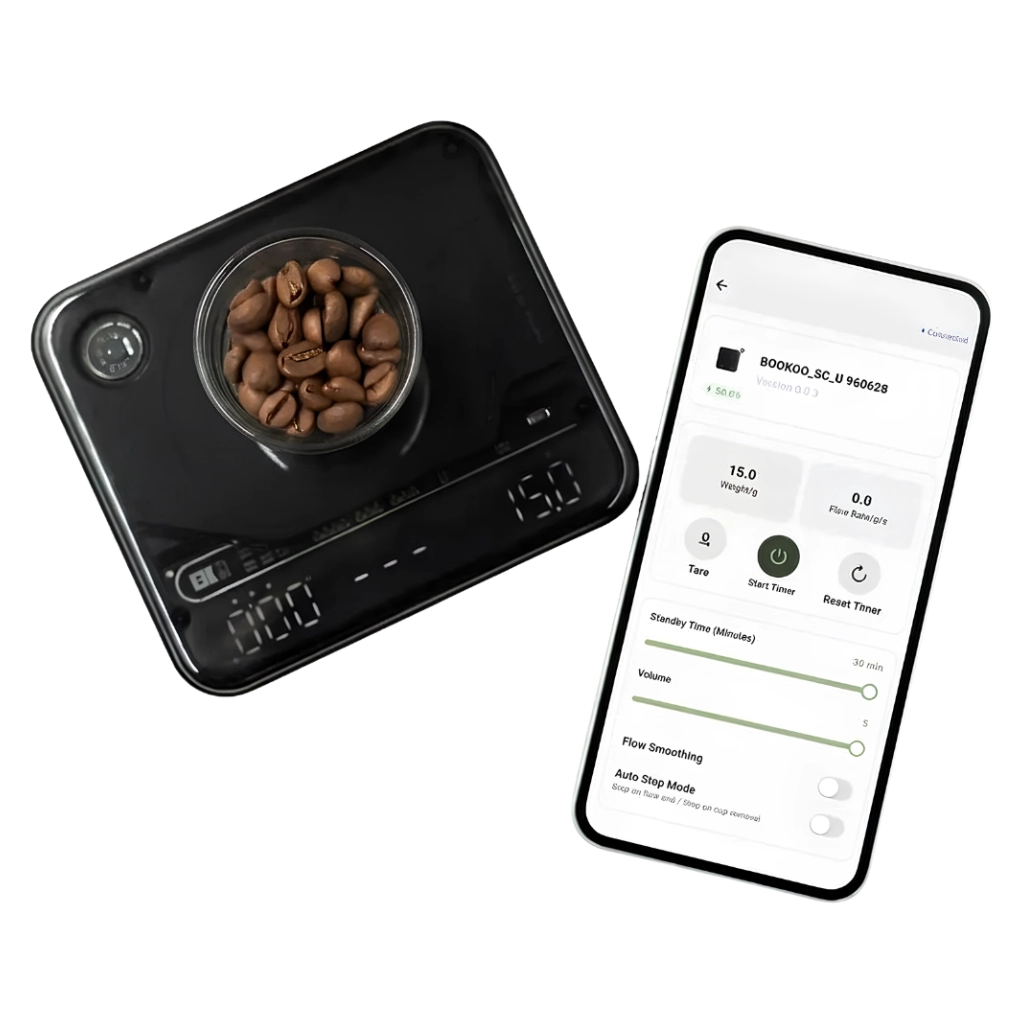
You need three things: a scale, a stopwatch (or a scale with a timer), and a recipe as a starting point. Let's use the standard recipe: 18 g coffee, 36 g espresso in the cup, 25–30 second window.
Dose 18 g of coffee, tamp, pull the shot, and watch two things: how many grams land in the cup and how long it takes. The extraction time tells you whether your grind size is right.
If the espresso runs through too quickly (e.g., 36 g in 18 seconds), your grind is too coarse. The water meets too little resistance and rushes through the puck. The espresso typically tastes sour, thin, and watery.
If it runs too slowly (e.g., 36 g only after 40 seconds), your grind is too fine. Water barely flows through, and the coffee becomes over-extracted. The espresso tastes bitter, astringent.
If you land in the time window (25–30 seconds for 36 g), you're in the right range. From here on, your taste decides.

Adjusting grind size: How much should I turn?
Here's the rule: less than you think. With most espresso grinders, small adjustments make a noticeable difference. With some grinders that have fine gradations (e.g., the Eureka Mignon or Niche Zero), it's even just one or two clicks or lines. How finely you can adjust the grind size is itself a buying criterion when considering which grinder you need.
The rule of thumb: adjust the grind in small steps and pull a shot after each change. Don't jump from "way too coarse" straight to "extremely fine" — you'll almost always overshoot, and especially when you grind noticeably finer, the grinder can even jam. A good rhythm: make a small adjustment, pull a shot, taste, correct. After three to four shots, you're usually in the right range.
Important: after adjusting, discard the first small amount of ground coffee (2–6 g is usually enough). The grinder burrs still hold coffee grounds from the previous grind size. If that gets into your portafilter, it skews the result. We call this leftover coffee the retention and it varies from grinder to grinder.
When you need to readjust your grind size
Grind size isn't a set-and-forget setting. Several factors change how your coffee behaves at the same grind size:
New coffee: Every coffee has a different density, cell structure, and roast. When you open a new bag — even of the same coffee — the grind size might be slightly off. With a completely different coffee (e.g., from light to dark roast), you often need to adjust several settings.
Coffee age: Freshly roasted coffee releases CO₂. In the first few days after roasting, it resists water more strongly, and the shot runs slower. At the same time, it's still bubbling and not yet delicious. We recommend starting to brew espresso about two weeks after roasting. The longer the coffee sits, the finer you'll need to grind it over time.
Humidity: In high humidity, ground coffee tends to swell and creates more resistance. On humid summer days, your espresso might suddenly run slower even though you've changed nothing. Going one setting coarser usually solves it.
If your espresso tastes sour — despite fine grind
A common problem: the espresso tastes sour, so you grind finer. And finer. And eventually the shot takes 40 seconds and still tastes sour. What's going on?
Usually channeling. If the grind is very fine but the coffee puck wasn't distributed evenly, pressure builds unevenly. Water finds a channel through the puck and extracts everything there (bitter), while the rest of the puck gets barely any water (sour). The result is an espresso that tastes both sour and bitter, no matter how fine you grind.
The solution isn't in the grind size, but in puck preparation. Distribute the coffee in the portafilter evenly (WDT with a needle works well), then tamp evenly. More on this in our brewing guide. A pre-wet can also help with channeling because it saturates the puck more evenly before full pressure arrives.
If none of that helps and the espresso still tastes sour at the right time and ratio, brew temperature might play a role. Temperature that's too low extracts fewer acid-binding compounds. A couple degrees warmer can make the difference. But try grind size and puck preparation first — that solves 90% of the problems.

Espresso grind vs. filter coffee grind
Espresso requires the finest grind of all brewing methods. For comparison: filter coffee is ground roughly like fine sand, French press like coarse sea salt. Espresso is somewhere between powdered sugar and fine sand — noticeably finer than anything else.
There's a simple reason: contact time for espresso is only 25–30 seconds. So water can extract enough flavor from the coffee in that short time, the surface area of the coffee particles must be as large as possible. Finer grind = more surface area = more extraction per second.
That's why you need a grinder for espresso that can grind fine enough while delivering uniform particle size. Not every Kaffeemacher can do that. A decent espresso grinder costs around 200 euros or more. Cheaper grinders can grind fine, but unevenly — with many coarse and many overly fine particles at the same time. This leads to under- and over-extraction in the same shot. Our comprehensive espresso grinder test shows which ones can do it. A curated selection of recommended grinders can be found in the espresso grinder selection. Hand grinders under 100 euros are often the best choice in the budget range.
Setting grind size: Dialed in through five shots
When you have a new grinder or want to open a new coffee, this method gets you to your goal quickly. Define the recipe or use ours. We provide a recipe for every espresso in our shop.
Shot 1: Start with a setting that seems roughly right to you. Dose 18 g, pull to 36 g, and time it. If the shot takes under 20 seconds: grind noticeably finer. Over 35 seconds: grind noticeably coarser.
Shots 2–3: Correct in the right direction, each time in small steps. You should now land in the 22–32 second range.
Shots 4–5: Fine-tuning. Small corrections, taste, evaluate. If the espresso is in the time window and tastes good to you: done. If it's in the time window but doesn't taste right: read on at espresso too sour or adjust your brew ratio (slightly more or less water).
Yes, that costs you five shots of coffee. Think of it as an investment — after that, you'll know where your grinder stands and only need minor adjustments.
More on brew time and why it's your most important diagnostic tool: Espresso extraction time: When does brew time really matter?
Your espresso tastes sour? Check out our detailed troubleshooting article: Espresso too sour — what to do?