





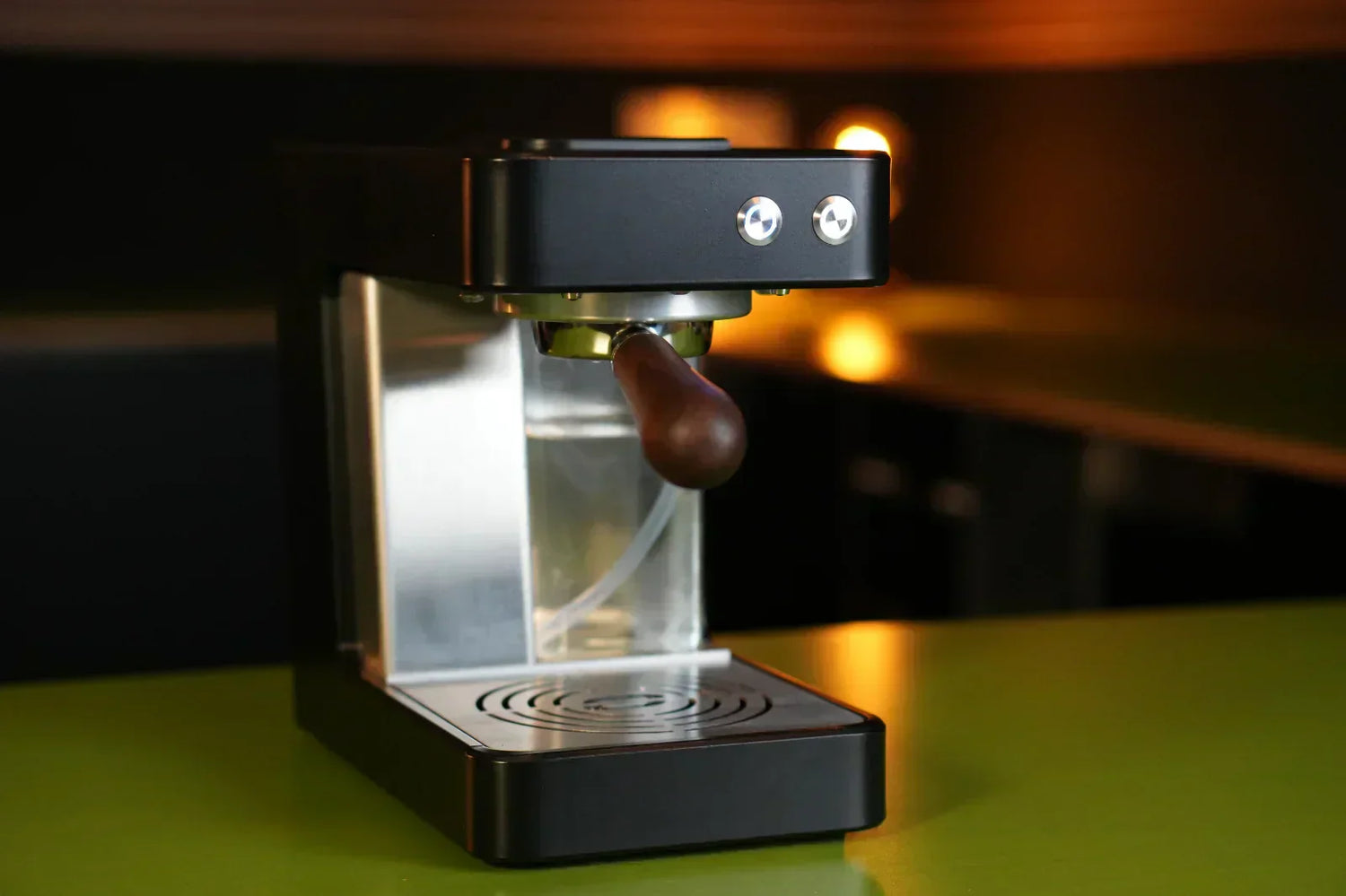

On the outside, the Roxy Espresso is a minimalist. Two buttons, no steam wand, and zero fluff in the smallest of spaces. However, this formal restraint belies the density of functionality slumbering within.
Meanwhile, the espresso potential of the Roxy Espresso keeps pace with any other espresso machine worldwide. As I write this, I realize I am falling into the same understatement that characterizes the two founders and inventors of the Roxy, Florian Köpplinger and Maximilian Seyfert. No, the Roxy does not just keep pace! It leaves others behind. A handful of espresso machines worldwide might keep up with the Roxy. But what is being built there in Fürstenfeldbruck, Bavaria, is the best espresso machine we have ever tested for under 3000 euros – though the Roxy doesn't cost 3000 euros, but 2300 euros or Swiss francs.
I have thought a lot about "understatement" since the Roxy espresso machine appeared on my horizon. That was in the summer of 2024. Back then, Florian Köpplinger visited us in Basel to introduce the Roxy and collect feedback before the Swiss Coffee Festival.
In a charming way, the Roxy bears a resemblance to its inventors. No, they aren't particularly compact – they are quiet doers who don't shout to the world what they have actually created. In the world of design and engineering, "hidden complexity" best expresses what the Roxy is: clear on the outside, highly complex on the inside. "Quiet Power" also hits the mark. The machine isn't loud, but it is massively powerful. No flash, no chrome, no bling – just sheer sovereignty.
Do you want to learn more about the Roxy Espresso? Then take some time for this written text report, our long or short review video, or even the English translation.
This review was worked on by Andrea Perin (barista trainer), Michel Indelicato (coffee demi-god), Larissa Bürgi (barista, videographer), and Benjamin Hohlmann (host).
Design and build quality: Pure understatement
When you unbox the Roxy, the first thing you notice is: It's tiny. At 16 centimeters wide and 30 centimeters deep, it is arguably the most compact machine, alongside the Zuriga, that truly deserves the name espresso machine. The anodized aluminum housing and the external glass water tank look high-quality. We searched in vain for sharp edges or sloppy gaps, which is why we award a solid 7.5 out of 10 points for build quality. Everything feels good, nothing rattles. According to the company, they rely on local production and recyclable materials wherever possible.
But where there is light, there is also shadow – or in this case, water. The drip tray is very tight at 350 milliliters and has no indicator to warn you before it overflows. Fiddling the tray out requires some finger acrobatics and led to small floods now and then during our test. Another detail that is annoying in the workflow: when flushing, a bit of water always remains due to the design of the tray cover. It looks stylish with the Roxy logo, but it's impractical because you have to wipe it constantly. A grate would have been the less pretty, but more pragmatic choice here.
The Roxy is operated via two buttons, which can be configured via an app. Button 1 lights up in one of three colors, signaling that an assigned brew profile or recipe has been selected. Button 2 cycles through the profiles.
Technology & heating time: Waiting is a thing of the past
Let's move on to the inner values, where the Roxy really scores. It dispenses with classic boilers and relies on a thick-film heater. The manufacturer promises brew readiness in under two minutes.
Naturally, we measured it. In our standardized KM protocol, the machine was fully heated and ready for us to pull a stable shot after exactly 2 minutes and 50 seconds, including the portafilter. For this purpose, we pulled a full flush shot through the portafilter. However, that is already included in the 2:50.
That is world-class and earns the Roxy the full score of 10.0 for heating time. Anyone with little time in the morning will love this. And of course, this fast heating time also has an immediate effect on energy consumption and our performance measurement.
How the Roxy controls the flow (pulse packet control)
We need to clarify and examine one technical detail more closely, as it is the heart of the flow and pressure control that happens in the Roxy. A classic vibration pump works inside.
Some manufacturers try to control these pumps through a type of "dimming," which can lead to the pump stalling at low pressure because it lacks the force. The Roxy takes a different approach: it uses targeted pulse control (technically: wave packet control).
The pump isn't made weaker. Instead, the electronics specifically switch individual strokes of the pump on and off. Each stroke therefore occurs with full force, but the frequency of the strokes is reduced. You have to imagine it like walking: instead of small, shuffling steps (dimmer), the Roxy takes large, powerful steps, but leaves pauses in between. This allows for extremely precise and powerful low-flow profiles without the pump being choked.
Further info you won't find elsewhere online
- Distance from portafilter to drip tray: 13.4 cm
- Depth with plug: 31 cm
- Depth with portafilter: 41 cm
- Height: 26.3 cm, Depth: 30 cm, Width: 16.6 cm
- Weight: 7.8 kg

Energy efficiency: A role model for power saving
We need to pause briefly here, because the Roxy's power consumption is sensational. We measure the consumption for heating and the first espresso shot (EE). The Roxy only requires 0.0278 kWh for this.
With that, it easily undercuts our strictest threshold for the top grade of 0.05 kWh and secures a clean 10 out of 10 points in our energy score. For comparison: for this process, it consumes only about half as much electricity as an already economical DeLonghi Dedica. The fact that the machine has no steam function naturally benefits the energy balance here – those who "only" want espresso don't heat up any unnecessary mass.
Volumetrics: The acid test
A real highlight is the volumetrics – and we rarely say that about machines in this price range. Volumetrics is the precise dispensing of the desired amount of coffee. To understand why the Roxy cleans up with 9/10 points here, you have to know how conscientious our test protocol is.
How we test: The 5-stage stress test
We don't just test whether the machine stops at some point. Our volumetric test goes through five stages to check the "intelligence" of the automatic volume control:
- Hardware basis: First, we measure with a Scace device (simulated resistance) to test the pure repeatability of the technology without the "coffee" factor.
- Reference espresso: This is followed by extractions under ideal conditions with the correct grind size.
- Profile check: We check whether the volumetrics remain stable even with complex pressure profiles (e.g., with long pre-infusion).
- The stress test (coarser & finer): This is where the wheat is separated from the chaff. We intentionally set the grinder significantly coarser (faster flow) and finer (slower flow).
The Roxy thinks for itself
The Roxy mastered this course brilliantly. It uses an algorithm that measures the flow and calculates the amount in the cup from that, instead of just timing it. In the stress test, it recognized when the flow was faster or slower and ended the shot accordingly earlier or later. The result: even without a scale, we arrived at a solid accuracy of +/- 1.5 to 2 grams in our test. For a quick espresso in the morning, that is absolutely reliable.
The scale mode for perfectionists
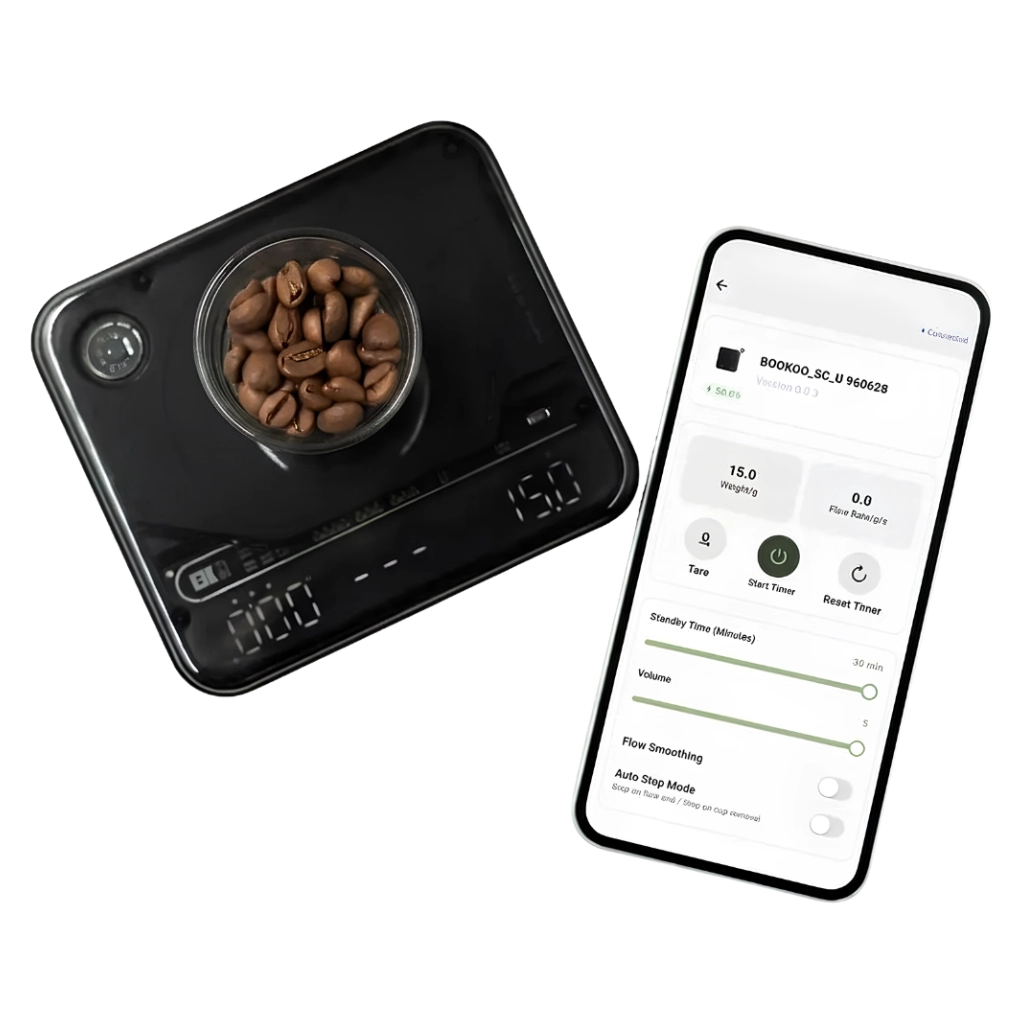
If you want to take it to the limit, you pair a Bluetooth scale. Then the Roxy switches to a kind of "override mode": it deactivates its internal calculation and controls the shot exactly according to the scale's feedback. In this setup, we ended up with a precision of +/- 0.5 grams. That is high-end level and – together with the intuitive entry of the target amount in the app – almost earns it the full score.
As a brief note: We have refined and revised our test protocol. To achieve the full score, an accuracy of +/- 0.5 must be reached, and a scale must be sensibly integrated under or in the drip tray.
Usability and workflow
We rate the usability with 8.0 points. Deductions are primarily for the small drip tray and the dripping, but the control via app and buttons is intuitive and powerful.
In terms of usability, the Roxy shows its own unique character. We award 8.0 points here because the control via app and buttons is excellently solved, but the hardware holds a few pitfalls in everyday use.
Minimalism meets "Snake" charm
There is no display on the device itself, only two buttons and an RGB LED. We find that extremely pleasant in everyday life: you don't have to whip out your phone every time to pull an espresso. Once set, you simply press the button for the stored profile (e.g., yellow for standard profile).
The app itself is a case in itself. Visually, its pixel look reminds us of the classic "Snake" or the old Windows days – you won't win a UX design award here. But: it works. Stable, fast, and without unnecessary fluff. We found the feedback system particularly helpful: after the shot, the app tells you if you should adjust the grind size because the flow didn't fit the profile. That is a real feature that helps beginners.
The hardware pitfalls: Wiping and fiddling
As good as the software is, you can feel the extreme compactness of the hardware in some places.
- The drip tray: At 350 ml, it is very small. But the actual problem is not the size, it's the handling. There is no float indicator to show when it's full. Moreover, it sits so snugly that you literally have to "fiddle" it out. If it is well-filled, water is almost guaranteed to spill over when you remove it – even if the honeycomb structure inside reduces the risk of sloshing. The only thing that helps here is to empty it regularly before it gets critical.
- The "drip tray cover": We have already mentioned it. One of the few areas where the designers did not follow the motto "form follows function." Instead of a permeable grate, the tray cover becomes a drip catcher after every shot and flush. A cloth next to the espresso machine is essential to clean it after every use.
Water tank: Refilling often
The glass water tank is a visual highlight and easy to clean. With a 0.9-liter volume, however, it is at the lower limit for an espresso machine. If you – like us in the test – also use the flush mode or brew filter coffee, you feel like you are refilling more often. Fine for the single user, a compromise for the heavy drinker. On the other hand, you are guaranteed to brew with fresh water.
Conclusion on operation: The Roxy is fun once you get the hang of it. The control is precise and "idiot-proof," the app powerful. However, the small hardware quirks (drip tray, wiping) cost it the rating in the 9-range. Anyone who can live with that gets a very direct and modern workflow.
Profiling & app: From "beginner-friendly" to "nerd mode"
This is where it gets exciting, because the Roxy is actually a wolf in sheep's clothing. It has no display, but the app opens up a playground that we usually only know from machines like the Decent or Maro.
The entry: Three profiles to start
For everyone who just wants to drink coffee, the Roxy comes with three stored profiles that can be selected via the colored buttons (or colors in the app).
- Dark roasts (yellow): A profile with a fixed flow of 1.6 ml/s.
- Light roasts (pink): An adapted profile for fruitier coffees.
- Classic (9 bar): A standard pressure profile that behaves like a normal vibration pump machine.
The ingenious thing about the first two profiles is the flow control. The machine does not desperately try to build up 9 bar of pressure, but keeps the water flow constant. So if you ground too coarsely or tamped unevenly, the water doesn't simply "rush" through. The machine intervenes and saves the shot. This is a kind of built-in barista assistant that massively reduces frustration for beginners. The app even gives you feedback: if the pressure was too low, it tells you after the shot that you should grind finer.
The nerd mode: "If-This-Then-That" for espresso
Anyone who wants to dive deeper can go wild in the app. You can build profiles based on "if-then" logic. An example: "When the pressure reaches 2 bar, switch to the next phase." You can run ramps, let the pressure drop slowly, or program "turbo shots." An unlimited number of profiles can be saved.
In our test, we experimented with our Hamesho from Ethiopia and were able to control the balance of sweetness and acidity extremely precisely. Although the app itself is visually more reminiscent of Snake on a Nokia 3310 than modern UX design, it works flawlessly and offers a depth that is absolutely unrivaled in this price range.
The only limitation with profiling: The Roxy technically limits the flow to a maximum of 5 milliliters per second. For 99% of all espressos, that is completely sufficient. But anyone wanting to brew extremely fast turbo shots or large amounts of filter coffee runs into a limit here. Our filter coffee test with David showed: it's okay for 200 ml, but for more, the flow becomes too slow.
Espresso quality & temperature
But the most important thing is: does it taste good? Yes, and how. In terms of espresso potential, the Roxy achieves an excellent 8.7 points. The shots were sensorially very balanced, sweet, and dense. But good taste is not a coincidence; it is the result of technical precision. That is why we are looking closely at the temperature curves – because this is where the wheat is separated from the chaff.
We rate the temperature performance with a very strong 8.0 out of 10 points. To put this grade into perspective, it is worth looking at our three-part temperature protocol:
1. The "First Shot" (everyday suitability)
The big challenge for fast-heating machines is the first shot. Is the system really stable yet? We measured: the first shot on the Roxy started at an average of 93.44 °C, while the machine later settled at about 92.5 °C. So we have a minimal "overshoot" of 0.95 °C. Since this deviation is under one degree, this is a very good value that brings almost no sensory disadvantages. For a machine that is ready to go in under three minutes, that is impressive.
Important: anyone wanting to use the Roxy after 2:30 must pull a flush shot through the portafilter to heat it up completely.
2. Intra-shot stability (the curve progression)
What happens during the shot? This is where the Roxy loses points for absolute perfection. Our measurement shows a slight "rise": the temperature climbs by a good 1 degree during extraction (start ~91.8 °C to end ~92.8 °C). A flat line ("flatline") would be ideal. We would also evaluate a slightly falling curve positively. Such an increase is not a disaster, but it slightly changes the extraction dynamics. This cost it the top grade in our strict B-cluster (intra-shot stability).
3. WBC performance (the stress test)
But this is where the little Roxy shows muscles like a big one. We ran it through our protocol based on the World Barista Championship: 14 shots in short succession. The result is astonishing: under this continuous load, the machine remains in a temperature window of under 1 °C (difference min/max: 0.94 °C). It shows absolutely no fatigue. Whether you make one espresso or twenty – the Roxy delivers consistently like a professional machine.
About our espresso roasts
We roast coffees for every taste. From the darker roast of Italian style like the Compadre, a transitional espresso like the Mano, or light roasts with which we attack podiums at barista championships in Germany and Switzerland. We accompany you on your coffee journey and provide suitable recipes and recommendations for every coffee. We would be happy if you gave it a try.
The elephant in the room: No steam = 0 points
Let's get to the point that will divide opinions: the Roxy cannot froth. Not at all. There is no steam wand and no steam boiler. Consequently, there are 0.0 points for frothing quality. Anyone who loves their cappuccino must place an external frother like the Nanofoamer next to it or choose another machine.
Such frothers are becoming more and more common and are of increasingly better quality. Anyone who has espresso preparation and frothing in one machine will not be happy with the Roxy Espresso.
For Michel on our team, this is an exclusionary criterion, as he likes to entertain guests with latte art. Personally, I find the concept consistent. It is a pure espresso machine. If I don't need milk foam, why should I pay for technology for it and heat it up?
The Roxy Espresso integrates flow and pressure profiling built in Germany into a price of 2300 euros only because it so consistently focuses on being an espresso machine. That is its mastery, and it is extremely good at it.
Accessories: Light and shadow (6.0 points)
With accessories, the Roxy doesn't make it easy for us. We rate this point with 6.0 out of 10 points – a grade that shows: there is room for improvement, especially measured against the price of 2,300 euros.
The silver lining: The tamper
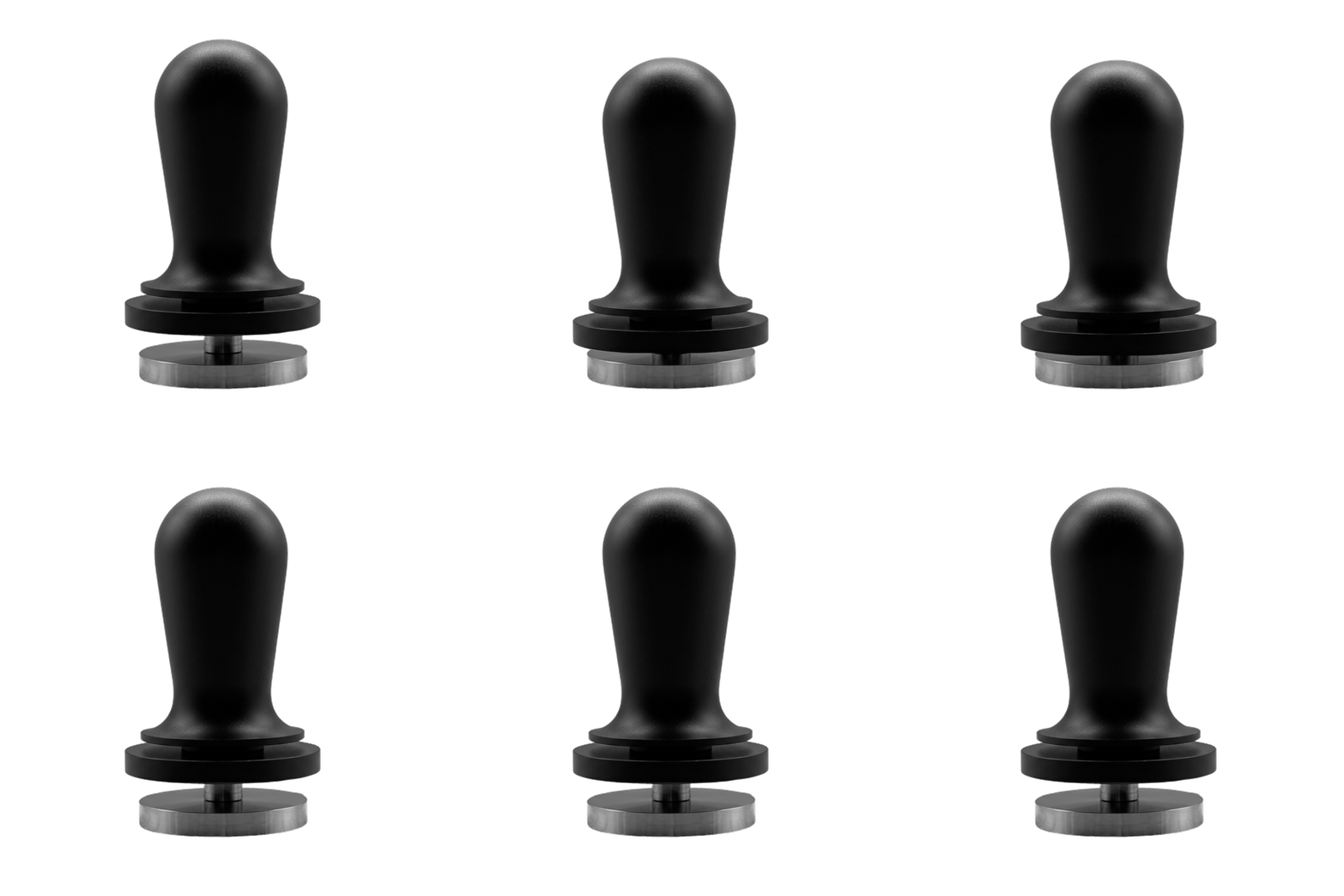
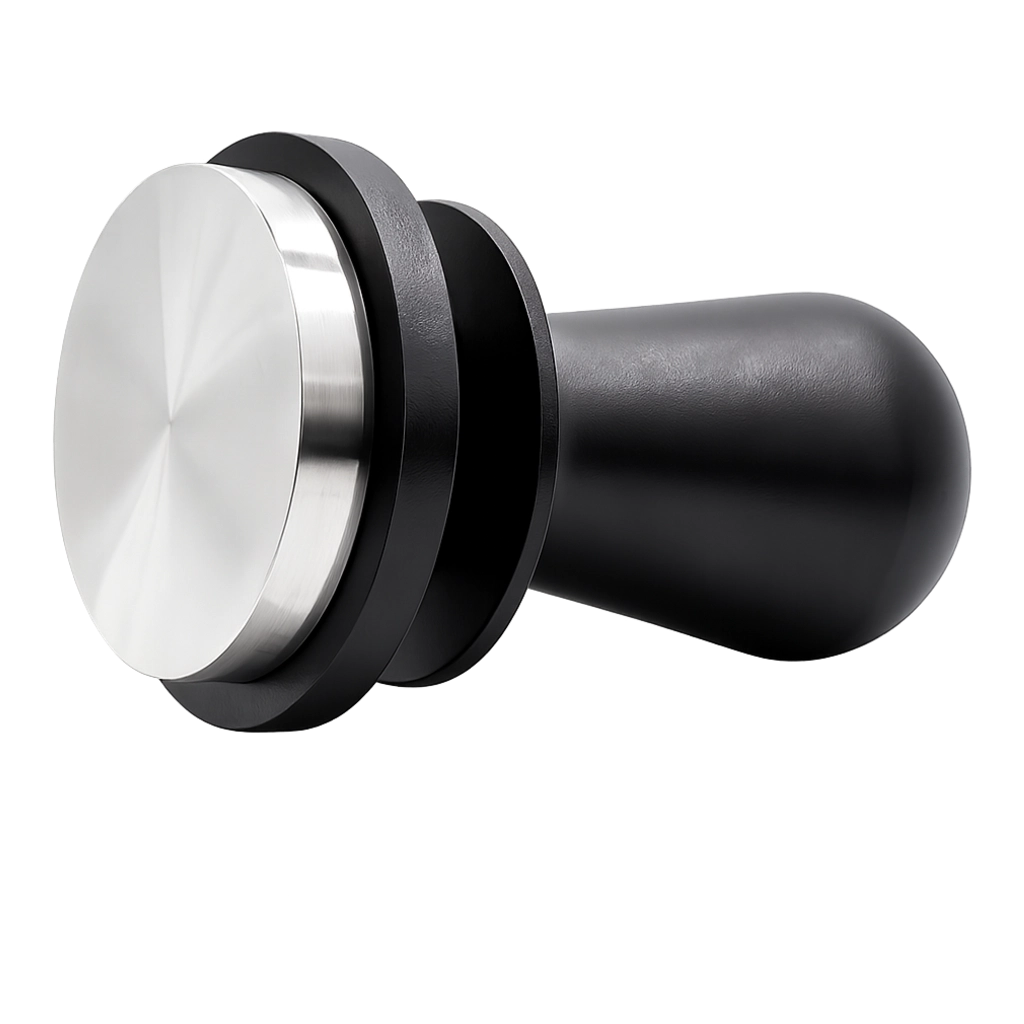
We must positively highlight the included tamper. Many manufacturers skimp here and only include plastic toys. [cite_start]Not so with the Roxy: you get a solid tamper with a diameter of 58.5 mm. That is decisive, because this "oversize" ensures that it really closes the basket flush to the edge and almost no coffee grounds remain on the side walls. It sits well in the hand and fits perfectly with the high-quality claim of the machine.
The shadow: The baskets
At the heart, the baskets, we were somewhat disappointed. The Roxy comes with standard baskets that are "okay" but don't exploit the full potential of the machine. Michel hit the nail on the head in the video: for a machine that can work so precisely, we would have wished for factory-precision baskets (e.g., from IMS or VST) that are cylindrical and perfectly holed.
Here, the manufacturer skimped in a place that is definitely relevant to the taste. Our tip: use the high-quality 58er portafilter, but treat yourself to an upgrade to a precision basket for a few euros. The machine will thank you.
Filter brewer
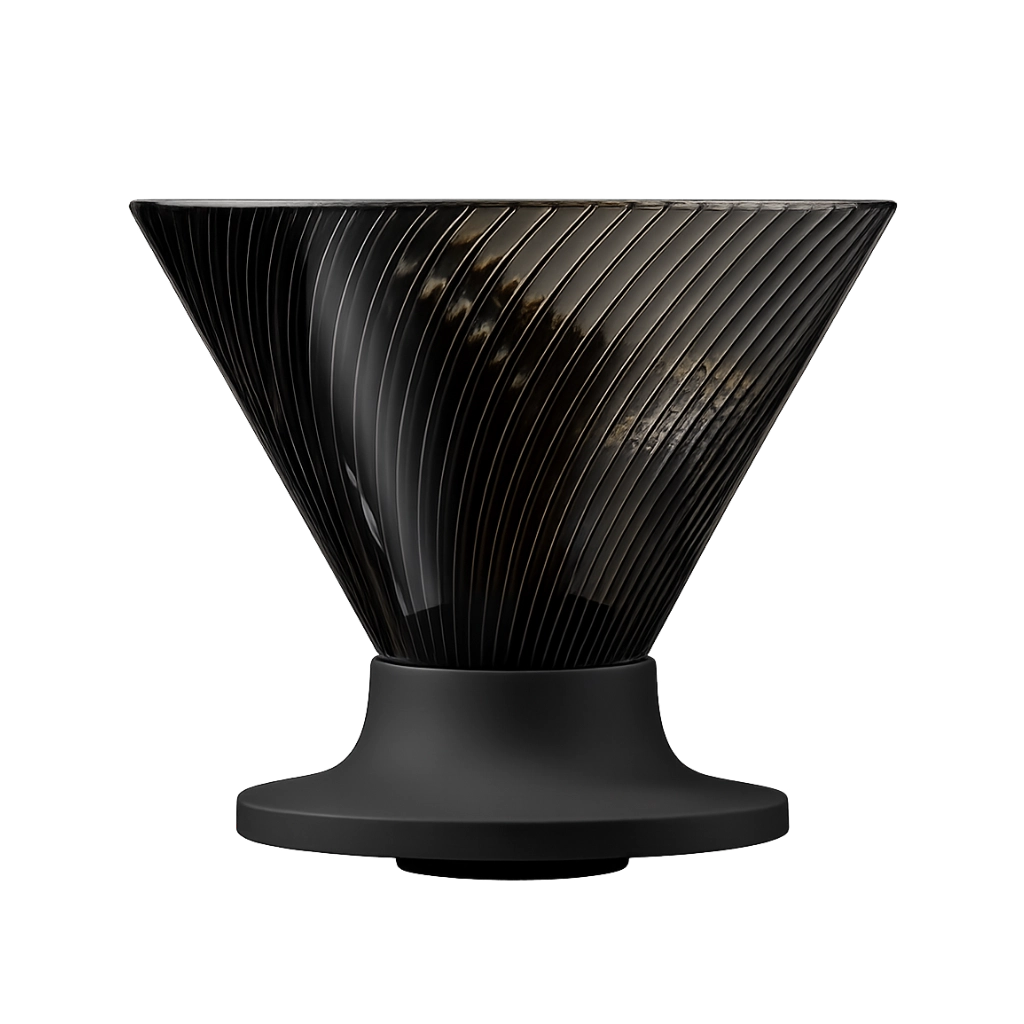
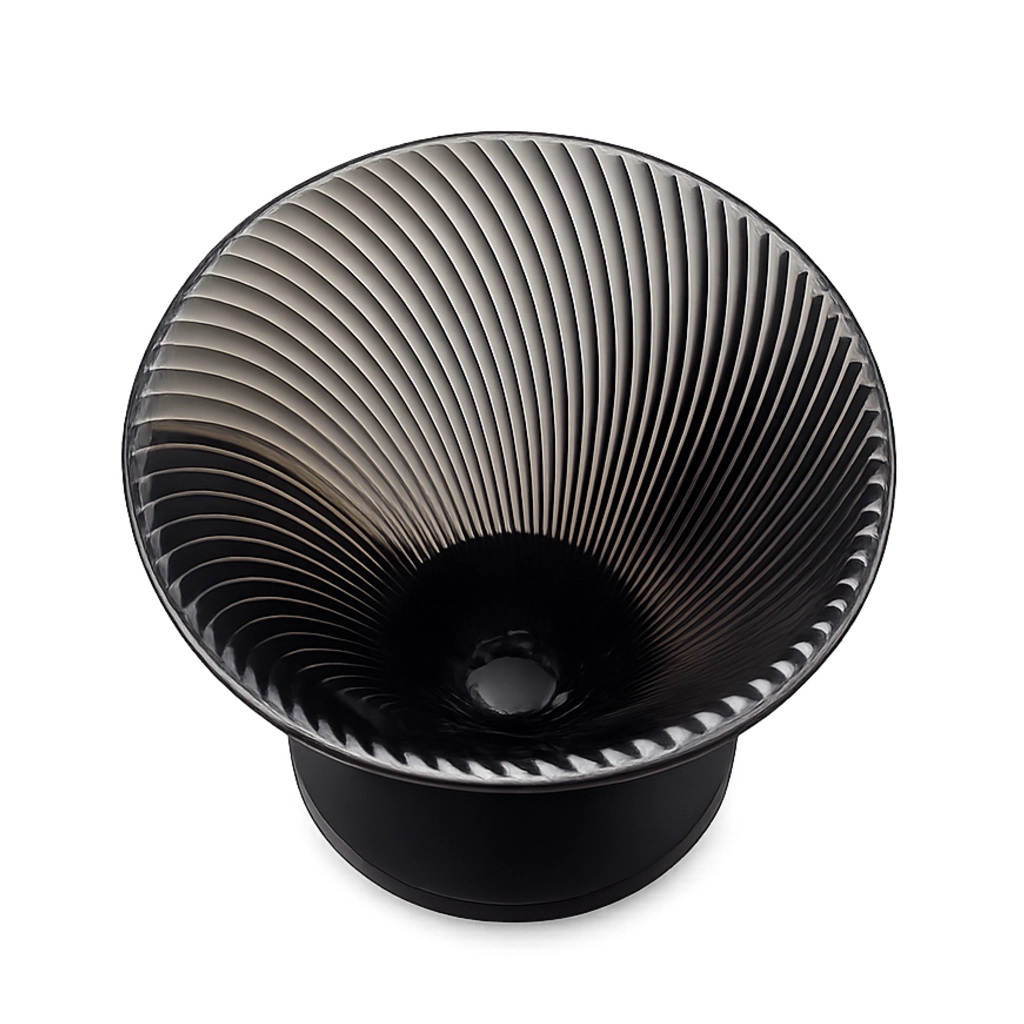
Included in the scope of delivery is a small V60 filter as well as a corresponding suspension. To me, it feels out of place and breaks with the clear concept of the espresso brewer. If I want to make filter coffee, I brew it by hand, in the appropriate amount. Nevertheless, it should be mentioned positively: you also have an option in the scope of delivery of the Roxy to make filter coffee, and in smaller amounts, the Roxy does that well too.
Conclusion: 72 points for a specialist
The Roxy Espresso, with a total score of 72.0 points ("Very Good"), is one of the most exciting machines we have had on the counter lately. It is a specialist, not an all-rounder.
Who is it for? It is perfect for the pure espresso drinker who has little space but is looking for maximum control and nerd features like profiling. It is ideal for everyone who wants to save energy and is prepared to use a separate solution for milk foam.
Who is it not for? If you primarily make cappuccino for the whole family in the morning, you won't be happy with the lack of steam. Even those who want to brew large amounts of filter coffee will find better solutions – namely filter coffee machines.
The Roxy Espresso, with its small drip tray and lack of a steam wand, is also not made for catering or volume operation. However, the machine's temperature consistency would completely meet the demands of volume operation!
Priced at 2,300 euros/CHF, it is in a range that is absolutely fair for the manufacturing quality offered and the innovative technology (price/performance: 5.1 points). It is quiet (8.0 points), extremely temperature-stable, and delivers results at a world-class level.
A total score of 72/100 points (test protocol 2.3) is still very good, and it is even more impressive when you consider that it is achieved without points for frothing performance or catering potential.
If you can live with the fact that the Roxy "only" does espresso, it does that damned well!