

Bharath - Espresso from India


Bharath - Coffee Info
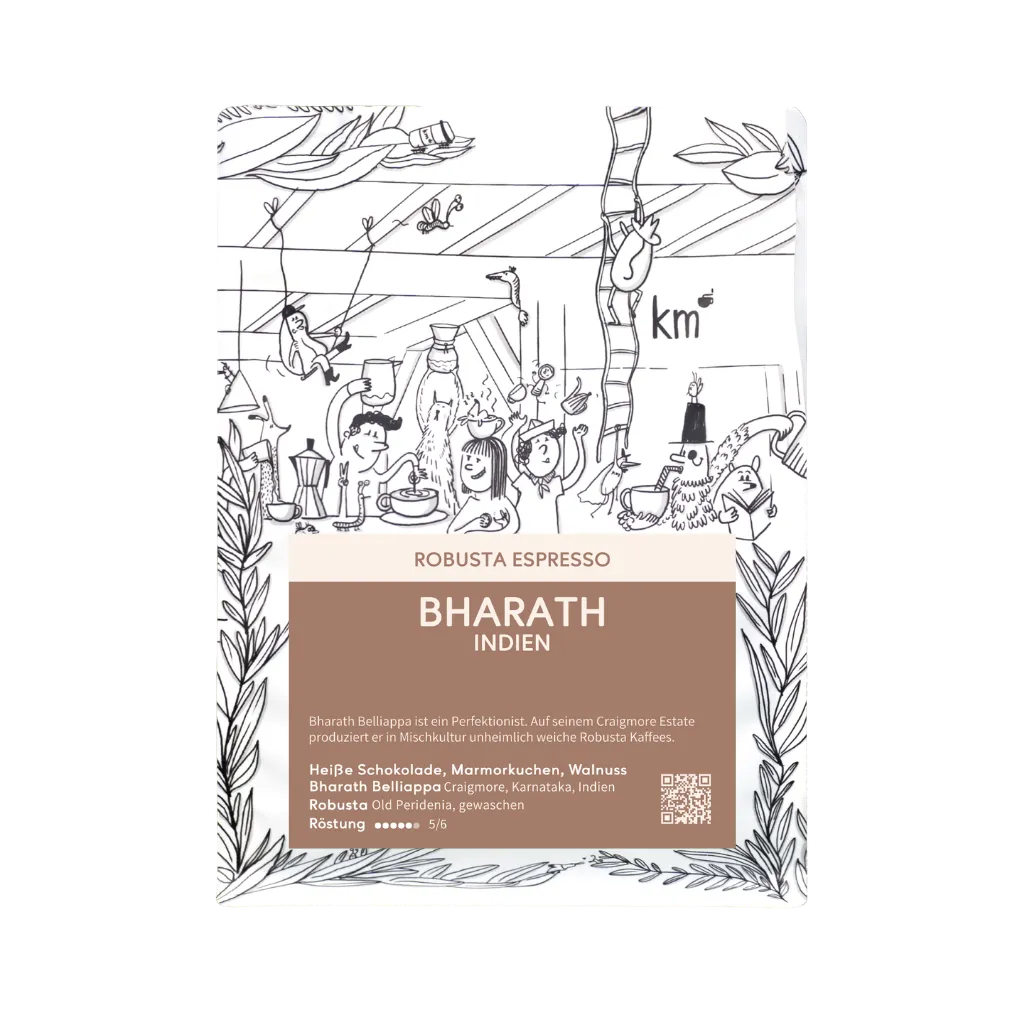
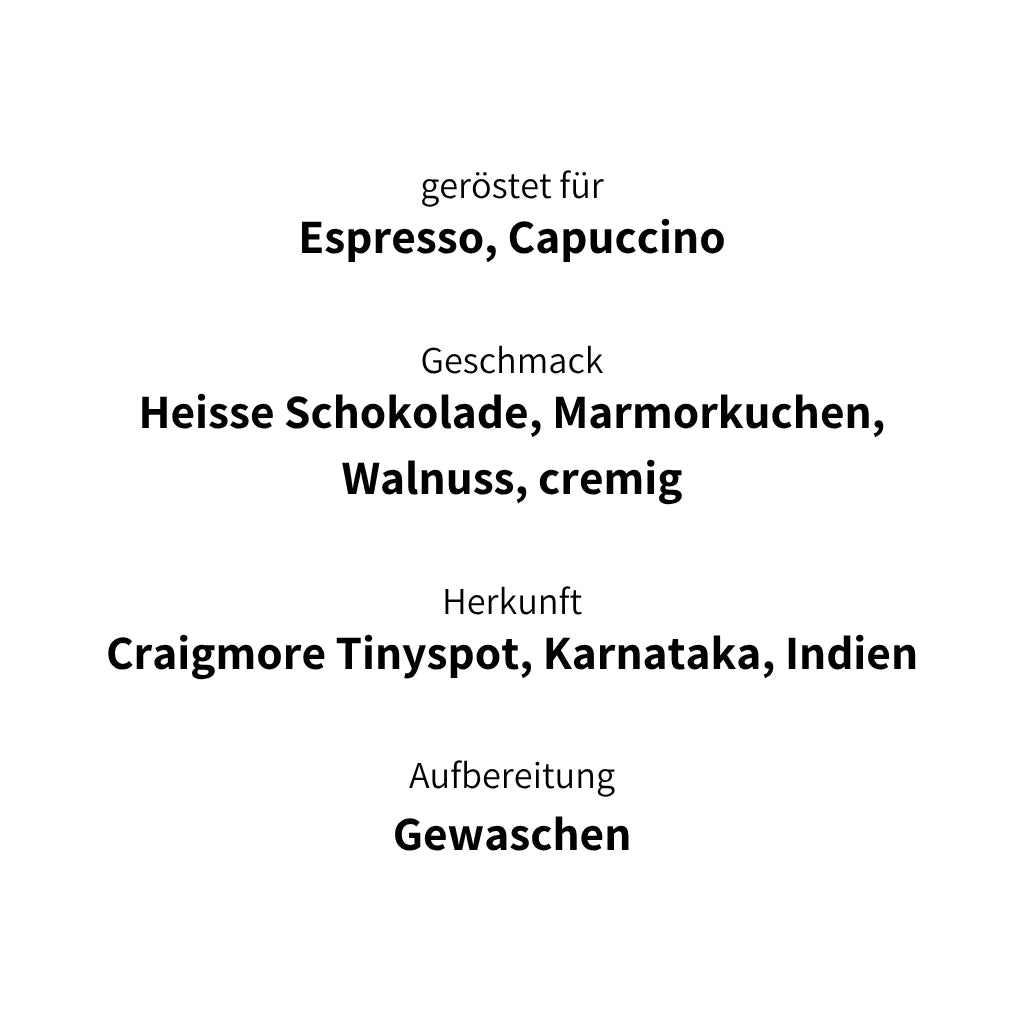
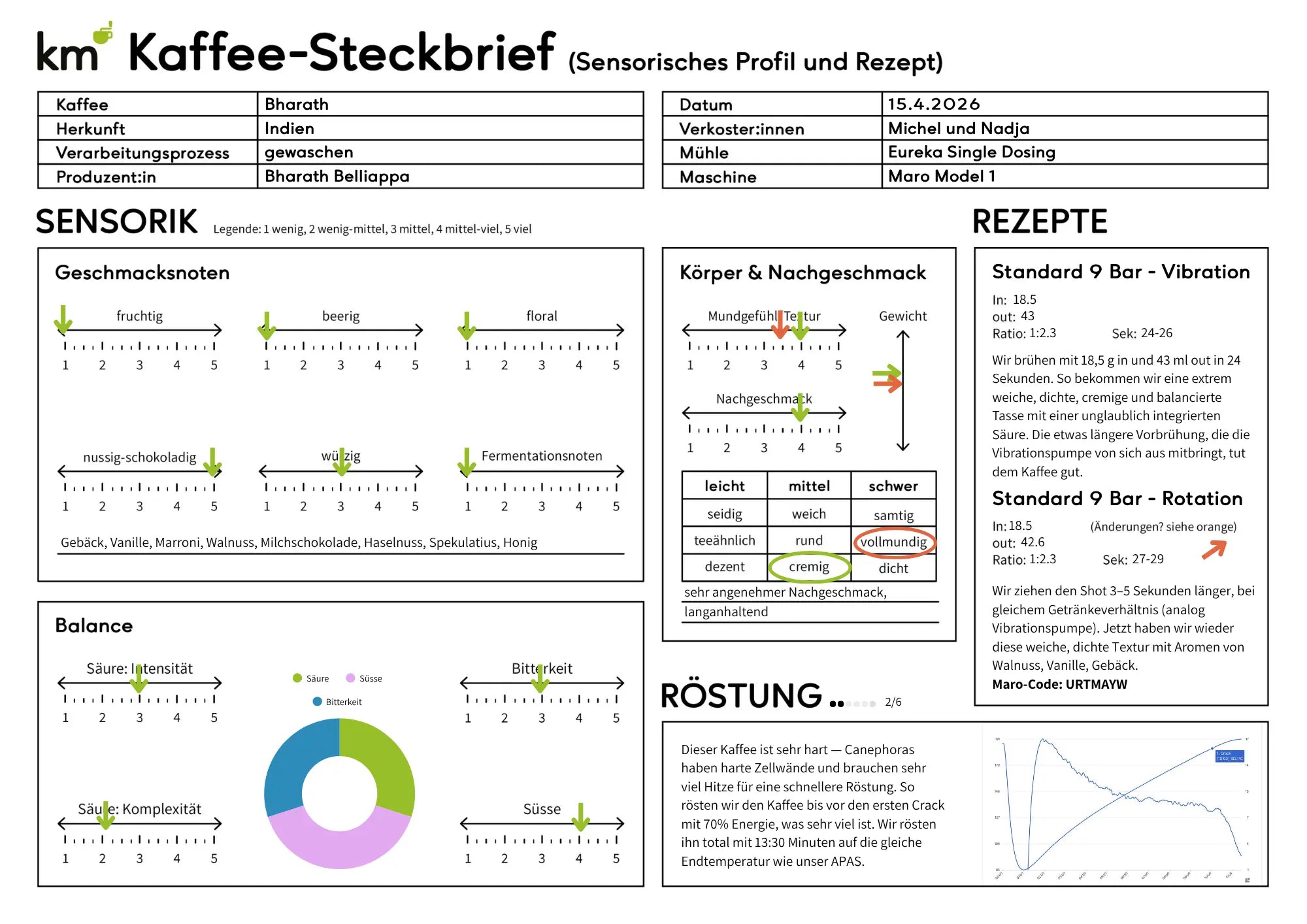
| Taste: | Hot chocolate, marble cake, walnut, creamy |
| Bean origin: | Craigmore Tinyspot, Karnataka, India |
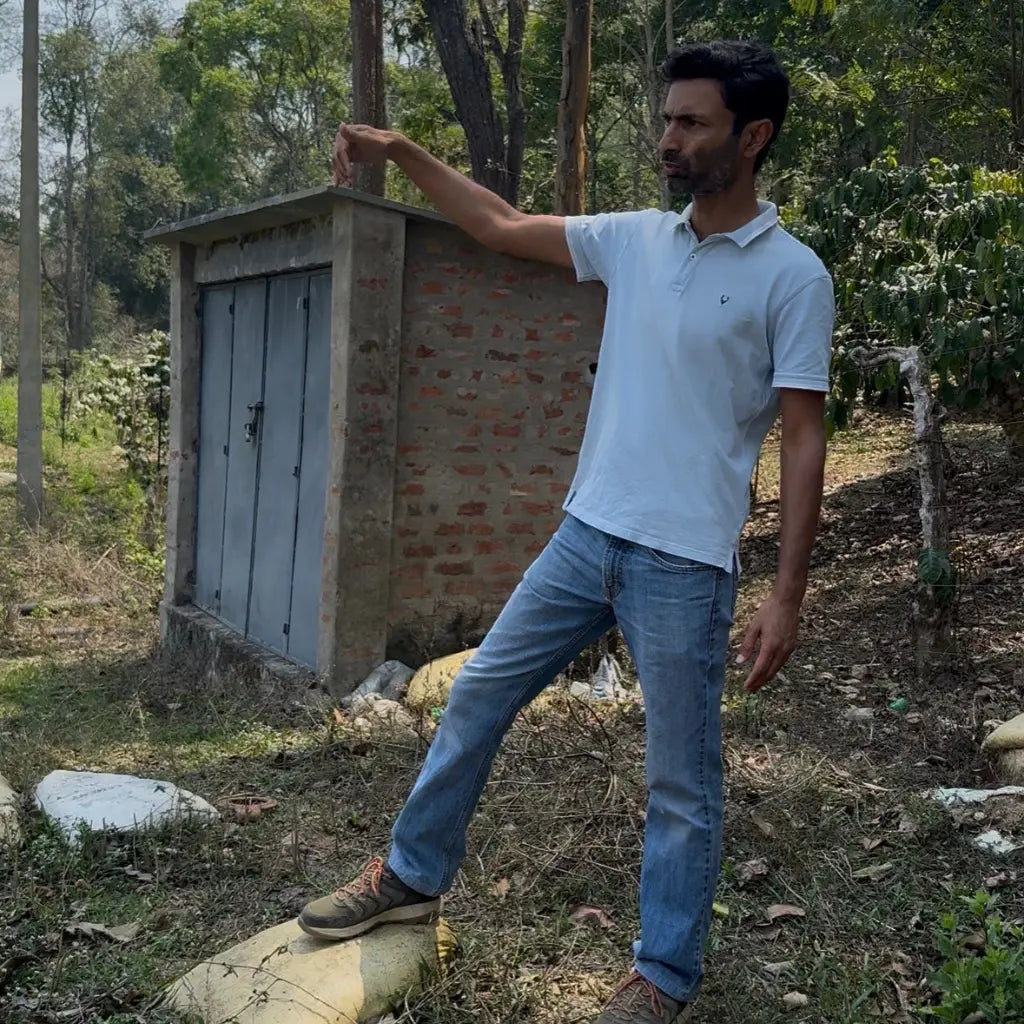
| Producer: | Bharath Belliappa |
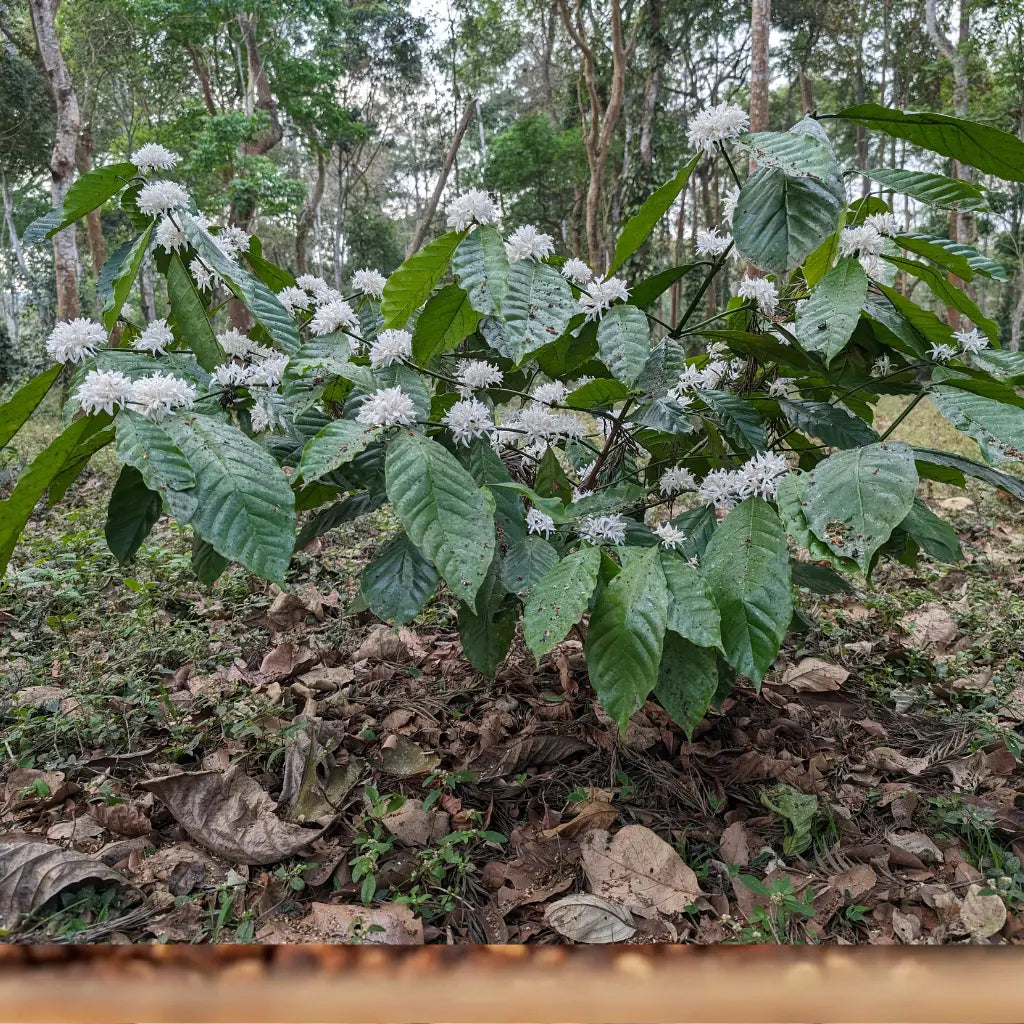
| Varieties: | Old Peridenia (Robusta) |
| Post-harvest process: | Washed |
| Growing philosophy: | In harmony with nature, under the dense natural shade of native trees |
| All our coffees are sold as whole beans. | |
How we brew this coffee

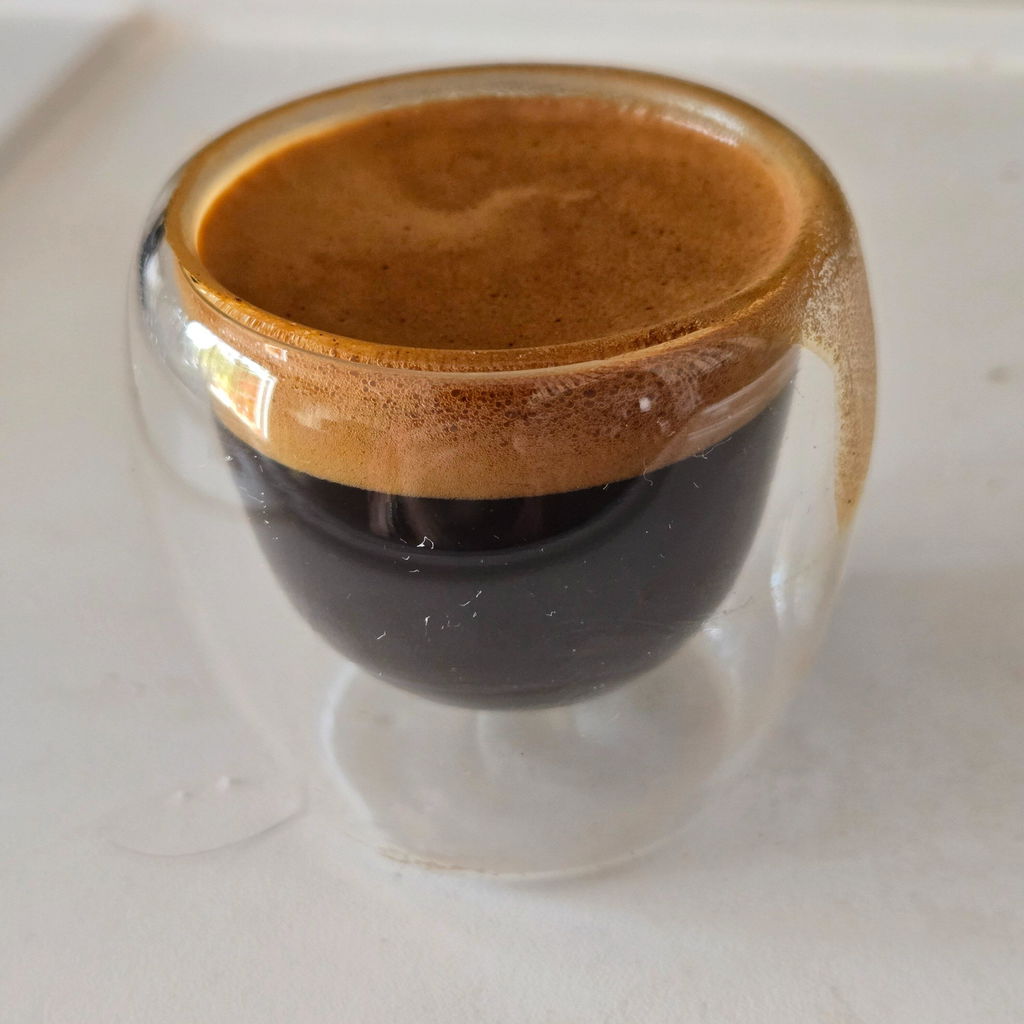
This Old Peridenia is fantastic. It brings a creamy, soft texture that perfectly supports the delicate acidity of this Robusta. When extracted skillfully, it delivers a sweet, dense, balanced espresso that takes Nadja straight to a cozy winter fireplace. Don't pull for more than 30 seconds, otherwise it slowly slides into an unpleasant, slightly metallic bitterness.
The recipe with the vibration pump convinces us completely. In Michel's words: "I've never had a Robusta with such impressively integrated acidity." This refers to our brew with 18.5 g in and 43 ml out in 24 seconds. This gives us an extremely soft, dense, creamy and balanced cup with incredibly integrated acidity. If we pull the coffee for 32 seconds or longer, we get pronounced acidity from over-extraction - similar to Arabica. The slightly longer pre-infusion that the vibration pump naturally provides does this coffee good.

Our recipe for the vibration pump (18.5 g in, 43 ml out in 24 sec.) doesn't quite work for the rotary pump. For our taste, the cup is not balanced enough. That's why we pull the shot 3-5 seconds longer, keeping the same drink ratio. Now we get that soft, dense texture again with notes of walnut, vanilla, pastry. This brings us to the question of whether the vibration pump really needs a longer brew time - a universal theory that deserves to be questioned and explored.

Why does this coffee taste the way it does?
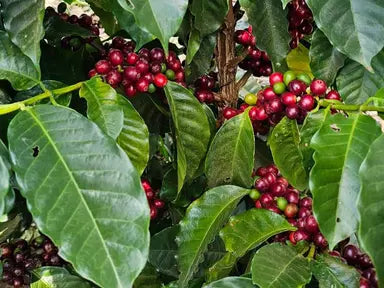
This coffee comes from Coorg in India, more precisely from the municipality of Palestina, at an altitude of 1,000 meters. The Old Peridenia variety has been grown here since time immemorial.
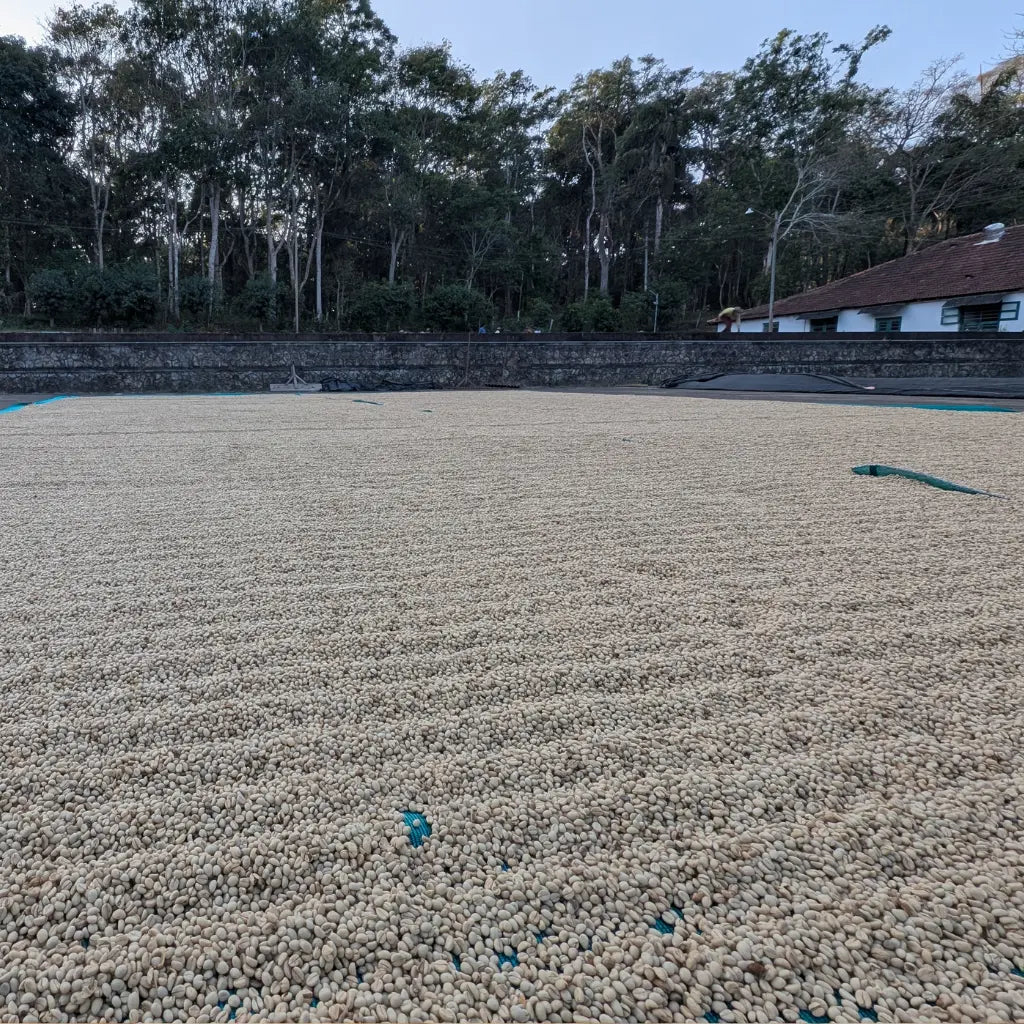
The cherries are hand-harvested and then passed through a flotation system at the washing station on Bharath's farm Craigmore Tinyspot to remove low-density beans and defects. After that, they are depulped and washed, then dried on sun-warmed concrete.
Why did we purchase this coffee?
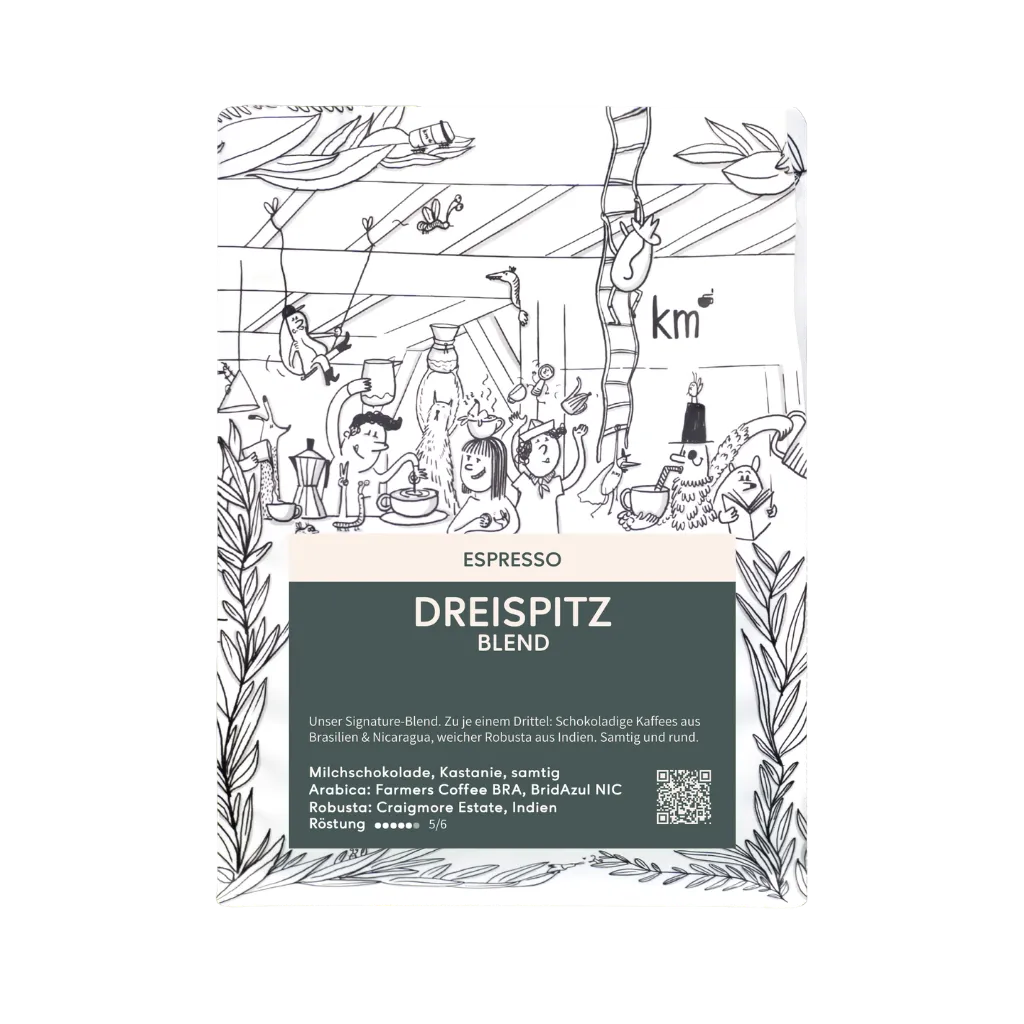
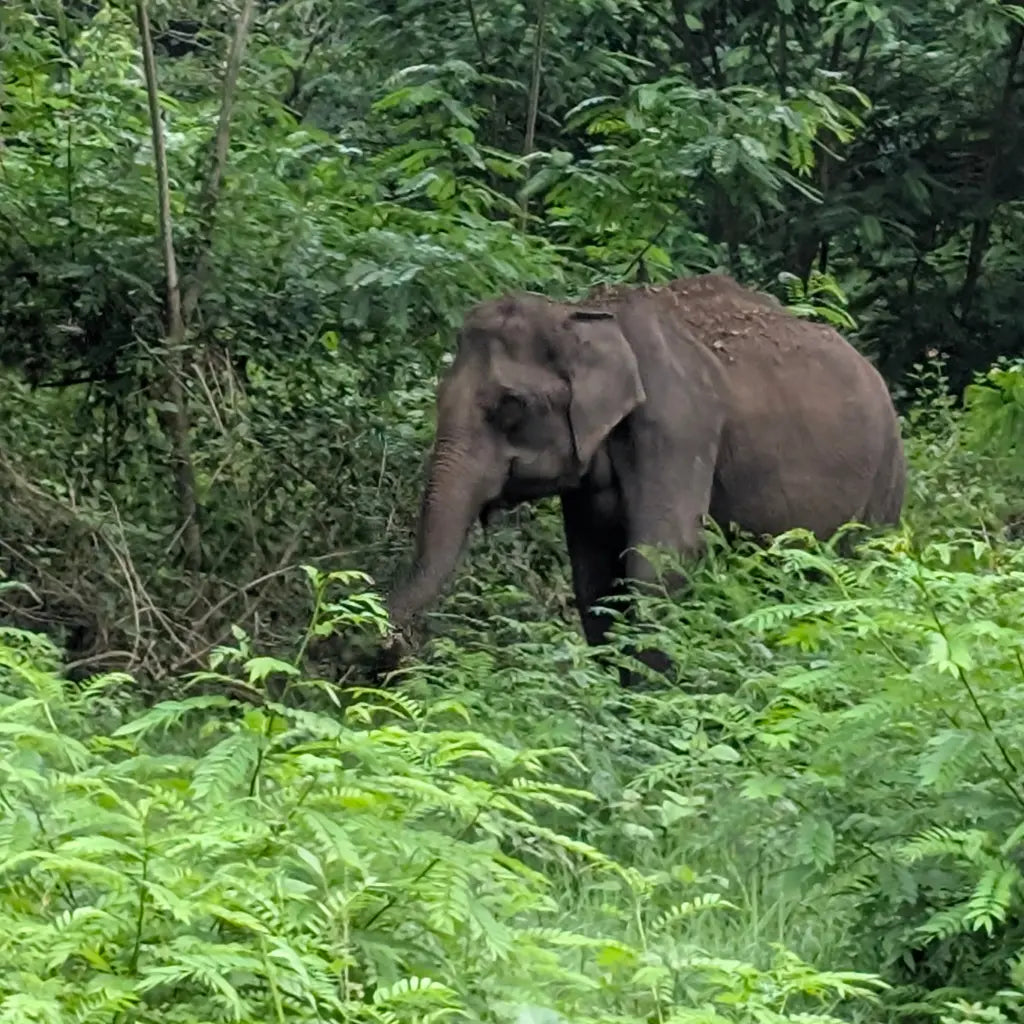
Nestled in the foothills of the Western Ghats lies Craigmore Tinyspot - a family-run coffee farm in its third generation in the gentle hills of Coorg, Karnataka. Bharath Belliappa is committed to producing sustainably grown coffee that thrives under the dense natural shade of native trees of the Western Ghats.
We met Bharath through Komal and Akshey from the South India Coffee Company (SICC). The two manage a coffee farm in its sixth generation in Coorg and serve as a knowledge hub for the region with their expertise and wet mill.
Our collaboration with SICC and Bharath grew out of this exchange. We were looking for a producer who shares our understanding of coffee and produces high-quality Robusta. Thus, this Old Peridenia is grown by Bharath and processed at his own wet mill, exported through Komal and Akshey, imported by Lennart and his company This Side Up, and roasted by us.
How do we roast this coffee?
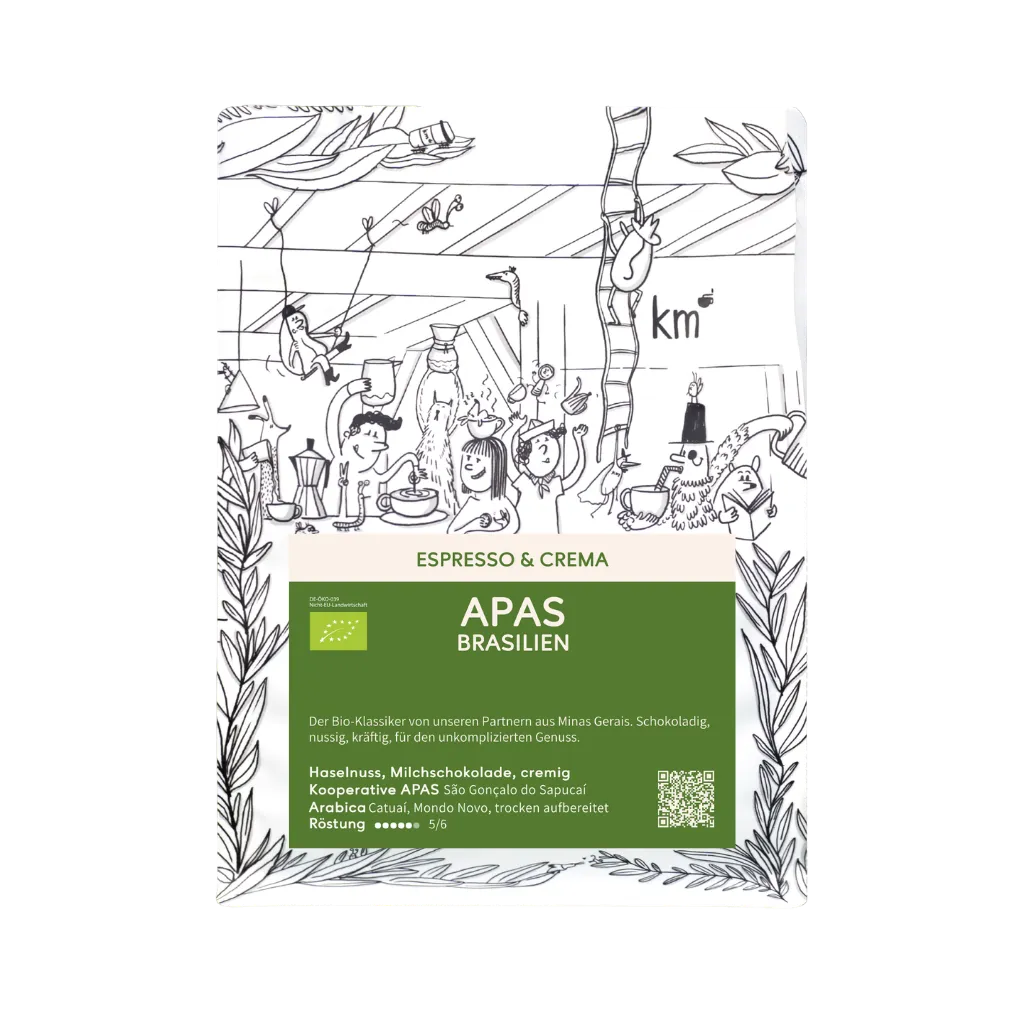
As a 20-kg batch on our 30-kg roaster. We usually roast our slightly darker coffees at full capacity of 30 kg, but this coffee is very hard - Canephoras have hard cell walls and need a lot of heat for a faster roast. So we roast the coffee up to the first crack at 70% energy, which is very high. We roast it for a total of 13:30 minutes to the same end temperature as our APAS. The roast level is thus similar, but the color is lighter because Canephoras don't get as dark as Arabicas at the same temperature.
 Legal guarantee rights

Legal guarantee rights

Guaranteed origin
We know exactly where our coffee comes from and when and where it was roasted.

Personal advice
We are here to help you with any questions or problems.

Fast shipping
Delivery from Germany or Switzerland

Free shipping in DE from €75