









Reasons, qualities, differences
Reading time: 7 minutes. This article is a short blog post. You can find the detailed blog article here on our Swiss website.
Anyone who has ever drunk coffee while on vacation knows it: coffee is prepared differently everywhere and it tastes different in other countries. In Central Europe, dark-roasted espresso is considered the "proper espresso." On the other hand, in places like the USA, you can find shops where under-extracted, light, and extremely acidic espresso is frequently sold and enjoyed by people.
Acidity in coffee: is it all a matter of perspective?
Taste is learned. What we perceive as delicious is part of our socialization and our experiences. Whether or not we like coffee with high acidity depends, to a large extent, on whether or not we are used to acidity in coffee. For example, an Italian might grimace at a low-acidity coffee, whereas a coffee farmer from Nicaragua would barely be able to get an espresso down without acidity.
Acidity in coffee divides opinions and palates
Therefore, it is advisable to approach acidic coffees with caution. After a few more acidic espressos, you might notice that low-acidity coffees now lack liveliness. It is not about acidity per se, but about the balance between acidity and sweetness. If, despite a few attempts, you still decide to avoid acidity, then at least you will know you tried.
Sour or acidic? The pH value of coffee
When describing acidity in coffee, it is worth looking at the English language. "Acidity" in coffee is something desirable, whereas "sour" is a negative description that we want to avoid in the beverage. So-called acids can be identified in coffee in a differentiated manner. There are up to 40 different ones.
The term "acidity" refers to various flavor notes in coffee. "Sour," on the other hand, describes the pH value of the coffee.
The pH value is a chemical value that indicates how acidic a liquid is. Coffee is between 4.85 and 5.1. The lower the value, the more acidic the liquid. For example, tomato juice has a value of 4, lemonade even 3. One point on the pH scale makes a 10x difference. Thus, lemonade (pH 3) is 100 times as acidic as coffee (pH 5).
But the perceived differences in acidity in coffee are not really measurable. An acidic roast has the same pH value as a dark, rather bitter roast.
Which acids do we taste in coffee?
Of the 40 different acids in green coffee it is mainly chlorogenic acids that influence our beverage. They make up 6-7% of Arabica and up to 10% of Robusta. Compared to caffeine (1-2%), they take up a lot of space in our drink.
These chlorogenic acids are partially altered during roasting and break down into bitter-tasting chlorogenic acid lactones, but some remain. The longer a bean is roasted and the darker it becomes, the fewer acids remain. We will introduce you to five acids below.
- Citric acid: Occurs in every coffee, occurs naturally in the plant's metabolism, and tastes like lemon, lime, or orange.
- Malic acid: Tastes like apples, pears, or rhubarb. Is a bit more pleasant and balanced than citric acid.
- Phosphoric acid: Is a mineral acid. It is a bit more tart and tingling. We often find it in Kenyan coffees.
- Acetic acid: A fruity acid that is only delicious in very small doses.
- Lactic acid: Reminiscent of the acidity in quark. Tart, sour, and heavy.
Acids become interesting when they appear in combinations. We then speak of complex, multi-layered acids. If the acidity is not accompanied by sweetness, the coffee is usually of inferior quality and simply does not taste good. A coffee with no acidity at all tastes flat and empty. Much like a white wine without acidity.
Where does the acidity in coffee come from?
Plant and cultivation
The coffee plant grows through so-called cellular respiration. This also produces the cherries and generates the various acids as a by-product. The cultivation conditions influence the type and quantity of the acids. The temperature of the growing region is particularly decisive here. Growing areas that are further from the equator produce slower-growing coffee plants due to their climatic conditions. These slower-growing coffee plants focus more on their reproduction and produce cherries that contain more proteins, sugar, fats, and also acids. The caffeine content of these slower-growing plants is lower, however.
Species and varieties
The acid content is higher in Arabicas than in Robustas. Within these two varieties, there are still many subgroups. Parainemas, a hybrid from Honduras, for example, shows significantly more citric notes. However, the differences between the various subgroups are rather small and difficult to taste.
Post-harvest processes
There are differences in the post-harvest processing of coffee. After picking, they are processed in various ways. Depulped, fermented, and washed coffees can develop more acidity here than those dried in the cherry. The storage of the cherries can then influence the proportion of acetic acid. However, the post-harvest processing of the coffee changes the quantity of acids less, but rather adds new aromas to the spectrum of the coffee.

Roasting
As already described, higher temperatures and longer roasting times minimize the organic acids in the bean. Although acetic acid reaches a short peak during roasting, it decreases, like the other acids, over the course of the roasting process. Depending on what the roaster wants to achieve, they accentuate the different acids in the coffee through their roasting.
Preparation
The factors described above influence the type of acids in the coffee. Preparation, on the other hand, influences the amount of acids in the coffee. Important parameters for this are the grind, brewing temperature, brewing pressure, flow rate, and brewing time.
Water
The hardness of the water can also influence the acidity in the drink. Hard water (with high alkalinity) buffers the acids and the coffee tastes rather bland. If that happens to be the case for you, read our reports on the topic of water filtration.
Type of drink: Acidity in espresso, filter, and fully automatic machines
It is also of crucial importance which drink we actually want to consume. Due to the high concentration of dissolved coffee particles, an espresso forgives very few mistakes. If it is too sour due to the type of roast or preparation, it will blow you away. Acidity in filter coffee, on the other hand, can be very pleasant and refreshing, as filter coffee has far fewer dissolved coffee particles per milliliter of drink.
In our acidic espresso blends, we only use beans that also have a distinct sweetness. In this interplay between acidity and sweetness, the acidic components unfold their full and delicious effect.
Caution is advised when using an acidic coffee in a fully automatic machine. These devices usually brew the coffee below 90°, which emphasizes the acidity even more. So, those who reach for a light roast might have a hard time with a fully automatic machine.
We coffee makers like coffees that do not hide their acidity. That is why we work with green coffees that already bring this acidity with them. Our challenge is to bring the acidity into the drink in a positive way through sweetness, in order to make it exciting and multi-layered.
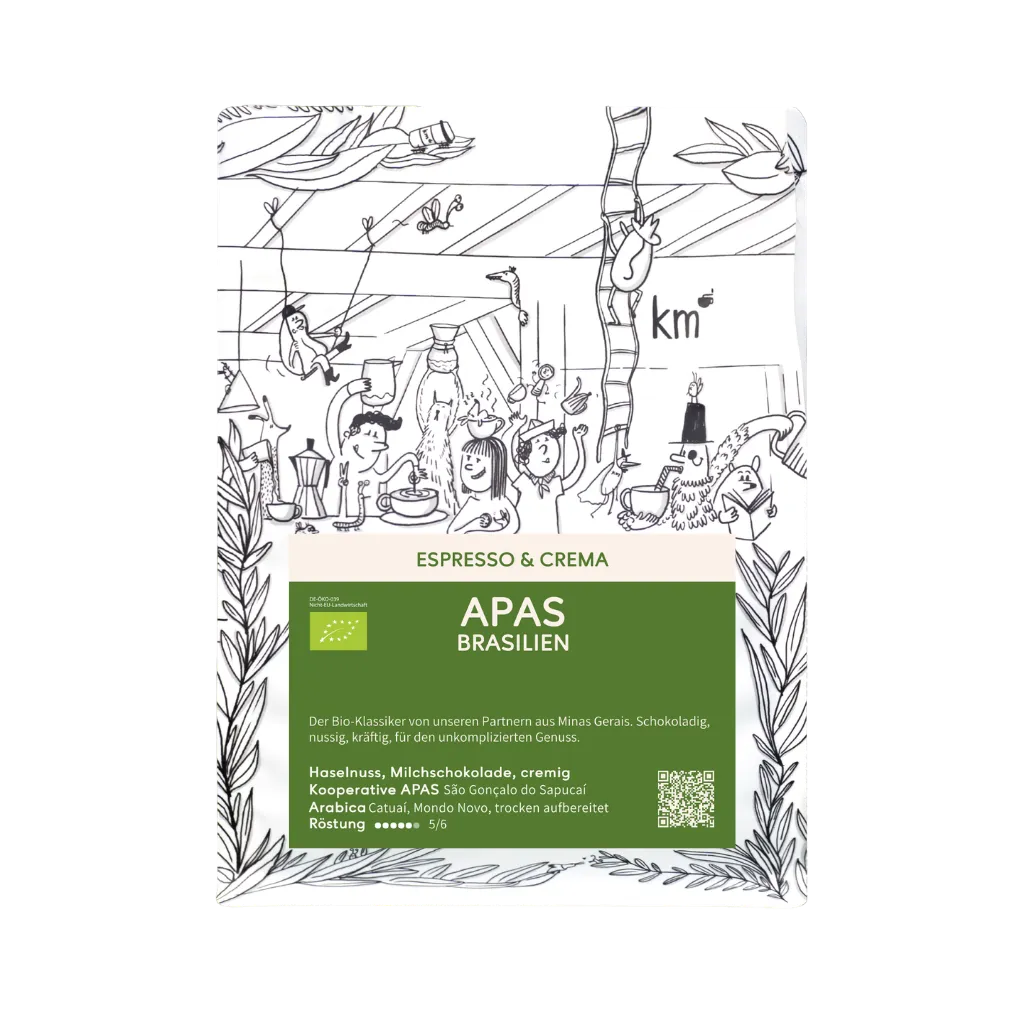
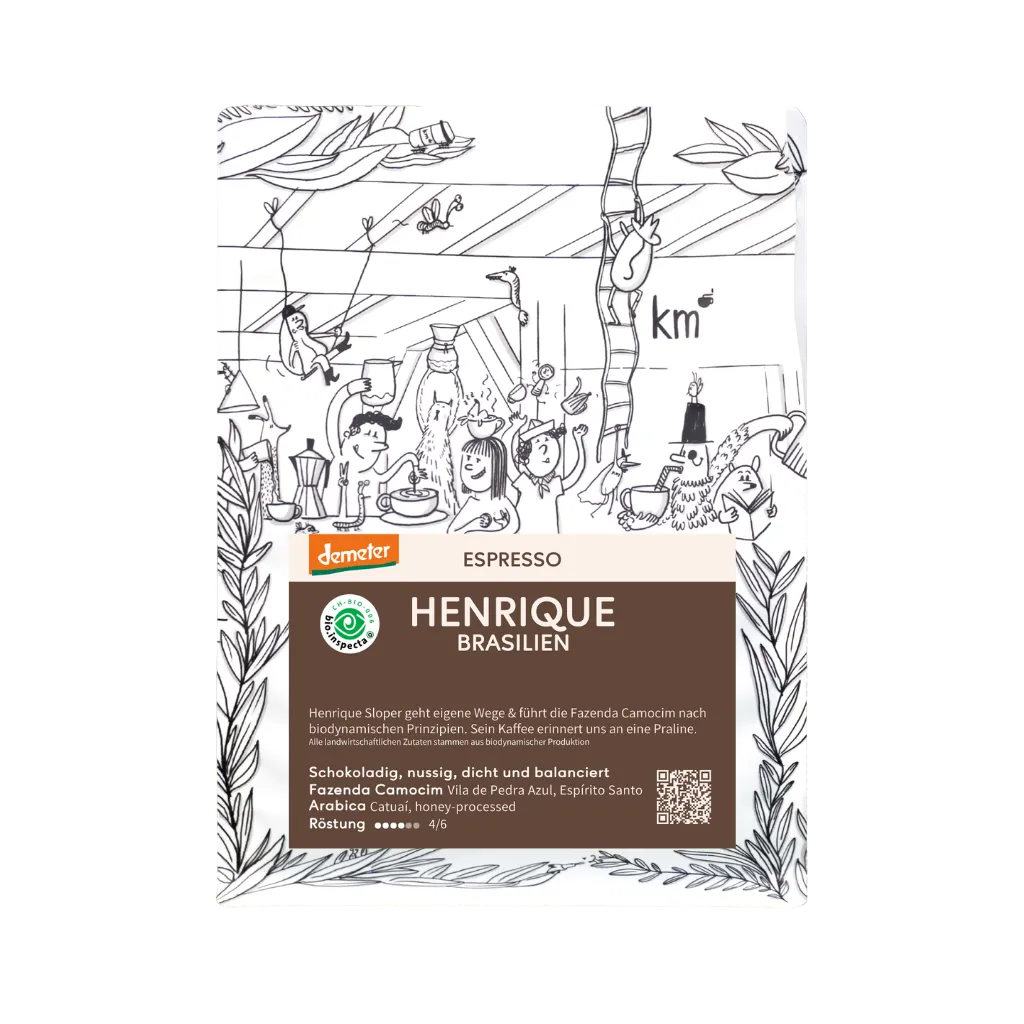
Nevertheless, not everyone likes these light roasts. That is why we also have classic nutty-chocolatey roasts, such as our APAS or Henrique from Brazil.
We want to remove the bad reputation from acidity in coffee; that is why we try to describe acidity in coffee as something positive and exciting. However, since we are sure that everyone's taste is different, no one should forcefully convince others that acidity in coffee is exclusively good. Perhaps the old discussions about acidity and bitterness should be replaced by a new way of talking about coffee. Acidity could, for example, be described through fruit associations. In our El Colibri, a Peruvian coffee, we find tartaric acid. Anyone who thinks of wine will certainly not try the coffee, but if we think of grapes, which are also full of tartaric acids, we are getting much closer to the truth. Our plea is therefore: away from the pure acidity-bitterness discussion. Coffee is so much more than a more or less sour drink.