



A double espresso is standard in most cafés. Yet at home, confusion reigns: How much coffee goes in? How much liquid comes out? And why does a single shot often taste worse? We clarify doses, ratios, and the differences that matter in the cup. (Find fundamental brewing principles in our Espresso Brewing Guide.)
What a Double Espresso Is
A double espresso (Doppio) uses double the ground coffee compared to a single espresso and yields double the liquid in the cup. Here is an overview of standard baseline parameters:
| Beverage | Dose Weight (Input) | Espresso Weight (Output) | Volume (Approximate) |
|---|---|---|---|
| Single Espresso | 7–10 g | 14–20 g | approx. 20–25 ml |
| Double Espresso (Doppio) | 16–20 g | 32–40 g | approx. 40–50 ml |
At Kaffeemacher, we usually work with an 18 g coffee dose for a Doppio. This is the dose capacity for which most double portafilter baskets are designed. Yield in the cup is then 36 g at a 1:2 brew ratio, or 45 g at a 1:2.5 ratio, which we recommend for many specialty coffees.

Grams, Milliliters, Volume — Why They Aren't the Same
A common point of confusion: 36 g of espresso is not 36 ml. Espresso contains crema, and crema has a much lower density than liquid water. In practice, 36 g of liquid espresso equals roughly 40–50 ml in volume in the cup. The exact volume depends on how much crema your coffee generates.
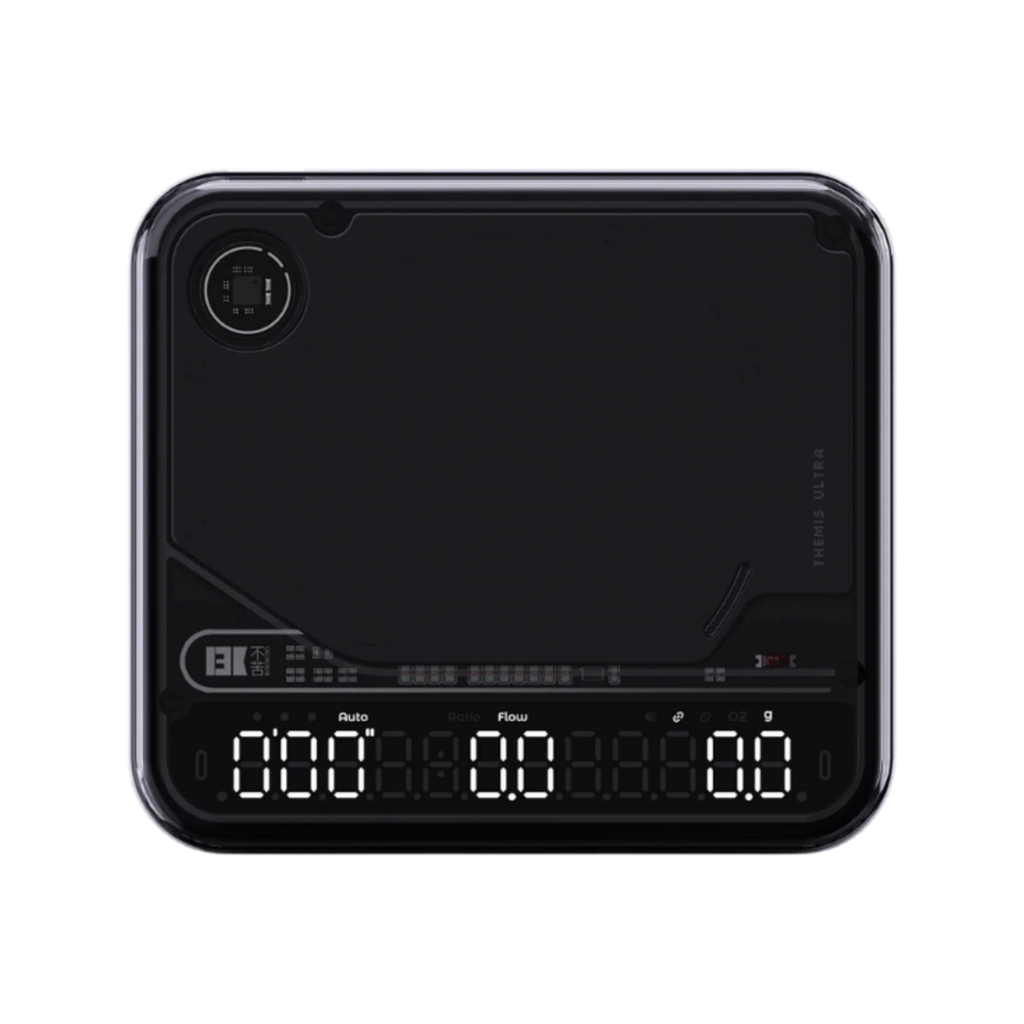
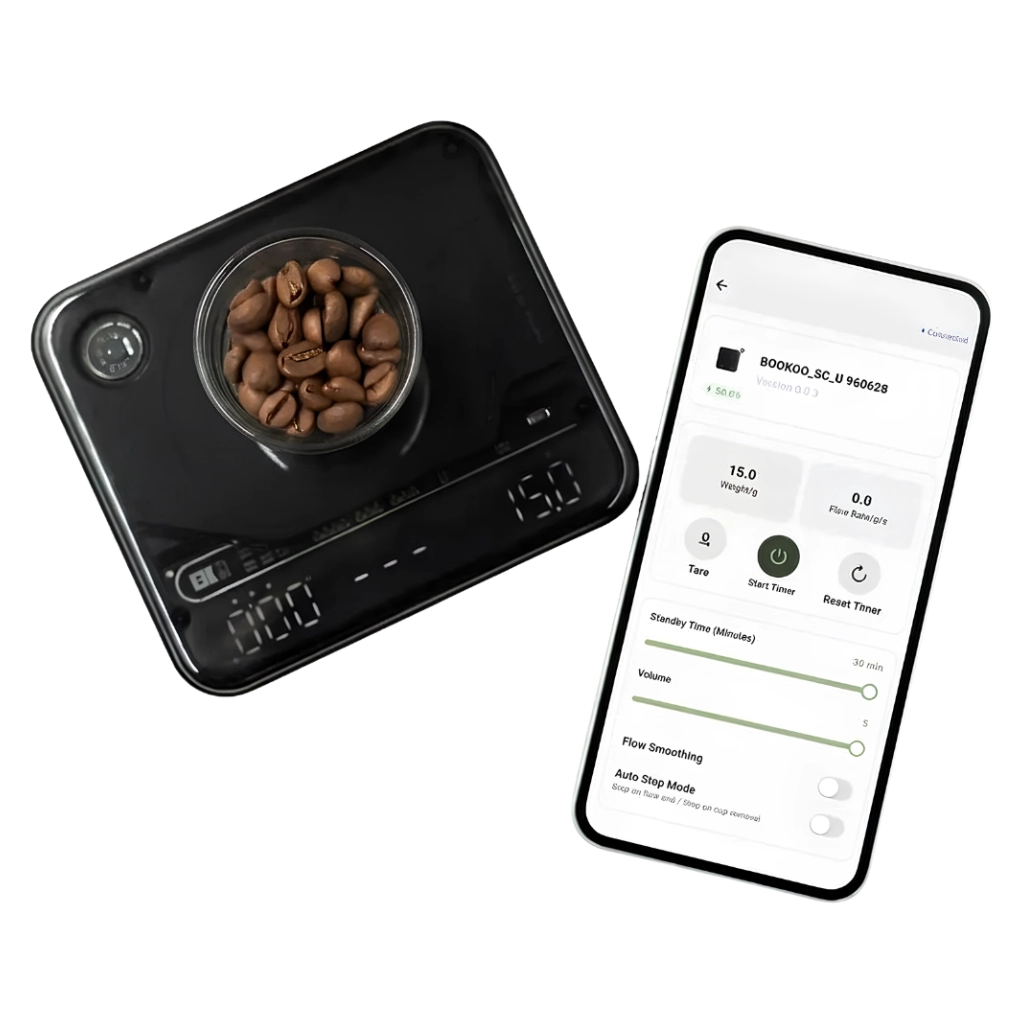
That is why we always weigh espresso in grams rather than measuring volume in milliliters. A liquid measuring glass is useless for precision espresso recipes. A coffee scale that reads to 0.1 g precision is affordable and makes your espresso routine instantly repeatable. It is the single most valuable investment you can make for your setup.

Why the Doppio Almost Always Tastes Better
We generally recommend pulling double shots. Not because more coffee is inherently better, but for a fundamental physical reason.
A double basket is engineered for a specific coffee depth—its geometry, depth, and hole pattern across the bottom. If you place only 7–10 g into a single basket, it forms a thin coffee bed that offers far less resistance than intended. Tiny distribution flaws in the puck, which would be harmless in a Doppio, instantly turn into channels in a single basket: water pushes coffee particles aside, and the resulting gap channels water through faster, widening the channel further. The result is uneven extraction—over-extracted in some spots, under-extracted in others. The espresso tastes sour and bitter simultaneously—a classic channeling issue.
With 16–20 g of coffee in a double basket, the puck depth matches what the basket was designed for. Water distributes evenly, and the puck resists minor density variations far better. Extraction becomes homogeneous, and flavor clarity improves. Many issues beginners face with single shots disappear automatically when pulling double shots—not by magic, but because the equipment is being used as designed.
If you only want a small amount of coffee: pull a double shot anyway and drink half. Or use the remainder in a cappuccino. The taste is almost universally better than a single shot pulled from a single basket.
Single Espresso Pro Tip
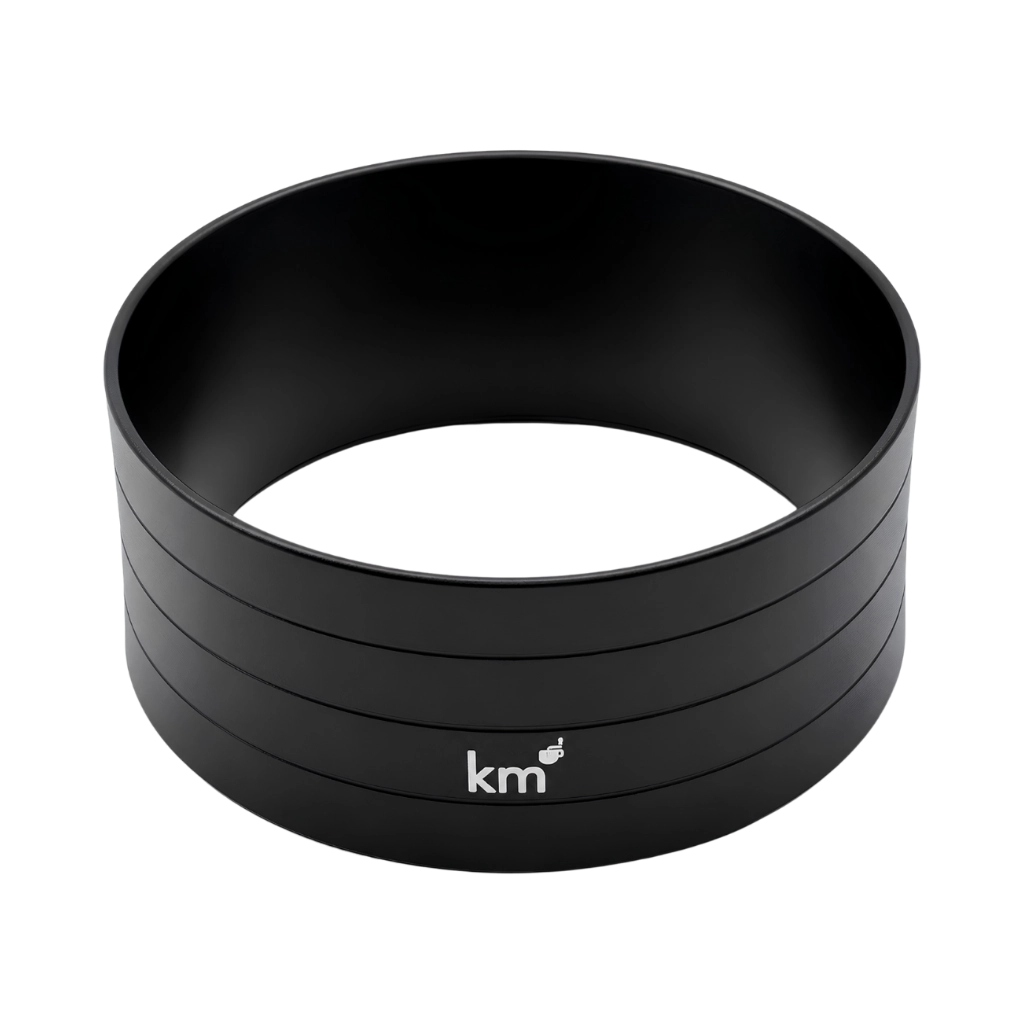
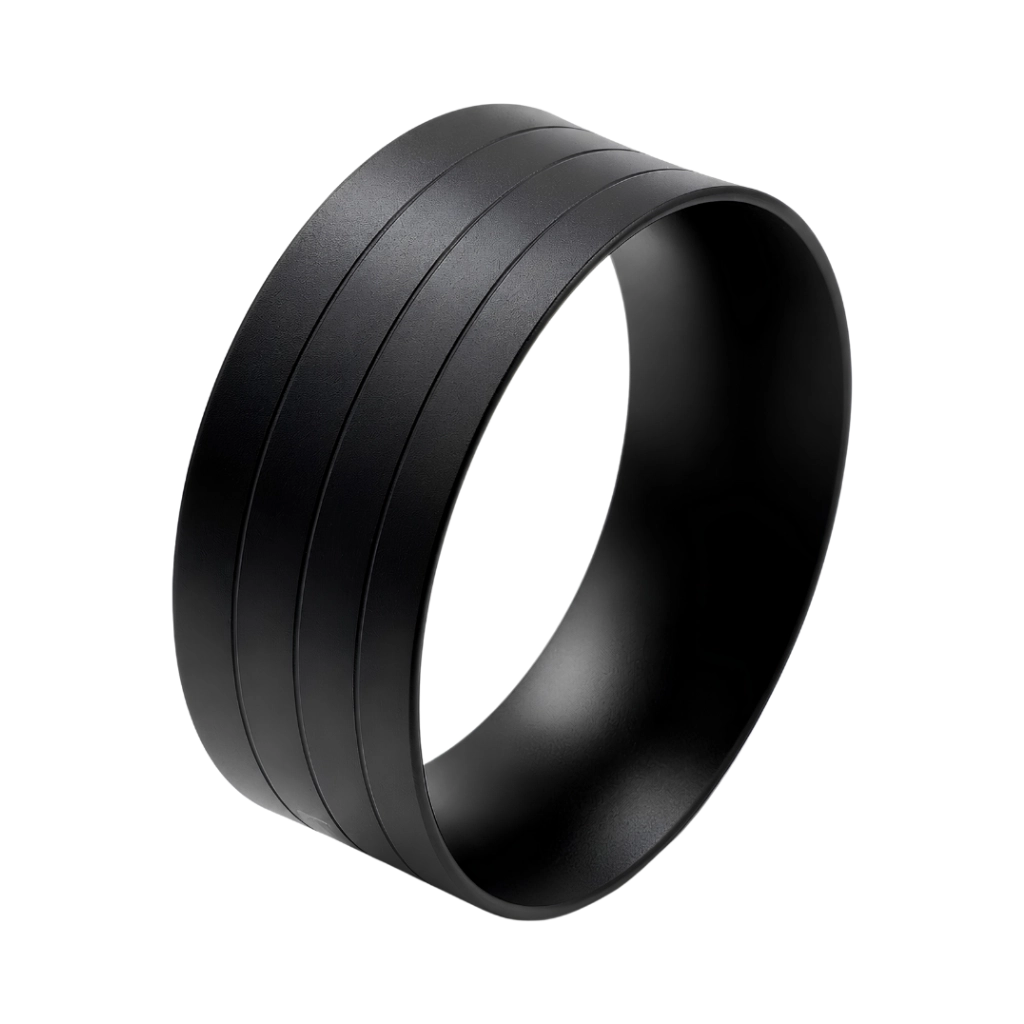
A great middle ground is using 14–15 g double baskets or precision single baskets like the ones in our shop. Our single basket holds up to 14 g of ground coffee. At a 1:2 brew ratio, you pull 28 g of espresso—yielding a delicious, balanced single shot.

Uniform extraction even with lower doses. Perfect for precise extractions on 58mm group heads.
Brew Ratio: The Number That Really Counts
The brew ratio describes how much ground coffee goes in relative to how much liquid espresso comes out. At a 1:2 ratio, 1 g of ground coffee yields 2 g of liquid espresso.
18 g coffee → 36 g espresso = 1:2 ratio. This is the baseline standard for most coffees. Lighter specialty roasts often benefit from a little more water (1:2.5), while darker roasts sometimes shine with less (1:1.5 to 1:1.8).
Where 1:2 sits globally was demonstrated in a field study by André Eiermann (2024): he measured 106 espresso shots across 85 cafés in 11 countries using a refractometer. Specialty coffee shops averaged 9.4% TDS (Total Dissolved Solids in the cup). A properly pulled double shot with 18 g in and 36 g out lands right in this sweet spot. Commercial cafés averaged 6.4% TDS, while automatic bean-to-cup machines recorded 5.2%. The 1:2 ratio isn't an arbitrary number—it is the core parameter used by quality-focused espresso bars. Traditional Southern Italian espresso, by contrast, is pulled much more concentrated.
Do double and single shots taste identical at the same ratio? Usually similar, but not necessarily identical. A thicker puck extracts in horizontal layers—the top coffee layers saturate earlier and extract differently than the bottom layers. If you switch between single and double baskets and notice a taste shift despite keeping the same ratio, this is why.
Our espresso recipes always specify dose weight, brew ratio, and target shot time. With these three variables, you can adapt any recipe to your machine.
Shot Time: Single vs. Double Espresso
Does a double espresso need to run longer? Not necessarily. With double the coffee in a larger basket and double the water flow, resistance and flow rate scale proportionally in practice. The extraction time usually stays in the same window at the same ratio—typically 25–30 seconds.
If your Doppio runs significantly faster or slower than your single shot under identical parameters, grind size is almost always the issue. When switching between single and double baskets, you must adjust the grind size because the puck depth and flow resistance change.
Our advice: stick to one basket size (preferably the double basket) and dial in your grind size for it. Constantly swapping between single and double baskets makes dialing in needlessly complicated.

Caffeine: Is it Double?
Yes, roughly. A double espresso contains about twice as much caffeine as a single espresso because twice as much ground coffee is extracted. Using an 18 g coffee dose, you will land around 120–140 mg of caffeine depending on the bean variety and roast level. A single espresso with 9 g of coffee contains roughly 60–70 mg.
For comparison: a cup of drip filter coffee (200 ml) contains 80–120 mg of caffeine depending on preparation. A double espresso actually contains slightly more caffeine than a standard cup of filter coffee, despite looking much smaller in the cup.

Decaffeinated using the chemical-free Mountain Water Process in Mexico. Chocolaty, sweet, and full-bodied—perfect for an evening espresso.
Ristretto, Lungo, and Espresso: The Varieties
Beyond the standard 1:2 ratio, two popular shot variations are frequently confused with a Doppio:
| Variation | Brew Ratio | Yield (from 18g Dose) | Flavor Profile |
|---|---|---|---|
| Ristretto | 1:1 to 1:1.5 | 18–27 g | Shorter, highly concentrated, punchier acidity, less bitter. |
| Espresso (Standard) | 1:2 to 1:2.5 | 36–45 g | Balanced sweetness, acidity, and bitterness. |
| Lungo | 1:3 to 1:4 | 54–72 g | Thinner body, higher volume, often more bitter from longer extraction. |
A Ristretto isn't simply a "stronger espresso", but a different extraction balance. When you order a short, intense espresso in a traditional Southern Italian café, it falls into this category—brewed with less water for a concentrated shot.
The ground coffee dose remains the same across all variations. What changes is the water volume—and consequently the extraction time and flavor balance. If an espresso tastes too sour, pushing for a higher yield (towards 1:2.5) helps. If it tastes too bitter, stopping a bit earlier (towards 1:1.8) can tame the harshness.
The most popular coffee drink in Switzerland is not a Lungo—even though it fills a cup similarly. The difference lies in the recipe: a Café Crème uses 12–15 g of coffee in a double basket brewed at a 1:8 to 1:10 ratio, using a significantly coarser grind than espresso. From 15 g of coffee, you yield 120–150 g in the cup in 25–30 seconds.
Trying to make a Café Crème as a Lungo—using the same fine espresso grind and pushing more water through—results in an over-extracted, bitter drink. A proper Café Crème requires its own distinct grind setting, ideally on a separate grinder. Learn all about recipes, history, and technique in our complete Café Crème guide.