








The Maro Model 1 is, at first and second glance, a highly exciting and innovative espresso machine. Maro is developed by two young Thuringians who couldn't find their ideal espresso machine on the market, so they built it themselves.
And as cheesy as the story may sound: with Maro Model 1, Max Grimm and Robin Kuprat have not just introduced any espresso machine, but in many respects the best espresso machine we currently have on the market.
The Maro uses modern sensor technology, fast heating elements, and smart algorithms to brew the perfect espresso. It is the opposite of a traditional espresso machine with a boiler. This very interplay of hardware and software is what makes it so powerful. The founders are not bound by the legacy of the industry.
We don't make the statement "best espresso machine" lightly. We have tested over 70 different espresso machine models and worked with more than a thousand machines from home baristas in our courses. And so that there is no impression that we are bluffing:
- Temperature consistency ranks 3rd among the machines we have measured so far. The competition needs at least 15 minutes of heat-up time for this.
- The Maro reaches this temperature consistency after 4 minutes.
- It is the quietest espresso machine we have measured to date.
- It is among the top three machines in terms of energy efficiency in our test scenario.
- In terms of espresso potential, it achieves full marks, thanks to flow and pressure profiles. The Maro even emulates the brewing behavior of lever machines.
With this brief summary, we will dive into the test. In May 2026, we recalculated everything with our updated test protocol v2.3 and, most importantly, with the many software updates that Maro has rolled out since the initial publication of the test.
Due to numerous inquiries, we have also produced an English version of our test video.
Maro and Us
During the Swiss Coffee Festival in September 2023, we tried out the Maro espresso machine for the first time and had a conversation with the two founders, Max Grimm and Robin Kuprat.
In April 2024, we then received our Maro Model 1. As always and with every machine, we bought the espresso machine ourselves.(1) We acquired it through crowdfunding for 3,999 Euros. Today, the machine costs 4,999 Euros. Since then, we have examined the Maro closely. It travels between our film studio, classroom, and desk.
Even in 2024, the Maro positioned itself in the top tier of available espresso machines on the market. Those who bought it back then will confirm this. However, there were also teething problems. Few of these were on the hardware side. On the software side, Max and Robin have delivered in recent months.
This is possible because the machine is connected to the internet. Improved controls, changes to menu navigation, optimized heating intervals, new features like Bluetooth scale support: all of this is streamed to the Maros over the air.
The first 50 Maro owners provided feedback, and Robin and Max listened and delivered. We also regularly gave them feedback, and they incorporated our input into the machine. Precisely for this reason, we completely re-measured the Maro for this update.

Tests with Time
We took our time with the Maro test. First, because the machine is very complex, and we wanted to examine it holistically. Second, because we wanted to give the two young founders space to mature their machine. Even a test in spring 2024 would have performed very well. But in consultation with Max and Robin, we scheduled the publication for late 2024. In this update now in May 2026, we are updating the entire picture.
Some may criticize us for being in close contact with the manufacturer before this test. We want to contextualize this before we dive into the test.
Our goal with all videos and tests is to find excellent espresso machines on the market so that you can make good espresso. If a manufacturer is willing to listen and integrate our feedback, that is effective for us. Most only listen to us after a test or only want to involve us for marketing. We don't participate in that.
For complex machines like the Maro, the Decent, the Unica, or the Roxy, it's not even possible for us to conduct a test without speaking to the manufacturers. If we can speak directly with the developers, we do. If we get stuck with marketing, as with some larger companies, then we decline.
We test based on measurable findings and impressions from our experience as machine testers. We share these transparently. Maro never had insight into our video or this test report. No money flowed from Maro to us.

Quality
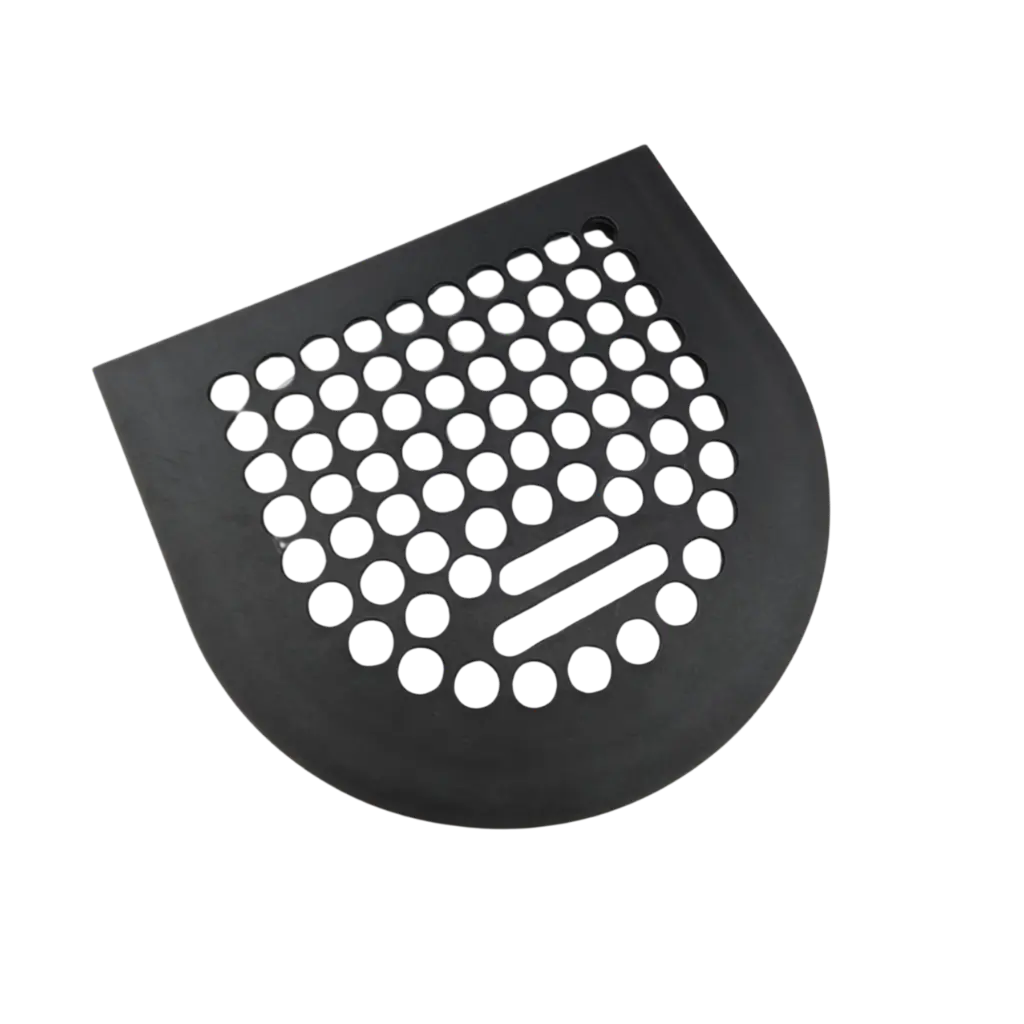
Maro Model 1 is built from a high-quality mix of materials. The housing is made of HIMACS®, a mineral material composed of aluminum hydroxide, acrylic, and pigments. Known for durability, hygiene, and scratch resistance. Often used in luxury interior design, smooth but not cold, non-porous, easy to clean. We don't know any other espresso machine that uses this material.
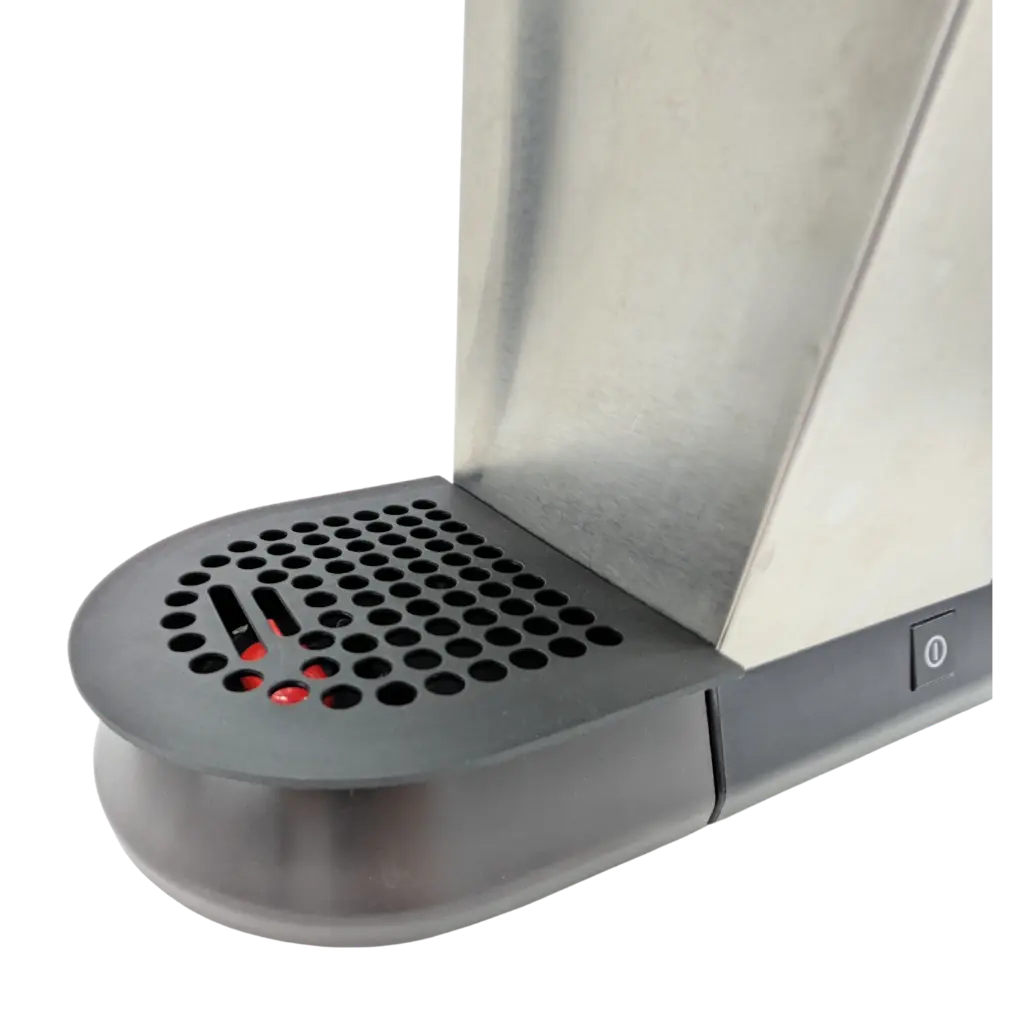
- The drip tray holds 750 milliliters and is made of stainless steel. When full, it is quite challenging to carry to the sink. The water tank is also made of stainless steel, holds 1.5 liters, and is dishwasher safe. It can be pulled out from the front or filled when partially removed.
- The edges of the two stainless steel modules are relatively sharp. Be careful with wet hands.
- The brew group is made of lead-free brass. Its conductivity helps with consistent extraction temperature and fast heat-up times.
- The cup warmer is made of anodized aluminum and is easily controllable.
- The steam wand is plasma-polished and remains cool during use. Cool-touch, safer, and easier to clean.
- The 7-inch touchscreen is fluid and responsive. Compared to other espresso machine displays, this is a real plus.
- The Maro has a 2300-watt thick-film heater (FTH) from Ferro. This only heats the desired amount of water. This is good for energy efficiency, fast heat-up times, and flexible temperature adjustment.
- The pump is a very quiet rotary pump from Fluidotech, model GB072, controlled via pulse-width modulation. More on this in the chapter on pressure and flow rate control.
We measure 38.5 cm height, 30 cm width, 33.1 cm depth. With portafilter: 44 cm. Weight: 22.6 kilograms. Distance between portafilter spout and drip tray cover: 8.9 cm.
Quality Rating: 9.0 / 10
High-quality material selection, good to very good craftsmanship. Drip tray, body, cup tray feel premium. Gap dimensions are a foreign concept here. Deduction for the sharp edges inside around the drip tray, water tank, and water tank cover.
Maro Noise Level: 10 / 10
Is the machine running? We asked ourselves this question not only in a quiet room. Even during espresso extraction, when we were having a conversation in parallel, we had to actively listen. The rotary pump is extremely quiet, and the suspension and stability ensure that the machine purrs when brewing. We measure 48.8 decibels, the lowest value we have ever measured for an espresso machine. Full marks.

Accessories
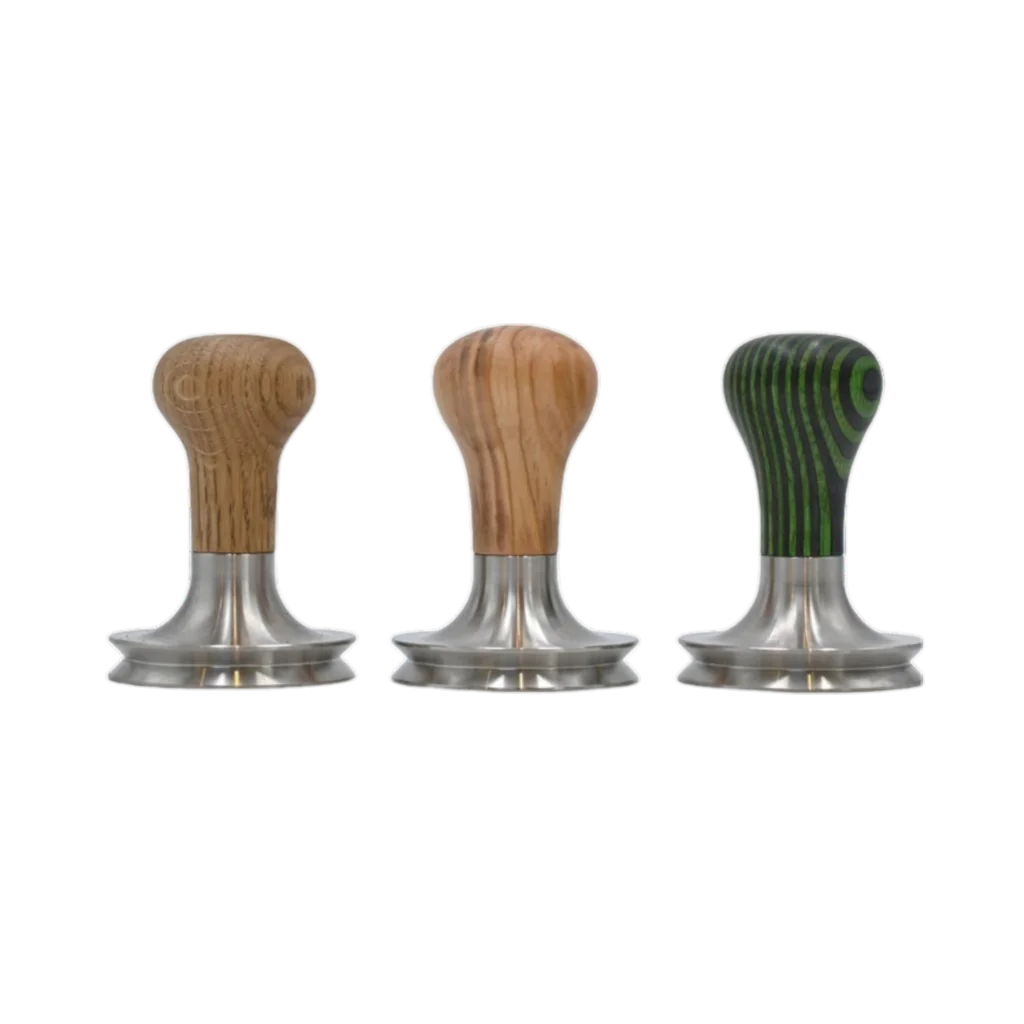
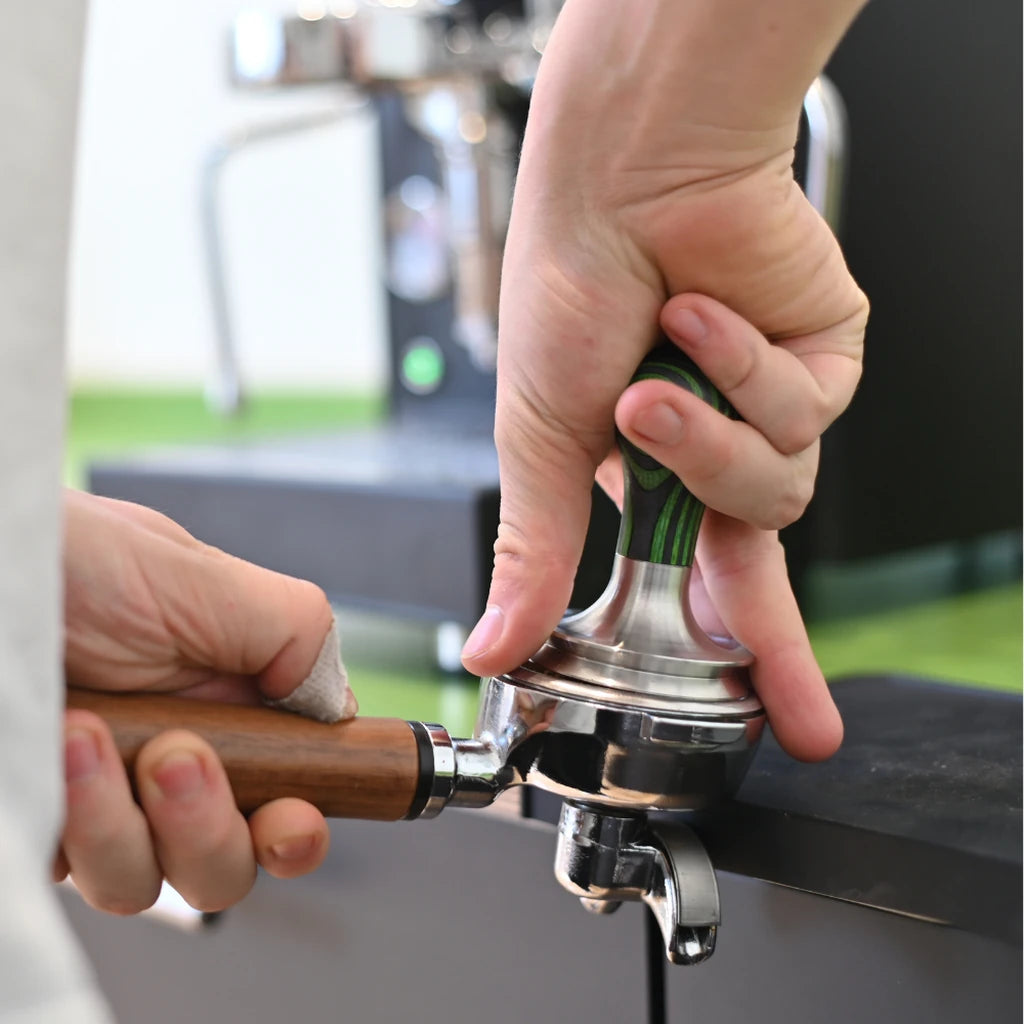
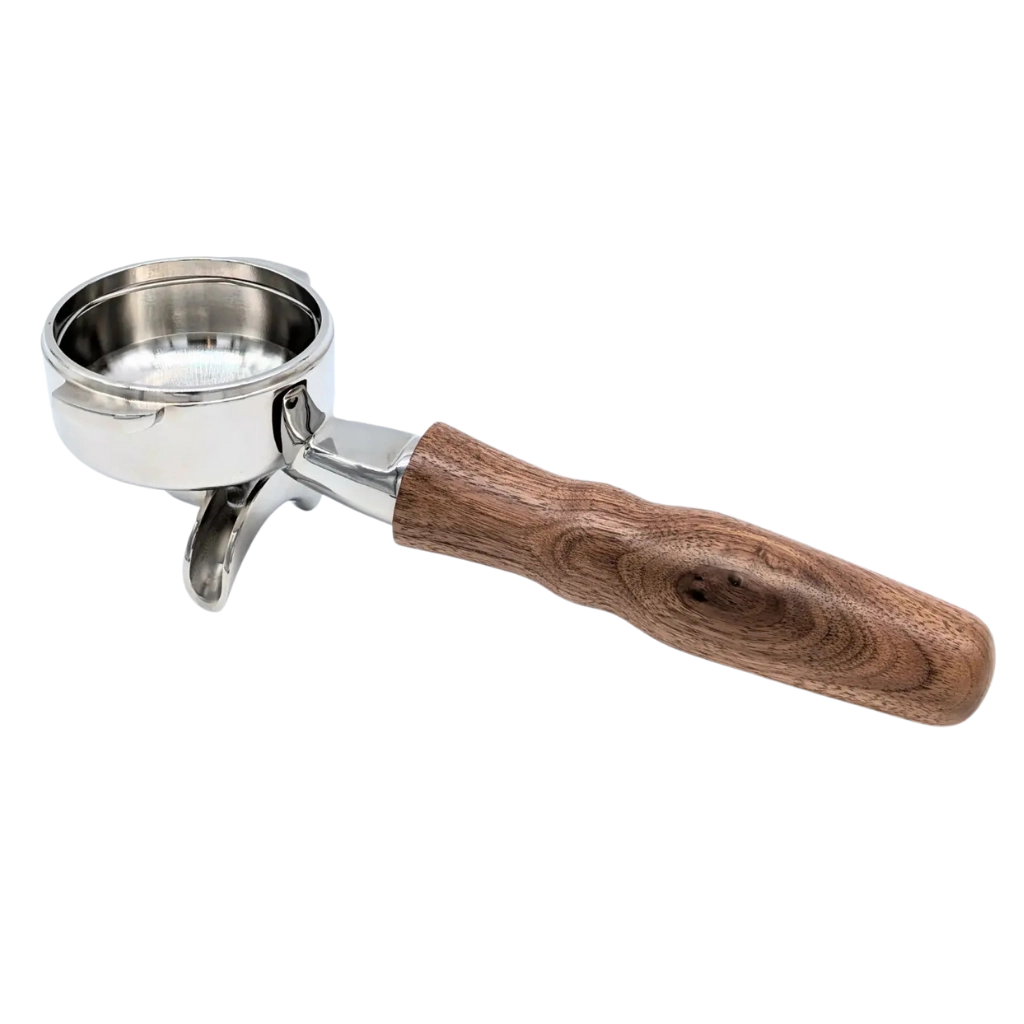
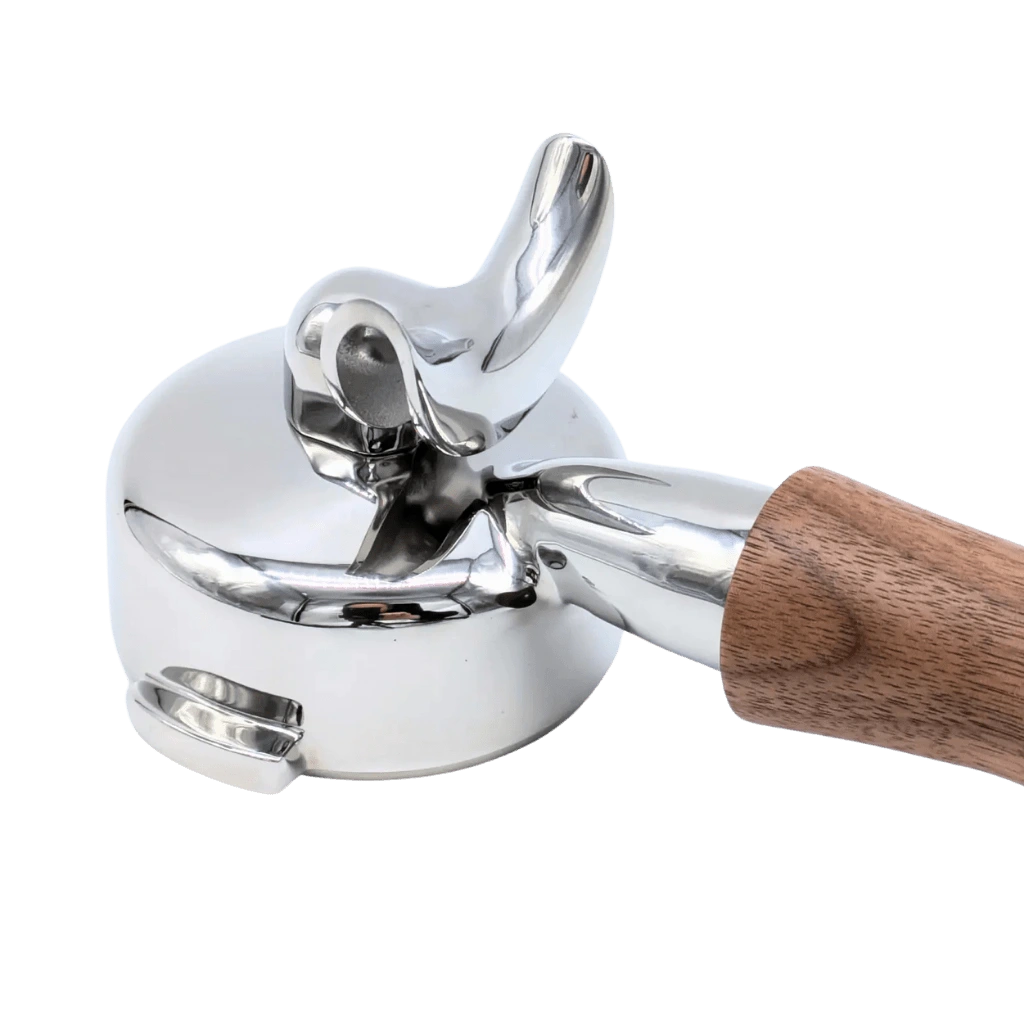
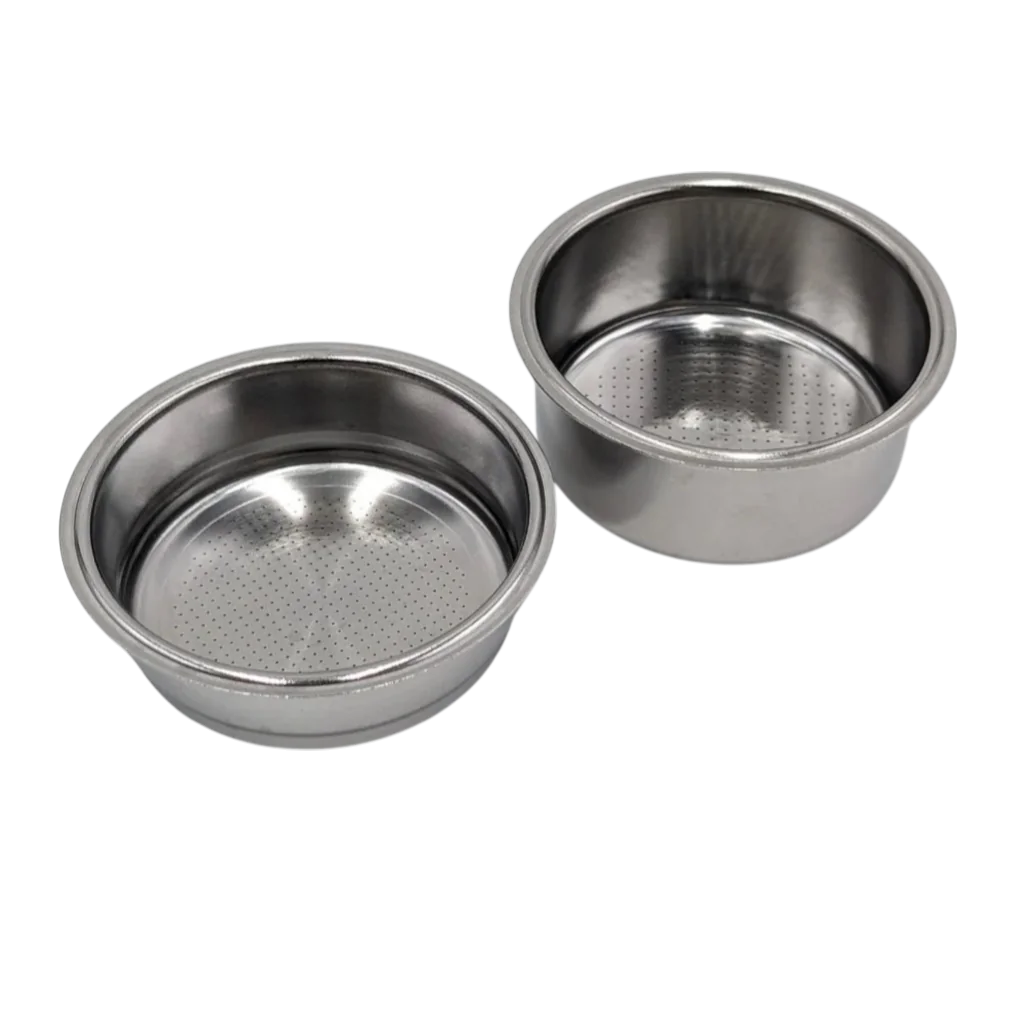
The Maro Model 1 comes with a portafilter with a double spout and a bottomless portafilter. Both are made of stainless steel with a walnut wood handle. An IMS Competition 1-cup and 2-cup basket are also included. The tamper is stainless steel with a walnut wood handle and sits flush with the basket. We measure 0.65 mm play between the basket and the tamper base.
The tamper has an additional function: the lid of the handle is also a hex key. This can be used to lift the water intake mechanism of the water tank on the left side of the machine.
Also included in the delivery is a cleaning kit with a blind filter, degreaser, milk cleaner, and descaler.
Accessories Rating: 9 / 10
The accessories are good and high quality. Useful and complete. However, Maro doesn't go the extra mile anywhere, which we've seen with another manufacturer in the highest price category.

Usability and Target Group
The Maro is one of the most complex espresso machines on the market in terms of control options. At the same time, it is perhaps the easiest espresso machine to operate. It allows people who have never stood in front of an espresso machine to make very good coffee.
This balancing act is adventurous. You decide at what level you want to start with the Maro Model 1 and what path you want to take with it.
Three modes pave this way
- Explorer: The machine takes you completely by the hand. You choose a drink like with a fully automatic coffee machine and are guided step-by-step, similar to the Thermomix. A smart mode "repairs" shots that run too fast and makes the espresso more balanced if something doesn't work out.
- Expert: This mode resembles a classic espresso machine with PID control, volumetrics, and pre-infusion. You set the temperature, pressure, and espresso output quantity yourself. Optionally, the Smart Profiler runs along and corrects or slows down shots.
- Extreme: Here the machine unleashes everything the best and most flexible espresso machines on the market can do. Variable flow and pressure control, phase or condition control. You can give a phase a flow target that is limited by a pressure target. When a condition is met, the machine jumps to the next phase. The final condition is usually volume in the cup or total brew time.
Numerous shortcuts make operation easier. Double-tapping the flush button starts a flush of the shower for an adjustable time. A single tap opens the selection window for backflushing and the cleaning program.
Recipes are stored per roaster and coffee. Brew curves can be checked later, on the display or, newly, in Maro Home.
The display during brewing shows how much water has flowed and whether the Smart Profiler has intervened. It is not intrusive, but presented as an option. If you want, you can embark on a learning journey with the Maro and improve as a home barista.
Usability Rating: 9 / 10
Very responsive display, all important settings, three modes for three skill levels, good routines for daily operation and cleaning. What's still missing for a perfect score is an inline water filter in the tank. This is a separate criterion in the new test protocol v2.3, because it noticeably reduces the effort for descaling and machine maintenance in everyday use. We expect this from a 5,000-euro machine.

Heat-up Time
After 4 minutes, the Maro espresso machine indicates that it has heated up. This is one of the fastest values among high-quality espresso machines. Some inexpensive thermoblocks can keep up here, but then fail in various other test areas. Most espresso machines with boilers need 20 minutes or more to fully heat up and thus achieve a constant temperature. There are a few exceptions with small boilers and heating times of 15 minutes, and even fewer machines that reach the target temperature in under 10 minutes. We test this with a sophisticated and precisely defined system uniformly for all espresso machines.
Maro Model 1 achieves this heat-up time because the machine heats only the necessary amount of water with a so-called thick-film heater (Fast Through Heater; FTH). Heating with the thick-film heater is similar to the principle of the thermoblock, which we know from capsule coffee machines or filter coffee machines. However, the DH can be regulated more precisely and quickly. In addition, the Maro heats the brew head with a heating cartridge to also heat the portafilter. Portafilters in all systems lag behind the heating elements in the machine. However, it should also be heated to avoid absorbing too much water temperature during brewing and thus reducing the brewing temperature.
However, the fastest heat-up time is worthless without good temperature consistency, which we will examine in the following chapter. But first: The temperature consistency of the Maro is also unparalleled and is unbeatable in this combination.
With Maro Model 1, our wishes come true! We no longer have to adapt our clock and our daily rhythm to the espresso machine and start the machine 20 to 40 minutes before pulling an espresso (which is often the case for Faema E61 models). Instead, we can spontaneously decide if we want an espresso in 4 minutes! This is a quantum leap! And yet: We only rate the Maro's heat-up time with 9 out of 10 points. This is because the espresso machine boots for a full minute before it starts heating. The actual heating time is about 3 minutes. If the Maro is optimized here, it can push to the front and catch up with the Zuriga. The Zuriga heats up a little faster, but is not as temperature-stable as the Maro.

Temperature Consistency
Brace yourselves for superlatives. Maro Model 1 is among the top three espresso machines in terms of temperature consistency and precision. In many respects, it is the most precise machine on the market across all price ranges and all espresso machines we have measured so far.
To verify this, we conduct two test series for each espresso machine. The KM protocol simulates a realistic home scenario. Immediately after the determined heat-up time, we measure 5 shots at one-minute intervals. We examine standard deviation, consistency within the shot, and temperature difference within the shot. This is followed by the WBC protocol, which is normally used for commercial machines. This focuses on consistency under high performance.
In the KM protocol, the Maro achieves a standard deviation of 0.516 degrees. This puts it just behind the Dalla Corte Mina (0.43), the Dalla Corte Studio (0.51), and the Sanremo You (0.34). All of these machines take longer than 12 minutes to heat up.(3) The Maro delivers this value after 4 minutes. We normally compare the shot from second 4 to 25. If we look at the shots from second 9 to 25, the Maro takes the top position.

The Maro also impresses in the WBC protocol. We measure a standard deviation of 0.79 degrees over 14 shots. This is very high consistency between shots. For the WBC protocol, machines are left on for an hour to achieve thermal equilibrium. For the Maro, this actually contradicts the concept. It doesn't need to stay on due to its short heat-up time.
If the machine is not used for a longer period, it switches to an Eco mode. It can be reactivated from this mode in a very short time.
One strength of the thick-film heater compared to boiler espresso machines is its flexible temperature adjustment. With boiler machines, the entire boiler water is always brought to one temperature. With thick-film heaters, only the brewing water quantity for the shot is heated. Fast switching between temperatures is no problem. If you want to go down by more than 10 degrees, you should cool the portafilter with cold water. Portafilter and brew group retain the temperature of the last shots.

Temperature Consistency Rating: 10 / 10
The Maro is among the top three espresso machines we have tested so far in terms of temperature consistency. Since it provides this consistency after only 4 minutes and allows for quick temperature changes, we award full marks. It should be noted that we found no offset with the Maro.
Volumetrics: The Big Leap
In 2024, volumetrics was our only serious criticism of the Maro. The machine offers the option of defining a precise output quantity on the display. However, this is not measured classically by a flow meter in the hot water line, but rather calculated. A flow meter in the cold water area measures the flow. A pressure sensor in the brew group detects the effective pressure. From these data, the Maro calculates the dispensed water quantity in the cup.
In 2024, the machine could be off by 2 to 5 grams in the cup with different profiles or various coffees. That was too much for a machine in this price class. We then rated it 4 out of 10 points and said, "Maro needs to catch up here." Maro took the criticism seriously and continued to work.
In May 2026, we remeasured everything with our new volumetric stress test from test protocol v2.3. Setup: Apas Espresso, Mahlkönig E64 GbW, brew ratio 1:2.5, target quantity 45 grams. Five stages: Scace with simulated resistance, reference espresso, complex pressure profile, stress "Coarser" and stress "Finer".
First measurement: calculated volumetrics without scale
The calculated volumetrics have been steadily improved in the changelog. We first measure how it performs today without an external scale.

Average total deviation over all five stages: 1.50 grams. For the reference and in the profile check, it's already very close. As soon as the grind size and thus the resistance changes significantly, the machine deviates more, especially upwards when we set it finer. In the new stress test, this is 7 out of 10 points. A maximum of nine points would be achievable in this configuration (without a bonus for an integrated scale). This is three points more than in 2024 and absolutely usable in everyday life without a scale.
Second measurement: with Bluetooth scale and new software
The Bluetooth interface has been planned in the Maro for some time. With the current update, it has been activated. Maro communicates with Felicita, Acaia, Bookoo, Difluid and other Bluetooth scales.

In this update, Robin and Max also solved what still bothered us about the first scale test: The machine consistently brewed above the target because the calculated volumetrics were calibrated for a bottomless portafilter.
The new software does things differently: The machine takes the previous brew as a reference and corrects the next shot by a certain percentage. Learning volumetrics. We measured the same five stages again.
Average total deviation: 0.37 grams. Compared to 1.50 grams from the measurement without a scale, this is a significant leap. Even in the reference espresso, we are between 45.0 and 45.7 grams with a target quantity of 45. Even under "Coarser" and "Finer," the machine remains in a very narrow corridor. This is a level you can hardly achieve by hand. Anyone who manually stops with the scale underneath has to anticipate because it still drips.
With a connected scale and new software, there are 9 out of 10 points. The last point is reserved by the new protocol for machines with an integrated scale. The Maro connects to an external Bluetooth scale, which is almost as precise in everyday use, but does require accessories. Compared to the last test, this is a jump from 4 to 9 points.
Even without a scale, the volumetrics are very strong in an everyday scenario and are among the best on the market. Those who have a Bluetooth scale will get the most out of it. Maro nails everything we would expect. Even commercial machines don't deliver more in this discipline.

Froth Quality and Steam Performance
With the Maro, a 0.6L pitcher for two cappuccinos can be frothed in 30 to 35 seconds. After a short condensate discharge, the machine quickly builds up steam power. At full power, it ranks in the upper midfield of home espresso machines, but can be regulated down very easily and quickly. The 2300-watt thick-film heater is responsible for this. The Maro shows no noticeable drop-off even when frothing several milk pitchers one after another. It does not depend on any heat storage capacity but generates steam as it froths. This is an advantage over portafilter machines with small boilers.
Thanks to Cool-Touch, the steam wand remains pleasantly tempered to the touch. We performed the test with the original steam wand tip and a prototype. The prototype generates more swirl and moves the milk better. Since it will be delivered with upcoming models, we rate the machine on this basis: 8 out of 10 points.
Brewing and frothing simultaneously is not possible. Frothing immediately after brewing is possible. For home or smaller offices, this is not an issue. The evaluation of parallel frothing and brewing performance is covered separately under catering capability.
Catering and Volume Performance
Those who enthusiastically brew coffee at home quickly find themselves at the next school festival or the youth football tournament at the coffee stand. Is the Maro the right espresso machine for this? It depends.
The Maro doesn't give up. Temperature consistency and steam power allow for many consecutive brews. In the new test protocol, it therefore receives full marks for temperature stability under continuous load. The WBC protocol is clean, frothing is powerful and consistent, and the drip tray is large. The problem remains: frothing and brewing cannot be done in parallel. The water tank cannot be refilled during brewing, as is possible with machines with an integrated tank in the cup tray. The drip tray has no wastewater hose, and the water tank has no water connection.
A side note from catering use: the machine is TOO QUIET. What is usually a strength becomes an irritation at a noisy fair. The machine does not start immediately after the shot begins and gives no acoustic feedback. We were sometimes unsure whether it was brewing at all.
The Maro has other strengths than catering use. With the new protocol, we give it 5 out of 10 points, one point more than in 2024, because the performance under load is so clean. For a few cappuccinos at a birthday party twice a year, that's fine. For regular catering, we would prefer espresso machines with large boilers, water connection, and wastewater hose.(4)

Power Consumption
The combination of fast heat-up time and precise energy-to-heat transfer means the Maro Model 1 consumes very little energy. It doesn't heat up the room, like many boiler machines. It doesn't have to heat 500 milliliters to 1.5 liters of water to use 80 milliliters. Instead, after four minutes, the water needed for the next double espresso is heated.
We measure 0.06 kWh for five double espresso shots including heat-up time. For comparison: a thermoblock with low power consumption like the Ascaso Steel Duo PID Plus needs almost double that value at 0.12 kWh. A dual-boiler espresso machine like the Lelit Mara X needs 0.28 kWh, which is 4.5 times as much. For the La Marzocco Linea Mini R, we land at 0.38 kWh (steam boiler on, otherwise not temperature-stable). Only the Zuriga is better than the Maro with 0.058 kWh.
With additional frothing, the lead becomes even greater. The Maro needs 0.0568 kWh for heating and preparing two cappuccinos. The Ascaso Steel Duo PID Plus is at 0.24 kWh, the Linea Mini at 0.579 kWh.
10 out of 10 points.

Espresso Potential
We've had great espressos from the Maro. In Explorer, Expert, or Extreme mode, all provide the conditions for excellent espresso. The modes are the right fit for every experience level. The user interface, combined with the highly precise technology, lays the foundation.
The sensors in the brew head measure pressure and temperature where it makes sense. The pump control is so precise that flow rates from 1 milliliter to 8 milliliters per second can be called up in Extreme mode.
Any desired pre-infusion time with freely selectable pressure and flow is programmable. From a blooming shot to a turbo shot to simulating a lever shot, everything is possible, as is our Kaffeemacher Lungo or an Allongé.
The brew water output of the Maro's shower screen is very even, thanks to a distribution design that Maro has applied for a patent. The included IMS screens are high quality.
With the Maro, both espresso beginners and advanced home baristas can extract everything inherent in the roasted coffee. In the realms we know, there are no limits. In the new protocol v2.3, this results in a full score: 10 out of 10 in a hybrid approach of temperature performance, profiling, and hardware hygiene plus sensory validation. Factor 3 in the overall rating, the most important category of all.
One point that still bothers us during espresso preparation: The machine takes a relatively long time after pressing the brew button until it actually starts brewing. Due to the contact of the hot, humid atmosphere with the portafilter clamped in, the reaction in the coffee starts before the water comes. We recommend starting the shot within 4 seconds for all espresso machines. The Maro currently takes about this long before the first water comes. An acceleration here would be desirable.
The Brewing Modes
Changing between modes takes two display touches between shots. We mention this because the Maro, for example, works very well in a shared apartment. While Vera, who works in a café and likes to brew with brewing profiles, Markus prefers the Explorer mode because he is inexperienced or wants to be guided through a Flat White. Perhaps he also brews a double espresso confidently in Expert mode, with the help of the Smart Profiler.
Explorer Mode
The Explorer mode can guide you completely, if desired. You choose a drink from the brew recipes. Espresso, Cappuccino, Americano, Café Latte, Latte Macchiato, and Flat White are six drinks with instructions.
By clicking on Flat White, it first shows that you need a small frothing pitcher and a medium cup in addition to the milk. Then the double espresso shot is prepared. The machine tells you how much coffee to grind and what the brew recipe looks like. Start brewing, visualize, relax, froth.
Select frothing time and intensity, then start. After cleaning the steam wand, evaluate the shot. Is my drink too acidic? The machine suggests improvements, such as a longer extraction time as a target.
This is saved for the selected coffee in Explorer mode. The next time I prepare an espresso with Apas, the machine guides me through the adapted recipe.

If I want to start an espresso directly next time, without the guides, that's also possible. In Explorer mode, the Smart Profiler always runs. If it detects that the espresso is running too fast due to too coarse a grind or channeling in the puck, it reduces the flow rate. Goal: to achieve the set brew time.
What at first glance sounds like "cheating" makes sense. An espresso with an adjusted flow rate tastes better than one that shoots through the coffee because it was ground too coarsely. Sensorially, the Smart Profiler achieves significantly better results in our extractions.
Expert Mode
The Expert Mode allows control of an espresso machine with PID and volumetrics, and if needed, the Smart Profiler. Again, we select the coffee. Set the brewing temperature, see that we last brewed Apas with 18 grams, output to 36 grams, specify desired time, add Smart Profiler.
Via "Edit Profile," set pre-infusion time and brewing pressure. Start extraction. The display shows flow in grams per second and actual generated pressure. A final image shows the analysis of the extraction.
Those who have just started with portafilter espresso machines begin by exploring recipes and eventually reach Expert Mode. Those who want to delve deeper switch to Extreme Mode.

Extreme Mode
In Extreme, there are no limits. The library of pre-saved profiles allows for an easy start. Standard 6 or 9 Bar, Lever, Long Pre-infusion, Slow Ramp Up, Blooming Shot, and Constant Flow are the names of the profiles.
Profiles are controlled in phases or stages. Each stage describes an action of the machine that continues until a condition is met. When a transition condition is met, the machine moves to the next phase. The end condition terminates the extraction, usually by brewing time or water volume.
For each phase, we decide whether to operate flow-controlled or pressure-controlled. In addition to the primary target, we can set a second limit. For example, 8 bar pressure as the primary target with a maximum of 4 milliliters per second flow. Flow can also be the primary target and regulated by maximum pressure. Primary targets can be defined as increasing or decreasing. Limits are always linear.
The transition condition (Exit) leads to the next phase. Three conditions are adjustable: time, grams in the cup, flow. A phase ends, for example, after 10 seconds, or at a flow target, or at 20 grams in the cup.
Virtually any number of stages can be programmed. We stopped at 100.

Pulse Width Modulation and Pump Control
To understand how flow and pressure are controlled in the Maro, we need to take a brief detour. Traditionally, the pressure of rotary pumps is controlled by an expansion valve. The pump delivers a continuous water flow through constant rotation and constant voltage. The effective pressure arises when the water flow meets a resistance, the coffee puck in the portafilter. Since the puck is variable (grind size, tamper pressure, channeling, erosion), the bypass valve ensures that the maximum pressure in the system remains constant. It is typically located in the outlet area of the pump and opens when the set maximum pressure is reached.
Completely different in the Maro. Here, pressure and flow are created by an interplay of sensors, calculation, and control. The pump is not operated by continuous voltage but by rapid switching on and off of the power supply, known as pulse width modulation (PWM). The pulse width (duty cycle) determines how long the pump is switched on within a time interval. 80% means higher power, 20% lower. This allows the speed to be regulated and the flow rate to be directly controlled.
Sensors for Monitoring Flow Rate
-
Flow sensor behind the pump:
- measures water flow directly after the pump and before the thick-film heater
- detects fluctuations to determine the actual delivery rate
- feedback allows dynamic adjustment of PWM control
-
Pressure sensor above the brew group:
- monitors water pressure directly before the coffee bed
- checks whether the desired pressure rate is maintained
- detects pressure changes due to puck resistance and reports them to the control system
The system operates as a closed-loop control system. The sensors measure continuously. The microcontroller adjusts the PWM signals. This way, pressure and flow remain at the target value in real time.
Advantages of PWM Control
The GB072 rotary pump can be controlled precisely and flexibly with PWM. Fluctuations that lead to channeling are reduced. Smart Profiler and flow control become possible in the first place. Energy is saved because the pump does not run continuously at full power.

Maro Home: Database, Profiles, Community
What was still missing in 2024 and has since been added: Maro Home. This is a web platform that communicates with your machine. Three things we use regularly.
Your Extraction Database
Every espresso you extract is stored in your database. With all data: which coffee, which dose, which temperature, which brewing ratio, which grind size (if you noted it), which extraction time, which profile. You view an extraction in detail: pressure curve, stages, flow progression. You can overlay and compare two extractions to see if a profile change has paid off.

Beyond the machine, the statistics show you: how many extractions you have made in total, how many since the last descaling, how many since the last backflushing, how much water has passed through in total.
Share and Find Profiles
Anyone who has developed a profile can share it directly from the database. Other Maro owners can adopt it with a click. In the profile search, we come across profiles from the community. And vice versa, we share our recipes for the coffees we are currently roasting at Kaffeemacher. Especially if you buy a new coffee and don't want to start from scratch every time, this is invaluable.
Community, Forum and Maro Academy
Maro Home also includes a forum, a community section, and an area where Maro introduces new coffees they have roasted. The Maro Academy on YouTube is growing. There you will find more and more content about the machine and espresso preparation.
Maro Home is not a finished product, but grows with the community. For us, the extraction database is a frequently used tool.
Maro Coffee Engineering
Behind the machine are two young men from Thuringia who are fulfilling a dream for themselves and many home baristas with this machine. Max Grimm and Robin Kuprat are shareholders, founders, and makers of Maro Model 1. Maro Coffee Engineering GmbH is based in Suhl.
They not only developed the Maro but also assemble every single machine themselves to this day. For this reason, the available quantity is limited for the time being.
They are supported with expertise, premises, supply chain access, and tools such as milling machines by Profectus GmbH from Suhl. Jürgen John, shareholder and managing director, acts as a business angel and mentor. Profectus specializes in circuit boards and electronics. This collaboration allows Maro to source many components locally and benefit from the industrial base in Southern Thuringia. This gives the machine and the start-up stability for the future.
Who is the Maro the right espresso machine for?
"For almost everyone" is a bit imprecise as an answer, but it's close. Let's first flip the question. Who is the Maro not the right espresso machine for?
- For machine purists and lovers of classic Italian espresso machines, the Maro will not be suitable. With its electronics, large display, and complex interplay of sensors and control, it is the opposite. Its durability still needs to be proven over the years.
- For cafés or catering, because water inlet and outlet are missing and brewing espresso and frothing cannot be done in parallel.
- As low as the energy consumption is, the peak demand is high because a lot of energy is used in a short time. This limits its use in settings with low energy availability. The Maro needs 2300 watts. At 38.5 cm high, 30 cm wide, 33.1 cm deep and 22.6 kilograms, it is also anything but lightweight.
So, who is it for?
The Maro adapts to the user and is therefore suitable for every skill level. No other machine is as accessible and beginner-friendly thanks to internal instructions and step-by-step guides. At the same time, the machine scales in Extreme Mode to spheres where only 5 to 6 other machines on the market operate.
This range opens up a playing field for the Maro that was previously dominated by automatic coffee machines, in addition to home use. With a good espresso grinder with weighing function, the Maro Model 1 is perfect for offices, staff rooms, and shared flats. The machine adapts and either guides you by the hand or makes home barista hearts beat faster. When in doubt, the Smart Profiler saves extractions if the espresso runs too fast.
What we still wish forSome wishes from 2024 have been fulfilled. Others have been added.
- Water inline filter in the tank. Currently the only point that prevents us from giving full marks for usability. We recommend it for every espresso machine because it improves water quality, machine maintenance, and descaling intervals in one step.
- Faster extraction start. After pressing the brew button, it currently takes about 4 seconds until water actually flows. We wish the delay would be significantly shorter.
- Dark skin for display and touch. Suits the machine better, is more pleasant for filming.
- KM-Skin in the Explorer with our guides directly on the machine.
- Integrated scale. With an integrated scale, the Maro would also earn the last bonus point in the new stress test. And the connection to the Bluetooth scale would be eliminated.
Overview of Rating
Maro Model 1
Scale per category 0 – 10, weighted to an overall score of 0 – 100. How we rate and where the factors come from can be found in Test Protocol v2.3.
Conclusion Maro Model 1 Espresso Machine
With the update to Test Protocol v2.3, the Maro Model 1 achieves an overall score of 88.7 out of 100 points. Quality class: Excellent. It improves compared to our 2024 test, particularly in volumetrics, which now climbs to 9 out of 10 points with the Bluetooth scale and new software. Maro Home completes the machine and allows easy sharing of recipes with other Maro users. The Maro was already very good; now it has made another leap. There is not much left to improve.
The points missing for world-class status mainly come from catering and price.
The Maro costs 4,999 Euros. In the new protocol's price-performance calculation, this results in a rating of 4.3. Those who optimize for price-performance will find cheaper espresso machines that also make top-quality espresso. Without question.
Those who optimize for technical maximum and are willing to spend 5,000 Euros on an espresso machine will find little comparable to the Maro on the market today. The Linea Mini, a Faemina, a Sanremo You are in this price range. None of them can do what the Maro can in Extreme Mode (or Explorer Mode).
Two young entrepreneurs from Thuringia have surpassed the established industry with their espresso machine, an industry that is still largely boiler-dependent. A concept that has its justification for large coffee volumes, but in a home context, it resembles clinging to analog film, while Maro, along with a few others, introduces digital film.
We are delighted to have secured one of the first Maros. And we'll stay tuned.
Footnotes
(1) For more expensive machines, we sometimes pay a rental fee and return the machine later. We generally do not accept first-time machines. If a machine performs poorly, we give manufacturers the opportunity to provide a second machine temporarily to challenge our findings.
(2) e.g., also in the Sanremo You.
(3) Sanremo You 15 minutes, Dalla Corte Mina 20 minutes.
(4) At least let them have this use case.
Disclaimer. We purchased the Maro Model 1 ourselves. This review and this update were not requested by Maro. Maro had no insight into our video or this review at any time. No money has flowed from Maro to us.