




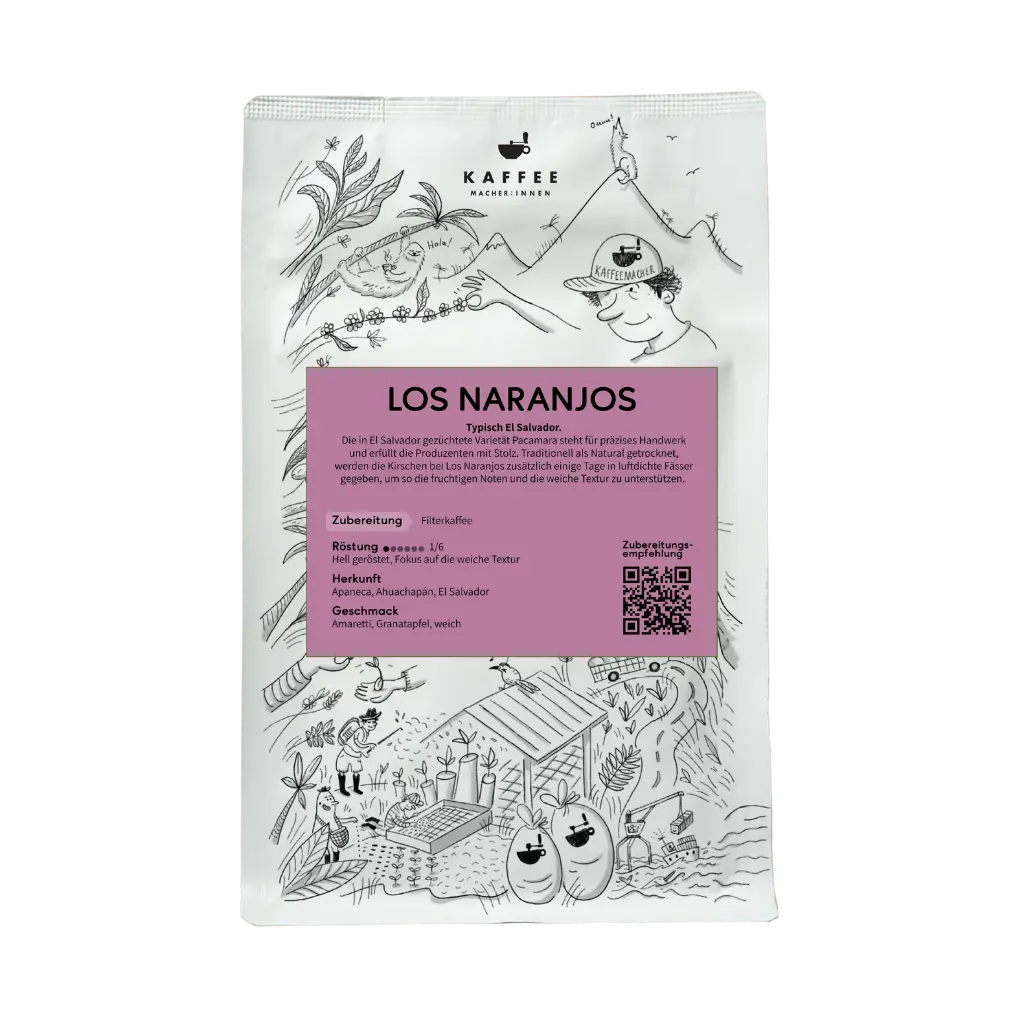


Los Naranjos - Filter coffee from El Salvador


Los Naranjos - Coffee Info
|
Taste: |
Amaretti, Pomegranate, soft |
|
Bean Origin: |
Apaneca, Ahuachapán, El Salvador |
|
Producers: |
David Velázquez, Los Naranjos Mill |
|
Varieties: |
Pacamara |
|
Post-harvest process: |
anaerobic fermentation, then dried as Natural |
|
Cultivation philosophy: |
sustainable farming with a focus on soil health |
|
All our coffees are sold as whole beans. |
|
How we prepare the coffee: V60

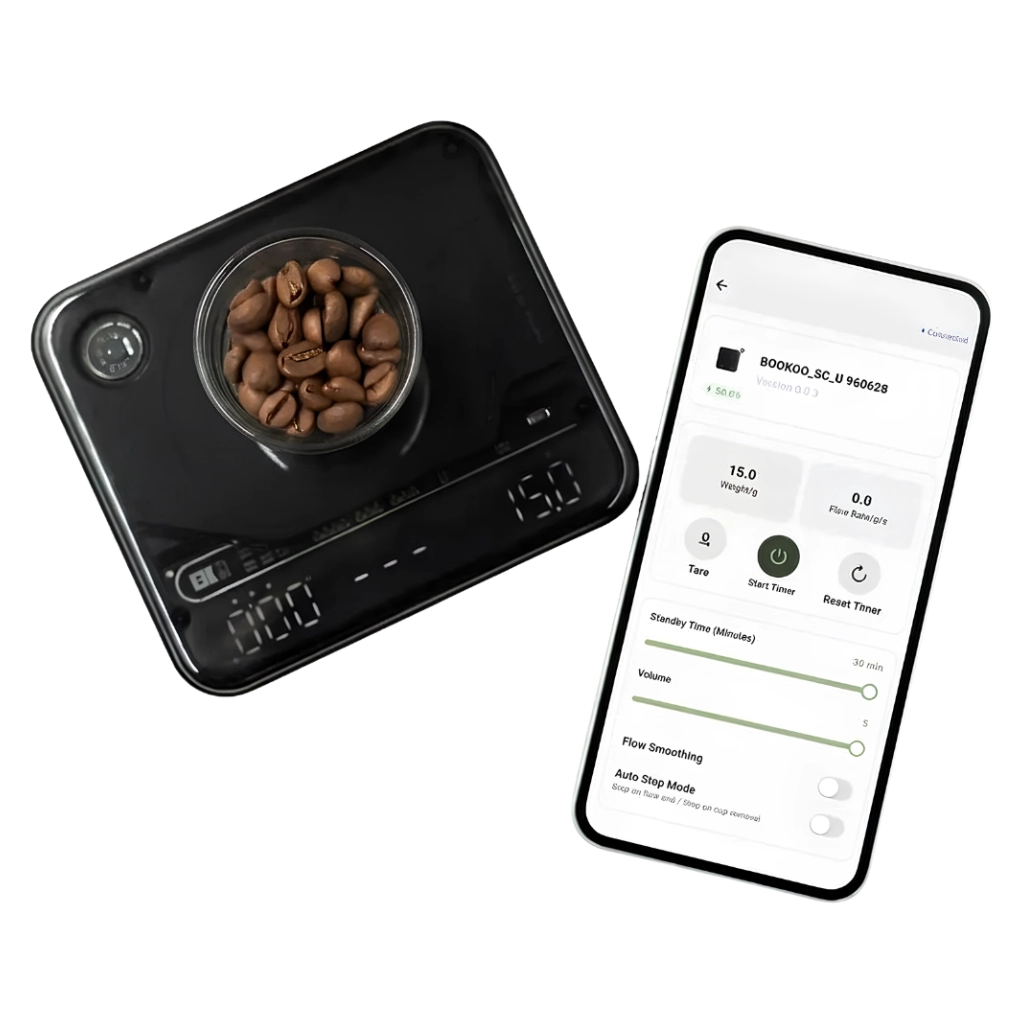
We use the following equipment for recipe development:
Water: Total hardness 3 °dH , Alkalinity 1.5 °dH (more about coffee water)
Grinder: Kinu M47 Classic
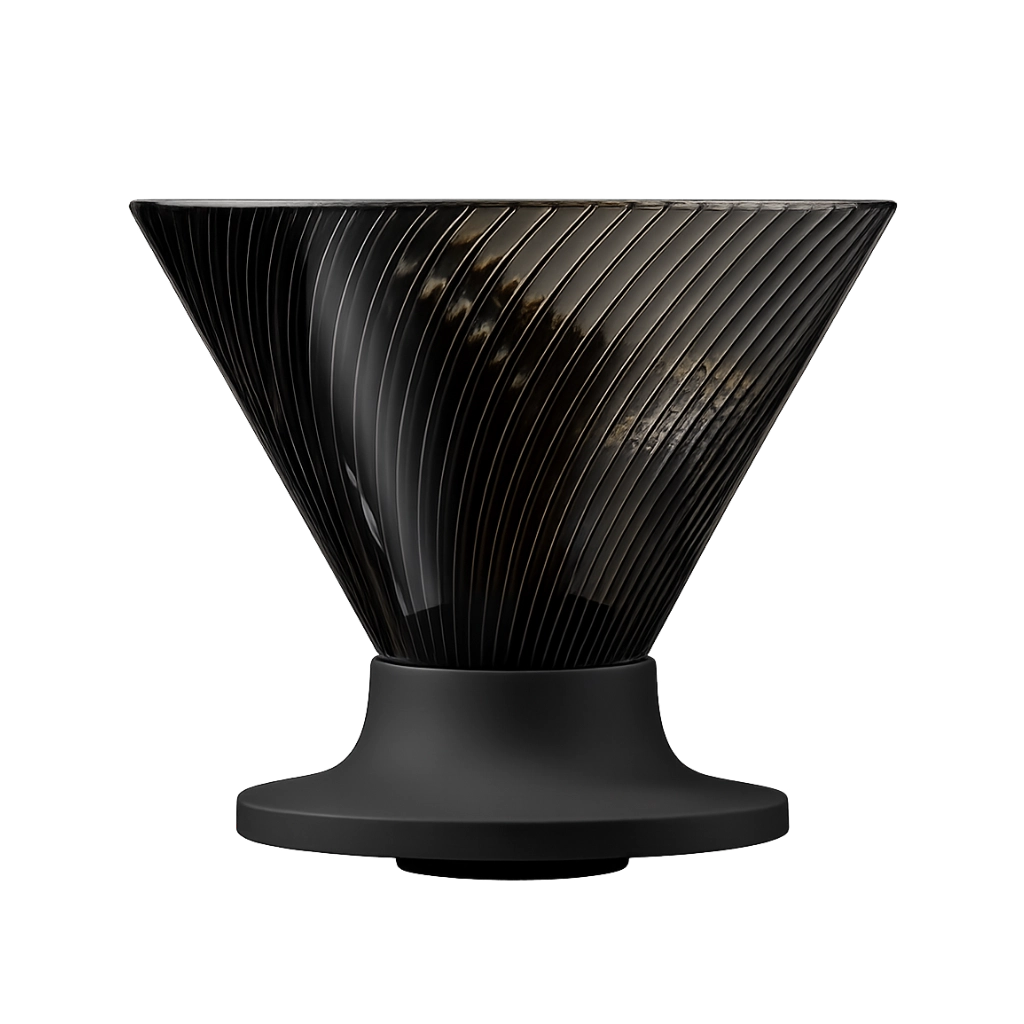
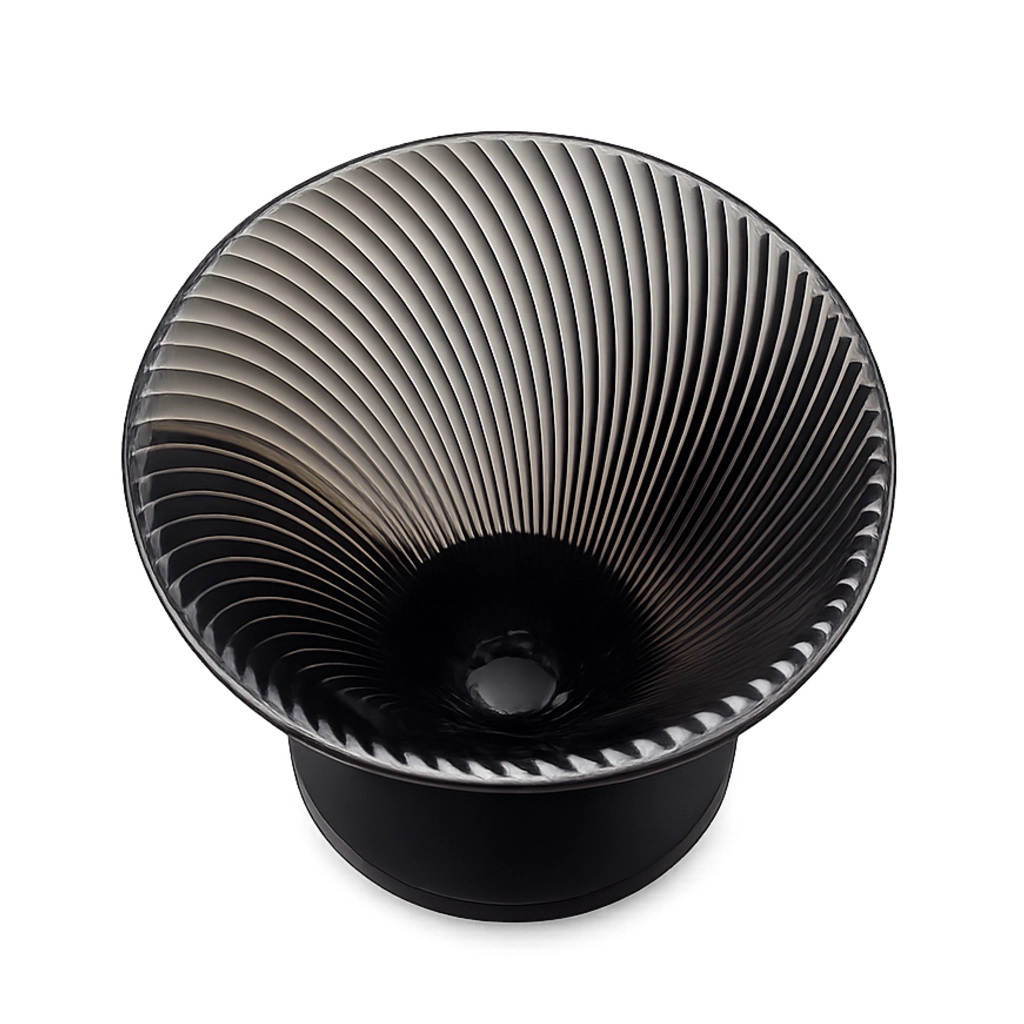
Dripper: Hario V60 Glass Filter 02
Filter paper: Hario V60 Paper
Why does the coffee taste the way it does?
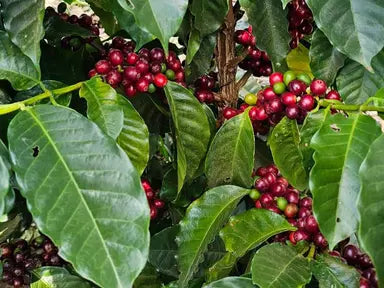
As soon as the cherries reach a uniformly ripe stage and a Brix value of over 20°, David Velázquez and his team harvest the Pacamara variety. After sorting over-ripe and unripe coffee cherries in the water channel, polypropylene bags are filled with just under 200 kg of coffee cherries and anaerobically fermented under exclusion of air.
The pH value is checked every 24 hours until it drops to 4.2 after 72 hours and the Brix value falls to 13° - during fermentation, sugars are microbially metabolized; this creates new aroma precursors. The coffee is then dried on drying beds.
The uniform ripeness gives the coffee a very dense, almost syrupy texture. The comparatively short fermentation time of 72 hours emphasizes this texture and adds fresh-fruity notes reminiscent of almonds to the coffee.
Why did we buy this coffee?
Juan has been roasting with us for almost as long as the roastery has existed. He originally comes from El Salvador and has a broad coffee network there. David Velázquez and the Los Naranjos Mill are even within walking distance of Juan's parents' house.
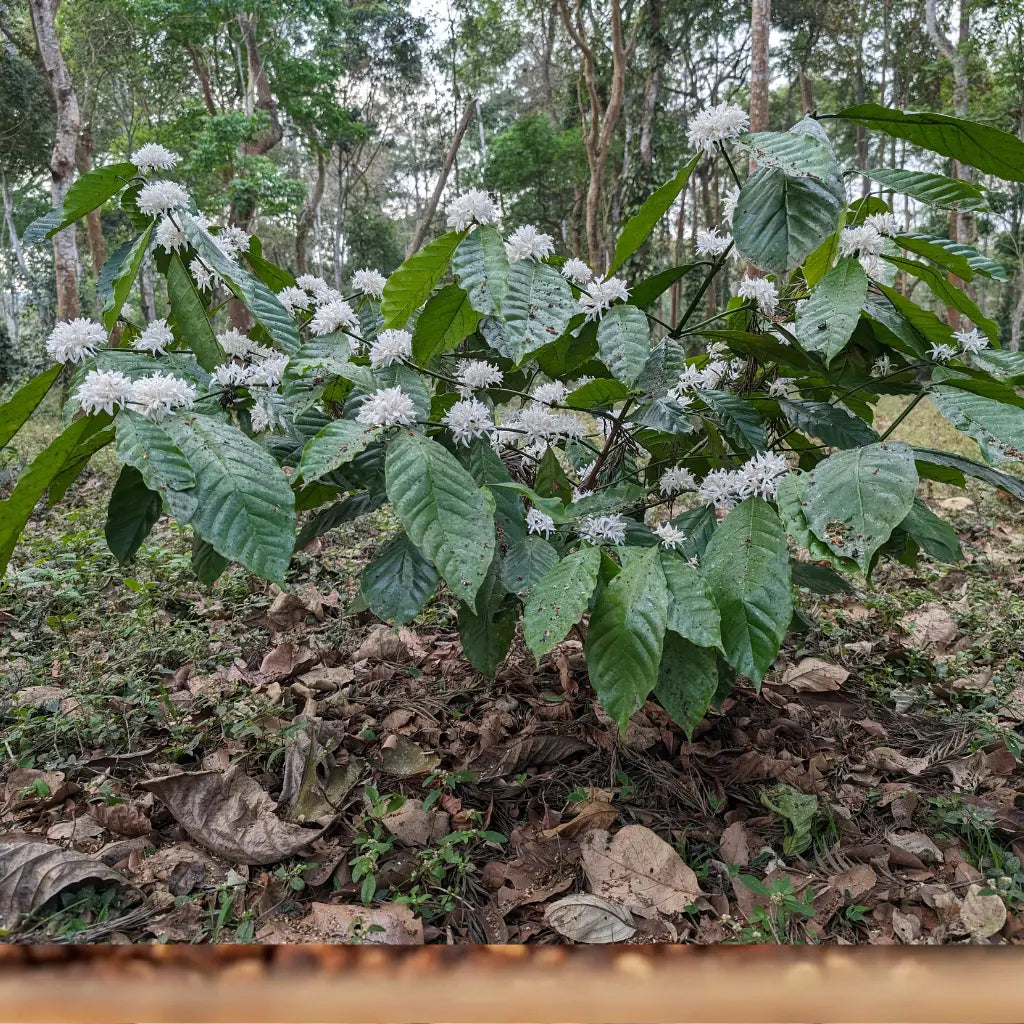
In addition to the processing facility, David Velázquez operates several farms where he practically only grows Pacamara. The farms are structured by many green borders; numerous shade trees and bushes grow between the plots. The farms have undergone an impressive transformation, as the owners have broken new ground and focused on sustainable management. Since then, soil health and farm care by young people who are trained at a regional agricultural school and apply their knowledge directly on the farm have been at the center.
The Pacamara particularly impressed us because it brings exactly what we appreciate: well-structured acidity, texture, fruit, and great balance.
How do we roast this coffee?
We roast the coffee in a 12 kg batch on our 30 kg Giessen roaster. Due to the large beans of the Pacamara variety, we start with a 45-second soak and only then increase the gas supply. This equalizes the bean temperature and allows for more even roasting afterward (according to some theories). To emphasize the creamy texture of the coffee and bring out the aromas more strongly, we slightly extend the roasting time.

Guaranteed origin
We know exactly where our coffee comes from and when and where it was roasted.

Personal advice
We are here to help you with any questions or problems.

Fast shipping
Delivery from Germany or Switzerland

Free shipping in DE from €75