





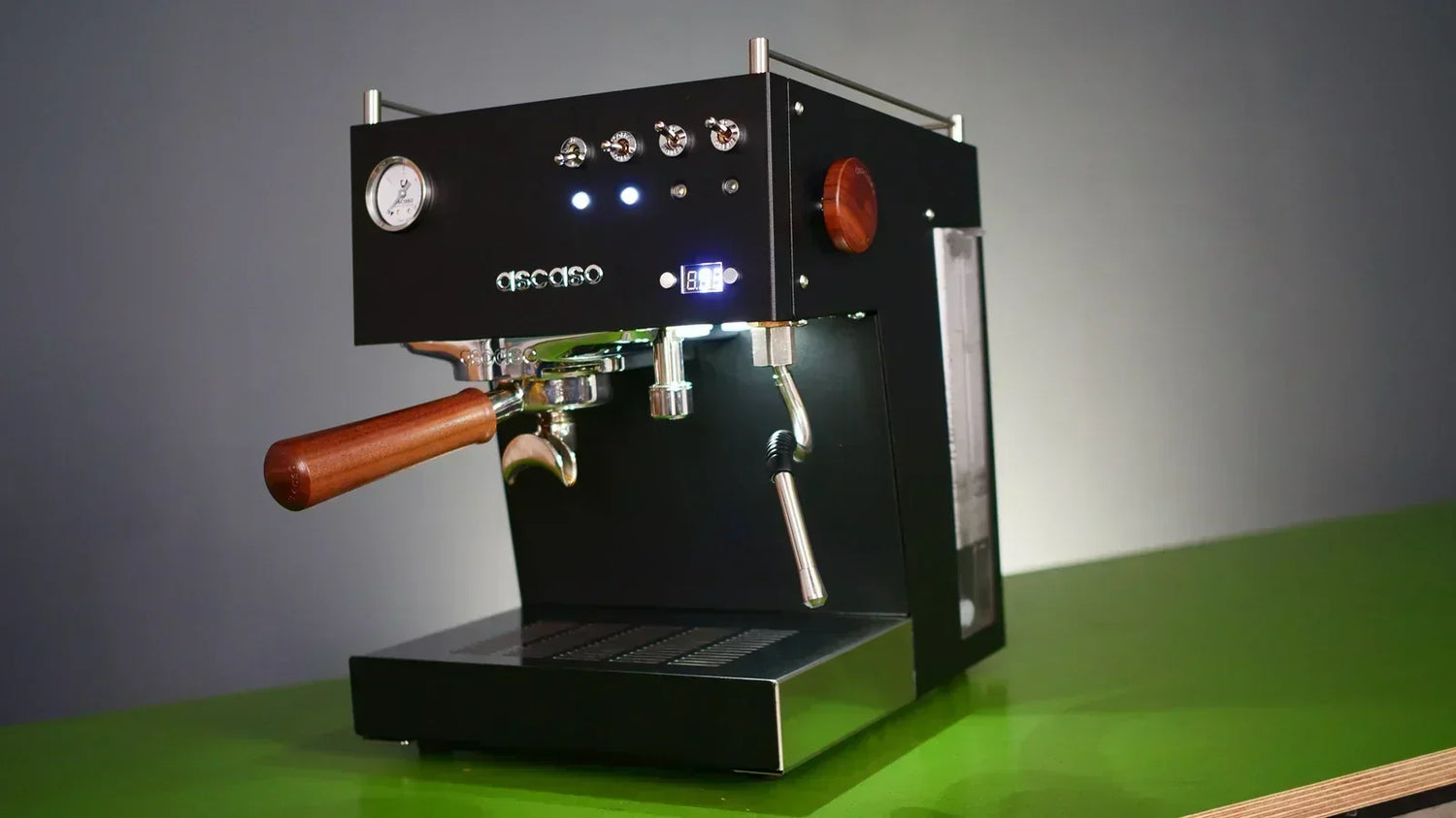

Die Ascaso Steel Duo PID hat uns bei unserem ersten Test positiv überrascht. Die Maschine der spanischen Firma ist ein doppelter Thermoblock. Sie zeichnet alles aus, was eine moderne und gute Thermoblock-Espressomaschine ausmacht. Sie ist nicht nur so schnell heiß, wie es Thermoblockmaschinen eigen ist. Sie ist auch Temperaturstabil und wie stabil sie ist, dass hat uns in unserem Test Anfang 2021 besonders überrascht. Durch die schnelle Aufheizzeit ist die Maschine auch sehr energieeffizient und verbraucht bis zu drei Mal weniger Strom als Zweikreiser-Boiler-Espressomaschinen oder auch Dualboiler.
Doch wir hatten einen Kritikpunkt beim alten Modell: das Schäumverhalten der Maschine ließ zu wünschen übrigen. Die Ascaso Steel Duo PID in der alten Fassung mit dem Dampf-Thermoblock nicht so viel Leistung in die Kanne. Genau daran hat der Hersteller aus Barcelona nun gearbeitet. Aus diesem Grund haben wir der Ascaso Steel Duo PID New ein weiteres Video gewidmet.
Ascaso Steel Duo PID: Stärken und Schwächen auf einen Blick
Nach der ersten Messung unseres Ursprungstests schrieb unser Tester Michel Aeschbacher (Schweizer Vize-Baristameister) in der internen Team-Chat nur ein Wort: „Krass." Felix Hohlmanns Antwort: „Das ist schon ziemlich geil." Das trifft es ganz gut, auch wenn wir im Detail einiges an der Maschine auszusetzen haben.
Stärken:
- Temperaturkonstanz von Bezug zu Bezug und über mehrere Extraktionen hinweg
- Kurze Aufheizzeit von rund 5 Minuten
- Niedriger Energieverbrauch im Vergleich zu Boiler-Maschinen
- Hochwertiger Siebträger mit Holzgriff im Lieferumfang
- Steuerung über Display und Volumetrik
- Seitlicher Wassertank
Schwächen:
- Verarbeitung, vor allem im Inneren der Maschine
- Milchschaum-Power (mit dem Update spürbar verbessert, aber weiterhin nicht auf Boiler-Niveau)
- Tassenheizung übersteuert
- Konstruktion der Tassenstandfläche (Tassen rutschen und klappern während des Bezugs)
- Zubehör der Basis-Version (Tamper, Siebe)
Boiler oder Thermoblock?
Die Ascaso Steel Duo PID zeigt gut, was ein Thermoblock einer klassischen Boiler-Espressomaschine (Einkreiser, Zweikreiser oder Dualboiler) voraus haben kann:
- Die Temperatur ist mindestens so konstant wie bei den besseren Zweikreiser-Espressomaschinen, die wir getestet haben.
- Die Maschine ist innerhalb von rund 3 Minuten komplett auf Betriebstemperatur, während Zweikreiser 20 Minuten und mehr brauchen.
- Der Energieverbrauch ist deutlich geringer (Zahlen dazu weiter unten), selbst wenn man die Maschine durchlaufen lässt.
- Im Thermoblock steht kein Wasser über längere Zeit, für den Espresso wird also frisches Wasser erhitzt.
- Die Verkalkungstendenz ist geringer als bei einem Boiler.
Für einen Boiler spricht dagegen vor allem ein kräftigeres und kontinuierlicheres Milchschäumverhalten sowie die in der Gastronomie bewährte, robuste Bauweise.
Wie das Thermoblock-Duo funktioniert
Der Name Ascaso Steel Duo PID kommt von den zwei verbauten Thermoblocks. Einer erhitzt das Brühwasser, seine Temperatur lässt sich per PID-Steuerung über das Display an der Front einstellen. Der zweite ist für die Milcherhitzung zuständig. In beiden Fällen läuft das Wasser durch ein spiralförmig aufgerolltes Edelstahlrohr in einem Aluminiumblock. Der Brühwasser-Thermoblock sitzt direkt über dem Siebträger und wärmt ihn dadurch gut durch, ein Punkt, an dem viele andere Thermoblock-Maschinen scheitern: ein zu kalter Siebträger kühlt sonst die Brühtemperatur während des Bezugs ab. Wir haben bei der Ascaso auch im Ruhezustand Siebträgertemperaturen von 89 bis 92 Grad gemessen.
Energieverbrauch im Vergleich
Wir haben den Stromverbrauch mit einem Adapter von MyStrom gemessen: nach 5 Minuten Aufheizzeit und fünf Espresso-Doppio-Bezügen lag er bei 0,09 kWh. Ließen wir die Maschine weitere zwei Stunden angeschaltet und zogen dann noch einen Doppio, stieg der Gesamtverbrauch auf 0,28 kWh.
Zum Vergleich, ebenfalls nach zwei Stunden gemessen: Die genügsamsten Zweikreiser in unserem Test, die Xenia Espresso und die Bezzera BZ10, kamen auf 0,48 kWh, Schlusslicht war die Bezzera Magica S mit 0,72 kWh. Da die Ascaso durch ihre kurze Aufheizzeit auch zwischendurch abgeschaltet werden kann, ließe sich ihr Verbrauch in der Praxis noch weiter senken.
Ascaso Steel Duo PID Kaufen
Folgende Fachgeschäfte vertreiben die Ascaso Steel Duo PID und wir können den Kauf einer Maschinen bei diesen Betrieben empfehlen. Sie alle bieten an, dass Offset der Maschine nachzustellen.
- Deutschland: [Partnerlinks] Stoll Espresso, Bohnendealer, Lücke Technik
- Österreich: [Partnerlinks] Bohnendealer, DieRöster
Wir suchen für euch nach Fachpartnern, von denen wir wissen, dass sie gute Arbeit und guten Service bieten. Wir sind mit den Händlern in einem engen Austausch. Es handelt sich um Provisionslinks. Wenn ihr über diesen Link bestellt, kostet es euch nicht mehr, aber wir kriegen eine kleine Provision, die wir in neues Test-Equipment stecken. Wir sind weiterhin daran, und suchen kompetente Partner für euch im DACH Raum.
Das Schäumverhalten der neuen Ascaso Steel Duo PID
Die Schäumperfomance der Ascaso Steel Duo PID wurde grundsätzlich überarbeitet. Der Hersteller spricht von +25 % Leistung. Und in der Tat hat die Maschine beim Schäumen deutlich mehr Kraft. Der Dampfdruck kann nun auch manuell in der Maschine verstellt werden. Die Maschine schäumt kraftvoll in ca. 30 Sekunden ein 0,6er Liter-Kanne auf Temperatur. Sie kann dabei gut die gesamte Milch in der Rollphase zum zirkulieren bringen.
Eine positive Veränderung ist, dass der Milchschaum nicht mehr wie beim alten Modell direkt über den Kippschalter auf der Maschine gestartet wird. Stattdessen wird mit dem Schalter nur noch der Dampf-Thermoblock gestartet. Das Schäumen wird erst durch das Drehen des seitlichen Holzrades eröffnet. Dadurch fällt ein weiterer, von uns kritisierter Posten weg. Der Dampf startet durch das Drehen des Holzrades direkt und baut sich nicht erst auf. Das war der Fall, als der Thermoblock noch über den Kippschalter gestartet wurde.
Mit dem neuen Aufbau raten wir dazu, die Dampflanze zunächst gut auszublasen. Es sammelt sich schnell viel Druck und Kondenswasser in der Lanze und in der Leitung und diese führen sonst dazu, dass beim ersten Starten des Dampfes zu viel Druck in die Milchkanne geblasen wird. Dadurch entstehen bei Nichtbeachtung viele große Bläschen, die nicht einfach heraus zu drehen sind.
Die Ascaso Steel Duo PID erhitzt die Milch immer noch gemütlich. Ca. 30 - 35 Sekunden dauert es, bis der Schaum auf Temperatur ist. In dieser Zeit können gerade auch Latte Art Anfängerinnen und Anfänger ohne Stress die Zieh- und Rollphase durchlaufen.

Links die neue, rechts die alte Ascaso Steel Duo PID. Neu ist nicht die Farbe. Weiß ist immer noch verfügbar. Neu ist das Dampfrad aus Holz.
Verbesserungspotential der Ascaso Steel Duo PID
Der Hersteller Ascaso hat mit dem Update der Duo PID die Kritik von uns und vielen Home Barista ernst genommen. Das spricht nicht nur für Ascaso, sondern macht Hoffnung, dass die Maschine weiter und weiter entwickelt wird.
Schon heute ist die Ascaso Steel Duo PID für uns eine der fünf interessantesten Espressomaschinen für Zuhause. Wenn Ascaso folgende Dinge angeht, steigt die Espressomaschine weiter in unserem persönlichen Ranking:
- Die Tassenheizung übersteuert immer noch und wird viel zu heiß. Die würde ich gerne einfach aus und an schalten können.
- Durch die Schräge der Maschine rutschen die Tassen im Bezug nach hinten und vibrieren im Bezug gegeneinander.
- Das Zubehör ist ein Überbleibsel aus der Vergangenheit. Das mitgelieferte Doppelsieb fasst knapp 15 Gramm und die Lochöffnungen hören weit vor dem Rand auf. Das kann jedoch mit einem Upgrade des Siebes einfach verbessert werden.

Verarbeitung und Maße
Die Ascaso Steel Duo PID ist 27 cm breit, 31,5 cm tief und 36 cm hoch, der Wassertank fasst 2 Liter und die Maschine wiegt 15 kg.
Bei der Verarbeitung überzeugt vor allem der Siebträger mit Holzgriff, das gehört bei anderen Maschinen oft zum Upgrade und ist hier bereits Standard. Das Gehäuse selbst wirkt dagegen eher blechern, klopft man etwa auf die Seitenwände oder die Tassenablage. Im Vergleich zu einem Edelstahl-Zweikreiser in ähnlicher Preisklasse (ECM, Rocket und Co.) zieht die Ascaso hier den Kürzeren. Auch im Inneren wirkt die Kabelführung wenig aufgeräumt, wir haben zudem vereinzelt Rückmeldungen zu locker verschraubten Teilen erhalten. Die Tropfschale besteht im Kern aus Plastik mit einer Metallblende.
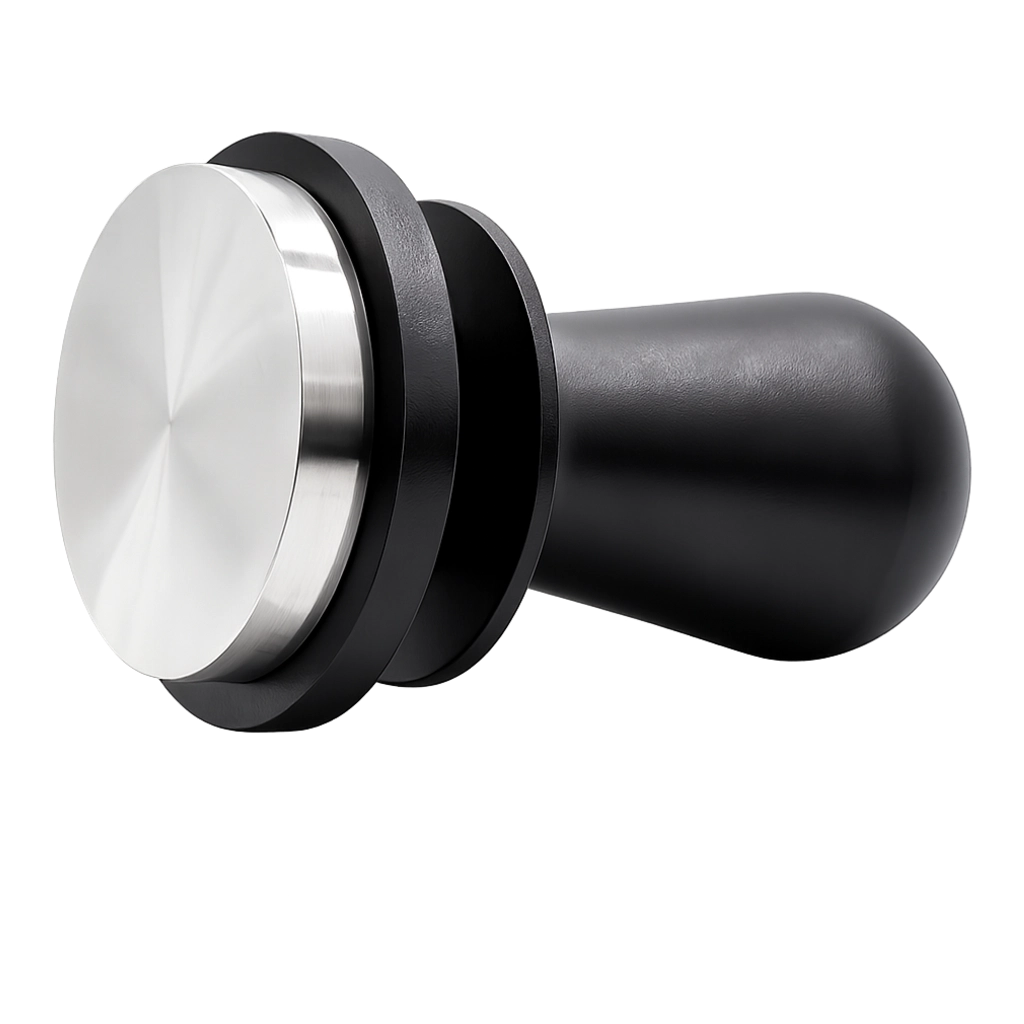
- Der mitgelieferte Tamper eignet sich als Briefbeschwerer. Bei der Benutzung ist Frust vorprogrammiert, da die Seiten gleich aussehen, aber unterschiedlich groß sind. Die Ergonomie ist auch nicht wirklich handfreundlich.
- Die größte Baustelle ist aber die Volumetrik. Die Ascaso Steel Duo PID kann eine gewünschte Kaffeewassermenge ausgeben. Zunächst ist das einmal ein großes Pro-Argument der Maschine gegenüber fast allen Zweikreisern und anderen Espressomaschinen, die manuell gestartet und gestoppt werden müssen. Deswegen ist wichtig zu beachten, dass wir hier etwas kritisieren, was andere Maschinen als Funktion gar nicht erst vorsehen. Bei der Ascaso Steel Duo PID sitzt nun aber das Expansionsventil hinter dem Flowmeter. Dadurch wird bei dem Überspringen eines bestimmten Druckbereiches Wasser teilweise nicht auf den Kaffeekuchen gebracht, sondern abgezweigt. Sollte sich euer Espresso also bei feinerer Mahlung und ungleichmäßiger Vorbereitung verändern, kann es sein, dass sich auch die Wassermenge reduziert. Eure Brühzeit wird aber tendenziell gleich bleiben. Es ist also ein Blick in die Tasse sinnvoll, oder das regelmäßige Verwenden einer Waage, um zu überprüfen, ob die Füllmenge eurem gewünschten Brühverhältnis entspricht.
Anmerkungen zur Espressoextraktion und Temperatur
Wenn die Ascaso Steel Duo PID von eurem lokalen Fachhändler richtig eingestellt wurde, ist sie nach fünf Minuten auf Betriebstemperatur. Dass ist eine echte Stärke der Maschine. Während bei vielen Espressomaschinen der Tag nach der Espressomaschine geplant werden muss, damit diese in 25 bis 30 Minuten heiß ist, kann die Ascaso auch recht spontan auf Temperatur gebracht werden.
Damit ist die Ascaso Steel Duo PID gut geeignet, nach kurzer Zeit sehr guten Espresso zu brühen (siehe auch Empfehlung Siebe und Tamper).
Allerdings wurden die von uns getesteten Espressomaschine alle mit falschem Offset ausgeliefert. Die Brühtemperatur wich zwischen 2 und 4 Grad von der angezeigten Brühtemperatur ab. Wir haben zu diesem Zweck 3 Maschinen mit kalibrierten Thermometern gemessen.
Das Offset der Maschine kann und muss von eurem lokalen Fachhändler eingestellt werden. Darauf solltet ihr beim Kauf der Maschine achten. Es braucht ein professionelles Scace Temperaturmessgerät. Diese Messung kann nicht mit einem einfachen Thermometer Zuhause vorgenommen werden.
In diesem kurzen Video erklären wir, wie die Veränderungen der Offset- und Dampfeinstellung vorgenommen werden können.
Temperaturanstieg bei Stillstand
Eine neuere Erkenntnis für uns ist, dass die Ascaso Steel Duo PID bei längerer Stehzeit von +15 Minuten über die Zieltemperatur hinaus überhitzt. Sie kann jedoch durch Spülen wieder auf die Zieltemperatur gebracht werden.

Wir haben die Brühtemperatur so eingestellt, dass sie beim ersten Bezug noch leicht unter der Zieltemperatur ist und beim zweiten Bezug dann genau im Bereich ankommt. Beim dritten Bezug ist der Siebträger dann so durchgeheizt, dass die Temperatur perfekt 93 Grad entspricht.
Diese Einstellungen können je nach Bedürfnis vorgenommen werden. Als Orientierung sollte betrachtet werden, was der bevorzugte Brühzeitpunkt ist. Mit der hier eingestellten Temperatur haben wir einen guten Kompromiss gewählt. Der erste Bezug ist zwar noch leicht unter dem Ziel, aber alle weiteren, auch wenn die Maschine länger an ist, sind genau in der Zielrange (vorher Spülen bei längerer Stehzeit nicht vergessen).


Diese beiden Grafiken zeigen die insgesamt sehr stabile Temperaturkonstanz bei der Nutzung des KM-Protokolls mit einem Abstand von 1 Minute zwischen den Bezügen. Wir haben hier eine Standardabweichung von 0,75 gemessen, was ein sehr guter Wert ist.
Upgrades für die Ascaso Steel Duo PID
In Deutschland bietet Espressopool als Importeur der Ascaso Steel Duo PID einen Update Service für das alte Ascaso Modell an. Dieser wird auch von lokalen Fachhändlern durchführbar sein.
Wir empfehlen euch für die Maschine andere Siebe und einen passenden Tamper, der zu den Sieben passt. Der lokale Fachhandel kann euch da beraten. Wir upgraden bei uns die Ascaso z.B. mit einem 18 Gramm IMS Competition Sieb (DE, CH).
Der Siebträger fasst Siebe der Größe 58 mm. Ein Tamper der entsprechenden Größe reicht von 58 bis 58,4 mm.
Ihr wollt die Maschine vor einem Kauf erst einmal ausprobieren? Sie steht euch in unseren Akademien in Basel und Dinslaken auf Nachfrage zur Verfügung.
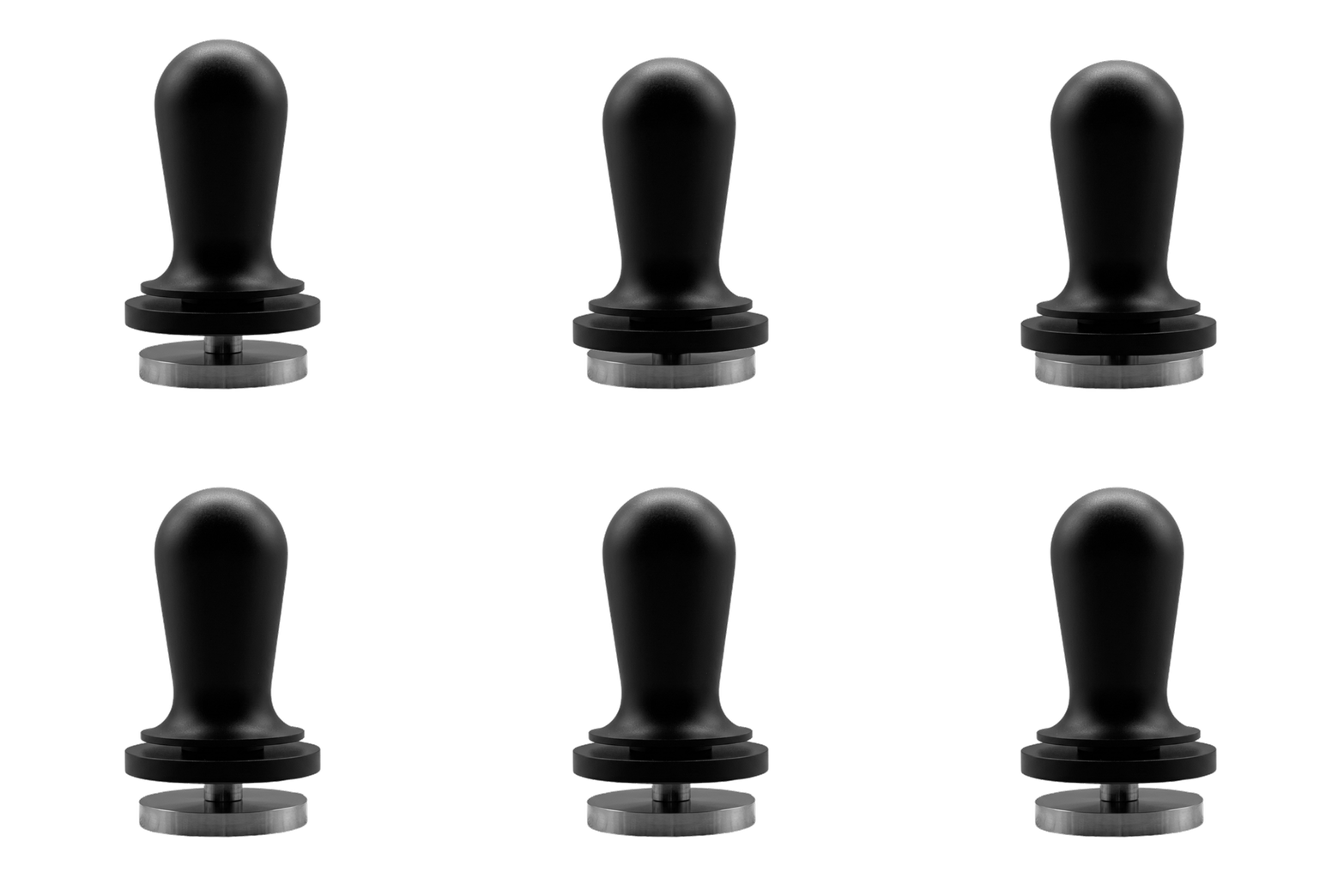
Schaut euch dazu auch unseren eigenen Tamper an, den wir lokal am Niederrhein herstellen. Zum KM Tamper in Deutschland/EU und in der Schweiz geht es hier.
Ascaso Steel Duo PID Plus im Test
Zwischenzeitlich hat Ascaso die Steel Duo PID Plus vorgestellt. Was ändert sich im Vergleich zur Basis-Version?
Die "Plus" ist ein Upgrade und bringt im Vergleich zur Ascaso Steel Duo PID Basis-Version einige Neuerungen. Das Modell kostet ca. 300 Dollar mehr und weist im Wesentlichen äußere Veränderungen auf.
Markant ist der hölzerne Dampfhebel sowie die veränderte Tropfschale. Außerdem werden eine Reihe besserer Siebe mitgeliefert sowie eine andere Dusche. Auch ein bodenloser Siebträger ist nun im Lieferumfang. Das einzige innere Update ist der Verzicht auf die Tassenheizung, die viele Home Barista bei der Basis-Version selbst entfernt hatten, da völlig unnötig. Die Maschine strahlt so viel Wärme nach oben ab, dass eine zusätzliche Tassenheizung nicht gebraucht wird.
Lieferumfang:
- Schwerer 58er Metalltamper mit Gewicht von 750 Gramm. Abstand zum Sieb von 1 mm (Mittelwert).
- Gelaserte und gut verarbeitete Siebe: 7g, 14g, 18g & 21g. Die Siebe fassen tendenziell etwas mehr.
- Blindsieb und Bürste
- Einloch- und Dreiloch-Düse
- Bodenloser Siebträger
- Gleichmäßige und gut verarbeitete Dusche
- Veränderte Tropfschale, die weniger die Tassen tanzen lässt, aber immer noch bei Extraktion Lärm erzeugt.
Entfernt wurde außerdem die Tassenheizung. Diese wurde bei Vorgängermodellen von vielen Home Baristas selbst abgesteckt. Die Abwärme der Maschine reicht vollkommen aus, um die Tassen zu erwärmen.
Einordnung der Upgrades der Plus-Version
Die Upgrades der Ascaso Steel Duo PID Plus sind alle sinnvoll. Die neuen Gerätschaften sind hochwertig und machen die Maschine besser. Mit der Verbesserung der Tropfschale wurde eine Verbesserung vorgenommen, die zu weniger Bewegung der Tassen führt. Dennoch ist immer noch Vibration sichtbar und das Gitter wackelt in der nun statischen Tropfschale. Fraglich bleibt, warum Ascaso das Tropfgitter nicht mit Gummi-Schützern vom Metall der Maschine trennt und so die Vibration aufnimmt.
Das Entfernen der Tassenheizung ist sinnvoll. Der viel größere Kritikpunkt an der Ablagefläche ist jedoch die Schräge. Die Tassen wandern während der Extraktion stetig nach hinten und berühren sich dabei klappernd. Wirklich frustrierend, weil unnötig. Hier sorgt eine Designentscheidung für unnötige Geräuschkulisse.
Der neue Dampfhebel ist griffig und schön. Die Arbeit damit fühlt sich definitiv stimmiger an als mit dem Dampfdrehrad. Eine Verbesserung der Performance der Maschine wird dadurch nicht erreicht.
Erfreulich sind die deutlich besseren Siebe. Sie haben sauber gelaserte Löcher und unterstützen eine gleichmäßigere Extraktion. Beim Tamper wäre etwas mehr Bündigkeit mit dem Rand wünschenswert. Der neue Tamper ist allerdings definitiv besser als die in der Basis mitgelieferte Tamper-Hantel.
Insgesamt ist der Mehrpreis von 300 CHF/Euro für die Plus-Version sicher nicht schlecht investiert. Bis auf den Bezugshebel lassen sich jedoch die wesentlichen Verbesserungen auch für deutlich weniger Geld individuell anschaffen.
An der Gesamtperformance ändert sich jeweils nichts. Sowohl unsere erneute Energieverbrauchsmessung als auch die Temperaturmessung bestätigen die Ascaso Steel Duo PID Plus als sehr gute Espressomaschine.
Doch der dringendste Upgrade-Wunsch bleibt unerfüllt: die Position des Flow-Meters und die dadurch inkonstante Ausgabemenge.


Fazit
Die Ascaso Steel Duo PID ist nach dem Update eine der spannendsten Thermoblock-Espressomaschinen für Zuhause: schnell aufgeheizt, sehr konstant in der Temperatur und deutlich sparsamer im Verbrauch als vergleichbare Boiler-Maschinen. Bei der Verarbeitung und beim Milchschaum hat sie weiterhin Luft nach oben, und wer auf den Milliliter genau brühen will, sollte wegen der Volumetrik-Schwäche zur Waage greifen. Mit der Plus-Version bessert Ascaso beim Zubehör nach, der grundsätzliche Charakter der Maschine bleibt aber gleich. Wir testen aktuell das neueste Modell und aktualisieren diesen Artikel, sobald der Test abgeschlossen ist.